


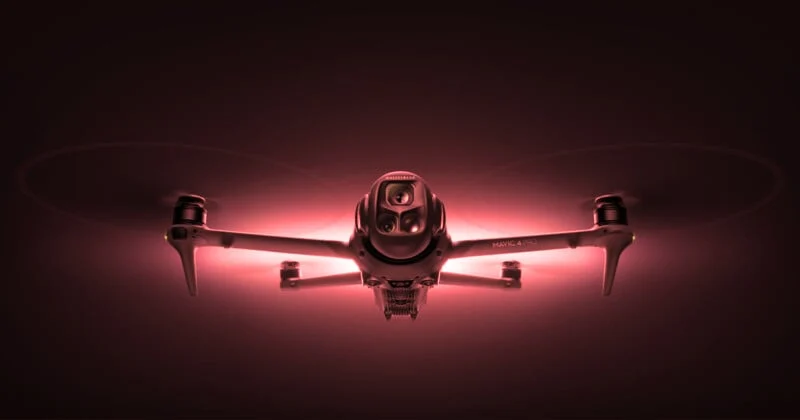
The United States Federal Communications Commission has initiated a significant enforcement action against eight technology firms, alleging a willful failure to respond to investigative inquiries regarding the importation and marketing of wireless products. This move signals a tightening of the regulatory net around foreign-made technology, specifically targeting entities suspected of serving as conduits for DJI, the world’s largest drone manufacturer, which has faced increasing restrictions within the United States. The commission has issued a Notice of Apparent Liability for Forfeiture, proposing a $25,000 fine for each of the eight companies involved, following their alleged silence in the face of official Letters of Inquiry regarding their business practices and potential links to restricted Chinese technology.
The companies named in the enforcement action include Cogito Tech Company Limited, Fixaxo Technology, Lyno Dynamics, Skyhigh Tech, Spatial Hover, SZ Knowact, WaveGo Tech, and Xtra Technology. According to the FCC, these firms ignored repeated requests for information concerning the nature of the radiofrequency equipment they have been marketing and selling within the U.S. borders. The agency has set a deadline of July 20 for these entities to provide a formal response. Failure to do so may result in escalated penalties, including the revocation of equipment authorizations, which would effectively ban their products from the American market.
The Alleged Connection to DJI Technology
Central to this enforcement action is the suspicion that several of these firms are operating as "shell" or "front" companies designed to bypass the stringent restrictions placed on DJI. Since late 2025, the U.S. government has significantly ramped up its efforts to limit the influence of Chinese drone manufacturers over concerns regarding national security and data privacy. Industry analysts and independent researchers have noted that as DJI faced mounting pressure, new brands began to emerge that appeared to utilize DJI’s proprietary hardware and software under different labels.
Specifically, WaveGo Tech and SZ Knowact have been linked to the "Skyrover" drone brand. Technical teardowns and software analysis by independent experts, such as researcher Konrad Iturbe, have previously suggested that Skyrover products share significant architectural DNA with DJI’s popular Mavic and Mini drone series. Similarly, Xtra Technology has marketed action cameras that bear a striking resemblance to DJI’s Osmo Action lineup, leading to questions about the true origin of the technology and the legality of its distribution under current FCC guidelines.
The FCC’s inquiry into Cogito Tech was particularly pointed. The agency’s statement noted that Cogito failed to respond to questions regarding whether it had "indirectly or directly marketed within the United States any radiofrequency (RF) equipment" that was added to the "Covered List" on December 22, 2025. This list identifies technology deemed to pose an "unacceptable risk to the national security of the United States or the safety and security of United States persons."
Chronology of Escalating Restrictions
The current fines are the latest chapter in a multi-year effort by the U.S. government to decouple critical infrastructure and consumer technology from Chinese firms perceived as being under the influence of the Chinese Communist Party.
- December 2020: The U.S. Department of Commerce added DJI to its Entity List, restricting U.S.-based companies from exporting technology to the drone maker.
- 2021-2023: Various federal agencies, including the Department of Defense and the Department of the Interior, implemented bans on the use of DJI drones for government purposes.
- December 2025: The FCC officially expanded its "Covered List" to include major foreign drone manufacturers. This action prevented the issuance of new equipment authorizations for these companies, essentially freezing their ability to launch new products in the U.S.
- Early 2026: Reports began to surface regarding the rise of "rebranded" drones entering the market through third-party distributors and newly formed tech companies.
- July 2026: The FCC issues the current Notice of Apparent Liability for Forfeiture against eight companies for failing to cooperate with investigations into these rebranding practices.
Regulatory Framework and the Power of the FCC
The FCC’s authority in this matter stems from the Communications Act of 1934 and the Secure and Trusted Communications Networks Act of 2019. Under these laws, any device that emits radiofrequency energy—including drones, cameras with Wi-Fi/Bluetooth, and remote controllers—must receive FCC authorization before it can be legally imported or sold in the United States.
The "Covered List" is a powerful tool used by the commission to protect national interests. Once a company is placed on this list, the FCC is prohibited from authorizing any new equipment from that entity. Furthermore, recent regulatory changes have granted the FCC the power to revoke existing authorizations if a product is later found to contain technology from a restricted source.
The $25,000 fines, while relatively small for a major technology firm, represent a procedural "first strike." By issuing these fines, the FCC is establishing a legal record of non-compliance. If the companies continue to ignore the Letters of Inquiry, the commission can move toward more severe administrative actions, including the "death penalty" for a tech company: the total revocation of their right to sell any wireless products in the United States.
Broader Impacts on the Drone Market and National Security
The FCC’s crackdown comes at a time when the American drone market is in a state of flux. For years, DJI dominated the consumer and commercial sectors, holding an estimated 70% to 80% of the market share. The sudden restriction of their products has left a vacuum that domestic manufacturers and "Blue UAS" (government-approved) alternatives are struggling to fill.
National security experts argue that the risk posed by DJI and its alleged shell companies is twofold. First, there is the concern of data exfiltration—the possibility that flight logs, GPS data, and high-resolution imagery could be accessed by foreign intelligence services. Second, there is the risk of "kill switches" or vulnerabilities within the software that could be exploited to disable drone fleets used by emergency services or law enforcement during a conflict.
The emergence of "front companies" complicates the enforcement of these security measures. If a police department purchases a drone branded as "Skyrover," believing it to be a compliant alternative, but the hardware is actually DJI-based, the security risks remain identical to those the government is trying to mitigate. The FCC’s investigation is an attempt to peel back the layers of corporate obfuscation to ensure that the spirit of the law is being upheld.
Reaction from the Tech Industry and Testing Laboratories
While DJI has historically denied that its products pose a security risk, the company has not yet issued a formal statement regarding this specific FCC action against its alleged distributors. In previous statements, DJI has characterized U.S. restrictions as "politically motivated" and harmful to the many American small businesses that rely on their technology for photography, agriculture, and infrastructure inspection.
In a related move to tighten the certification process, the FCC is also reportedly moving to revoke the recognition of a prominent testing laboratory in China. These labs are responsible for certifying that devices meet U.S. standards before they are sent to the FCC for final approval. By targeting the labs themselves, the FCC is signaling that it no longer trusts the "honor system" of overseas testing for products coming from high-risk jurisdictions.
Future Outlook and Enforcement Deadlines
The July 20 deadline serves as a critical juncture for Cogito Tech, Xtra Technology, and the six other named firms. If these companies choose to engage with the FCC, they will be required to provide exhaustive documentation regarding their supply chains, ownership structures, and the origin of their intellectual property. If they remain silent, the FCC is likely to proceed with the forfeiture of the $25,000 per company and may move to block their FCC IDs entirely.
This investigation is expected to be a bellwether for how the U.S. handles "white-label" technology moving forward. As the technological rivalry between the U.S. and China intensifies, the FCC’s role has shifted from a simple spectrum regulator to a frontline agency in the defense of national security. For consumers and commercial drone operators, this signals a future where the origin of a product’s internal components is just as important as the brand name on the box. The outcome of this enforcement action will likely determine the level of scrutiny applied to all foreign-sourced wireless technology entering the American market for years to come.

