


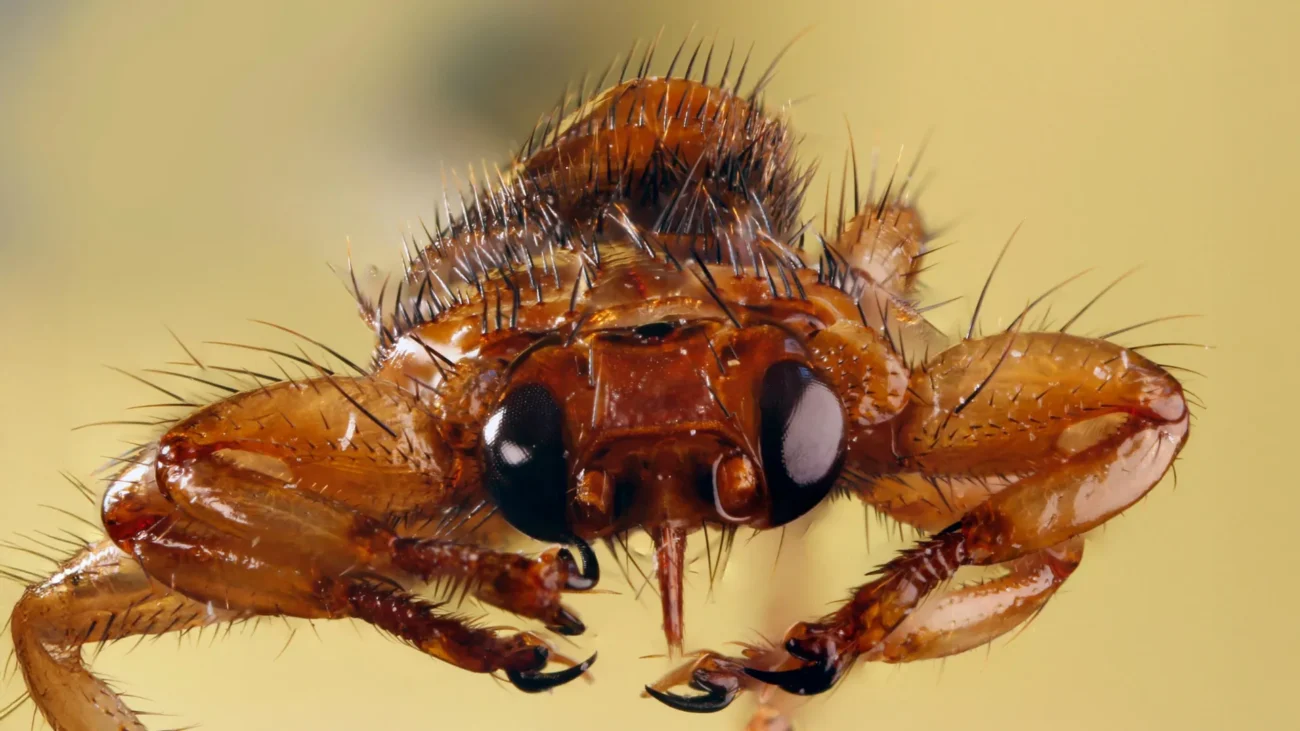
In the dense, temperate forests of the Northern Hemisphere, a remarkable biological transformation takes place quietly within the fur of passing mammals. Recent scientific investigations have revealed that the deer ked—a specialized, blood-feeding louse fly—undergoes a profound physiological and genetic downgrade after securing a host. Once it sheds its wings and abandons flight forever, the insect significantly dampens its visual sensitivity, redirecting its metabolic energy away from an expensive sensory system and toward the demands of permanent parasitism.
This discovery, spearheaded by a collaborative team of researchers from Aberystwyth University in the United Kingdom and the University of Florence in Italy, sheds new light on the metabolic trade-offs inherent in parasitic evolution. Published in the Journal of Experimental Biology, the findings offer a detailed look at how organisms recalibrate their biology when transitioning from free-roaming predators to permanently anchored ectoparasites.
The Dual Existence of the Deer Ked
Deer keds, scientifically belonging to the family Hippoboscidae (specifically Lipoptena cervi), are widely distributed across forested regions of Europe, Asia, and parts of the Americas, having been introduced to North America via imported European cervids. These flattened, leathery insects are formidable pests for a variety of ungulates, most notably roe deer, red deer, and fallow deer, though they have been known to accidentally land on and bite humans, horses, and dogs when their primary hosts are unavailable.
The life cycle of the deer ked is divided into two starkly contrasting phases. In the first phase, newly emerged adults are winged and free-living. During this window, they actively seek out hosts by utilizing a combination of visual cues—such as dark, moving shapes silhouetted against the forest floor—and olfactory signals like carbon dioxide and body heat.
However, this airborne hunting phase comes to an abrupt end the moment the insect successfully lands on a suitable host animal. Upon burrowing into the dense underfur, the deer ked engages in a form of self-mutilation unique among many insects: it snaps off its own wings at predefined basal lines. Once detached, the wings are never regenerated. The insect spends the remainder of its life crawling through the animal’s coat, feeding exclusively on blood, and mating to perpetuate the species.
Genetic Shifts and the Cost of Sight
Vision is among the most energetically demanding senses in the animal kingdom. Maintaining the complex neural architecture, photoreceptor cells, and light-sensitive proteins required to navigate a dynamic visual world consumes a substantial fraction of an organism’s daily metabolic budget. In evolutionary biology, systems that are no longer utilized efficiently are often subjected to downregulation or degeneration to conserve energy for vital survival processes such as digestion, immunity, and reproduction.
To understand how deer keds manage this metabolic transition, the research team, led by Dr. Roger Santer of Aberystwyth University’s Department of Life Sciences, analyzed the insects at distinct life-history milestones. The researchers compared winged adults captured while actively seeking hosts with wingless adults harvested directly from deer after they had established their parasitic existence.
The investigation centered on opsins, a group of light-sensitive proteins that form the foundation of visual pigment in photoreceptor cells. By quantifying the expression levels of opsin-encoding genes, the scientific team could measure precisely how the flies’ visual machinery responded to their sudden lifestyle change.
The results were striking. Prior to finding a host, the winged deer ked exhibited high levels of opsin gene expression, comparable to those found in other active, host-seeking blood-feeders such as the African tsetse fly. However, once the deer ked shed its wings and transitioned into an ectoparasite, the activity of its opsin genes plummeted by approximately fifty percent.
Evolutionary Implications and Metabolic Economy
The halving of opsin gene activity indicates that deer keds do not completely sacrifice their vision upon settling down. Instead, they implement a calibrated downregulation, scaling back their visual capabilities to a level just sufficient for rudimentary navigation within the dark, confining matrix of mammalian fur.
Dr. Santer emphasized the evolutionary elegance of this biological shift during discussions surrounding the publication of the study. Vision plays a vital role in animal behavior, but it is fundamentally expensive. Evolution consistently favors sensory systems that are meticulously matched to an animal’s ecological niche. While some blood-feeding insects maintain high visual acuity throughout their lives, deer keds occupy a rare ecological intersection by switching entirely from an aerial hunter to a permanent dweller.
By dimming their visual sensitivity, deer keds conserve precious physiological resources. In the perpetual darkness of a deer’s coat, high-resolution vision provides zero adaptive advantage. By redirecting energy away from the eyes and toward the gut and reproductive organs, the parasite maximizes its fitness in an environment where resources are locked behind skin and fur.
Chronology of the Research and Methodology
The collaborative project between Aberystwyth University and the University of Florence developed over several years, combining field collection techniques with advanced molecular biology.
- Field Collection Phase: Researchers gathered winged deer keds from vegetation and low-hanging branches during their peak autumn flight season, capturing them at the moment they were actively searching for hosts.
- Parasitic Sampling Phase: Wingless adults were collected directly from harvested or anesthetized deer in controlled wildlife management settings, ensuring samples represented individuals well-established in their parasitic phase.
- Molecular Analysis: Back in the laboratory, ribonucleic acid (RNA) extraction and quantitative polymerase chain reaction (qPCR) assays were performed to measure the relative expression of visual opsin genes across both cohorts.
- Comparative Physiology: The genetic data was benchmarked against existing literature on other dipteran insects, revealing the close resemblance between flying deer keds and tsetse flies, followed by the dramatic post-settlement divergence.
Broader Impact on Vector Control and Parasitology
Beyond answering fundamental evolutionary questions about sensory adaptation, this study holds practical implications for entomology and vector management. Biting flies like deer keds are not only persistent nuisances for wildlife and livestock, but they can also transmit various pathogens and cause severe skin irritation, known clinically as cervid ked dermatitis in humans.
Understanding the specific sensory pathways these insects rely on during different phases of their life cycle opens new avenues for surveillance and control. For instance, trapping methods that exploit the visual preferences of flying deer keds—such as dark-colored panels mimicking large mammals—are already utilized in some regions to reduce local populations.
By mapping how sensory systems degrade or adapt post-settlement, researchers can better understand the plasticity of parasitic genomes. This knowledge contributes to a broader comprehension of how parasites evolve resistance, adapt to novel hosts, and optimize their physiology in response to environmental constraints.
As researchers continue to dissect the physiological trade-offs made by creatures like the deer ked, science gains a clearer picture of nature’s ruthless efficiency. In the world of the deer ked, giving up the sky means giving up the need to see it clearly, trading the vast expanse of the forest canopy for the dim, secure interior of a mammalian host.

