



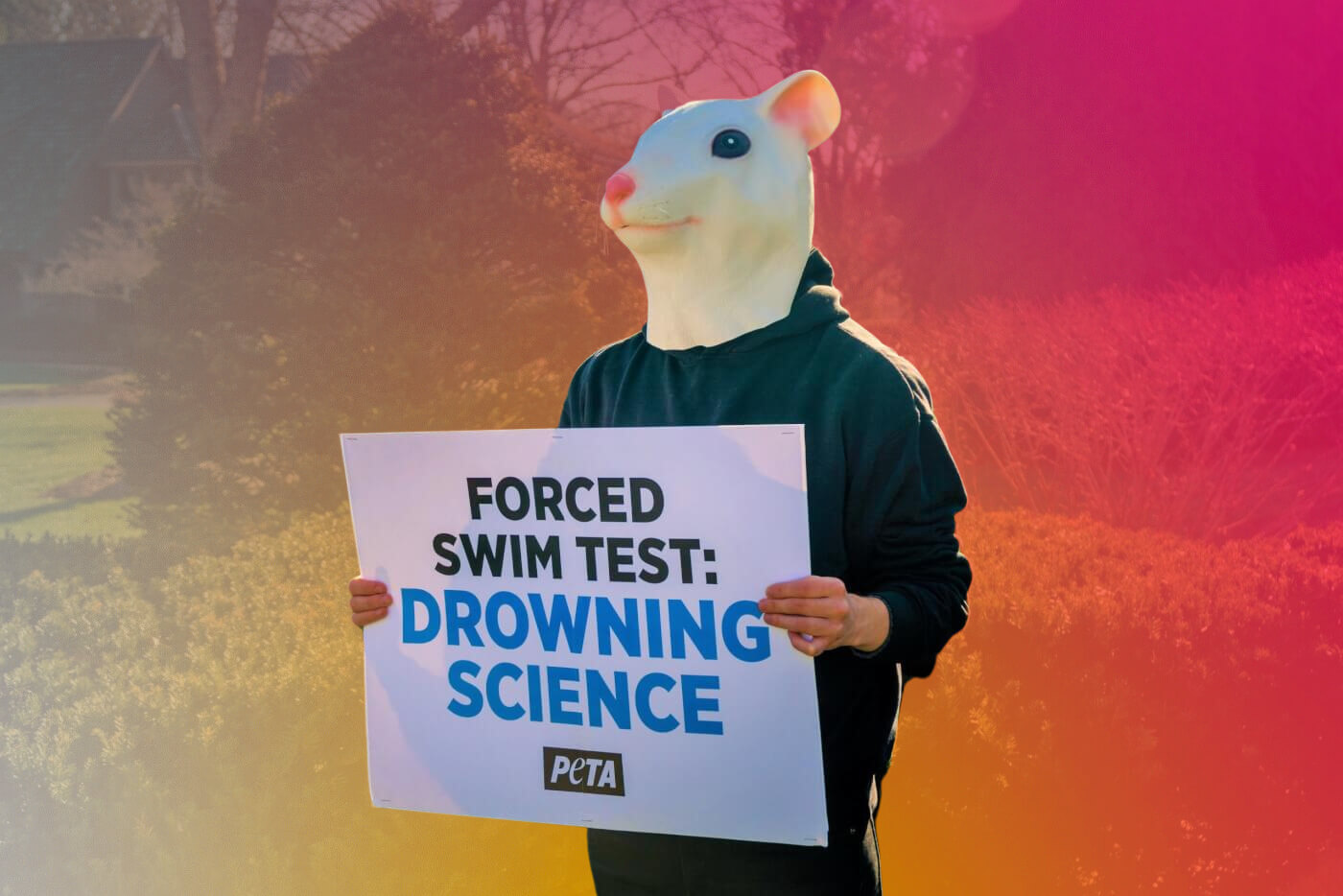
The landscape of biomedical research is undergoing a significant transformation as a growing number of international regulatory bodies, academic institutions, and multi-billion-dollar pharmaceutical corporations move to prohibit or severely restrict the forced swim test. Historically utilized as a primary method for screening antidepressant medications, the forced swim test (FST) involves placing small animals—predominantly mice and rats—into inescapable cylinders of water and measuring the duration of time they spend swimming versus floating. While experimenters once interpreted the cessation of swimming as a sign of "behavioral despair" or depression, a mounting body of scientific evidence suggests the test is both ethically problematic and scientifically unreliable.
As of mid-2026, the movement to eradicate the FST has reached a critical mass. Reports indicate that more than 40 universities and 19 major pharmaceutical companies have formally committed to ending their use of the test. This shift is the result of nearly a decade of sustained scientific outreach, shareholder advocacy, and regulatory pressure led by global PETA entities and a coalition of animal welfare organizations. The transition reflects a broader trend within the scientific community toward "New Approach Methodologies" (NAMs), which prioritize human-relevant data over traditional animal models that often fail to translate into successful clinical outcomes.
The Scientific Context: A Critique of the Forced Swim Paradigm
The forced swim test was first developed in the late 1970s by Roger Porsolt. The underlying theory was that antidepressants would increase the amount of time an animal spent struggling to escape, whereas a state of "depression" would lead to earlier immobility. However, modern neuroscience has challenged this interpretation. Critics argue that when a rodent stops swimming, it is not necessarily "giving up" due to despair; rather, it is performing a learned behavior to conserve energy and improve its chances of survival.
Furthermore, the predictive validity of the FST has come under intense scrutiny. Statistical analyses of drug development pipelines have shown that the test is often less reliable than a coin toss in predicting whether a compound will be effective in humans. Despite decades of use, many drugs that showed promise in the FST failed to demonstrate efficacy in human clinical trials. Conversely, some effective human antidepressants do not produce the expected results in the FST, leading to the potential abandonment of viable treatments. This disconnect has led organizations such as the U.K. Medicines and Healthcare products Regulatory Agency (MHRA) and the U.S. Food and Drug Administration (FDA) to increasingly emphasize the need for more sophisticated, human-centered research models.
Chronology of Regulatory and Institutional Prohibitions
The timeline of the FST’s decline illustrates a rapid shift in scientific consensus. Between 2018 and 2023, the movement was largely driven by the private sector. Major pharmaceutical players, including Pfizer, Johnson & Johnson, Bayer, and Bristol Myers Squibb, were among the first to announce they would no longer fund or conduct the test. These decisions were often preceded by shareholder resolutions and private dialogues with PETA scientists, who provided dossiers detailing the test’s scientific shortcomings.
By 2024, the momentum shifted toward governmental and regulatory oversight. In the United Kingdom, the Home Office—the department responsible for licensing animal experiments—announced its intention to phase out the FST following a petition signed by over 40,000 citizens. This led to a formal review by the Animals in Science Committee (ASC), which concluded that the test could no longer be justified as a model for human depression or anxiety.
In 2025, the U.K. Department for Science, Innovation & Technology (DSIT) published a roadmap for ending animal experiments, specifically citing the FST as a "technique of special interest." The department noted that the test failed the "harm-benefit" analysis required by law, as the psychological and physical distress inflicted on the animals was not outweighed by a clear scientific or medical benefit to humans.
Global Implementation and Regional Highlights
The year 2026 has seen a surge in formal bans across multiple continents, reflecting a global consensus that the FST is an antiquated methodology.
Europe: State-Level Bans and Institutional Shifts
In Germany, the state of Hesse became a pioneer in April 2026 when the State Animal Welfare Commissioner, Dr. Madeleine Martin, announced that the forced swim test was no longer being conducted within its jurisdiction. This was followed by confirmations from authorities in Brandenburg and Bremen. In June 2026, the German Mouse Clinic at the Helmholtz Center Munich—one of the world’s leading facilities for breeding genetically modified mice—confirmed it had permanently retired the test, stating there was no scientific justification for its reintroduction.
Ireland has also taken a rigorous stance. Following an investigation by the National Committee for the Protection of Animals Used for Scientific Purposes, the Health Products Regulatory Authority (HPRA) issued a directive in February 2026. The committee found that there were significant "questions over the validity" of the FST for modeling human behavior. Consequently, the test is now prohibited in Ireland for studying depression, anxiety, or exhaustion.
Asia: India’s Regulatory Turn
India has emerged as a leader in the Asian research sector regarding this issue. In April 2025, the Pharmacy Council of India directed all institutions under its oversight to review the continued use of the FST. By February 2026, Chitkara University became the first Indian institution to formally ban the experiment. Dr. Thakur Gurjeet Singh, Dean of the Chitkara College of Pharmacy, emphasized that the decision was rooted in a commitment to align academic research with modern, notification-based ethical standards.
Oceania and Latin America: Academic Leadership
In Australia and New Zealand, major universities have responded to public and scientific pressure. The University of Melbourne prohibited the test in 2025, and in early 2026, Victoria University of Wellington followed suit. These decisions were influenced by collaborative campaigns involving PETA Australia and local groups like the New Zealand Anti-Vivisection Society.
In Latin America, a wave of universities has recently confirmed the cessation of the test. This is particularly significant given the region’s growing role in global biomedical research, signaling that the move away from the FST is not limited to Western Europe and North America.
Corporate Shifts and Contract Research
The impact of these bans extends beyond academia into the multi-billion-dollar Contract Research Organization (CRO) industry. In 2025, Pennsylvania-based Melior Discovery and the global life sciences firm Creative Biolabs announced they would no longer offer the FST as a service to clients. A representative from Creative Biolabs stated that the test had become "irrelevant for drug development efforts," reflecting a pragmatic shift toward more lucrative and reliable non-animal methodologies.

The pharmaceutical industry’s abandonment of the test is now nearly universal among its largest players. Companies such as Sanofi, GSK, AstraZeneca, and Roche have all integrated FST bans into their internal animal welfare policies. This corporate consensus is critical, as these companies provide the majority of funding for drug discovery research worldwide.
Implications for the Future of Mental Health Research
The decline of the forced swim test is viewed by many in the scientific community as a bellwether for the future of behavioral neuroscience. The primary implication is an accelerated investment in human-relevant technologies. These include:
- Organ-on-a-Chip Technology: Microfluidic chips lined with human cells that mimic the physiological environment of the human brain, allowing for more accurate drug toxicity and efficacy testing.
- In Silico Modeling: Advanced computational simulations that use massive datasets to predict how human biological pathways will respond to new chemical compounds.
- Human-Induced Pluripotent Stem Cells (iPSCs): The use of stem cells derived from patients with specific mental health disorders to grow "brain organoids," providing a genetic and biological match that animal models cannot replicate.
The transition is also likely to affect regulatory filings. With the passage of the FDA Modernization Act 2.0 in the United States, which removed the federal requirement for animal testing for new drug applications, the legal barrier to adopting these modern methods has vanished.
Conclusion
The systematic dismantling of the forced swim test represents a rare alignment of animal welfare ethics and rigorous scientific progress. As more nations and institutions adopt formal prohibitions, the focus of the global research community is shifting toward a more sophisticated understanding of human mental health—one that does not rely on the distress of small animals in water tanks, but on the precise, molecular realities of human biology. The progress reported through 2026 suggests that the forced swim test will soon be relegated to the history books, serving as a case study in the evolution of scientific methodology.

