


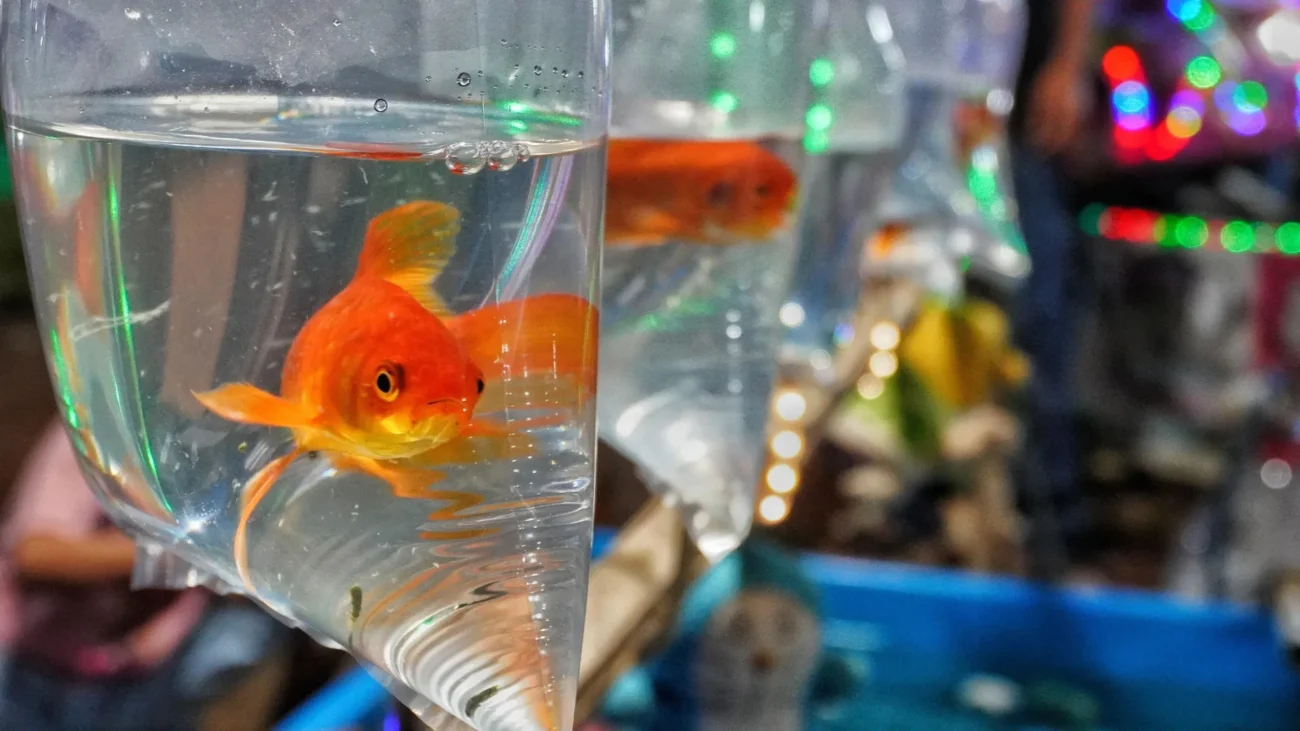
A groundbreaking peer-reviewed study conducted by researchers from The University of Toledo and the University of Missouri has unveiled the profound and often devastating impact that released or escaped goldfish can have on freshwater ecosystems. Published in the prestigious Journal of Animal Ecology, this research provides some of the most robust experimental evidence to date, demonstrating that these common household pets can transform entire lake environments into fundamentally altered and degraded states. The findings serve as a critical warning to pet owners, environmental managers, and policymakers alike, highlighting the significant ecological threat posed by goldfish when they venture beyond the confines of an aquarium.
The Hidden Dangers of Releasing a Beloved Pet
Dr. William Hintz, associate professor in UToledo’s Department of Environmental Sciences and Lake Erie Center and the study’s lead investigator, emphasized the urgency of public awareness. "It is critically important to inform the public that their pets can become pests that will harm freshwater ecosystems," Dr. Hintz stated. "The evidence is now clear—releasing a goldfish into the wild might be seen as an act of kindness, but it can turn into a major ecological threat." This sentiment underscores the disconnect between the perceived benign nature of goldfish as pets and their potent invasive capabilities in natural settings.
The research, titled "Invasive goldfish trigger a regime shift in experimental lake ecosystems of varying trophic state," employed large outdoor freshwater mesocosms—controlled environments designed to meticulously replicate real-world lake conditions. By introducing goldfish (Carassius auratus) into these experimental ecosystems, the scientists were able to precisely monitor their influence on different types of lakes over extended periods. The study specifically examined two prevalent freshwater conditions: nutrient-poor (oligotrophic) waters and nutrient-rich (eutrophic) waters. In both scenarios, the presence of goldfish induced substantial ecological disruption, underscoring their adaptability and destructive potential across a spectrum of aquatic environments.
Goldfish as Agents of Ecological Disruption
The study’s findings reveal a multi-faceted impact of goldfish on lake ecosystems. While the precise quantitative data points are detailed within the full research paper, the overarching conclusions are stark. Goldfish are not merely passive inhabitants; they actively alter the fundamental characteristics of their new environments.
One of the most significant observations was the direct link between goldfish and the degradation of aquatic vegetation. This impact was not solely attributable to the overall increase in fish biomass, but specifically to the presence of goldfish themselves. Researchers meticulously employed both additive and substitutive experimental designs. In additive designs, a fixed number of goldfish were added to existing fish communities, while in substitutive designs, goldfish replaced an equivalent biomass of native fish. This allowed scientists to disentangle the effects of goldfish from those associated with having more fish in general. The analysis conclusively showed that while an increase in total fish abundance could lead to some changes in aquatic vegetation, the most severe and detrimental ecological damage was unequivocally connected to the presence of goldfish.
Furthermore, the study documented the phenomenon known as a "regime shift." This critical ecological threshold is crossed when an ecosystem undergoes a rapid and often irreversible transition into a fundamentally different state. Once such a shift occurs, the ecosystem may become dominated by a new set of species, with altered food webs and significantly degraded water quality and biodiversity. Restoring an ecosystem after a regime shift is notoriously difficult and prohibitively expensive, making prevention the most effective strategy.
The Science Behind the Invasion: Why Goldfish Thrive and Destroy
The ubiquity of goldfish as pets is a primary driver of their invasive potential. They are among the most widely distributed ornamental fish globally, and the ever-expanding international pet trade facilitates the movement of aquatic species across continents at unprecedented rates. This global connectivity means that the potential for accidental introduction or intentional release into new environments is a constant and growing concern.
When goldfish are released into ponds, rivers, or lakes, or when they escape due to flooding events, they can rapidly establish self-sustaining invasive populations. Their hardy nature, prolific breeding habits, and opportunistic feeding strategies allow them to outcompete native species and disrupt established ecological balances.
Rick Relyea, professor in the University of Missouri College of Agriculture, Food and Natural Resources, director of Mizzou’s Johnny Morris Institute of Fisheries, Wetlands and Aquatic Systems, and a co-author of the study, elaborated on the mechanisms of disruption. "If goldfish are released into the wild, they rapidly grow into very large fish that stir up lake sediments, consume large numbers of prey and compete with native fish," Professor Relyea explained. The act of stirring up sediments has cascading effects, including increased turbidity (cloudiness) of the water, which reduces light penetration essential for aquatic plants. This sediment disturbance also releases nutrients trapped in the sediment, further fueling algal blooms in nutrient-rich environments and exacerbating water quality issues. Their voracious appetite means they consume vast quantities of invertebrates and small fish, depleting food sources for native species and altering the structure of aquatic food webs.
A Call to Action: Prevention and Public Education
Given the profound ecological damage that can result from invasive goldfish populations, the researchers are advocating for a proactive approach. They assert that goldfish should be classified and treated as a high-priority invasive species. This classification would enable natural resource agencies to allocate greater resources and attention to prevention, early detection, and control efforts. The goal is to intercept and manage populations before they become widely established and cause irreversible damage.
The authors also place significant emphasis on the critical need for enhanced public education initiatives. Many pet owners may be unaware of the potential ecological consequences of releasing their aquarium animals into natural waterways. Clear and accessible information campaigns can help foster a greater understanding of responsible pet ownership and the environmental responsibilities that come with it.
The study’s recommendations for pet owners who can no longer care for their goldfish are straightforward and practical:
- Return to Pet Stores: Many reputable pet stores are willing to accept unwanted pet fish. This is often the most direct and responsible way to rehome a goldfish.
- Find a New Aquarium Owner: Connecting with other aquarium enthusiasts through online forums, social media groups, or local aquarium societies can help find a suitable new home.
- Contact Local Wildlife Authorities: In some cases, wildlife agencies or conservation organizations may have established protocols or resources for the responsible surrender of invasive species.
Broader Implications and Future Research
The findings from this study have far-reaching implications for the management of aquatic invasive species. Goldfish represent just one example of how readily available and seemingly innocuous pets can pose significant threats to biodiversity and ecosystem health. The principles demonstrated in this research can be applied to understanding the invasive potential of other aquarium-traded species.
The study’s detailed methodology, utilizing controlled mesocosms and rigorous experimental designs, provides a strong foundation for future research. Further investigations could focus on:
- Long-term population dynamics: How do goldfish populations persist and spread over decades in various natural environments?
- Specific impacts on native species: Detailed analyses of how goldfish predation and competition affect the survival and reproductive success of particular native fish and invertebrate species.
- Effectiveness of control methods: Evaluating the efficacy and cost-effectiveness of different management strategies for established goldfish populations.
- Genetic analysis: Understanding the genetic diversity and adaptive potential of wild goldfish populations.
The research team, comprising Dr. William Hintz from The University of Toledo and Hannah Barrett and Dr. Rick Relyea from the University of Missouri, has provided an invaluable contribution to our understanding of aquatic invasive species. Their work, conducted using outdoor freshwater mesocosms designed to replicate realistic lake conditions and employing a combination of additive and substitutive experimental approaches across oligotrophic and eutrophic trophic states, offers a stark reminder of our interconnectedness with the natural world and the importance of informed, responsible stewardship. The message is clear: the seemingly innocent goldfish, when released into the wild, can indeed become a powerful ecological disruptor, demanding our immediate attention and concerted action.

