


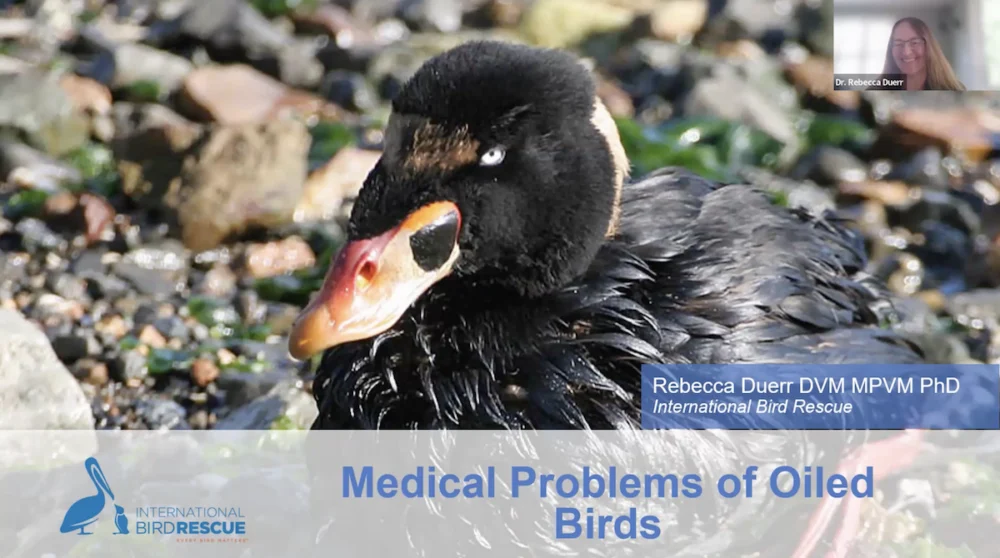
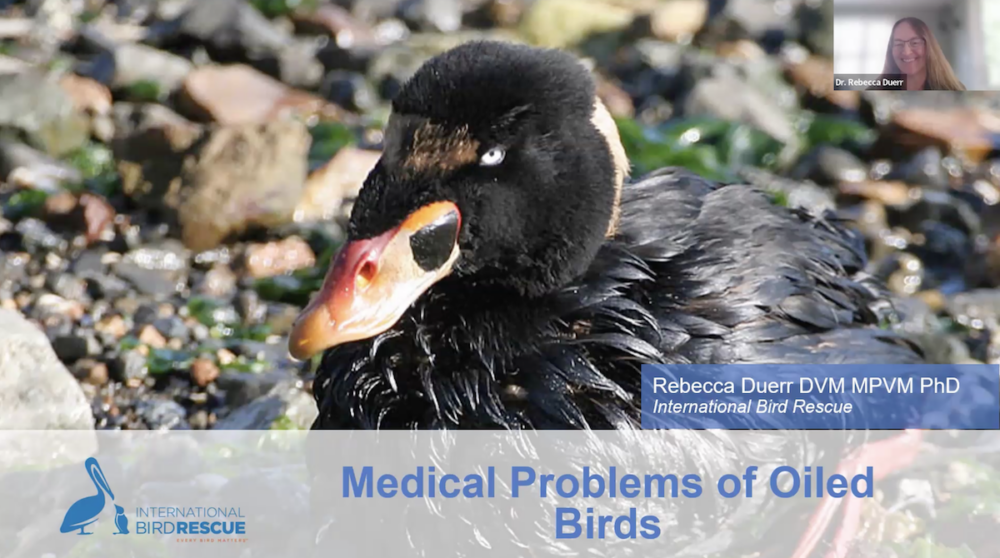
On April 21, 2026, the Kansas State University College of Veterinary Medicine’s Exotics Club hosted a virtual professional development session featuring Dr. Rebecca Duerr, DVM, MPVM, PhD, a distinguished authority in avian and wildlife medicine. The presentation, titled "Medical Problems of Oiled Birds," was facilitated through the Lafeber Company Veterinary Student Program, an initiative designed to bridge the gap between traditional veterinary curricula and the specialized requirements of exotic and wildlife clinical practice. Dr. Duerr’s lecture provided a comprehensive overview of the physiological, toxicological, and clinical challenges faced by avian species following exposure to petroleum products, offering the next generation of veterinarians a deep dive into one of the most complex fields of emergency wildlife response.
The event served as a critical educational touchstone, as oil spills remain a persistent threat to global biodiversity. While large-scale disasters like the Deepwater Horizon or the Exxon Valdez capture international headlines, smaller, chronic oiling events occur frequently, necessitating a standing workforce of trained veterinary professionals capable of managing the intricate stabilization and decontamination processes required to save affected wildlife.
The Pathophysiology of Petroleum Exposure in Avian Species
Dr. Duerr’s presentation emphasized that the impact of oil on a bird is far more than "skin deep." The primary and most immediate threat is the mechanical disruption of feather structure. Avian feathers are marvels of biological engineering, relying on a precise arrangement of barbs and barbules to create a waterproof and windproof barrier. This structure allows birds to maintain a high internal body temperature—often between 102°F and 109°F—even in frigid aquatic environments.
When oil coats the feathers, it causes them to mat and clump, breaking the waterproof seal. This allows cold water to penetrate the downy under-layer and reach the skin, leading to rapid heat loss and life-threatening hypothermia. To compensate, the bird’s metabolic rate increases dramatically as it attempts to generate heat, quickly exhausting its fat reserves and leading to a state of emaciation and severe metabolic stress.
Beyond the external physical damage, the internal toxicological effects are equally devastating. As birds instinctively attempt to clean their feathers through preening, they ingest significant quantities of oil. This ingestion leads to gastrointestinal irritation, mucosal hemorrhaging, and a decreased ability to absorb nutrients. Furthermore, the volatile organic compounds (VOCs) found in petroleum can be inhaled, causing aspiration pneumonia and severe respiratory distress. Long-term internal effects discussed in the session include hemolytic anemia, hepatic (liver) necrosis, and renal (kidney) failure, all of which require sophisticated diagnostic monitoring and pharmacological intervention.
The Stabilization Phase: Prioritizing Patient Health Over Cleanliness
One of the most vital takeaways from Dr. Duerr’s lecture was the counterintuitive timing of the decontamination process. For the uninitiated, the impulse is to wash the oil off the bird as soon as it arrives at a clinic. However, Dr. Duerr and the established protocols of wildlife medicine dictate a "stabilization first" approach.
The decontamination process—washing a bird with detergent and warm water—is an incredibly stressful and physically demanding ordeal for the animal. Attempting to wash a bird that is already hypothermic, dehydrated, or in shock often results in mortality. Consequently, the first 48 to 72 hours of treatment are dedicated to medical stabilization. This involves:
- Thermoregulation: Placing the bird in a temperature-controlled environment to combat hypothermia.
- Fluid Therapy: Administering oral or intravenous fluids to address dehydration and assist the kidneys in flushing toxins.
- Nutritional Support: Providing high-calorie, easily digestible tube feedings to reverse the emaciation caused by the bird’s heightened metabolic state.
- Diagnostic Assessment: Utilizing blood work (packed cell volume and total protein) to assess the severity of anemia and dehydration.
Only once a bird is alert, hydrated, and has stable blood parameters is it considered a candidate for the wash process.
Innovations in Decontamination: Sedation vs. Manual Restraint
A significant portion of the academic discussion centered on recent advancements in the methodology of bird washing. Dr. Duerr referenced a pivotal 2024 study published in the Journal of Avian Medicine and Surgery by Kelley et al., titled "Comparison of manual restraint with and without sedation on outcomes for wild birds undergoing decontamination."
Historically, birds were washed while fully conscious, utilizing manual restraint to keep them still. However, the intense stress of being handled by humans, combined with the noise and physical sensation of the washing process, can lead to capture myopathy—a syndrome where extreme stress leads to muscle damage and organ failure.
The cited research compared the outcomes of birds washed under manual restraint against those washed under sedation (often using a combination of midazolam and butorphanol). The findings suggest that sedation can significantly reduce the physiological stress response, leading to better post-wash recovery rates and higher overall release success. This shift toward pharmacological management during decontamination represents a major evolution in wildlife veterinary standards, emphasizing animal welfare and evidence-based practice.
The Decontamination Process and Post-Wash Care
When the bird is finally ready for the wash, the process is meticulous. It requires large volumes of water softened to a specific hardness and heated to approximately 102-105°F. Using a specific concentration of detergent—most commonly original Dawn dish soap due to its unique ability to break down heavy oils without damaging the skin—teams of technicians gently work the suds through the feathers in the direction of growth.
The rinsing phase is perhaps even more critical than the wash. Any residual soap left on the feathers will prevent them from "zipping" back together, leaving the bird just as vulnerable to the elements as it was when it was oiled. Once the bird is thoroughly rinsed, it is moved to a drying pen equipped with warm-air blowers.
The final stage of rehabilitation involves "waterproofing" in outdoor pools. The bird must demonstrate that it can remain buoyant and dry after hours of swimming and diving. Only when its feathers are fully functional and its blood values have returned to normal ranges is the bird cleared for release back into the wild.
The Broader Impact of the Lafeber Company Student Program
The presentation at Kansas State University highlights the essential role of specialized corporate-academic partnerships in veterinary education. The Lafeber Company Student Program provides resources, speakers, and high-level clinical data to veterinary schools, ensuring that students are exposed to "niche" but globally important fields like wildlife toxicology.
For the students of the KSU Exotics Club, Dr. Duerr’s lecture provided more than just clinical facts; it offered a roadmap for professional involvement in environmental conservation. As human activity continues to intersect with wildlife habitats, the demand for veterinarians who can manage the intersection of toxicology, emergency medicine, and avian physiology will only increase.
Chronology of an Oil Spill Response
To provide context for the students, the session outlined the typical timeline of a veterinary response to an oiling event:
- Day 1: Intake and Triage. Birds are captured, given a preliminary exam, and assigned a priority level based on the severity of oiling and physical condition. Initial warming and oral rehydration begin immediately.
- Days 2–4: Stabilization. Intensive medical management. This is where the veterinary team monitors for secondary infections and organ dysfunction.
- Day 5 (Approximate): Decontamination. The wash and rinse process, potentially utilizing the sedation protocols discussed by Dr. Duerr.
- Days 6–14: Conditioning. The bird is moved to pools to encourage preening and to verify that the feathers have regained their natural waterproof properties.
- Post-Recovery: Release. The animal is returned to a clean environment, often marked with a federal band to allow for long-term tracking and data collection.
Implications for Future Wildlife Policy
The insights shared by Dr. Duerr also carry implications for environmental policy and disaster management. The success of wildlife rehabilitation depends heavily on the speed of the response and the availability of trained personnel. By educating veterinary students on these protocols, the program ensures that in the event of a future spill, there is a larger pool of qualified professionals ready to be deployed.
Furthermore, the shift toward using sedation during decontamination, as supported by the 2024 Kelley et al. study, demonstrates the importance of ongoing research. As our understanding of avian stress and pharmacology improves, so too does the survival rate of the animals affected by human-caused disasters.
Conclusion
Dr. Rebecca Duerr’s presentation to the Kansas State University Exotics Club stands as a definitive guide to the medical management of oiled birds. By combining the fundamental principles of avian anatomy with the latest research in sedation and toxicology, the session equipped students with the knowledge necessary to tackle one of the most demanding challenges in veterinary medicine. Through the support of the Lafeber Company Student Program, the lecture not only advanced the clinical skills of the attendees but also reinforced the vital role of the veterinary profession in the broader context of environmental stewardship and wildlife conservation. As these students move toward their professional careers, the lessons learned from Dr. Duerr will undoubtedly contribute to the preservation of avian species in an increasingly industrial world.

