


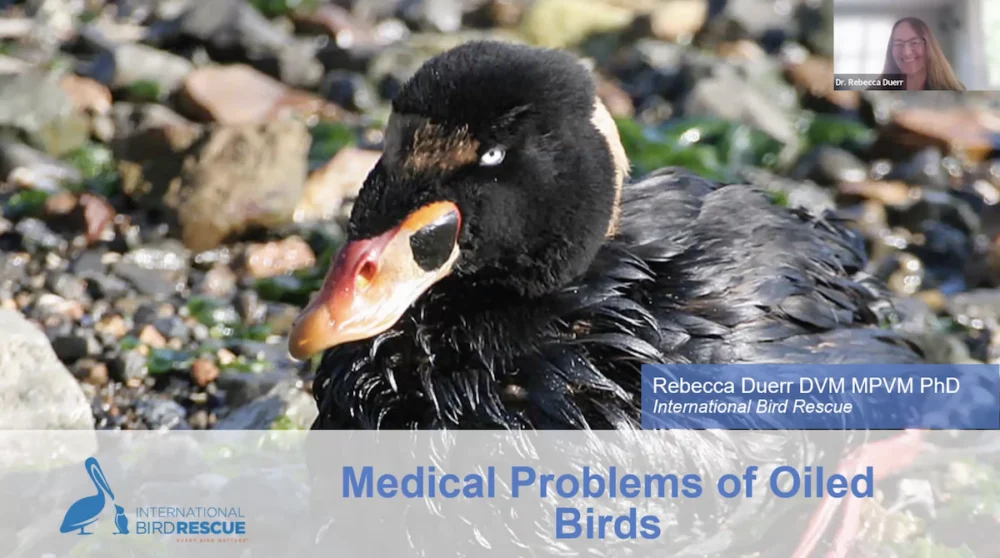
On April 21, 2026, Dr. Rebecca Duerr, DVM, MPVM, PhD, delivered an extensive virtual presentation to the Kansas State University College of Veterinary Medicine Exotics Club, focusing on the complex medical challenges associated with treating oiled wildlife. This educational session, hosted as part of the Lafeber Company Student Program, provided future veterinarians with a deep dive into the physiological, pathological, and rehabilitative requirements of avian species following exposure to petroleum products. Dr. Duerr, a renowned expert in the field of wildlife medicine and the Clinical Director at International Bird Rescue, shared her decades of experience in managing both large-scale environmental disasters and individual cases of oiling, emphasizing that the medical management of these patients extends far beyond the simple act of cleaning feathers.
The Critical Nature of Avian Oiling Incidents
The exposure of wild birds to oil is a multifaceted medical emergency that necessitates a specialized understanding of avian physiology. When oil coats a bird’s feathers, it destroys the precise interlocking structure of the barbules, which are responsible for waterproofing and insulation. As Dr. Duerr highlighted in her presentation, once this structural integrity is lost, cold water can penetrate the feather coat and reach the skin, leading to rapid heat loss. This often results in severe hypothermia, even in temperate climates, as the bird’s metabolic rate must increase exponentially to maintain core body temperature.
Beyond the external physical damage, the internal effects of oil ingestion are equally devastating. Birds attempt to clean their feathers through preening, which leads to the direct ingestion of toxic petroleum hydrocarbons. These substances can cause severe gastrointestinal irritation, ulceration, and hemolytic anemia. Dr. Duerr noted that the volatile organic compounds (VOCs) present in many oils also pose a respiratory threat, causing pneumonia and neurological impairment if inhaled. The presentation underscored that the "oiled bird" is not merely a dirty animal but a critically ill patient suffering from multi-systemic toxicosis and metabolic exhaustion.
Chronology of Care: From Field Capture to Release
The medical management of oiled birds follows a rigorous and chronological protocol designed to maximize survival rates. Dr. Duerr outlined a timeline that begins with the "stabilization phase," which is arguably the most critical period for the patient.
- Search and Rescue: Field teams must capture affected birds with minimal stress, as the animals are already in a state of extreme physiological shock.
- Initial Triage and Stabilization (Days 1–3): Upon arrival at a specialized facility, birds are not washed immediately. Instead, they receive fluid therapy to combat dehydration, nutritional support to address caloric deficits, and treatments to sequester ingested toxins (such as activated charcoal). Medical teams monitor blood parameters, specifically Packed Cell Volume (PCV) and Total Protein (TP), to assess the severity of anemia and hydration status.
- The Wash Process: Only once a bird is stable—meaning it is hydrated, has adequate blood values, and is behaviorally alert—does the decontamination process begin. This involves a series of warm water baths with specific surfactants (typically Dawn dish soap) to remove all traces of oil.
- Rinsing and Drying: Following the wash, every trace of soap must be rinsed away with high-pressure warm water to allow the feathers to "snap" back into their waterproof configuration. The birds are then placed in specialized drying pens with warm air circulation.
- Waterproofing and Conditioning: After drying, birds are moved to outdoor pools where they must demonstrate "self-preening" and achieve 100% waterproofing before they can be considered for release.
Comparative Research on Restraint and Sedation
A significant portion of the academic discussion during the presentation revolved around recent advancements in avian decontamination techniques. Dr. Duerr referenced a 2024 study published in the Journal of Avian Medicine and Surgery by Kelley et al., which compared the outcomes of wild birds undergoing decontamination with and without the use of sedation.
Historically, manual restraint was the standard practice during the washing of oiled birds. However, the high-stress nature of the 30-to-60-minute wash process can lead to capture myopathy or acute cardiac failure. The 2024 study explored whether pharmacological intervention, such as the use of midazolam or butorphanol, could mitigate these risks. The data suggested that while sedation can reduce the visible signs of stress and potentially lower the incidence of handling-related injuries, it requires careful monitoring to ensure that the bird’s thermoregulatory and respiratory functions are not compromised during the bath. This research represents a shift in wildlife medicine toward a more welfare-centric approach, prioritizing the psychological state of the animal alongside its physical recovery.
Supporting Data on Avian Toxicology
To provide the KSU students with a robust scientific foundation, the presentation included data regarding the toxicological impact of Polycyclic Aromatic Hydrocarbons (PAHs) found in crude and refined oils. PAHs are known to interfere with the red blood cell membranes of birds, leading to Heinz body anemia.
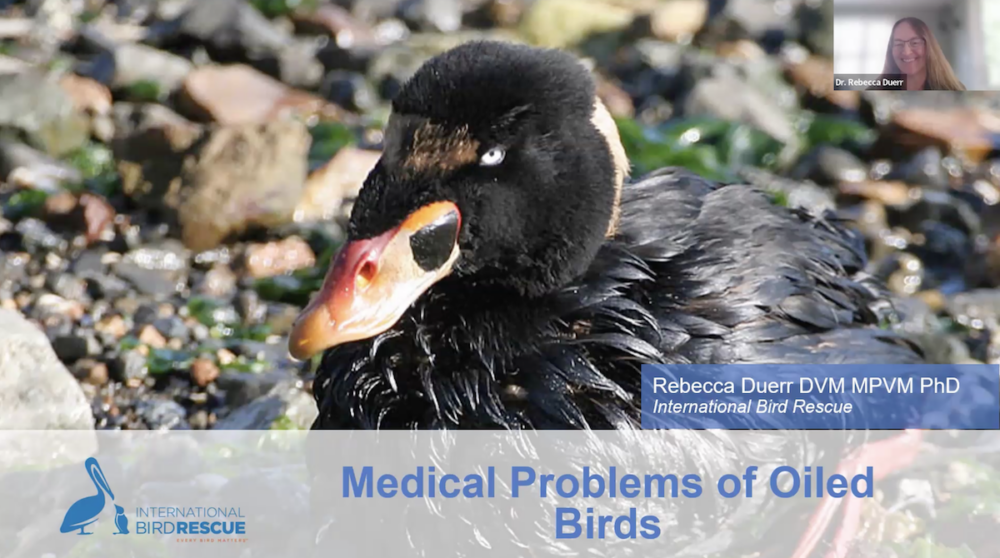
Dr. Duerr explained that even small, sub-lethal amounts of oil can have long-term reproductive consequences. Studies have shown that oil transferred from a parent’s feathers to an egg can result in embryo mortality or developmental deformities. This "invisible" damage highlights the necessity of professional veterinary intervention even in cases where a bird does not appear "heavily" oiled. The presentation emphasized that the goal of the veterinarian is to clear the systemic load of toxins, not just the visible stains.
The Role of the Lafeber Company Student Program
The event at Kansas State University is a testament to the ongoing commitment of the Lafeber Company to veterinary education. Through its Student Program, Lafeber provides universities with access to world-class experts like Dr. Duerr, bridging the gap between classroom theory and clinical reality.
The KSU Exotics Club, which hosted the virtual dinner, serves as a hub for students interested in non-traditional species. By engaging with specialists in oiled wildlife, students are exposed to the "One Health" concept—the idea that human, animal, and environmental health are inextricably linked. The management of an oil spill is a prime example of this connection, as it requires coordination between veterinarians, biologists, government agencies, and the energy industry.
Official Responses and Professional Implications
The veterinary community has increasingly recognized wildlife medicine as a critical specialty. Responses from attendees at the KSU presentation indicated a high level of interest in the logistical challenges of disaster response. Inferred reactions from faculty suggest that such presentations are vital for preparing the next generation of veterinarians to handle large-scale environmental crises, which are becoming more frequent due to increased global shipping and offshore drilling.
Dr. Duerr’s emphasis on the "PDF of the PowerPoint" and the recorded session ensures that this information remains a permanent resource for the KSU community. This level of transparency and resource-sharing is essential in a field where rapid response and shared knowledge can save thousands of lives during a spill.
Broader Impact and Future Outlook
The implications of Dr. Duerr’s work extend far beyond the immediate treatment of birds. As climate change alters migratory patterns and human activity continues to encroach on marine and aquatic habitats, the frequency of "mystery spills" and chronic oiling incidents is expected to rise.
Furthermore, the techniques developed for oiled birds—such as specialized fluid therapy and feather-care protocols—have applications in broader avian medicine, including the treatment of birds affected by other environmental contaminants or those requiring intensive care for trauma. The 2024 research on sedation, in particular, is likely to influence how various stressful procedures are handled in zoo and wildlife settings moving forward.
In conclusion, the presentation "Medical Problems of Oiled Birds" served as both a technical masterclass and a call to action for the veterinary students at Kansas State University. By combining rigorous scientific data with practical, field-tested experience, Dr. Rebecca Duerr provided a comprehensive overview of a discipline that stands at the intersection of medicine and conservation. As the veterinary profession continues to evolve, the integration of specialized wildlife training into the standard curriculum ensures that future practitioners are equipped to protect the most vulnerable members of our global ecosystem. Through the support of programs like the Lafeber Company Student Program, the path toward more effective and humane wildlife rehabilitation remains a primary focus for the academic and professional veterinary community.

