


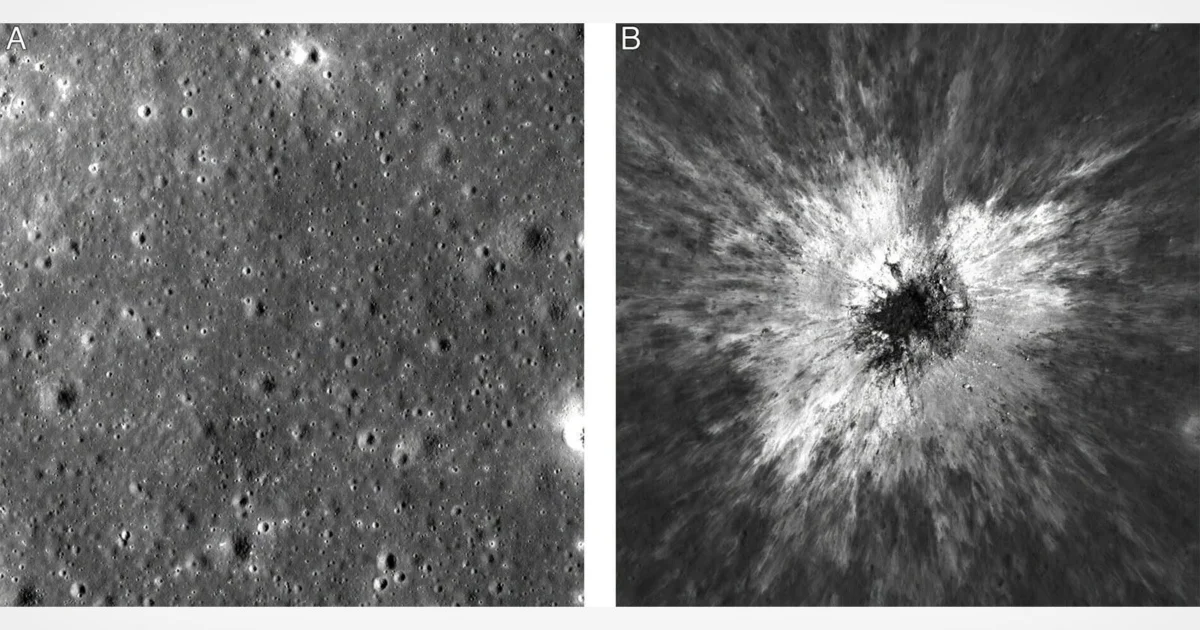
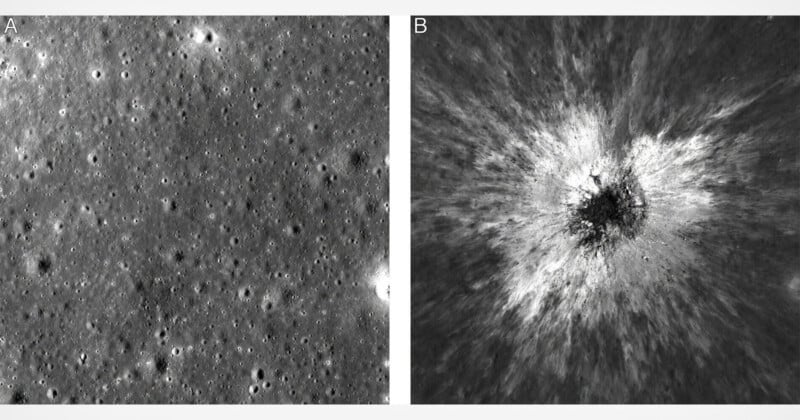
NASA’s Lunar Reconnaissance Orbiter (LRO) has provided humanity with an unprecedented view of planetary transformation by capturing high-resolution before-and-after imagery of a massive, newly formed crater on the Moon. Named the McGetchin crater, the formation serves as a scientific Rosetta Stone for understanding high-energy impact events. Measuring approximately 728 feet (222 meters) in diameter and plunging 141 feet (43 meters) into the lunar regolith, the crater is the largest of its kind documented by the LRO since the orbiter began its mission in 2009. Researchers have characterized this event as a statistically rare phenomenon, estimating that impacts of this magnitude occur on the lunar surface only once every hundred years.
The discovery was detailed in two landmark studies published in the journal Science Advances, highlighting the significance of the event for both planetary science and future lunar exploration. The crater is named in honor of Thomas McGetchin, the esteemed former director of the Lunar and Planetary Institute in Houston, whose contributions to planetary geology remain foundational to modern lunar research.
A Chronology of Discovery
The formation of the McGetchin crater occurred within a six-week window during the spring of 2024, specifically between April 11 and May 22. Despite the scale of the impact—which likely involved an asteroid or comet fragment several stories tall—the event went undetected by terrestrial observatories and space-based monitoring systems. The lunar surface, lacking an atmosphere to burn up incoming debris, acts as a pristine recording device for the solar system’s kinetic history, yet the vastness of the Moon means that most impacts occur far from the prying eyes of human technology.
The identification of the site was a triumph of systematic data analysis. In May 2024, during a routine quality-assurance scan of lunar mapping data, LRO researcher Robert Wagner observed an anomaly: a distinct, high-albedo (bright) feature surrounded by a dark, diffuse halo. This specific pattern of reflectance indicated a recent disturbance of the lunar regolith. Recalling the moment of discovery, Wagner noted that the visual evidence was so compelling that it necessitated an immediate shift in priorities to investigate the coordinates further.
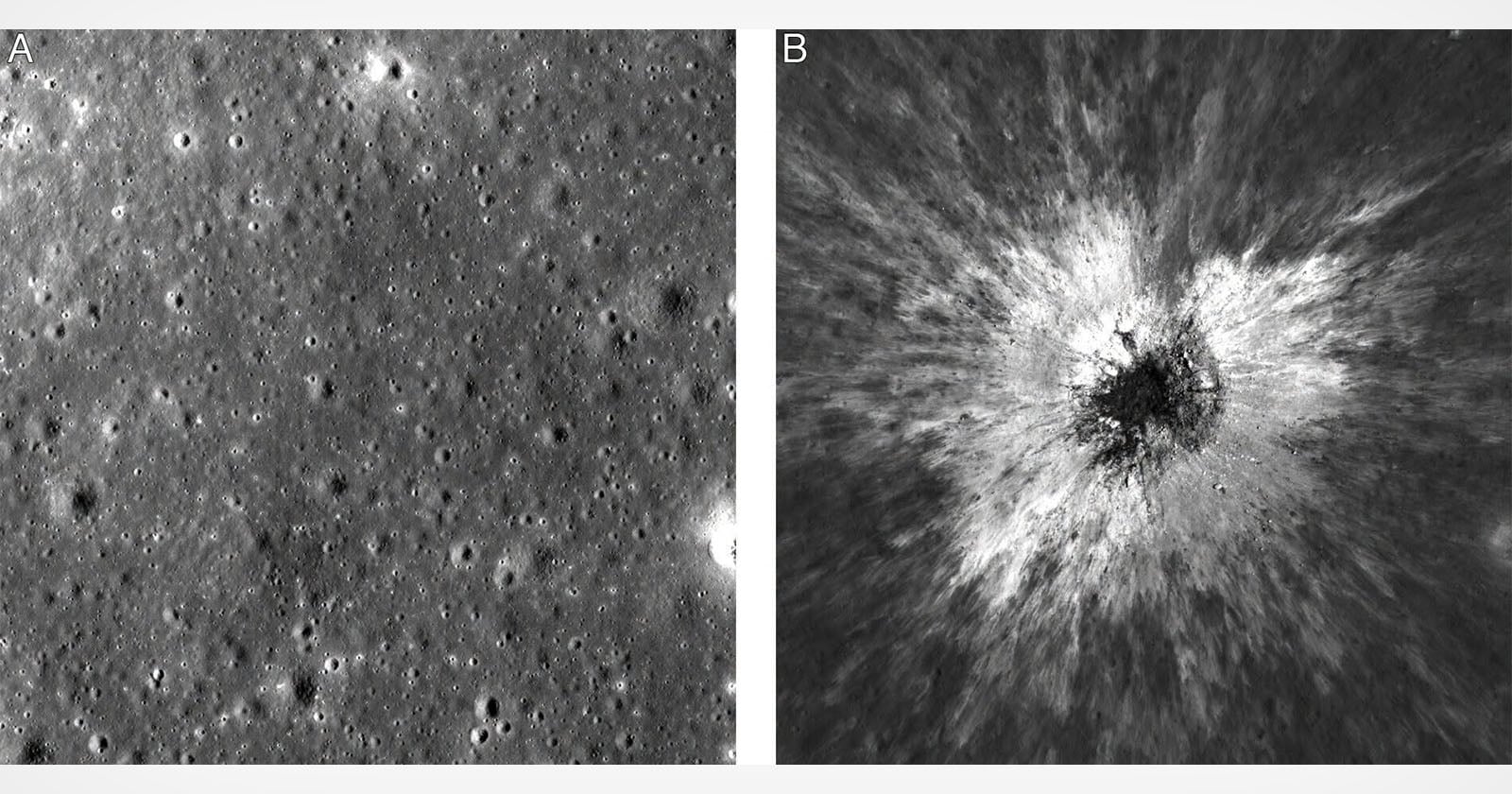
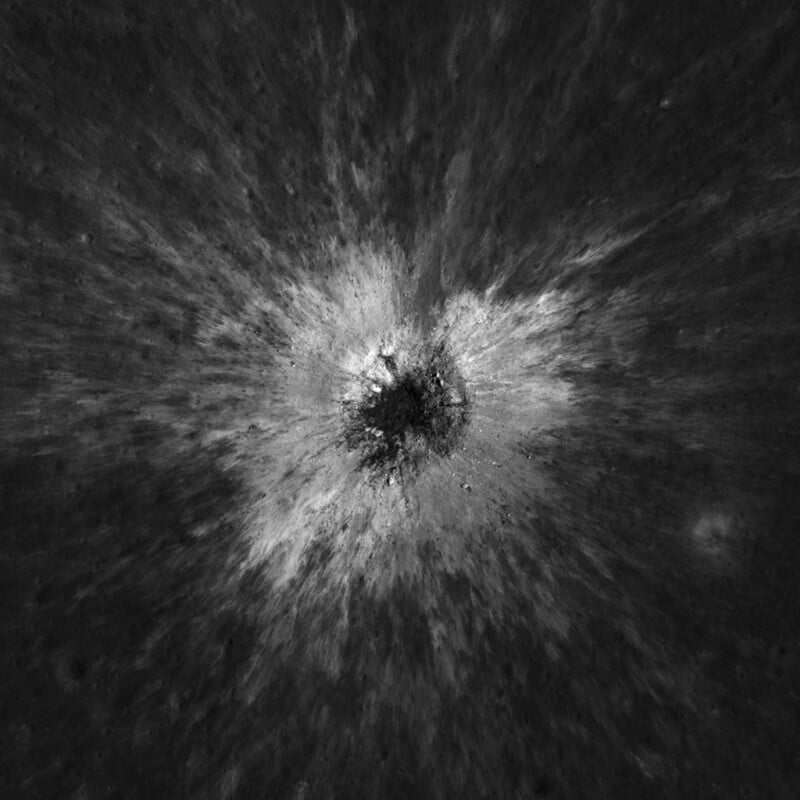
However, the confirmation process was methodical. While the initial wide-angle observations sparked curiosity, it was not until August 2025—following an exhaustive review of the immense volumes of data transmitted by the LRO—that researchers definitively categorized the feature as a significant new impact crater. High-resolution imagery captured in early 2026 provided the final verification, allowing scientists to map the crater’s geometry and the dramatic dispersion of ejecta.
Geomorphology and Scientific Significance
The McGetchin crater is not merely a hole in the ground; it is a complex geological site. The impact event displaced immense volumes of material, casting dust and shattered bedrock across a radius of more than 60 miles. The contrast between the crater’s bright, fresh material and the surrounding, older, weathered lunar surface provides a rare "control" environment. Because scientists have clear baseline images of the terrain taken before the impact, they can now perform a comparative analysis of lunar surface degradation, erosion rates, and the dynamics of material displacement in a vacuum environment.
Located near the boundary of the Moon’s dark, basaltic plains—known as maria—and its lighter-toned, ancient highlands, the crater offers a unique opportunity to study how impact processes vary depending on the substrate composition. This geological juxtaposition is highly valuable to geologists, as it allows for the observation of how different lunar materials behave under extreme mechanical stress and thermal shock.
The Role of the Lunar Reconnaissance Orbiter
The LRO remains one of NASA’s most productive assets. Since its arrival in lunar orbit nearly two decades ago, it has mapped the lunar surface with a level of detail that has redefined our understanding of the Moon’s history. The discovery of the McGetchin crater serves as a testament to the longevity and utility of the spacecraft.
The LRO’s ability to conduct long-term monitoring has also allowed it to differentiate between natural and anthropogenic impacts. Earlier in 2026, the LRO identified a crater generated by the impact of a SpaceX rocket body. By contrasting such man-made impacts with the natural, high-energy event of the McGetchin crater, researchers can better calibrate their models for crater formation, depth-to-diameter ratios, and the mechanics of impact-induced seismic waves.
Future Exploration and In-Situ Analysis
While orbital imagery provides a macroscopic view, researchers are already discussing the potential for ground-level investigation. Tyler Powell, the lead author of one of the studies, emphasizes that current orbital data, while revolutionary, represents only the beginning of the inquiry.
"Observations from the surface would be really valuable because they would allow us to correlate what we see and map from orbit with small-scale changes to surface texture, the distribution of ejected material, and other properties that can only be studied in detail from the surface," Powell explained. Such an expedition would allow for the collection of samples from the ejecta blanket, providing scientists with fresh, unweathered material that has been excavated from deep beneath the lunar surface by the impact.
By analyzing these samples, planetary scientists could gain insight into the age of the local bedrock and the chemical composition of the impactor itself, which may provide clues regarding the population of near-Earth objects that pose potential risks to our planet.
Broader Implications for Planetary Defense
The McGetchin crater event underscores the inherent unpredictability of the inner solar system. While this impact occurred on the Moon, it serves as a stark reminder of the kinetic energy constantly traversing the celestial neighborhood. For NASA and other global space agencies, the study of such craters is not purely academic; it is a critical component of planetary defense.
Understanding the size and velocity of the object that created the McGetchin crater helps refine the mathematical models used to predict the effects of asteroid impacts on Earth. By analyzing the "freshness" of the ejecta and the structural integrity of the crater walls, scientists can better estimate the energy yield of the impactor. This data is vital for assessing the risks associated with Near-Earth Objects (NEOs) and developing strategies to mitigate potential threats.
Furthermore, the "once-in-a-century" nature of the event highlights the necessity of persistent surveillance. As human activity on the Moon increases through programs like Artemis, the need for real-time monitoring of the lunar environment becomes a safety imperative. Future lunar habitats and infrastructure will be exposed to the same kinetic environment that produced the McGetchin crater. Learning how to identify these events early and understanding their local effects is essential for the long-term sustainability of human presence on the lunar surface.
Conclusion
The discovery of the McGetchin crater by NASA’s LRO is a monumental milestone in lunar science. It provides a rare, documented case study of a significant impact event that allows for a comprehensive before-and-after analysis of surface modification. As the scientific community continues to analyze the high-resolution imagery and data, the insights gained from this "once-in-a-lifetime" observation will undoubtedly inform our understanding of planetary formation, the evolution of the Moon, and the dynamics of the inner solar system for years to come. The crater stands not just as a mark of a violent encounter between celestial bodies, but as a gateway to new knowledge about the dynamic, ever-changing nature of the world that orbits our own.

