


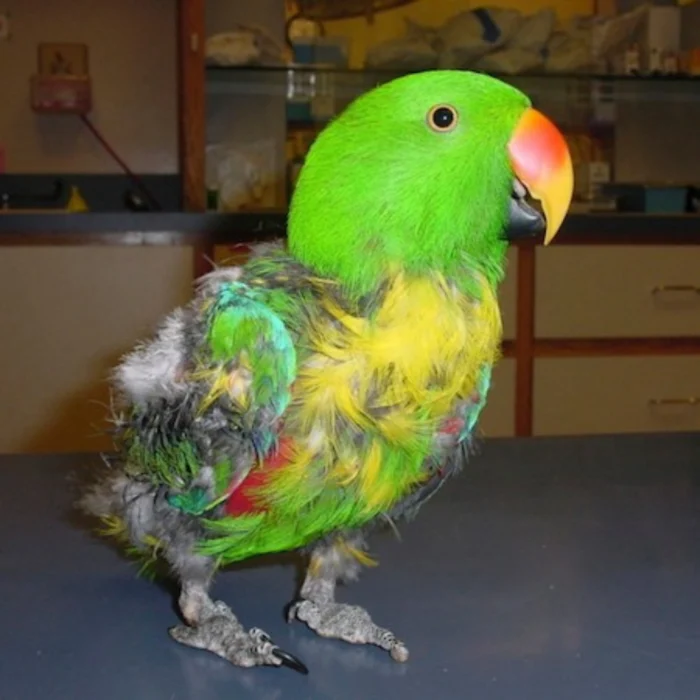
On March 18, 2026, Dr. M. Scott Echols, a distinguished Diplomate of the American Board of Veterinary Practitioners (Avian Practice), announced that the latest clinical webinar focusing on foraging and environmental enrichment has received formal accreditation from the American Association of Veterinary State Boards (AAVSB) Registry of Approved Continuing Education (RACE). This development marks a significant milestone for veterinary professionals seeking to enhance their clinical competencies regarding the physiological and psychological welfare of captive avian species. The accreditation ensures that participants receive one hour of recognized continuing education credit, a critical requirement for maintaining licensure in many jurisdictions across North America.
The Evolution of Avian Enrichment Protocols
The integration of foraging and environmental enrichment into standard veterinary care is not merely a modern preference; it is a clinical imperative. In the wild, psittacines and other avian species spend the vast majority of their waking hours engaged in foraging behaviors. When these animals are placed in captive environments without adequate stimulation, the resulting sedentary lifestyle and lack of cognitive challenge often manifest as stereotypic behaviors, feather destructive tendencies, and metabolic disorders.
Dr. Echols’ curriculum addresses these concerns by bridging the gap between basic husbandry and advanced clinical application. The webinar series explores the intersection of ultraviolet (UV) radiation, light cycles, and behavioral engagement. By utilizing scientific data to demonstrate how UVB light influences vitamin D3 metabolism and calcium homeostasis, the course provides a holistic framework for treating avian patients. The recent AAVSB RACE approval underscores the rigor of this curriculum, validating that the material meets the high standards required for professional veterinary development.
A Chronology of Veterinary Education Standards
The journey toward standardized avian care has been a gradual process spanning several decades. In the early 2000s, avian veterinary medicine was often relegated to an elective or niche field within larger veterinary practices. However, as the population of companion birds grew, so did the demand for specialized, evidence-based medical oversight.
- 2010–2015: Increased research into the circadian rhythms of captive birds revealed that standard indoor lighting was insufficient, leading to widespread hormonal and behavioral imbalances.
- 2018: The first major industry-wide push to formalize "Enrichment Standards" began, spearheaded by organizations like LafeberVet to centralize peer-reviewed data.
- 2022: AAVSB began tightening its criteria for RACE approval, requiring more interactive, measurable outcomes for online continuing education.
- March 2026: The official approval of the Foraging and Enrichment webinar represents the current peak of this movement, ensuring that practitioners are not only learning theory but are also evaluated through post-test assessments to confirm knowledge retention.
Data-Driven Insights: Why Foraging Matters
The curriculum emphasizes that enrichment is not synonymous with "entertainment." Foraging is a survival mechanism. Clinical studies cited within the program indicate that birds provided with complex, food-based foraging puzzles demonstrate a 30% reduction in cortisol-related stress markers compared to those provided with passive environmental enrichment.
Furthermore, the integration of light therapy is a core component of the syllabus. Scientific literature supports the fact that birds possess tetrachromatic vision, allowing them to perceive the ultraviolet spectrum. Standard household lighting, which lacks these wavelengths, effectively leaves birds in a state of sensory deprivation. By educating veterinarians on the installation and maintenance of appropriate full-spectrum lighting, Dr. Echols aims to mitigate common endocrine issues that frequently lead to egg binding, reproductive disease, and chronic lethargy in avian patients.
Institutional Responses and Professional Impact
The approval by the AAVSB RACE program is a validation of the pedagogical structure utilized by the platform. By requiring a post-test with a limited number of attempts, the program ensures that attendees are engaged with the material rather than simply viewing it passively.
For the veterinary professional, this accreditation offers more than just a credit hour. It provides a standardized baseline of knowledge that can be applied immediately in a clinical setting. Practice managers and clinic owners have noted that staff members who undergo this training are better equipped to educate clients during annual examinations. This "trickle-down" effect—from the veterinarian to the client, and finally to the bird—is the ultimate goal of the initiative.
"The objective is to move beyond the anecdotal," says a representative familiar with the accreditation process. "By tying behavioral enrichment to the physical health of the patient, we provide practitioners with a clear, clinical justification for recommending these lifestyle changes to owners."
Broader Implications for Avian Welfare
The implications of this certification are far-reaching. As veterinary practices continue to adopt these standards, the overall quality of life for companion birds is expected to improve. The correlation between environmental enrichment and physical health outcomes is becoming increasingly clear in longitudinal studies. Chronic stress, which is often dismissed as a behavioral quirk, is now recognized as a precursor to physical ailments such as atherosclerosis, hepatic lipidosis, and immune suppression.
Furthermore, the standardization of this curriculum helps to harmonize care across different clinics. When a client moves to a new city or changes veterinary providers, having a unified, evidence-based approach to avian enrichment ensures continuity of care. This is particularly important for species with high cognitive needs, such as African Greys and Cockatoos, which are notoriously sensitive to changes in their environment.
Accessibility and the Digital Learning Model
The platform hosting this content, LafeberVet, has prioritized accessibility. By offering materials in multiple languages, including French and Spanish, the organization is fostering a global standard of care. The login-protected portal serves as a digital library where practitioners can revisit the material, download supplementary resources, and ensure their knowledge base remains current with the latest peer-reviewed research.
The necessity for such a model is evident in the current veterinary landscape. With high workloads and limited time for travel to in-person conferences, on-demand webinars provide a flexible alternative that does not sacrifice academic depth. The AAVSB RACE approval confirms that digital platforms can meet the same high bar as traditional classroom settings, provided the content is robust and the testing mechanisms are secure.
Future Directions in Avian Medicine
As the field progresses, the focus is likely to shift toward more individualized enrichment plans based on genetic predispositions and life stages. Future iterations of this coursework may incorporate interactive diagnostic tools that allow veterinarians to input specific patient data to generate tailored foraging protocols.
The integration of technology in the veterinary office—such as smart lighting systems and automated foraging devices—is also expected to play a larger role. As these technologies become more affordable, the guidance provided by trained veterinary professionals will be crucial in ensuring they are implemented safely and effectively.
Conclusion: A Standard of Excellence
The approval of the Foraging and Enrichment webinar by the AAVSB RACE is a testament to the ongoing evolution of avian medicine. By elevating the standard of continuing education, the veterinary community is better positioned to address the complex needs of avian patients. This program serves as a critical resource for veterinarians and technicians who are committed to evidence-based practice and the long-term well-being of the birds under their care.
For those interested in pursuing this certification, the process is straightforward: register as a member, complete the educational module, and successfully pass the associated assessment. The resulting certification is not merely a professional credential; it is a commitment to a higher standard of care, ensuring that avian medicine continues to advance in lockstep with the needs of its patients and the expectations of the public. Through consistent, high-quality education, the veterinary profession continues to demonstrate its dedication to animal welfare, proving that even in the specialized world of avian care, the pursuit of knowledge remains the most effective tool in the clinician’s arsenal.

