


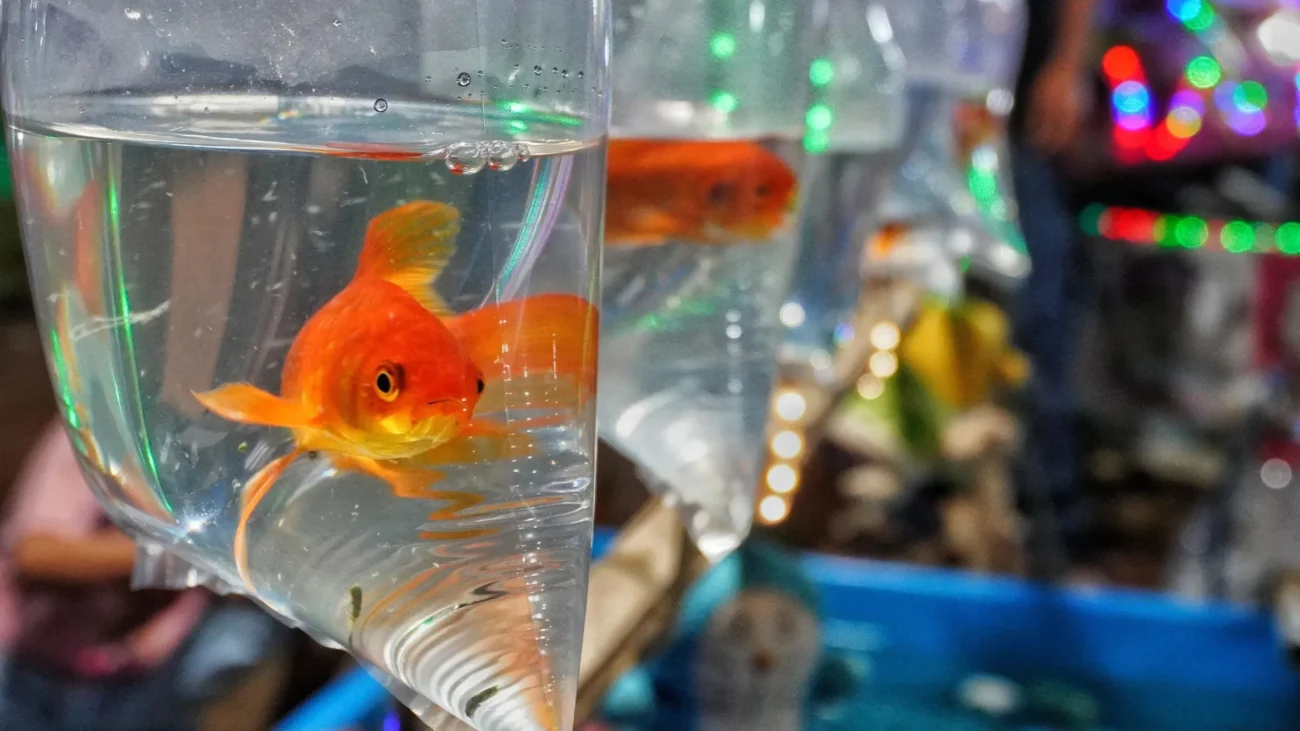
The tranquil image of a discarded pet goldfish swimming freely in a local pond or lake has long been dismissed by the general public as a harmless act of misplaced compassion. However, a groundbreaking peer-reviewed study conducted by collaborative researchers from The University of Toledo (UToledo) and the University of Missouri has dismantled that comforting myth. Published in the esteemed Journal of Animal Ecology, the research provides some of the most rigorous and conclusive experimental evidence to date that common household goldfish (Carassius auratus) can act as destructive ecological catalysts, capable of fundamentally altering freshwater lake environments and triggering irreversible environmental degradation.
The findings carry urgent, far-reaching warnings for pet owners, commercial pet industry stakeholders, natural resource managers, and environmental policymakers worldwide. While goldfish remain one of the most ubiquitous and unassuming household pets, the new research demonstrates that their seemingly docile nature indoors belies a profound ecological threat once they are introduced into the wild. As global aquatic trade continues to move species across continents at unprecedented rates, scientists are ramping up calls for stricter regulations, heightened public education, and proactive management strategies to prevent ornamental pets from transforming into apex environmental pests.
The Experimental Framework: Replicating Real-World Lake Dynamics
To arrive at these definitive conclusions, the research team—led by Dr. William Hintz, associate professor in UToledo’s Department of Environmental Sciences and Lake Erie Center, alongside Hannah Barrett and Dr. Rick Relyea of the University of Missouri—undertook a sophisticated and rigorous experimental undertaking. Titled "Invasive goldfish trigger a regime shift in experimental lake ecosystems of varying trophic state," the project utilized large outdoor freshwater mesocosms. These standardized, controlled enclosures were specifically designed to mimic real-world lake conditions, allowing scientists to observe complex ecological interactions over extended periods without the uncontrollable variables of an open-water system.
The researchers carefully introduced goldfish into these experimental ecosystems to monitor how the species impacts two distinct and common freshwater conditions: oligotrophic waters, which are characteristically nutrient-poor and clear, and eutrophic waters, which are nutrient-rich and prone to dense biological activity. By testing the fish across these varying trophic states, the research team aimed to determine whether the environmental impact of goldfish would remain consistent regardless of a lake’s baseline nutrient levels.
The results were unequivocal. In both nutrient-poor and nutrient-rich environments, the introduction of goldfish caused substantial, measurable ecological disruption. The fish exerted pressure through multiple pathways simultaneously, altering water quality, shifting the composition of phytoplankton, disrupting delicate invertebrate communities, encouraging the growth of troublesome filamentous algae, and directly deteriorating the health and condition of native fish species competing for the same finite resources.
Separating Correlation from Causation: The Definitive Evidence
In ecological research involving invasive species, a persistent challenge is isolating the specific impact of a single species from broader environmental variables—such as the simple presence of more fish biomass in a given body of water. To address this methodological hurdle, Dr. Hintz and his colleagues incorporated both additive and substitutive experimental designs into their study.
This meticulous approach allowed the scientists to carefully separate the negative effects specifically attributable to goldfish from general ecological pressures associated with high fish abundance. The resulting data analysis yielded a critical distinction: while minor fluctuations in aquatic vegetation could occasionally be linked to total fish biomass, the most severe, systemic ecological damage was directly and exclusively connected to the presence of goldfish.
Furthermore, the study documented a phenomenon well-known to ecologists yet rarely captured with such experimental precision: a ecological "regime shift." A regime shift occurs when an ecosystem absorbs cumulative stressors until it crosses a critical threshold, prompting a rapid, widespread reorganization into a fundamentally different, and typically degraded, baseline state. For freshwater bodies, this often manifests as a transition from clear, macrophyte-dominated lakes to turbid, algae-choked systems devoid of biodiversity. Once a freshwater ecosystem crosses this threshold into a degraded regime, the financial and logistical costs of ecological restoration skyrocket, often requiring decades of active intervention and management to reverse the damage.
The Biological Mechanism: Why Domestic Pets Become Wild Invaders
To understand why a small, ornamental fish can inflict such heavy damage, researchers point to the biological traits of the goldfish. Despite centuries of selective breeding in captivity, Carassius auratus retains many of the hardy survival traits of its wild carp ancestors. When released into natural ponds, rivers, or lakes—or when they inadvertently escape during seasonal flooding events—goldfish do not simply struggle and die. Instead, they exploit local resources, grow rapidly into surprisingly large adults, and multiply.
"If goldfish are released into the wild, they rapidly grow into very large fish that stir up lake sediments, consume large numbers of prey, and compete with native fish," explained Dr. Rick Relyea, professor in the University of Missouri College of Agriculture, Food and Natural Resources and director of Mizzou’s Johnny Morris Institute of Fisheries, Wetlands and Aquatic Systems, as well as a co-author of the study.
The physical act of bottom-feeding and foraging by large goldfish continuously disturbs fine lake sediments, suspending particulate matter into the water column and drastically reducing water clarity. This increased turbidity blocks sunlight from reaching submerged native aquatic plants, effectively starving them. Simultaneously, the foraging behavior releases trapped nutrients—such as phosphorus and nitrogen—from the sediment back into the water, fueling massive, choking blooms of phytoplankton and filamentous algae that further degrade water quality and deplete dissolved oxygen levels.
Historical Context and the Global Pet Trade Crisis
The issue of released goldfish is not an isolated local nuisance but a symptom of a massive global trade in ornamental aquatic species. For decades, millions of goldfish have been bred, transported, and sold globally. While the vast majority remain safely enclosed in indoor aquariums and backyard garden ponds, a significant fraction finds its way into public waterways.
Historically, natural resource managers have struggled to convey the gravity of this issue to the public. Animal abandonment laws frequently target dogs, cats, and livestock, while the release of small fish, turtles, and aquarium plants has often slipped through regulatory enforcement gaps and public awareness campaigns. Environmental agencies across North America, Europe, and Asia have increasingly reported finding "monster goldfish"—some weighing several pounds and measuring over a foot in length—thriving in municipal stormwater ponds, urban rivers, and delicate Great Lakes coastal wetlands. These feral populations demonstrate a remarkable resilience to extreme temperatures, low oxygen levels, and pollution, making eradication efforts exceptionally difficult and resource-intensive once established.
Calls for Prevention, Policy Reform, and Public Education
In light of the empirical evidence presented in the Journal of Animal Ecology, the study’s authors are advocating for an immediate shift in how environmental authorities and the public view goldfish. The researchers argue that goldfish must be formally recognized and prioritized as high-impact invasive species by natural resource management agencies at local, state, and federal levels.
Rather than relying on costly and frequently ineffective eradication programs after populations have established themselves in the wild, agencies should focus upstream on prevention, early detection, and rapid response protocols. Intercepting the pathway of introduction—pet release—remains the single most effective defense mechanism against the proliferation of aquatic invasive species.
"It is critically important to inform the public that their pets can become pests that will harm freshwater ecosystems," Dr. Hintz emphasized. "The evidence is now clear—releasing a goldfish into the wild might be seen as an act of kindness, but it can turn into a major ecological threat."
To combat the trend, researchers and conservationists are urging pet industry retailers, municipal authorities, and educational institutions to ramp up public awareness campaigns. Consumers must be thoroughly educated on the long-term commitments required for pet ownership and the severe environmental consequences of dumping unwanted animals into natural bodies of water.
For pet owners who can no longer care for their goldfish, the scientific community and wildlife agencies offer clear, responsible alternatives. Rather than opening a carton or net near a local stream, individuals are encouraged to return unwanted fish to a commercial pet store, find another hobbyist or local school willing to adopt the aquarium, or consult with state and provincial wildlife authorities for safe, humane surrender options.
Broader Implications for Environmental Management and Biodiversity
As global biodiversity faces compounding pressures from climate change, habitat loss, and pollution, the introduction of biological pollutants like invasive goldfish represents an entirely preventable crisis. The UToledo and University of Missouri study underscores the reality that small-scale individual actions—when aggregated across millions of households—can drive macro-level ecological collapse.
The documentation of regime shifts caused by goldfish highlights the fragile equilibrium of freshwater habitats. Lakes and ponds provide essential ecosystem services, including drinking water supply, recreational spaces, agricultural irrigation, and critical habitats for native fish, amphibians, and migratory birds. When an invasive species destabilizes this baseline, the cascading economic and ecological consequences ripple across entire regional watersheds.
Moving forward, policymakers face mounting pressure to strengthen regulations surrounding the sale and disposal of exotic pet species. By bridging the gap between rigorous scientific research and public policy, environmental managers hope to curb the tide of ornamental invasions, protecting fragile aquatic ecosystems before they cross the threshold into irreversible degradation.

