


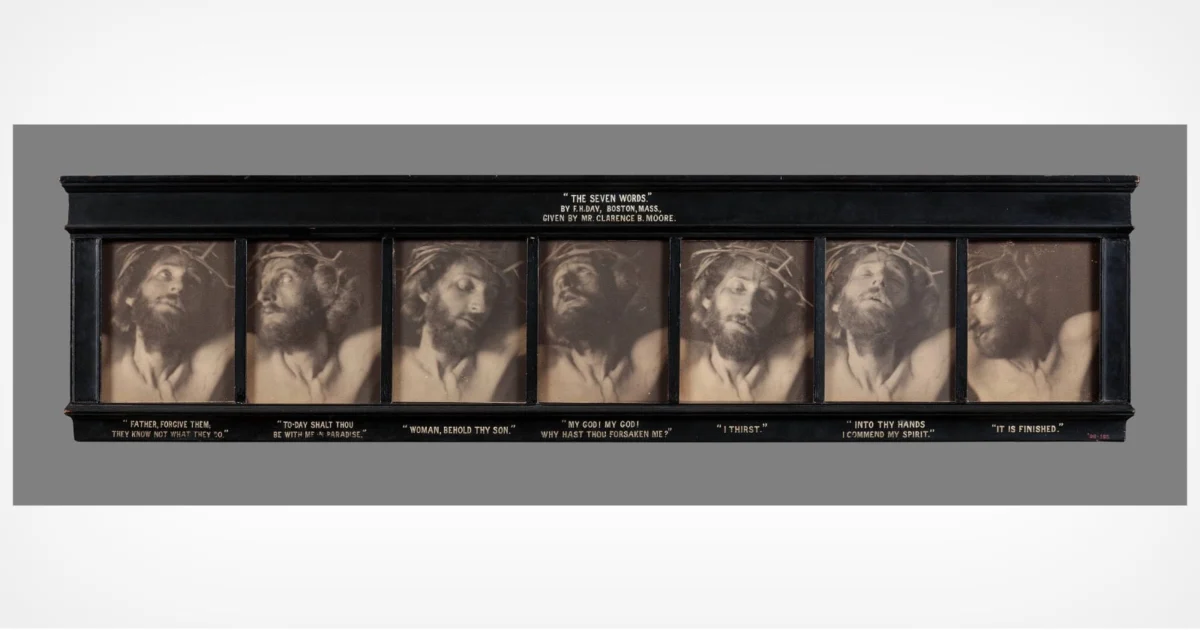
The Toledo Museum of Art has officially announced the acquisition of F. Holland Day’s seminal 1898 photographic series, The Seven Words. This acquisition, which stands as the most expensive photographic purchase in the institution’s history, marks a significant milestone in the museum’s efforts to recontextualize the history of American art. While F. Holland Day was a titan of the Pictorialist movement in the late 19th century, his legacy has long been overshadowed by his more prolific rival, Alfred Stieglitz. By securing one of only three known sets of these platinum prints, the Toledo Museum of Art is not merely adding to its collection; it is reasserting the radical, boundary-pushing nature of early fine-art photography.
A Legacy Reclaimed: Who Was F. Holland Day?
Born in 1864 in Norwood, Massachusetts, Fred Holland Day was a multifaceted figure: a publisher, an aesthete, and, most importantly, one of the earliest champions of photography as a legitimate medium for high art. During the 1890s, the prevailing sentiment in the art world was that photography was a mechanical process—a tool for documentation rather than creative expression. Day, influenced by the Symbolist movement and his own intense, often provocative sensibilities, sought to dismantle this hierarchy.
Unlike his contemporaries who focused on landscapes or urban life, Day gravitated toward the theatrical, the religious, and the deeply personal. He became an early adopter of "Pictorialism," a style that emphasized soft focus, atmospheric effects, and artistic manipulation of the print to mimic the aesthetic qualities of paintings and etchings. His dedication to the craft was total; he once famously grew his hair out, engaged in grueling fasting, and donned custom-made robes to embody the figures he captured in his lens.
The Genesis of The Seven Words
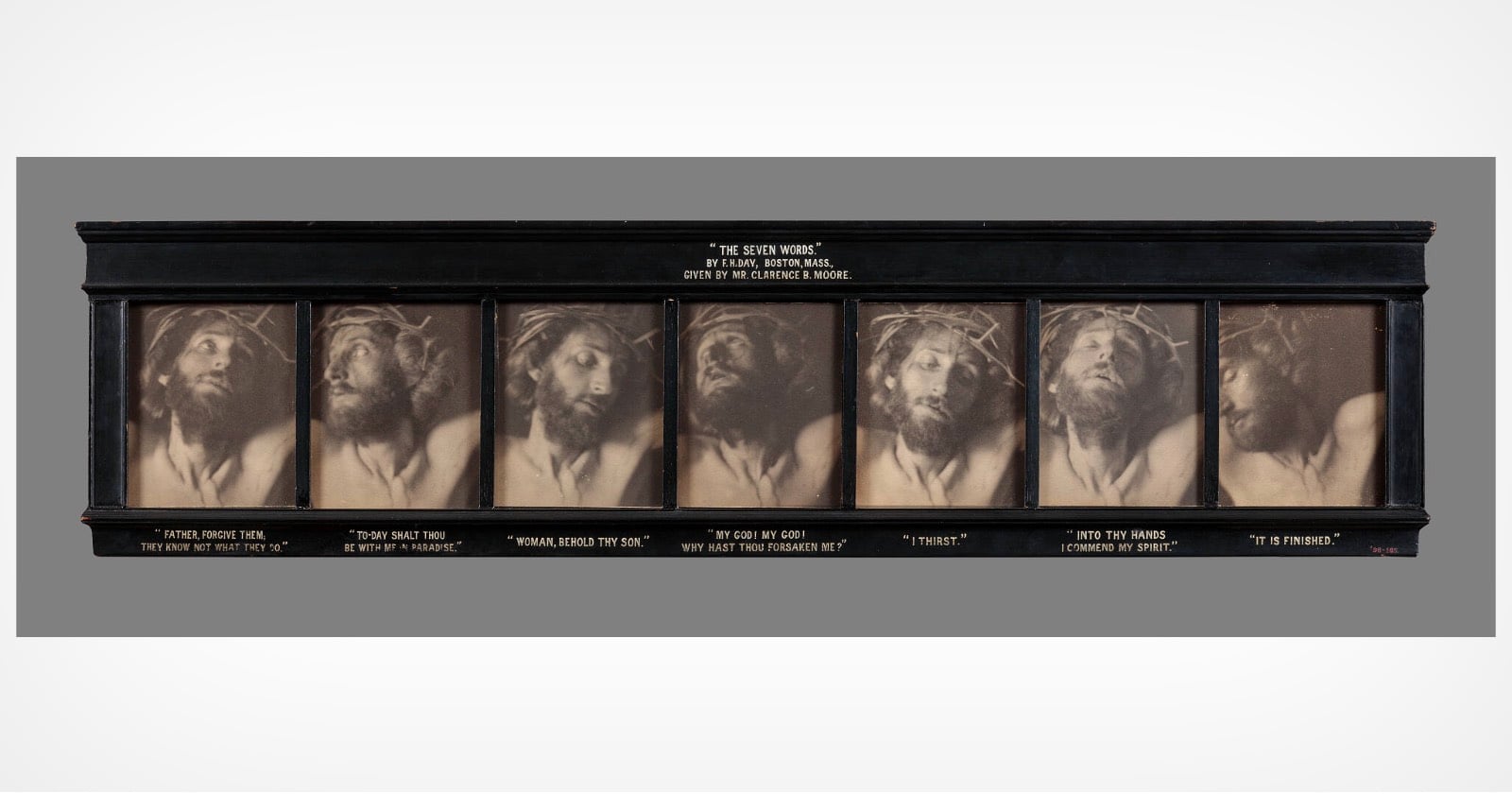
Between 1896 and 1898, Day embarked on his most ambitious endeavor: a photographic reinterpretation of the Crucifixion of Christ. Titled The Seven Words, the series consists of seven distinct platinum prints. Each image corresponds to one of the traditional "seven last words" or utterances of Jesus on the cross, as recounted in the Gospels.
The production was a feat of early 20th-century art direction. Day enlisted the help of neighbors in Massachusetts to stage an elaborate, outdoor recreation of the Calvary scene. He went to extraordinary lengths to ensure authenticity, including the use of historically informed costumes and a custom-built mirror attachment for his camera, which allowed him to maintain control over his framing and expression while appearing in front of the lens.
The technical difficulty of this project cannot be overstated. According to records, Day produced approximately 250 plate studies in his quest to capture the perfect composition. Of these, only a dozen were considered successful enough to be included in the final portfolio. The resulting platinum prints are noted for their incredible tonal range, featuring deep, rich blacks and delicate highlights that often lead viewers to mistake them for charcoal drawings at first glance.
A Timeline of Recognition and Obscurity
The history of The Seven Words is a study in shifting cultural tides:
- 1898: The series makes its debut at the first Philadelphia Photographic Salon at the Pennsylvania Academy of the Fine Arts. The exhibition is met with immediate controversy, as critics debate the ethics and legitimacy of using the camera—an instrument of modern science—to depict sacred religious events.
- Early 1900s: Day’s influence remains strong for a brief window, but as Alfred Stieglitz begins to organize the Photo-Secessionist movement and establish the influential journal Camera Work, the artistic narrative shifts. Stieglitz’s vision of photography, which moved away from theatrical staging toward a more "straight" and modern aesthetic, eventually dominates the canon.
- 1933: F. Holland Day dies, and his work begins to drift into the periphery of art history. While his peers are frequently included in major surveys of photography, Day is often relegated to a footnote or an outlier of the Pictorialist movement.
- 2026: The Toledo Museum of Art officially acquires the series, sparking a renewed scholarly interest in Day’s role as a pioneer of performance art and self-portraiture.
Institutional Significance and Strategic Impact
For the Toledo Museum of Art, the acquisition is a strategic move to address a noted gap in its permanent collection. Erin Corrales-Diaz, the museum’s curator of American art, has been a driving force behind the acquisition, noting that the museum’s holdings of early, avant-garde photography were previously insufficient to tell the full story of the medium’s evolution.
"Today, we’re so inundated with photography that we forget its original exploratory nature," Corrales-Diaz noted in recent statements. "If sculpture and painting could depict religious subjects, why not photography?"
The museum’s director, Adam M. Levine, has framed the acquisition as a correction to the historical record. By positioning The Seven Words alongside the history of performance art and the burgeoning language of cinema, the museum is providing its visitors with a new lens through which to view late 19th-century innovation. The work will be a focal point of the museum’s upcoming reinstallation, scheduled for next year.
Fact-Based Analysis: Why This Matters Now
The significance of this acquisition extends beyond the aesthetic quality of the prints. It highlights the shifting valuation of historical photography. In recent years, the market for 19th-century masterworks has seen a resurgence, but the value here is primarily academic and cultural.
By securing one of the only three known original sets—the others being held at the Metropolitan Museum of Art in New York and the Museum of Fine Arts, Boston—the Toledo Museum of Art has cemented its status as a destination for serious photographic research. The work challenges the modern viewer to reconcile the "mechanical" nature of the camera with the "subjective" nature of performance.
Furthermore, the acquisition serves as a commentary on the nature of art-historical canonization. The eclipse of Day by Stieglitz serves as a reminder that the history of art is rarely a neutral process of selection; it is often driven by the personalities, institutional backing, and stylistic preferences of the era. In reclaiming Day, the Toledo Museum of Art is not simply purchasing an object; it is reclaiming an entire branch of photographic history that was sidelined by the triumph of modernism.
Broader Implications for Museums
The move by the Toledo Museum of Art mirrors a broader trend among regional American museums to invest in "hidden" masterworks. As the costs for contemporary works continue to rise, and the provenance of famous 20th-century pieces becomes more complicated, institutions are increasingly looking to the 19th century to fill gaps in their narratives.
The Seven Words is more than a photograph; it is an artifact of a moment when the boundaries of art were being redrawn. By treating the series with the same reverence usually reserved for Old Master paintings, the museum is making a definitive statement about the maturity of photography as an art form. As the museum prepares to reopen its permanent collection next year, this acquisition will likely serve as a centerpiece, inviting a new generation of visitors to engage with the radical spirit of F. Holland Day.
Ultimately, this purchase underscores the vital role that museums play in the preservation of cultural memory. By bringing a "lost" masterpiece back into the public eye, the Toledo Museum of Art ensures that the complexities and contradictions of the past remain accessible, challenging contemporary audiences to rethink their own perceptions of the intersection between faith, performance, and the photographic image.

