


The Oregon Supreme Court has agreed to hear a significant appeal involving Oregon Health & Science University (OHSU) and People for the Ethical Treatment of Animals (PETA), marking the latest chapter in a protracted legal battle over transparency, animal welfare, and the use of public funds. The core of the dispute centers on the university’s attempts to withhold video evidence of federally funded experiments involving alcohol consumption and social behavior in prairie voles. Following years of litigation, the state’s highest court will now determine the extent of the university’s liability regarding legal fees after a lower court found that OHSU had engaged in "undue" and "unreasonable" delays in fulfilling public records requests.
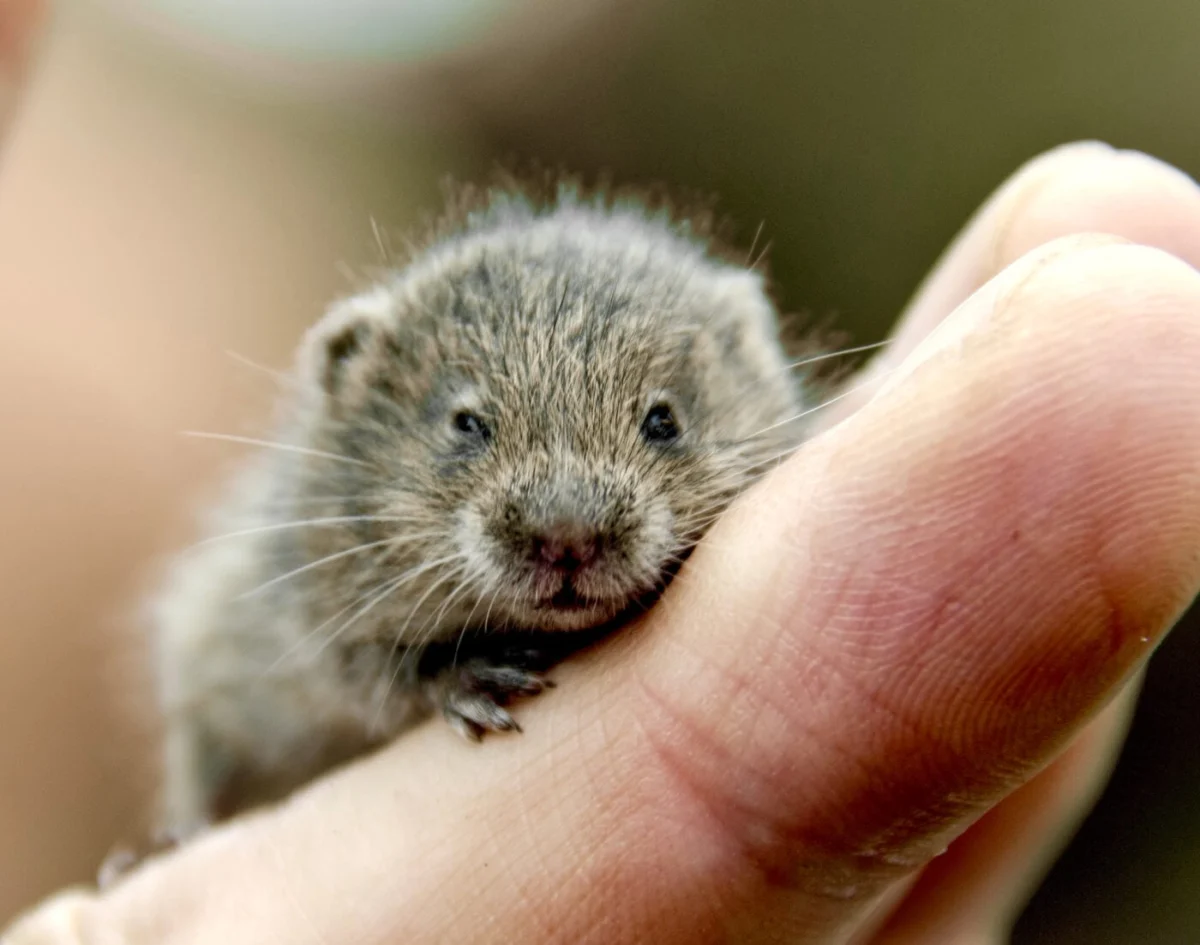
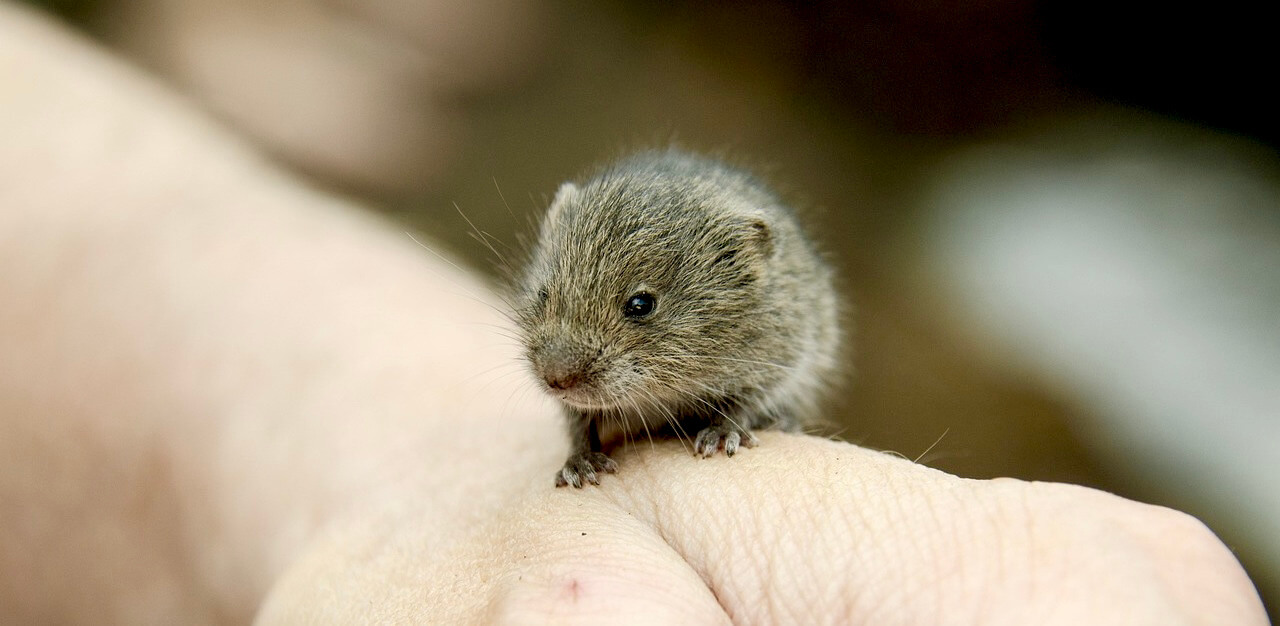
The controversy began several years ago when PETA sought access to recordings and data from research conducted by OHSU experimenter Andrey Ryabinin. The research, which received approximately $3 million in taxpayer funding through the National Institutes of Health (NIH) and the National Institute on Alcohol Abuse and Alcoholism (NIAAA), aimed to study the effects of alcohol on monogamous relationships. To facilitate this, researchers used prairie voles, a species of rodent known for forming long-term social attachments, making them a common, albeit controversial, animal model for human social behavior.
The Nature of the Volatile Experiments
The experiments at the heart of the legal conflict involved the use of approximately 150 prairie voles. Unlike many other rodents, prairie voles are socially monogamous, often staying with a single partner for life and sharing parental responsibilities. Researchers sought to determine if alcohol consumption would induce "infidelity" or alter the "pair-bonding" behavior of male voles.
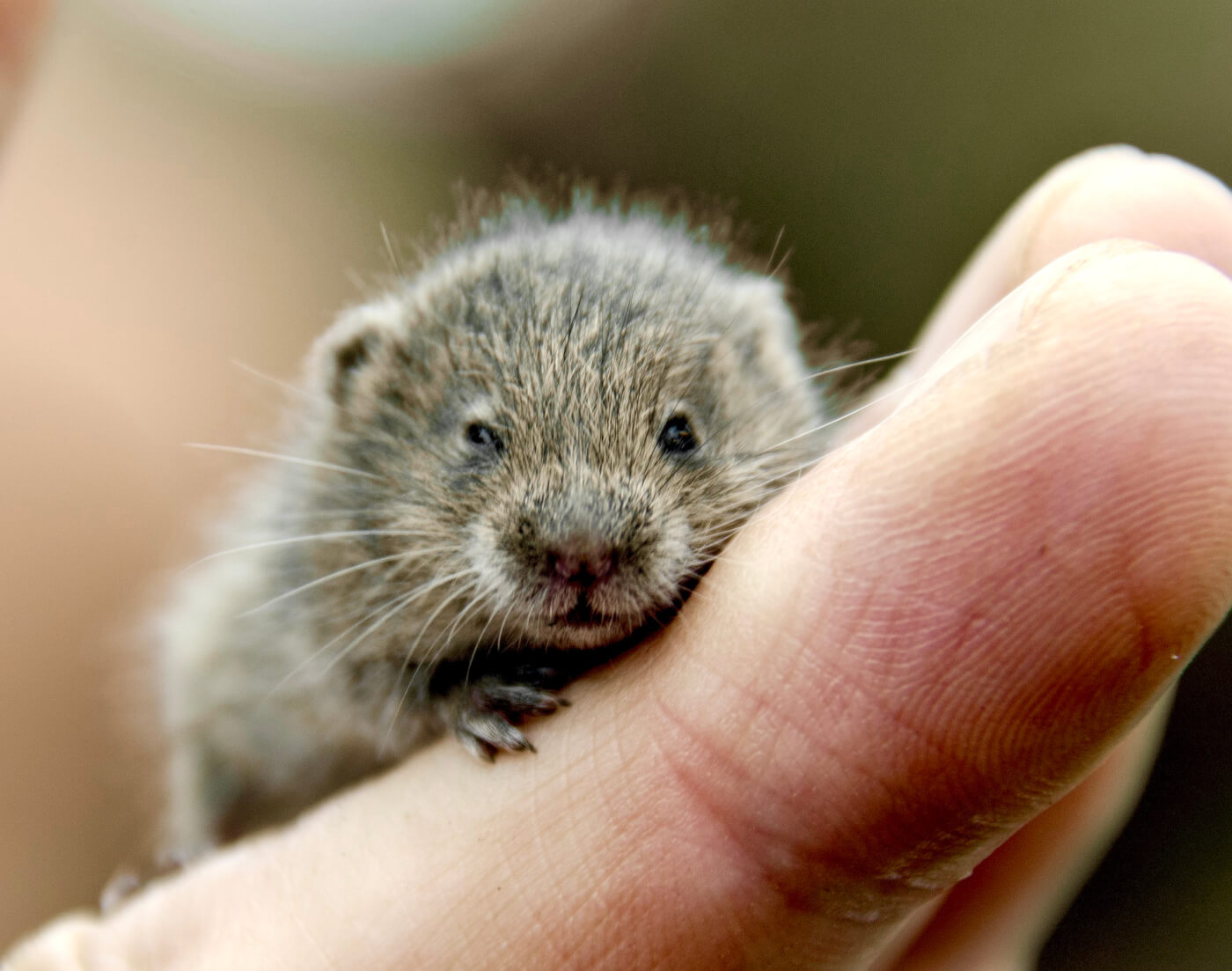
According to records eventually obtained by PETA, the voles were housed in small plastic containers. The experimental protocol involved pairing males and females for a period of one week to establish a bond. Following this brief period, the males were given access to high concentrations of alcohol. Some reports indicate that the rodents consumed the equivalent of 15 bottles of wine daily in human terms.
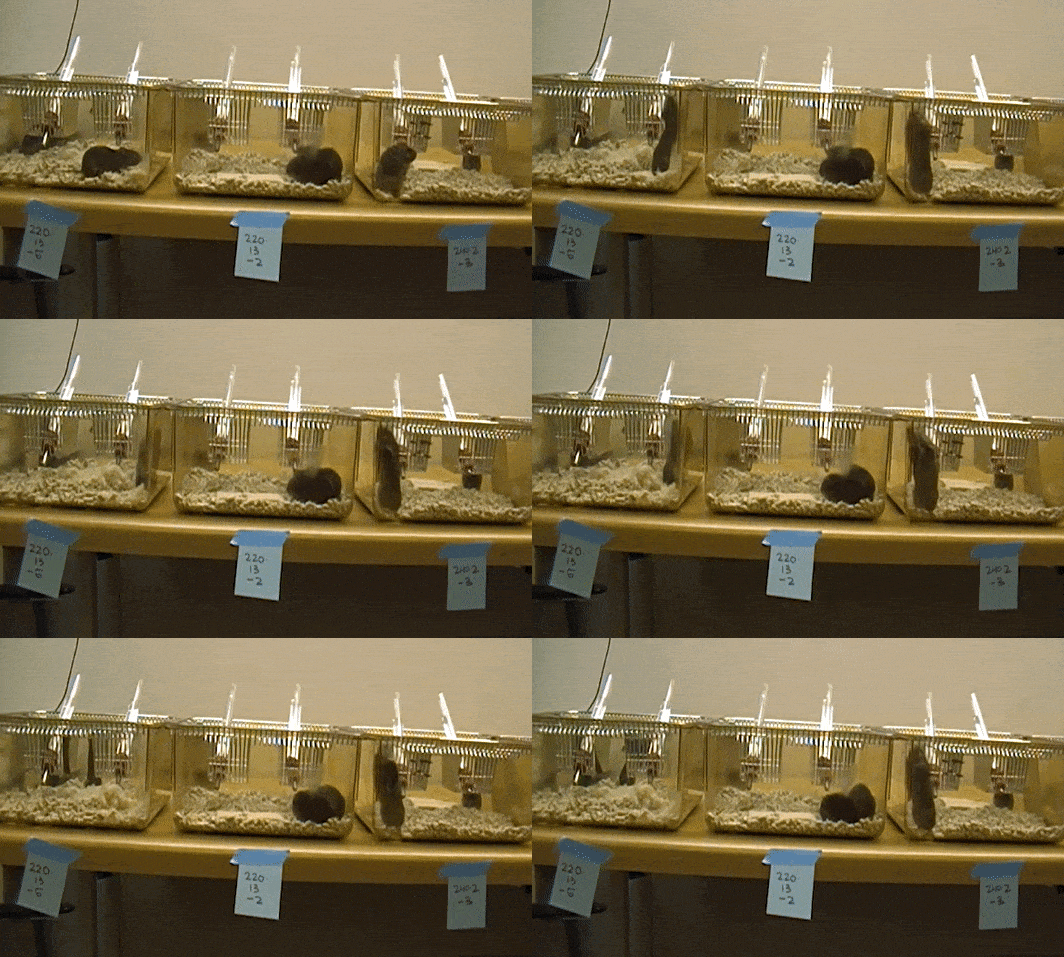
Once intoxicated, the voles were subjected to a series of behavioral assessments. One primary method was the "partner preference test." In this setup, a male vole was placed in a three-chambered apparatus. His established female partner was tethered at one end, while a "stranger" female was tethered at the other. Researchers monitored the amount of time the male spent huddling with each female to measure the impact of alcohol on his social preference.
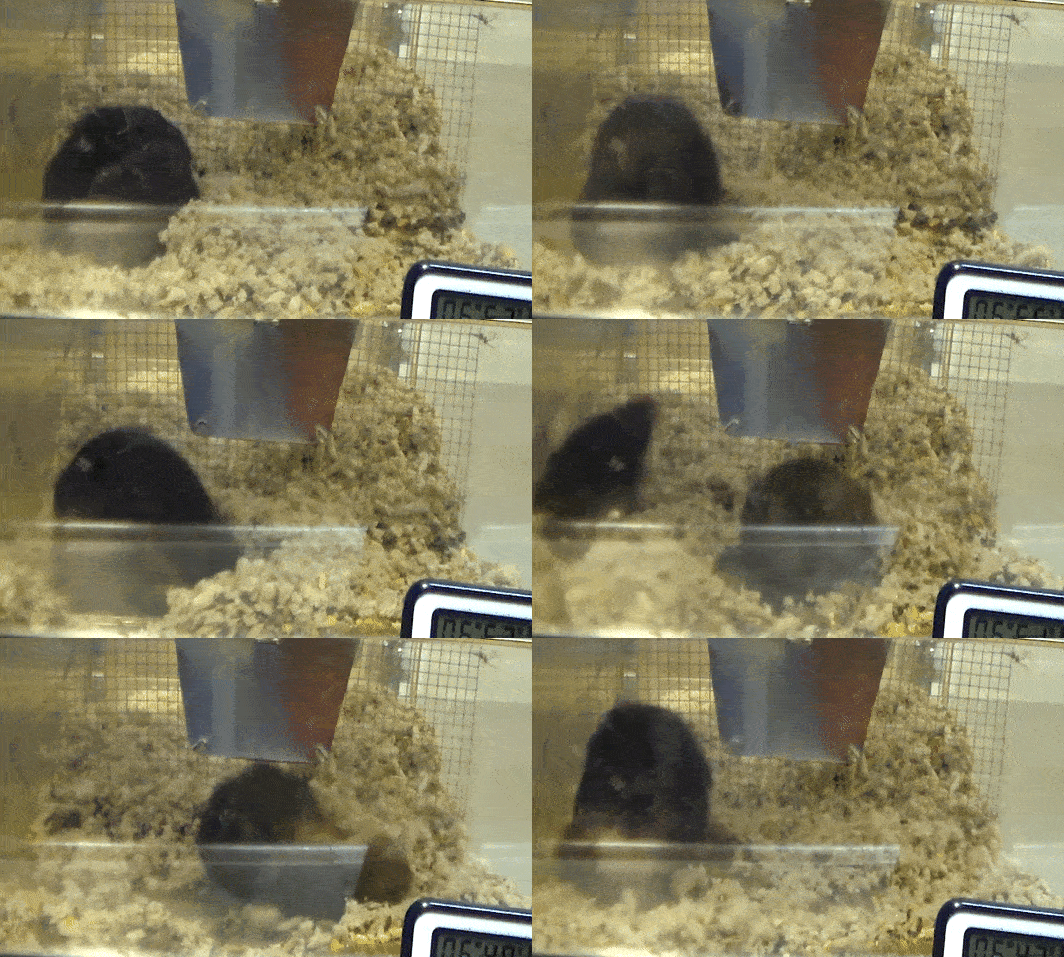
A second assessment, the "resident intruder test," was used to measure aggression. In this scenario, an unfamiliar male "intruder" was introduced into the cage of a "resident" male. Researchers recorded instances of lunging, biting, and chasing. The study concluded with the termination of all 150 voles, followed by the dissection of their brains and the examination of fetuses from any pregnant females to analyze neurological and developmental impacts.
Chronology of the Legal Dispute
The transition from a laboratory study to a landmark legal case began in 2018 when PETA submitted public records requests to OHSU. The organization sought photographs and video recordings of the vole experiments to evaluate the necessity and ethics of the research.
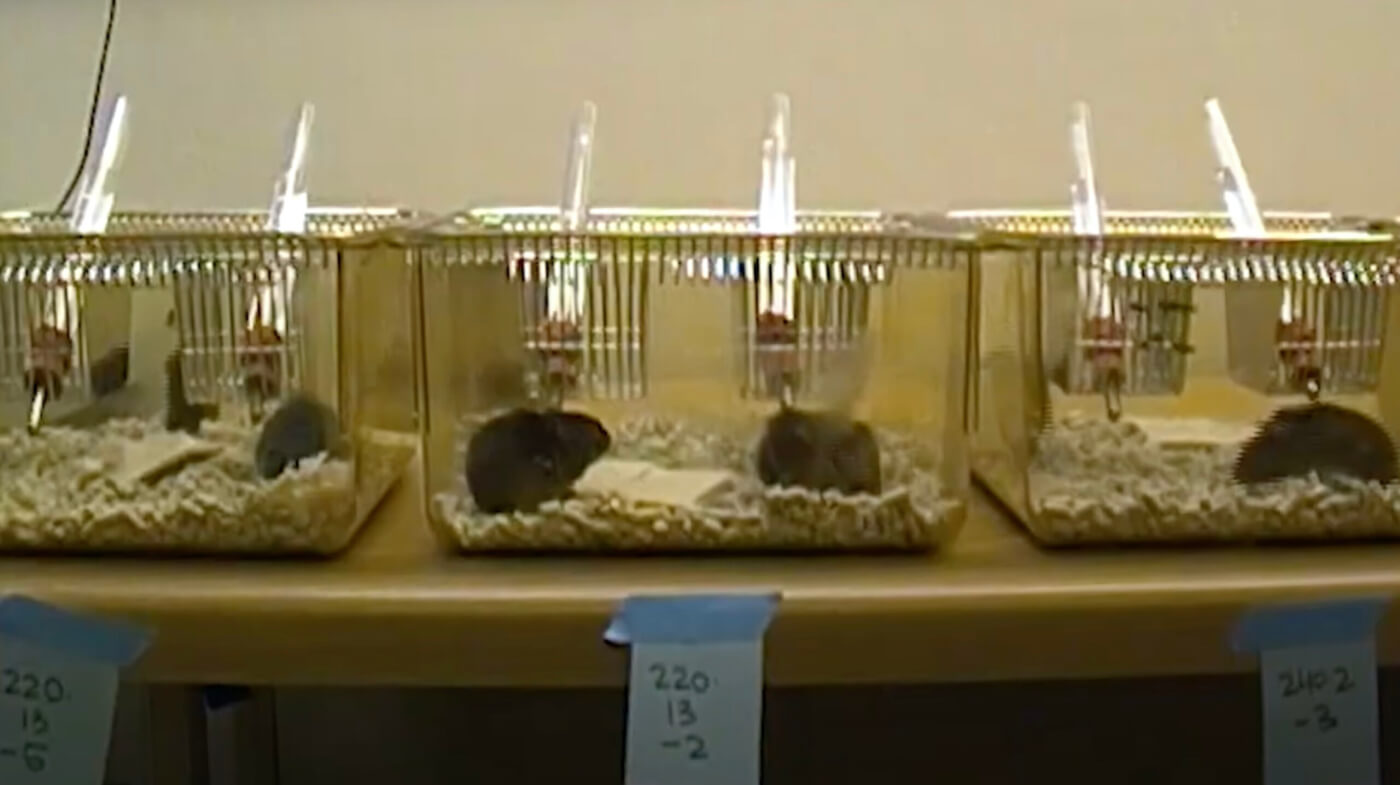
The university’s initial response was a denial of the existence of such records. OHSU officials claimed that no such videos or photographs were in their possession. When pressed, the university changed its stance, suggesting that the records belonged to a different institution or that any existing media had likely been destroyed in accordance with standard data retention policies.
Faced with these contradictions, PETA filed a lawsuit in Oregon state court to compel the release of the records. During the discovery phase of the litigation, it was revealed that the videos did, in fact, exist and were held by the university. The legal proceedings were expanded multiple times as more information regarding the university’s handling of the evidence came to light.
In June 2023, a circuit court judge ruled in favor of PETA, finding that OHSU had violated Oregon’s public records laws. The court characterized the university’s behavior as an "unreasonable delay" and ordered OHSU to release the footage. Furthermore, as a sanction for its conduct, the court ordered OHSU to pay more than $434,000 in legal fees and costs incurred by PETA.
OHSU subsequently appealed the financial sanction, leading to the current proceedings before the Oregon Supreme Court. The university argues that the fee award was excessive or improperly calculated, while PETA maintains that the university must be held accountable for what it describes as a deliberate attempt to mislead the public and the court.
Allegations of Illegal Surveillance
The legal battle took an unexpected turn when PETA discovered evidence of surveillance conducted by OHSU’s campus police department. During the litigation process, documents emerged showing that at least two OHSU police officers, including the chief of police, had received regular intelligence reports regarding PETA’s activities.
These reports were reportedly provided by Information Network Associates (INA), a private security and intelligence firm. The updates included monitoring of PETA’s blog posts, social media activity, and planned demonstrations. Under Oregon law (ORS 181A.250), law enforcement agencies are generally prohibited from collecting or maintaining information about the political, religious, or social views, associations, or activities of individuals or groups unless such information relates directly to a criminal investigation and there are reasonable grounds to suspect criminal activity.
The court eventually ruled that OHSU’s surveillance of PETA was a violation of state law and the First Amendment, adding another layer of legal culpability to the university’s defense. This finding reinforced the argument that the university had gone to extraordinary lengths to manage its public image and monitor its critics.
Scientific and Ethical Critiques
The OHSU vole studies have drawn sharp criticism from both animal rights advocates and members of the scientific community. Critics argue that the "pair-bonding" model in voles is a poor proxy for the complexities of human relationships and alcohol addiction.
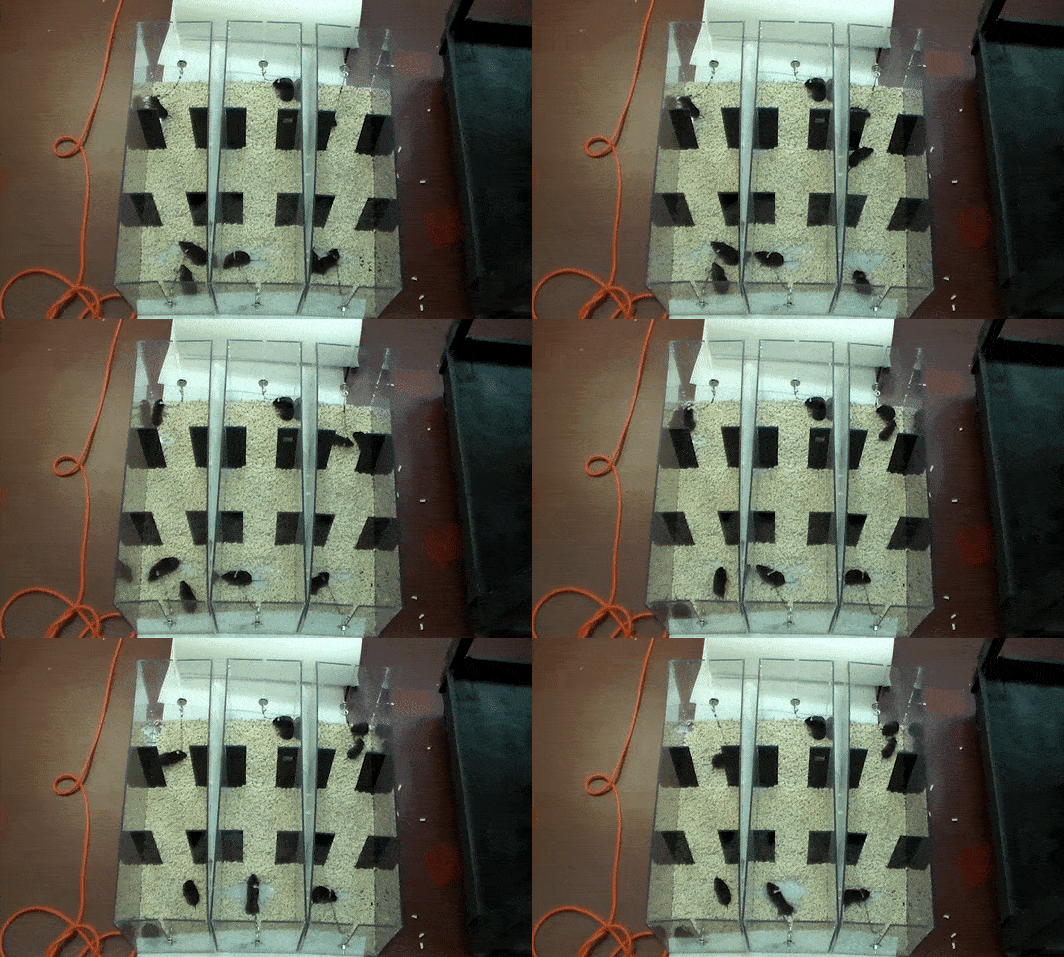
Dr. Frances Cheng, a science adviser for PETA, stated that an "arbitrarily created, weeklong relationship" between rodents does not mirror human biology or social structures. She characterized the research as a "curiosity-driven boondoggle" that resulted in a high body count without providing actionable insights for human health.
Clinical psychologists have also weighed in on the utility of the data. Dr. Sana Gaitonde noted that human volunteers and clinical studies would provide more reliable insights into the social and physiological effects of alcohol. The critique highlights a broader debate within the scientific community regarding the "reproducibility crisis" and the limitations of animal models in behavioral neuroscience. While animal research has historically contributed to medical breakthroughs, the specific utility of inducing intoxication in rodents to study human infidelity remains a point of intense contention.
Financial and Institutional Implications
The financial scope of the research is another point of public interest. The NIH, through the NIAAA, has allocated millions of dollars to the OHSU projects led by Ryabinin. For many taxpayers and advocacy groups, the $3 million expenditure on vole research is seen as a misallocation of resources, especially when compared to the funding needs of human-centric alcohol treatment programs and social services.
The outcome of the Oregon Supreme Court case will have significant implications for how public universities in Oregon handle transparency. If the court upholds the $434,000 fee award, it will serve as a stern warning to public institutions that withholding records or providing misleading information to the public can result in substantial financial penalties.
Furthermore, the case has prompted calls for increased oversight of federal research grants. Advocates are urging the NIH to prioritize non-animal research methods, such as organ-on-a-chip technology, computer modeling, and human clinical trials, which they argue are more ethically sound and scientifically relevant to human health outcomes.
Conclusion and Future Outlook
As the Oregon Supreme Court prepares to hear the appeal in May 2026, the case remains a focal point for discussions on the intersection of law, ethics, and science. The "drunken vole" experiments have become a symbol of the tension between academic freedom and public accountability.
For OHSU, the legal fees and the negative publicity surrounding the "cover-up" allegations represent a significant institutional challenge. The university continues to defend its research practices and its handling of the records, though the lower court’s findings of "illegal surveillance" and "unreasonable delay" have already established a difficult narrative to overcome.
PETA, meanwhile, views the upcoming Supreme Court hearing as an opportunity to solidify a precedent for government transparency. The organization continues to campaign for the cessation of the vole experiments, calling on federal agencies to redirect funding toward modern research methodologies.
Regardless of the final ruling on the legal fees, the case has already forced a high degree of transparency on a laboratory project that was originally intended to remain behind closed doors. The release of the videos—which the university fought for years to hide—allows the public to view the reality of the experiments and decide for themselves whether the scientific gains justify the ethical and financial costs. The decision of the Oregon Supreme Court will ultimately determine the price of that transparency.

