



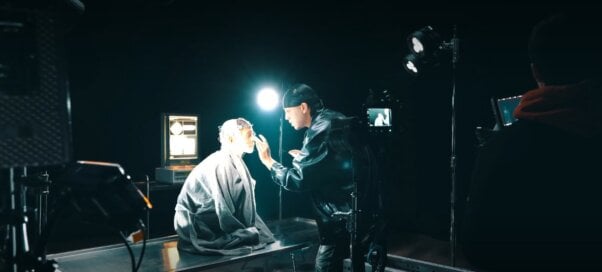
The People for the Ethical Treatment of Animals (PETA) has launched a provocative new short film titled Bodies of Research, designed to challenge public perceptions of animal experimentation through the lens of the "body horror" cinematic genre. Directed by French filmmakers Favio Vinson and Andres Gomez Orellana, the one-minute film utilizes a role-reversal narrative, placing human actors in the sterile, often violent conditions typically reserved for laboratory animals. The release of the film coincides with renewed legislative efforts in the United States to increase oversight of taxpayer-funded research and marks a significant escalation in the organization’s campaign to transition global scientific communities toward non-animal testing methodologies.
Bodies of Research depicts a series of visceral scenes: individuals thrashed against cage doors, strapped to metal tables, and subjected to chemical injections under harsh fluorescent lighting. The film concludes with a disclaimer that the participants are professional actors, immediately pivoting to the assertion that for millions of animals in global laboratories, such relief does not exist. The production aims to highlight the daily reality of mice, rats, rabbits, primates, dogs, and cats that are utilized in both basic research and commercial testing.
The Scientific Debate: Reliability and Failure Rates
While the ethical implications of animal testing have long been a focal point of public discourse, PETA’s latest campaign places equal emphasis on the scientific efficacy of these methods. Central to the organization’s argument is data from the National Institutes of Health (NIH), which suggests a significant disconnect between animal models and human clinical outcomes.
According to NIH data, approximately 95% of all new drugs that pass animal testing phases—appearing both safe and effective in species such as mice or monkeys—ultimately fail in human clinical trials. These failures generally occur because the drugs are either ineffective in humans or produce toxic side effects that were not present in the animal subjects. Furthermore, nearly 90% of basic research, much of which involves animal experimentation, never translates into tangible treatments for human patients.
This "translational gap" is attributed to the fundamental biological differences between species. Despite sharing many genetic markers, the complex physiological systems, metabolic pathways, and immune responses of humans differ significantly from those of other animals. For example, certain substances that are harmless to humans can be lethal to other species, and vice versa. The history of medicine is punctuated by instances where animal models failed to predict human outcomes, such as the 2006 TGN1412 clinical trial, where a drug that appeared safe in non-human primates caused near-fatal systemic organ failure in human volunteers.

Chronology of Animal Welfare Advocacy and Regulation
The release of Bodies of Research is part of a decades-long trajectory of animal welfare advocacy that has increasingly influenced international law. Understanding the current landscape requires a look at the chronological development of research regulations:
- 1966: The United States passes the Animal Welfare Act (AWA), the only federal law in the U.S. that regulates the treatment of animals in research, exhibition, transport, and by dealers. However, it notably excludes birds, rats, and mice bred for research, which constitute the vast majority of animals used in labs.
- 1981: The Silver Spring monkeys case, led by PETA co-founder Ingrid Newkirk, brings national attention to laboratory conditions and leads to the first arrest and criminal conviction of an animal experimenter in the U.S. on charges of animal cruelty.
- 2013: The European Union implements a total ban on the sale of animal-tested cosmetics, setting a global precedent for "cruelty-free" regulatory standards.
- 2022: The U.S. Congress passes the FDA Modernization Act 2.0, which removes the federal mandate requiring animal testing for new drug development, allowing pharmaceutical companies to utilize modern alternatives.
- 2024–2026: Advocacy groups shift focus toward the CARGO Act and other legislative measures to redirect funding from animal-based models to human-relevant technologies.
The Legislative Front: The CARGO Act
A significant component of PETA’s current advocacy involves the Cost-effective Alternatives and Regulatory Global Oversight (CARGO) Act. This proposed legislation in the United States seeks to address the flow of taxpayer money to foreign animal laboratories. Currently, billions of dollars in federal grants are awarded to facilities outside the U.S. that may not adhere to the same oversight standards as domestic laboratories.
Proponents of the CARGO Act argue that animal laboratories operating in foreign jurisdictions often bypass U.S. animal protection laws, leading to unaccountable spending and unnecessary suffering. By cutting off funding to these entities, the act aims to incentivize the adoption of state-of-the-art, human-relevant research methods. This legislative push is framed not only as a moral imperative but as a fiscal one, aimed at reducing the waste of public funds on research models with high failure rates.
Emerging Alternatives to Animal Testing
As the push against animal experimentation grows, the scientific community is increasingly looking toward "New Approach Methodologies" (NAMs). These technologies are designed to be more human-relevant, potentially offering higher predictive accuracy for drug safety and efficacy.
Organs-on-Chips (Microphysiological Systems)
These are tiny, complex devices that mimic the structure and function of human organs. By lining microfluidic chips with human cells, researchers can simulate the physiological environment of the human heart, liver, lungs, or kidneys. This allows for the observation of how human tissues respond to drugs or toxins in real-time, providing data that animal models cannot replicate.
Human Cell Models and 3D Bioprinting
Advances in stem cell technology now allow scientists to grow "organoids"—three-dimensional clusters of cells that behave like miniature organs. Coupled with 3D bioprinting, researchers can create human tissue structures to test the permeability of skin or the toxicity of inhaled substances, bypassing the need for corrosive tests on rabbits or mice.
AI and Computational Modeling
Artificial Intelligence and machine learning are being utilized to analyze massive datasets of chemical properties and biological responses. Sophisticated algorithms can now predict the toxicity of a new compound by comparing it to thousands of known substances, often with greater accuracy than traditional animal tests.
Stakeholder Perspectives and Industry Reactions
The debate over animal experimentation involves a diverse array of stakeholders, including pharmaceutical companies, academic institutions, and regulatory bodies.
The pharmaceutical industry has historically defended animal testing as a "necessary evil" required to ensure human safety before clinical trials. However, the high cost and lengthy timelines associated with animal research—often taking years and costing millions per drug candidate—have led some industry leaders to embrace NAMs. The transition is viewed by some as a way to streamline the drug development pipeline and reduce the "sunk cost" of failed trials.
Conversely, some academic researchers argue that animal models are still essential for understanding complex systemic interactions that cannot yet be fully replicated by chips or computers. They contend that while alternatives are improving, they are not yet capable of replacing the "whole-body" context provided by a living organism.
PETA and other advocacy groups counter this by stating that the "whole-body" context of a different species is fundamentally misleading when applied to human medicine. They argue that the continued reliance on animal models is a result of institutional inertia and a lack of dedicated funding for alternative methods, rather than a lack of technological potential.
Broader Implications and Future Outlook
The release of Bodies of Research serves as a cultural touchstone in a broader movement toward ethical science. The film’s focus on the sensory experience of fear and pain is designed to bridge the gap between abstract scientific data and the biological reality of the subjects involved.

From a global trade perspective, the shift away from animal testing has significant implications. As more regions adopt "cruelty-free" standards, companies that rely on animal testing may find themselves locked out of major markets. This creates a powerful economic incentive for innovation in non-animal testing technologies.
Furthermore, the move toward human-relevant models could accelerate the development of personalized medicine. By using a patient’s own cells on a chip, doctors could potentially test which treatments will be most effective for that specific individual, a feat that is impossible with animal models.
In conclusion, PETA’s Bodies of Research is more than a short film; it is a manifestation of a shifting paradigm in medical research. By highlighting the failures of the current system and advocating for legislative changes like the CARGO Act, the organization seeks to redefine the relationship between science and ethics. As technology continues to evolve, the pressure on the scientific community to move beyond the cage and toward the computer chip is likely to intensify, potentially marking the beginning of the end for traditional animal experimentation.

