


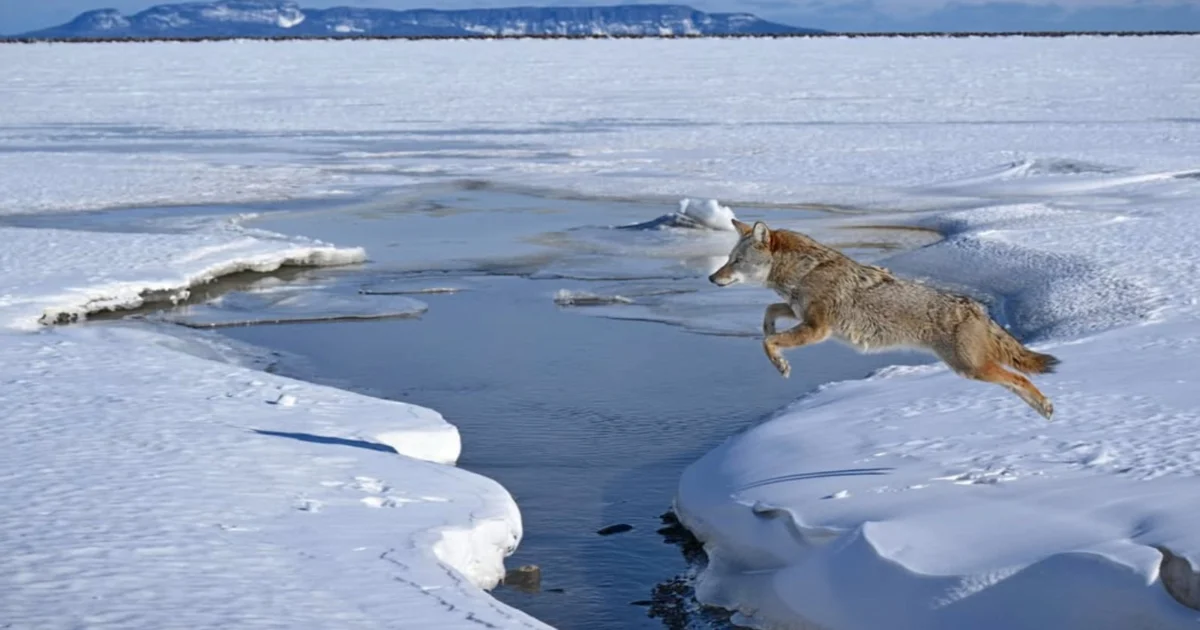
In the rugged wilderness of northwestern Ontario, where the sub-arctic winds of Lake Superior shape the landscape into a mosaic of jagged ice and deep snow, photographer Jamie Ruggles has achieved a feat of patience and precision that has captivated the wildlife photography community. After four years of scouting, observing, and anticipating the movements of local wildlife, Ruggles successfully captured a definitive image of a coyote in mid-flight, leaping across a treacherous channel of open water amidst the ice floes of the world’s largest freshwater lake.
The photograph, taken in March along the northern shore of Lake Superior near Thunder Bay, depicts a coyote suspended in the air, its body perfectly silhouetted against a backdrop of frozen terrain and the iconic Sleeping Giant land formation. The image serves as a testament to the "long game" required in professional wildlife photography, where success is often measured not in seconds, but in years of dedicated fieldwork.
The Pursuit of the Decisive Moment
For Jamie Ruggles, a Thunder Bay-based photographer, the image was not a product of chance, but the culmination of a creative vision established years prior. Ruggles notes that he had been frequenting specific "hotspots" on the Lake Superior shoreline for four years, specifically targeting areas where the movement of the water prevents total freezing. These patches of open water are vital for local fauna, serving as rare drinking stations during the harsh Canadian winters when most other water sources are locked under several feet of ice.
The chronology of the shot began with advice Ruggles received from a National Geographic editor. The guidance emphasized a fundamental truth of the craft: success in wildlife photography is directly proportional to the amount of time spent in the field. Adhering to this philosophy, Ruggles made repeated visits to the shoreline, studying the patterns of the coyotes that inhabit the Boreal forest bordering the lake.
"In a way, I waited for four years," Ruggles explained in an interview. "I frequent their favorite spots like this one, where they drink in the winter because of the open water." This longitudinal approach allowed him to understand the animals’ preferred routes and behaviors, eventually positioning him to be in the right place at the right time when the coyote attempted the leap.
Geographic and Environmental Context: The Sleeping Giant
The setting of the photograph adds a layer of geological and cultural significance to the composition. Visible on the horizon is the Sleeping Giant, a massive formation of sills and mesas on the Sibley Peninsula. When viewed from Thunder Bay, the formation resembles a human figure lying on its back with arms folded across its chest. This landmark is central to the identity of the region and is protected within Sleeping Giant Provincial Park.
Lake Superior itself presents a formidable environment for wildlife. As the largest of the Great Lakes of North America, it contains 10% of the world’s surface fresh water. During the month of March, the lake is often at its most volatile stage of ice coverage. Data from the Great Lakes Environmental Research Laboratory (GLERL) indicates that Lake Superior’s ice cover can fluctuate wildly; however, the northern shores near Thunder Bay typically maintain significant ice shelves that are prone to cracking and shifting due to wind and currents. It is within these shifting "leads"—cracks in the ice—that animals like the coyote must navigate, often requiring them to jump across open water to reach stable ground or access points.
Biological Analysis: The Eastern Coyote in Winter
The subject of Ruggles’ photograph is the Eastern Coyote (Canis latrans), a highly adaptable predator that has become a staple of the Ontario wilderness. Unlike their western counterparts, Eastern coyotes in the Great Lakes region are often larger, a result of historical hybridization with wolves.
During the winter months, these animals must maintain a high caloric intake to survive temperatures that frequently dip below -20 degrees Celsius (-4 degrees Fahrenheit). Their thick, multi-layered pelts provide insulation, but their need for hydration remains constant. In the deep winter of northwestern Ontario, finding liquid water is a challenge. The movement of Lake Superior’s tides and currents keeps certain near-shore areas from freezing solid, attracting coyotes from the surrounding woods.
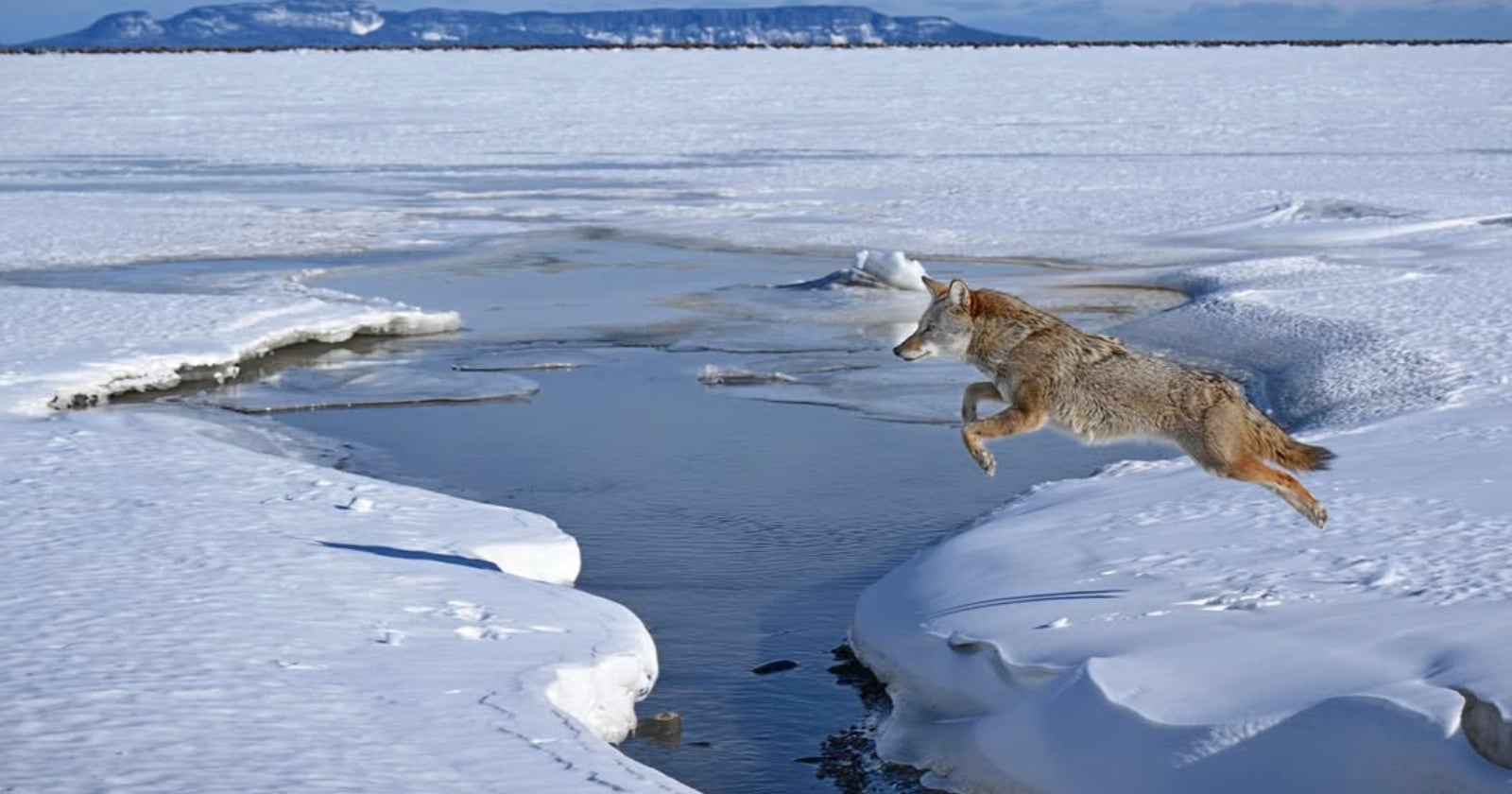
The physical act of leaping across an ice gap, as captured by Ruggles, is a high-risk, high-reward maneuver. A fall into the frigid waters of Lake Superior in March could lead to rapid hypothermia. The coyote’s willingness to make the jump highlights the animal’s desperation for resources and its inherent agility.
Technical Execution and the Photographer’s Critique
Capturing a fast-moving subject against a high-contrast background of white snow and blue sky presents significant technical challenges. Wildlife photographers must utilize high shutter speeds—typically 1/2000th of a second or faster—to freeze the motion of an animal in mid-air. Furthermore, the reflective nature of the snow can often trick a camera’s light meter into underexposing the subject, requiring the photographer to manually adjust exposure compensation to ensure the coyote’s fur retains detail.
Despite the widespread acclaim for the image, Ruggles maintained a self-critical perspective common among high-level professionals. Upon reviewing the frame on his camera’s LCD screen immediately after the shutter clicked, his first instinct was to analyze how the shot could be improved in future encounters.
"Believe it or not, the very first thing I thought when I took the image and viewed it on the camera was what I want to do next time to improve on it," Ruggles stated. This drive for iterative improvement is a hallmark of the photographic discipline, where the "perfect" shot is often viewed as a stepping stone toward a more refined vision.
Broader Implications for Wildlife Documentation
The publication of Ruggles’ work comes at a time when the intersection of social media and wildlife photography has heightened public interest in conservation. Images that humanize or dramatize the daily survival of northern species play a role in fostering environmental stewardship. By showcasing the coyote not as a nuisance—as they are sometimes viewed in urban environments—but as a majestic and resilient survivor of the Boreal landscape, Ruggles contributes to a broader narrative of biodiversity appreciation.
Moreover, the photograph highlights the importance of the Thunder Bay region as a corridor for wildlife. The proximity of the city to the vast wilderness of the Sibley Peninsula creates a unique "edge effect" where human observation and wild behavior frequently overlap.
The Role of Patience in Modern Photography
In an era of "instant" content, Ruggles’ four-year journey serves as a reminder of the value of slow journalism and patient observation. The advice from the National Geographic editor regarding "spending time in the field" reflects a traditionalist approach that remains the gold standard for high-quality wildlife documentation.
The successful capture of the coyote leap is expected to inspire other regional photographers to engage in long-term projects rather than seeking quick, opportunistic shots. As Ruggles continues his work in northwestern Ontario, his portfolio remains a vital record of the region’s natural beauty and the harsh realities of life on the shores of Lake Superior.
Ruggles’ work is currently featured on his social media platforms, including Facebook and Instagram, where he shares insights into the technical and emotional aspects of his fieldwork. His commitment to the craft continues to provide a window into the hidden lives of the predators that roam the frozen frontiers of the Great Lakes.

