


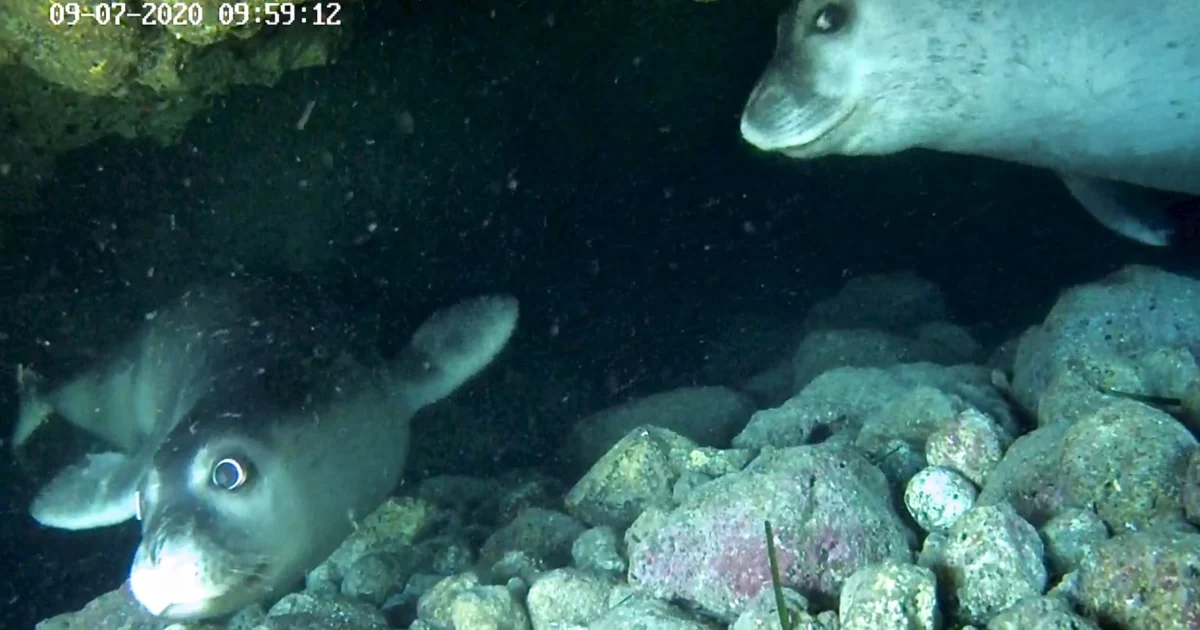
The Mediterranean monk seal, scientifically known as Monachus monachus, is widely regarded as one of the most reclusive and endangered marine mammals on the planet. For decades, researchers have struggled to monitor the remaining population, which is estimated to consist of fewer than 700 individuals scattered across the Mediterranean Sea and parts of the Atlantic. A groundbreaking study, recently published in the journal Oryx, has finally shed light on where these elusive creatures go when they vanish from known habitats. By utilizing specialized remote camera technology, a team of scientists from the Tethys Research Institute and the Octopus Foundation has discovered that these seals are utilizing "bubble caves"—fully submerged chambers with trapped air pockets—as secret refuges to avoid the growing pressures of human disturbance.
These bubble caves represent a significant departure from the traditional resting sites documented by marine biologists. Historically, Mediterranean monk seals were known to haul out on open sandy beaches to rest and pup. However, as coastal tourism, industrial fishing, and maritime traffic intensified throughout the 20th and 21st centuries, the species was forced to adapt. They retreated first to secluded coastal caves with visible entrances and internal beaches. Now, it appears they have taken their quest for privacy a step further, seeking out geological anomalies that are inaccessible to all but the most determined divers.
The Nature of the Bubble Cave Phenomenon
To understand the significance of this discovery, one must first understand the unique geology of a bubble cave. Unlike a standard sea cave, which typically has a large opening at the waterline and a dry interior beach, a bubble cave is accessed through a completely submerged entrance. To enter, a seal must swim through an underwater tunnel that leads upward into a sealed chamber. Because of the cave’s structure, a pocket of air remains trapped at the ceiling, pressurized by the surrounding water.
These chambers are often dark, silent, and entirely invisible from the surface, making them the perfect sanctuary for a species that has become increasingly wary of human presence. The air within these pockets is replenished slowly through the porous nature of the rock or through small fissures, but for the seals, the primary draw is the absolute isolation. In these chambers, the seals can rest, sleep, and socialize without the risk of encountering boats, tourists, or researchers.
Chronology of the Discovery
The search for these secret hideouts began when researchers in Greece’s Ionian Islands noticed a perplexing pattern. Despite the islands being a known stronghold for the species, seals were frequently seen swimming in the open water but would seemingly disappear for days at a time. Traditional surveys of known beach caves often turned up empty, even when tracking data suggested seals were in the immediate vicinity.
In 2020, the Octopus Foundation and the Tethys Research Institute launched a collaborative project to solve this mystery. They focused their efforts on the rugged coastlines of the Ionian Sea, where the limestone geology is prone to forming complex underwater cavern systems.
The timeline of the breakthrough is as follows:
- July 2020: Researchers identified a series of "blind" caves—caverns that appeared to end abruptly underwater. Suspecting there might be hidden chambers beyond the visible walls, they deployed a prototype remote camera system designed to withstand high pressure and low-light conditions.
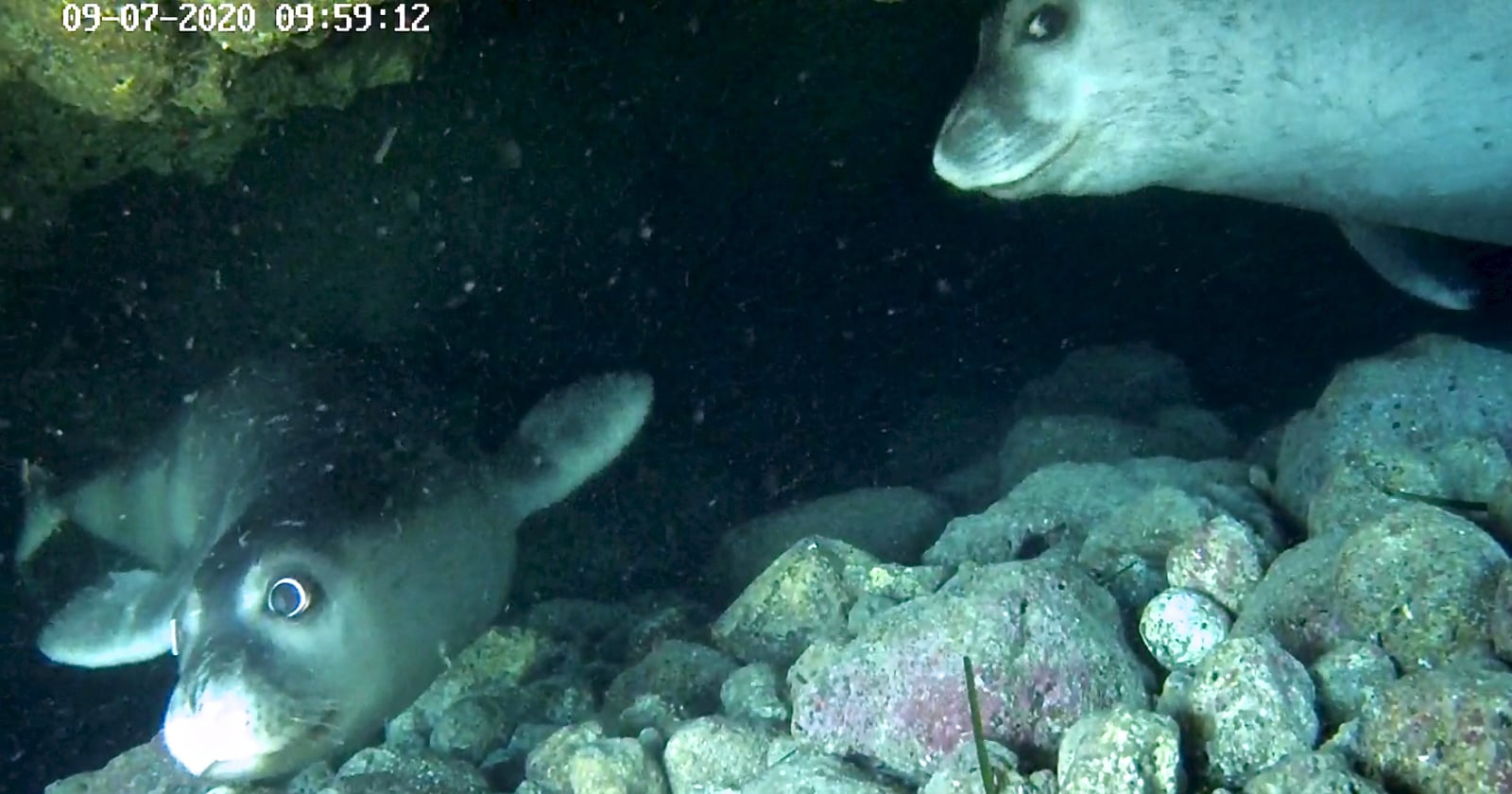
- Late Summer 2020: Within an hour of installing a camera in a suspected bubble cave, the footage revealed a "eureka moment." A Mediterranean monk seal was filmed entering the submerged passage and surfacing within the air pocket of the chamber.
- 2021-2023: The study was expanded to include multiple sites. Researchers reviewed hundreds of hours of footage, documenting not just single seals, but groups of individuals using these spaces.
- 2024: The findings were finalized and published in Oryx, providing the first visual and scientific confirmation of bubble cave usage as a primary defense mechanism against human disturbance.
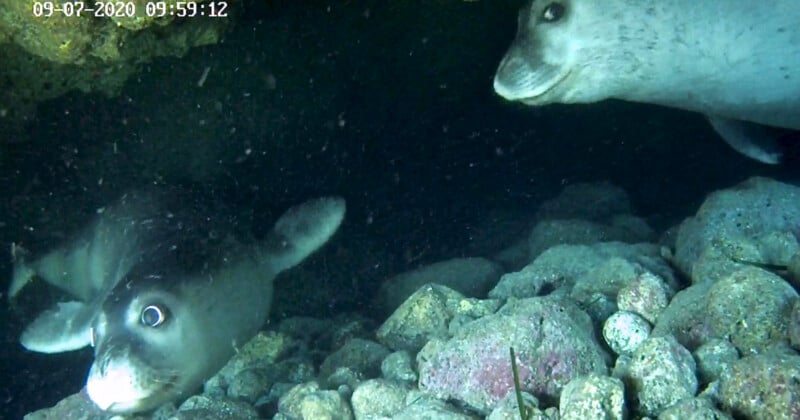
Julien Pfyffer, the study’s author and president of the Octopus Foundation, noted that the discovery validated a long-standing intuition among local biologists. "When we discovered remotely that several seals were inspecting the waterproof camera less than an hour after we installed it, we were really amazed," Pfyffer stated. "We were looking at the factual confirmation of the intuition they might be hiding somewhere."
Behavioral Insights and "Bottling"
The remote camera footage has provided a rare window into the private lives of Monachus monachus. Because the seals felt safe from observation, they exhibited a range of natural behaviors that are seldom seen in the wild.
One of the most striking observations was the variety of sleeping positions. Seals were documented sleeping soundly on the rocky seafloor of the caves, while others preferred to float sideways in the water column. Perhaps most interestingly, the cameras captured a behavior known as "bottling." In this state, a seal floats vertically in the water, with its body bobbing like a bottle. Sometimes they float upright with their noses just above the water line to breathe; at other times, they were seen bottling upside down, with their tails near the surface and their heads submerged.
The footage also revealed the presence of large, heavily scarred males. These scars are often the result of territorial battles or interactions with fishing gear. The fact that these dominant males are utilizing bubble caves suggests that these sanctuaries are high-value real estate within the seal community, offering a level of security that even the most formidable individuals prioritize.
Historical Context: From Homeric Beaches to Submerged Shadows
The retreat of the Mediterranean monk seal into bubble caves is a poignant illustration of the species’ struggle for survival. In ancient times, the monk seal was a common sight across the Mediterranean. They are mentioned in the works of Homer and Plutarch, often described as sunning themselves in large colonies on open beaches. At that time, they had few natural predators and no reason to fear humans.
However, the Middle Ages and the industrial era brought about a shift. Seals were hunted for their oil, skins, and meat. As their numbers dwindled, the survivors became more reclusive. By the 20th century, the expansion of coastal tourism in Greece, Turkey, and North Africa effectively evicted the seals from their ancestral sunning grounds.
The discovery of bubble cave usage suggests that the species is currently in a "refugee" state. While they have successfully adapted to these extreme environments, scientists warn that this is a survival tactic born of necessity rather than a preferred lifestyle. Living in dark, damp caves can have physiological impacts, particularly on the development of pups, which historically benefited from the warmth and Vitamin D provided by sunlight on open beaches.
Conservation Data and Current Threats
The Mediterranean monk seal is currently listed as "Endangered" on the IUCN Red List, having recently been upgraded from "Critically Endangered" due to slight population recoveries in specific areas like the Cabo Blanco peninsula and the Greek archipelago. However, the population remains fragmented and extremely vulnerable.
Current data highlights several ongoing threats:
- Human Disturbance: Tourism is the primary driver of the seal’s retreat into caves. Even well-intentioned eco-tourists and divers can cause seals to abandon a cave, potentially leaving pups vulnerable.
- Fishery Interactions: Seals often compete with local fishermen for the same stocks. Entanglement in nets remains a leading cause of mortality.
- Habitat Loss: Coastal development for hotels and marinas destroys the very caves the seals rely on.
- Genetic Bottlenecking: With such a small population, low genetic diversity makes the species susceptible to disease outbreaks.
The discovery of bubble caves adds a new layer to conservation math. If a significant portion of the population is hiding in underwater chambers, current census methods—which rely on visual sightings in known beach caves—may be undercounting the population.
Broader Implications for Marine Management
The identification of bubble caves as critical habitat has immediate implications for marine conservation policy. Currently, many Marine Protected Areas (MPAs) are drawn based on visible surface features or known foraging grounds. This study suggests that "invisible" geological features must also be protected.
Conservationists are now calling for stricter regulations regarding cave diving and coastal construction in areas known to harbor bubble caves. There is also a push for more "passive" monitoring technology. The success of the remote cameras used by the Octopus Foundation proves that we can study endangered species without physically entering their space and causing flight responses.
"Before this discovery, I believe some scientists had the intuition that Med monk seals were temporarily using these bubble caves, but not to this extent," Pfyffer explained. The proof provided by this study—the first long-term photographic and video evidence of its kind—will likely serve as a cornerstone for future habitat protection strategies.
As human activity continues to expand into the farthest reaches of the ocean, the Mediterranean monk seal’s move into the "bubbles" of the earth serves as a stark reminder of the lengths to which wildlife will go to find peace. The challenge for the scientific community now is to ensure that these last secret rooms remain exactly that: secret and safe.

