


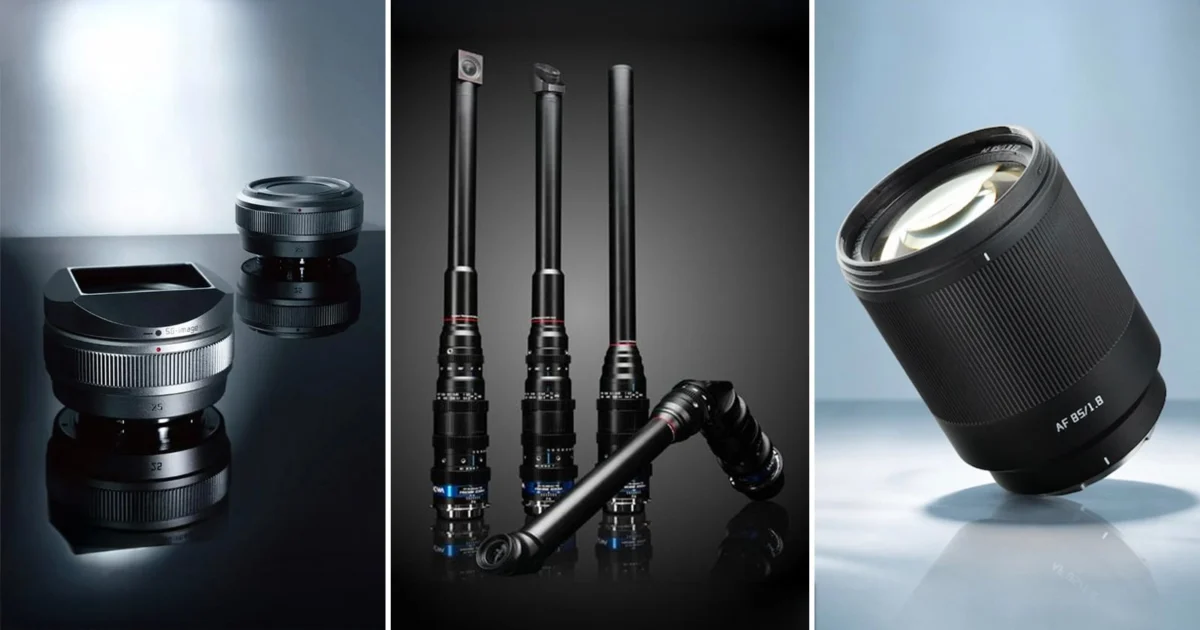
The 2026 trade show season, anchored by the China P&E (Photography & Electrical Imaging) exhibition held from May 15 to May 18, has become the staging ground for a transformative shift in the photographic industry. Once characterized as producers of budget-friendly manual optics, Chinese lens manufacturers have arrived with an unprecedented wave of sophisticated autofocus (AF) systems, high-speed cinema glass, and experimental designs. Companies including Viltrox, Thypoch, Laowa, TTArtisan, SG-image, Meike, and Yongnuo are no longer merely filling gaps in the market; they are aggressively challenging the dominance of established Japanese first-party and third-party manufacturers. This expansion covers every major mount and sensor format, from Micro Four Thirds and APS-C to Full-Frame and Medium Format GFX systems.
The Strategic Pivot: From Budget Alternatives to Market Leaders
The current surge in production is not a sudden phenomenon but the culmination of a five-year trajectory of rapid research and development. In the early 2020s, the "Chinese lens boom" was largely defined by manual-focus "pancake" lenses and affordable primes. However, the 2026 lineup demonstrates a pivot toward professional-grade performance and electronic integration. Industry analysts note that the speed of iteration among Shenzhen-based manufacturers is now nearly double that of traditional optical firms. This is driven by a robust local supply chain and a direct-to-consumer feedback loop facilitated by global social media presence.
The 2026 releases highlight a significant milestone: the mastery of complex autofocus algorithms and actuator technology. For years, the lack of reliable autofocus was the primary barrier preventing Chinese brands from capturing the professional market. By licensing or reverse-engineering mount protocols and implementing Voice Coil Motors (VCM) and Stepping Motors (STM), these brands are now delivering focus speeds that rival first-party glass at approximately 40% to 60% of the cost.
Viltrox: A Comprehensive Ecosystem Expansion
Among the most prolific exhibitors at the 2026 trade shows, Viltrox has signaled its intent to become a full-service optical house. The company’s "Pro" and "EVO" series represent a direct challenge to the premium tiers of Sony’s G-Master and Canon’s L-series.
The centerpieces of the Viltrox exhibit are the AF 35mm f/1.4 Pro and the AF 18mm f/1.2 Pro. The 35mm f/1.4 is a full-frame optic featuring a dedicated de-clickable aperture ring and weather-sealed construction, targeting hybrid shooters who require seamless transitions between stills and video. Simultaneously, the 18mm f/1.2 and 40mm f/1.2 APS-C lenses continue the company’s "f/1.2 Lab" initiative, providing crop-sensor users with the shallow depth-of-field and light-gathering capabilities typically reserved for full-frame systems.
Further diversifying its portfolio, Viltrox has introduced the EVO series, specifically the AF 75mm f/1.8 and AF 90mm f/2.2. These lenses are engineered for portrait photographers who prioritize weight reduction without compromising on optical character. Perhaps most surprising is the announcement of the T/S 35mm f/2.8. Tilt-shift lenses are notoriously difficult to manufacture and have historically been the exclusive domain of major manufacturers like Canon and Nikon. Viltrox’s entry into this niche suggests a high level of confidence in their precision engineering and glass molding capabilities.
Laowa and the Shift Toward Autofocus Integration
Venus Optics, under its Laowa brand, has long been revered for its "weird" and specialty optics—macro probes, zero-distortion ultra-wides, and anamorphic lenses. However, 2026 marks Laowa’s decisive entry into the autofocus arena. The transition is significant because it combines Laowa’s unique optical formulas with the convenience of modern electronic systems.
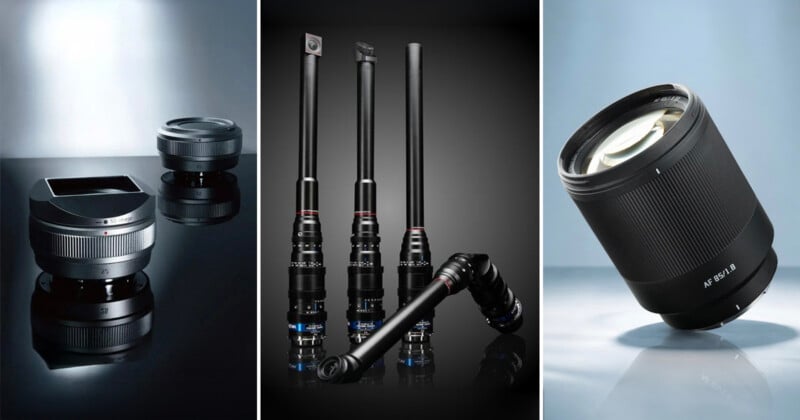
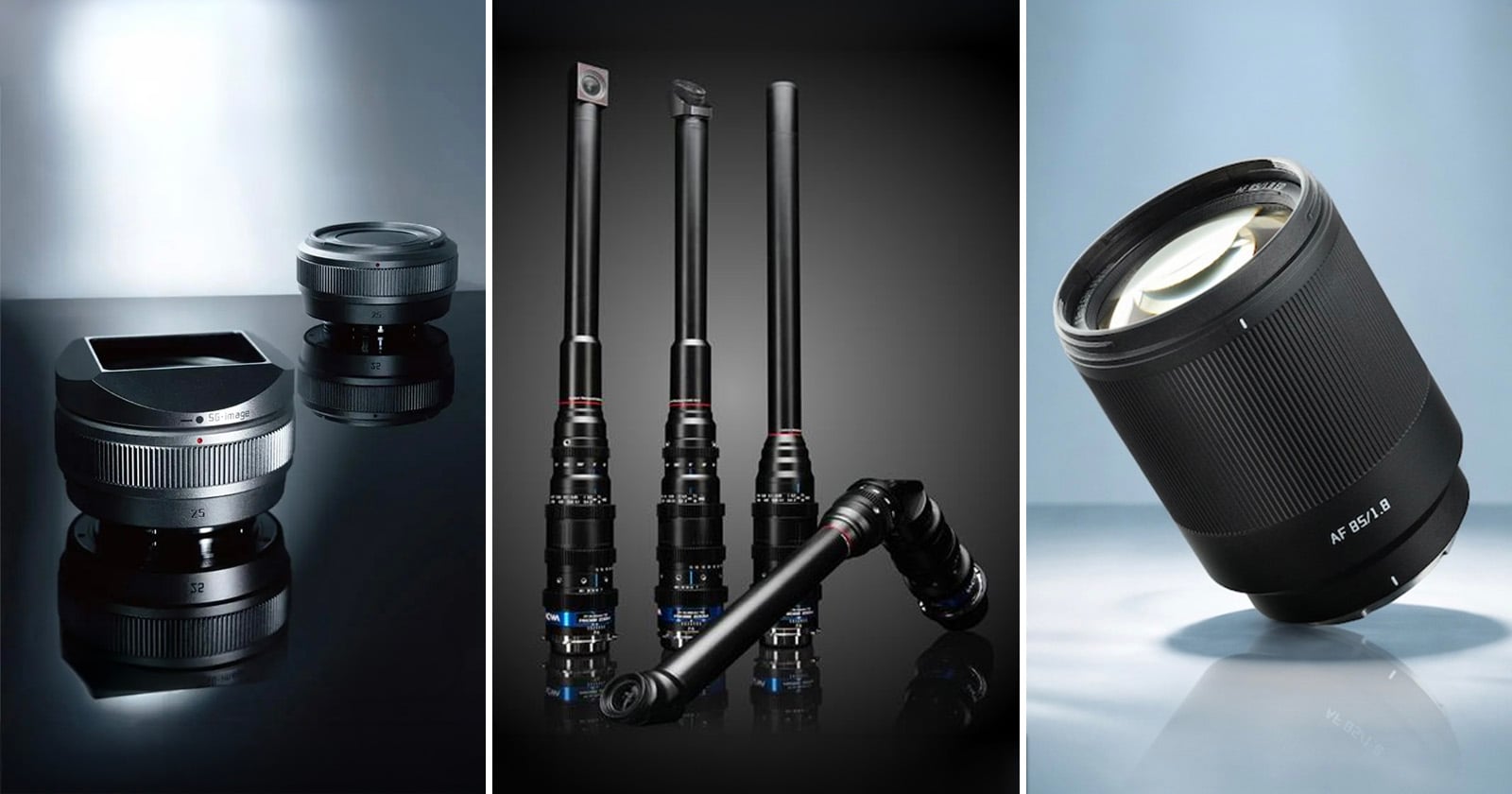
The new AF 8-15mm f/2.8 and AF 7.5mm f/2.8 lenses represent a new era for the brand. By adding AF to ultra-wide designs, Laowa is positioning itself to capture the burgeoning vlogging and gimbal-based cinematography markets, where manual focus is often impractical. The most technically ambitious of these is the CF 4.5-10mm f/2.8 Fisheye Zoom, a lens that offers a perspective previously unavailable in an autofocus-enabled format. This move suggests that Laowa intends to remain a "specialty" brand but is modernizing its interface to appeal to a broader demographic of content creators.
Thypoch and the Landmark Achievement in Zoom Technology
While prime lenses have been the mainstay of Chinese manufacturers, the development of high-performance zooms has remained a "final frontier" due to the complexity of maintaining constant apertures and optical alignment throughout the focal range. Thypoch has broken this barrier with the Voyager AF 24-50mm f/2.8.
The Voyager is one of the first constant-aperture, full-frame autofocus zooms developed by a Chinese brand. Utilizing an internal zoom mechanism, which prevents the lens barrel from extending, the Voyager is optimized for video use on gimbals where balance is critical. Thypoch, which originally gained fame for its Leica M-mount manual lenses, has announced a roadmap of six autofocus lenses for the remainder of 2026. This transition signifies that the company is moving from being a "boutique" manufacturer to a mainstream competitor in the mirrorless market.
TTArtisan and SG-image: The Minimalist and Compact Revolution
While Viltrox and Thypoch target the high-end professional, TTArtisan and SG-image are redefining the entry-level and enthusiast segments through the "Neo" and "Air" concepts.

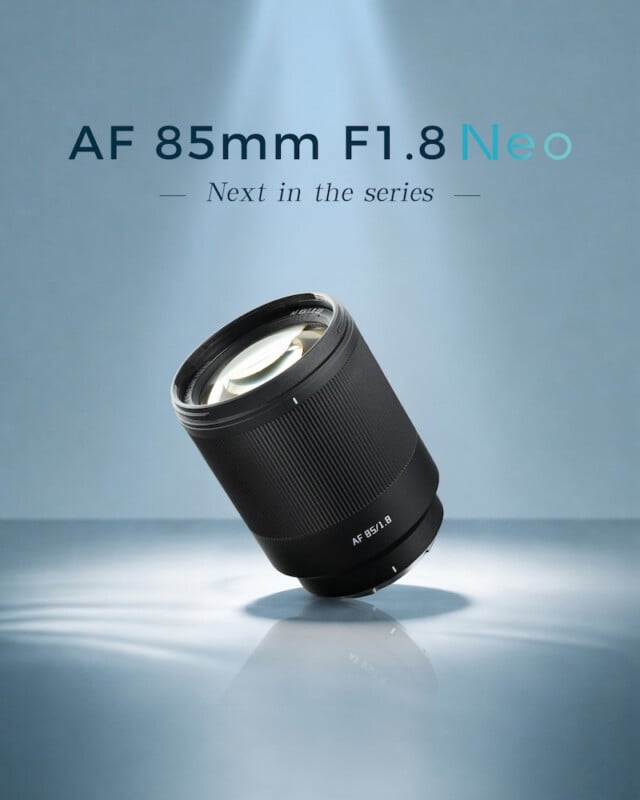
TTArtisan’s AF 85mm f/1.8 Neo introduces a minimalist design philosophy that removes all physical switches and rings from the lens body. Control is handled entirely through the camera interface, which reduces manufacturing costs and minimizes points of failure. This approach appeals to a new generation of photographers who are accustomed to smartphone interfaces and prefer a streamlined, lightweight setup.
SG-image has focused its efforts on the "compact prime" market, with the AF 25mm f/1.8 for Micro Four Thirds and the AF 18mm f/2.2 for APS-C. These lenses are designed for portability, often referred to as "pancake" or "near-pancake" lenses. By focusing on "character-driven" rendering—which often involves a softer, more vintage look—SG-image is catering to a street photography audience that values aesthetics and size over clinical sharpness.
Specialized Markets: Meike and Yongnuo’s Niche Dominance
The 2026 expansion also reaches into the most demanding sensor formats. Meike has made waves with the AF 85mm f/1.8 GFX, a lens designed for Fujifilm’s medium-format system. This is a bold move, as the GFX user base typically demands the highest level of optical resolution. By offering an autofocus alternative to Fujifilm’s expensive native glass, Meike is lowering the barrier to entry for medium-format photography.
Yongnuo, one of the oldest players in the Chinese third-party market, has matured its "VCM" (Voice Coil Motor) series. The AF 35mm f/1.4 VCM and AF 85mm f/1.4 VCM are designed specifically for high-speed tracking and silent operation, making them suitable for professional wedding and event videography.
Market Implications and Global Economic Impact
The influx of high-quality, low-cost Chinese optics is creating a deflationary pressure on the lens market. Data from the first quarter of 2026 suggests that third-party lenses now account for nearly 35% of all new mirrorless lens sales, up from 20% in 2023. This trend is forcing traditional manufacturers to reconsider their pricing strategies and focus more on "halo" products and proprietary features that cannot be easily replicated.
Industry analysts suggest several key implications of this "Chinese Lens Boom":
- Democratization of Fast Glass: High-speed apertures (f/1.2 and f/1.4) are no longer luxury items. This allows amateur photographers to achieve professional results without the five-figure investment previously required.
- Accelerated Innovation: The rapid release cycles of these brands are forcing established companies like Sony, Canon, and Nikon to speed up their own R&D or risk losing the entry-level and mid-range markets.
- Shift in Brand Perception: The "Made in China" label in the photography world is undergoing a rebranding similar to the one experienced by Japanese electronics in the 1970s. Brands like Viltrox and Laowa are increasingly associated with innovation rather than imitation.
- Hybrid-First Design: Almost all the 2026 releases feature video-centric designs, such as linear AF motors and de-clicked rings, reflecting the reality that the modern camera user is a "hybrid" creator.
Conclusion and Future Outlook
The 2026 trade show season has served as a definitive declaration of intent from the Chinese optical industry. The sheer volume of releases—spanning from tilt-shift specialty lenses to constant-aperture zooms—indicates that the technological gap between the "new wave" and the "old guard" is closing at an exponential rate.
As the year progresses, the focus will shift from announcements to real-world performance. While these manufacturers have mastered the specifications on paper, their long-term success will depend on their ability to provide consistent quality control and global customer support. Nevertheless, for the global consumer, the 2026 boom represents a golden age of choice, providing more tools for creative expression than at any other point in the history of photography. The lens market is no longer a closed shop; it is a vibrant, competitive ecosystem where innovation is the only currency that matters.

