


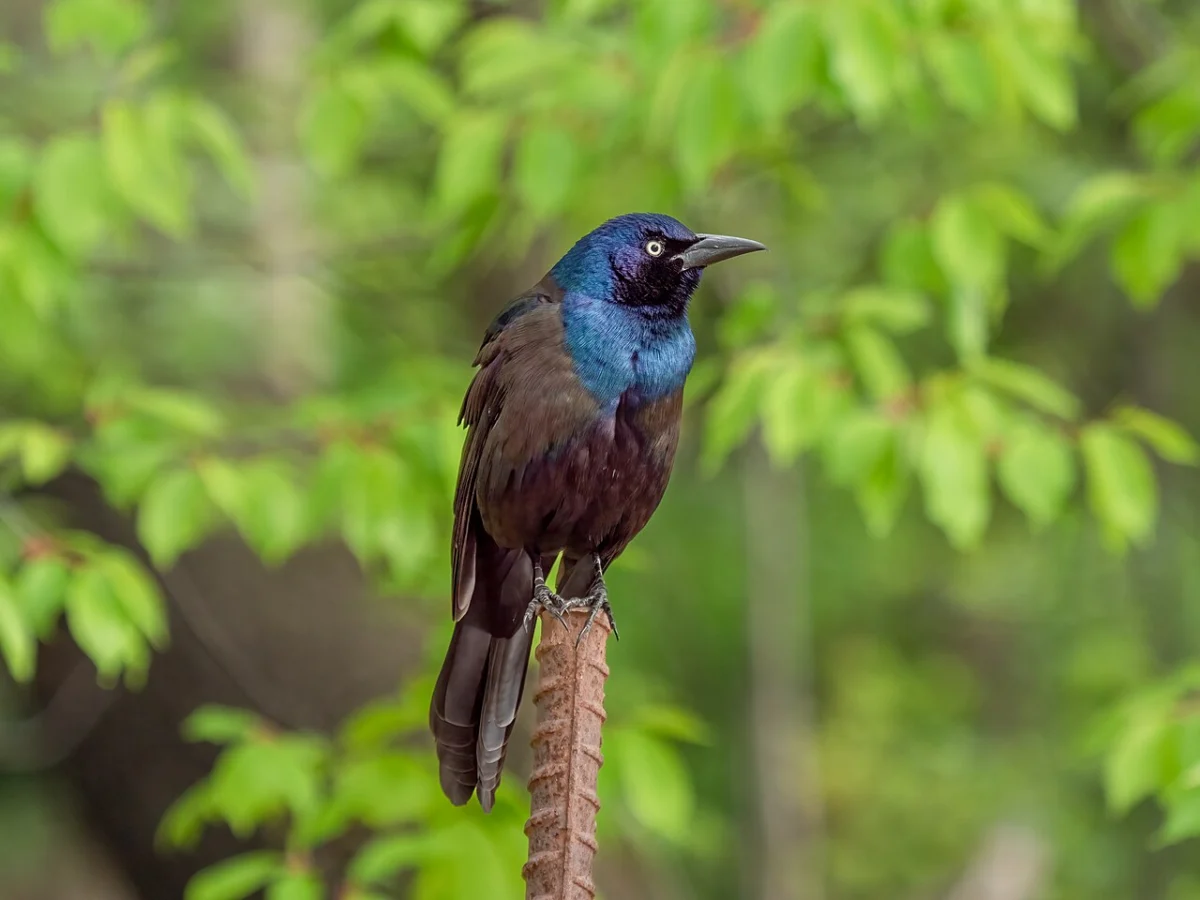
At first glance, a bird that appears entirely black might seem to possess a simple, almost stark coloration. However, a moment’s pause, a subtle shift in light, and suddenly a sapphire sheen flashes across its head. What initially appeared plain transforms into something luminous. These black birds with blue heads occupy a beautiful in-between space, where their color is not derived from pigment but revealed through the intricate interplay of light, feather structure, and motion. They serve as a profound reminder that nature often conceals its most dazzling details in plain sight, challenging our perception of the mundane and inviting deeper observation. This phenomenon, rooted in the scientific marvel of structural coloration, extends across diverse avian species, weaving a narrative of evolutionary adaptation, intricate courtship rituals, and enduring symbolic meaning.
The Science Behind the Shimmer: Structural Coloration Unveiled
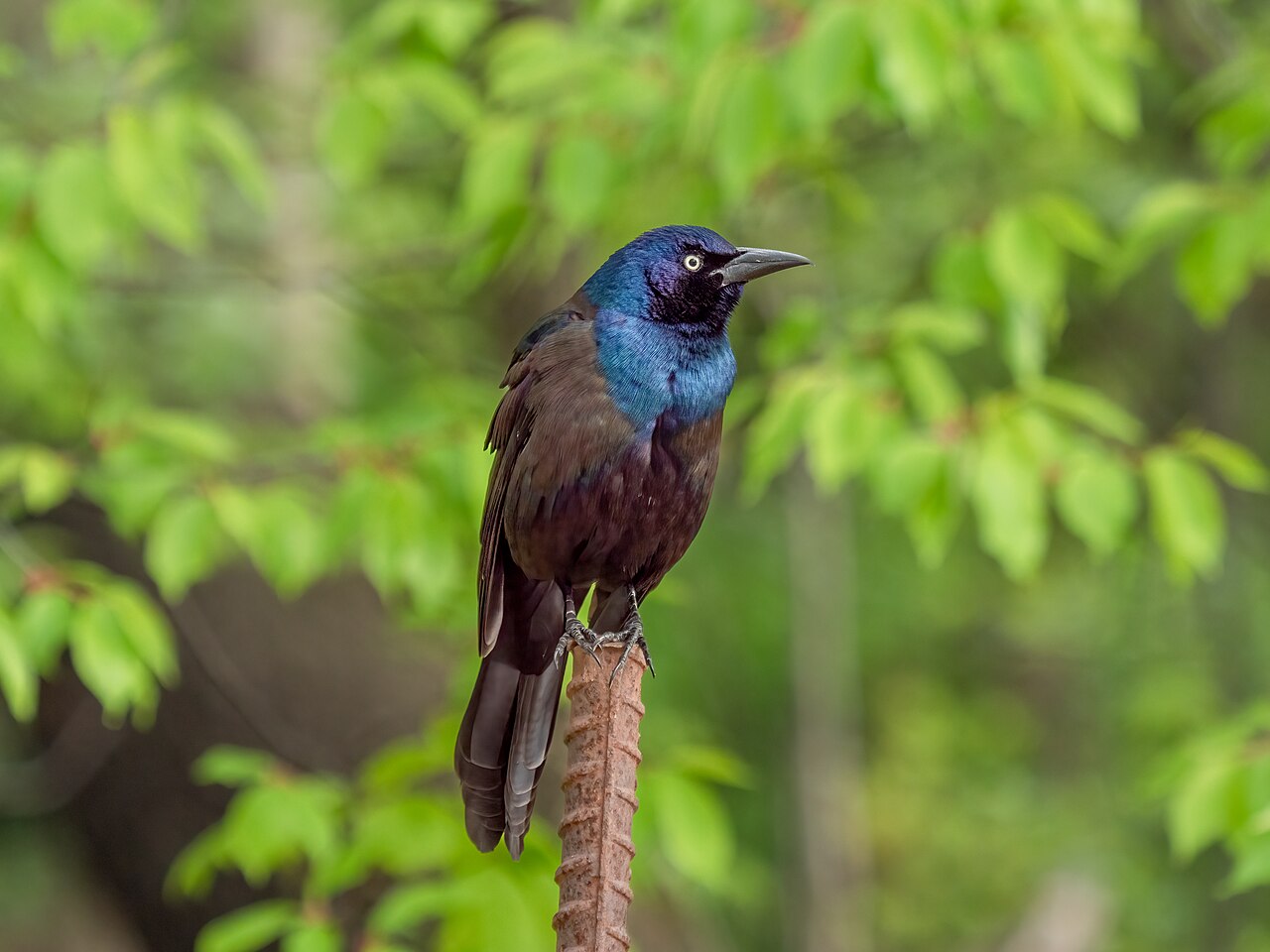
The captivating blue hues observed on the heads of many seemingly black birds are rarely the result of pigmentation. Instead, they are a testament to the sophisticated biological engineering of structural coloration. Microscopic layers within the barbules of their feathers interact with light, causing it to scatter. This scattering preferentially reflects shorter wavelengths of light, specifically blues and violets, directly back to the observer’s eye. The perceived color is therefore dynamic, dictated by the angle of incoming sunlight and the viewer’s perspective. Consequently, the same bird can appear a matte, deep black one moment and a vibrant, metallic blue the next. This inherent variability lends these birds an almost magical quality, their coloration a fluid performance rather than a static attribute.
This phenomenon is not unique to one or two species but is observed across a fascinating array of birds found on different continents, each with its own unique adaptations and ecological roles. Understanding the science behind this iridescent display requires a closer look at the feather microstructure itself. These microscopic structures, often lamellae or air cavities within the keratin of the feathers, act as diffraction gratings or interference filters. As light strikes these precisely arranged layers, it undergoes constructive and destructive interference. For blue light, the wavelengths are short enough to be effectively reflected by these microscopic structures, while longer wavelengths (greens, yellows, reds) are either absorbed or transmitted. The exact shade and intensity of the blue depend on the size, shape, and arrangement of these nanostructures, as well as the angle at which light hits the feather.
A Global Tapestry of Iridescence: Notable Examples

Across the avian world, several species exemplify this striking black-and-blue dichotomy, each showcasing the evolutionary and behavioral significance of their structural coloration.
Common Grackle: A Familiar Urban Jewel
One of the most familiar examples encountered by North American birdwatchers is the Common Grackle (Quiscalus quiscula). Often dismissed as noisy, pushy, or unremarkable, these corvids, particularly adult males, reveal a stunning secret when observed in sunlight. Their heads shimmer with an unmistakable blue or blue-violet gloss, a stark and beautiful contrast against their predominantly bronzed or greenish bodies.
The iridescent blue on the grackle’s head is not merely ornamental; it plays a crucial role in their social signaling. During the breeding season, males engage in elaborate courtship displays. They puff out their feathers, tilt their heads provocatively, and strut, deliberately angling their heads to catch and reflect the sunlight. This visual display, subtle to the casual observer, may serve as a powerful communication tool for other grackles, conveying vital information about the male’s health, dominance, and genetic fitness. Studies on avian communication suggest that brighter and more consistent iridescence can be indicative of a male’s ability to acquire resources and resist parasites, making it a reliable indicator of quality for potential mates.

Satin Bowerbird: The Artful Architect of Blue
In the lush landscapes of Australia, the Satin Bowerbird (Ptilonorhynchus violaceus) elevates the concept of black with blue to an extraordinary level. Adult males are cloaked in a deep, velvety black, but their feathers, especially on the head and upper body, gleam with an intense blue gloss. In the right light, they appear as living pieces of polished obsidian, a testament to the power of structural color.
This remarkable coloration is intrinsically linked to one of the most fascinating and complex courtship behaviors in the avian kingdom. Male Satin Bowerbirds meticulously construct elaborate structures known as bowers. These are not nests but rather decorative avenues or huts, painstakingly adorned almost exclusively with objects of a striking blue hue. These objects can range from naturally occurring items like berries and flowers to a remarkable array of human-made detritus, including bottle caps, shards of glass, and plastic fragments. The male’s own blue sheen visually harmonizes with this blue-themed stage, amplifying the impact of his display. Here, color becomes an integral component of architecture, performance, and persuasion, a visual symphony designed to attract and impress females. The intensity and quality of the blue iridescence may also signal the male’s ability to collect and maintain a desirable collection of blue objects, further enhancing his appeal.
Drongos: Sleek Predators with a Fiery Glint
Across Africa and Asia, drongos, belonging to the family Dicruridae, present another compelling example of black birds adorned with a blue gloss. Species such as the Black Drongo (Dicrurus macrocercus) exhibit sleek, black plumage that, under the sun’s scrutiny, erupts with flashes of electric blue or blue-green iridescence, particularly on the head and neck. Their feathers often possess an oily sheen, enhancing the intensity of these reflected colors.

Drongos are renowned for their bold, intelligent, and notoriously fearless nature. They are agile aerial predators, known for mobbing much larger birds of prey, mimicking the alarm calls of other species to steal food, and employing sophisticated deception tactics. The metallic sheen of their heads, coupled with their sharp, almost menacing appearance, contributes to an aura of confidence and a reputation that often belies their actual size. This visual intensity may play a role in territorial defense or intimidating rivals, projecting an image of power and dominance within their ecosystem.
Starlings: A Spectrum of Iridescence
Numerous starling species worldwide fit the description of black birds with blue heads, offering a diverse spectrum of this captivating coloration. The familiar European Starling (Sturnus vulgaris), common in urban and rural environments across much of the Northern Hemisphere, often displays subtle purple-blue iridescence on its head, particularly during the breeding season and more prominently in males. Against their black plumage, which is often speckled with pale spots, this iridescence can create a soft, oily blue glow.
In Africa, several species of glossy starlings take this aesthetic to a more pronounced level. These birds often boast intensely reflective blue heads that contrast dramatically with their dark bodies, ranging from deep black to metallic bronze. These African Glossy Starlings, such as the Greater Blue-eared Starling (Lamprotornis chalybaeus) or the Superb Starling (Lamprotornis superbus), exemplify how the black-and-blue combination can manifest as both quiet elegance and almost neon brilliance, depending on the species and the specific light conditions. Their gregarious nature and often spectacular plumage make them a highlight for birdwatchers in their native ranges.

Evolutionary Advantages and Signaling Power
From an evolutionary standpoint, the development of blue iridescence on black feathers offers several strategic advantages. Black plumage, by its nature, absorbs a significant amount of light. This absorption creates a visually strong, dark backdrop, which in turn amplifies the intensity and visibility of any reflective color present. Blue, a color that stands out effectively without requiring the production of expensive or energetically costly bright pigments, is an ideal choice for this purpose.
Furthermore, structural coloration, like the blue iridescence seen in these birds, can serve as a condition-dependent signal. Because the color is produced by the precise microstructure of the feathers, only healthy birds with adequate nutrition and robust feather development can produce a strong, consistent, and vibrant sheen. A dull, patchy, or uneven blue might indicate poor health, parasitic load, or a lack of resources, effectively signaling weakness to potential mates or rivals. Conversely, a vivid, uniform gloss suggests strength, vitality, and good genetic quality, making it a reliable indicator of a bird’s suitability for reproduction or its dominance within a social hierarchy. This reliance on physical condition for the display of color provides a form of honest signaling, crucial for effective communication in the animal kingdom.

Cultural Resonance and Symbolic Meanings
Humans have long been captivated by the enigmatic allure of black birds, and the addition of an unexpected flash of blue only intensifies this fascination. Across various cultures and historical periods, black birds have often been imbued with symbolism relating to mystery, intelligence, transformation, and the liminal spaces between worlds. The subtle yet striking blue sheen adds layers of meaning, often associating these birds with hidden wisdom, magic, and understated beauty.
In many indigenous mythologies, black birds like crows and ravens are seen as messengers or tricksters, possessing deep knowledge and the ability to navigate between the earthly and spiritual realms. The iridescent blue can be interpreted as a spark of divine insight, a glimpse of the supernatural, or a symbol of transformation and rebirth. In some traditions, blue itself is associated with spirituality, serenity, and the celestial. When combined with the grounding presence of black, these birds embody a powerful duality, representing both the profound mysteries of the universe and the intricate beauty found within the natural world.

In contemporary society, these birds challenge our preconceived notions of beauty. Unlike the overtly vibrant colors of parrots or hummingbirds, the beauty of a grackle or a drongo is more nuanced, demanding patience and keen observation. Their iridescent displays are not constant but fleeting, dependent on light and movement. This subtle magnificence rewards curiosity and encourages a deeper engagement with the natural world, reminding us that extraordinary beauty can often be found in the most unexpected places. They invite us to look beyond the superficial and to appreciate the intricate, dynamic processes that shape the world around us.
Seeing Them Anew: A Shift in Perception
Once an observer becomes attuned to the presence of blue iridescence in black birds, it becomes an almost impossible detail to overlook. A grackle perched on a telephone wire, a drongo silhouetted against the sky, or a starling foraging in a city park are no longer mere background elements. They transform into shifting mosaics of color, their appearances constantly redefined by the sun’s angle, atmospheric conditions, and their own movements.

These black birds with blue heads serve as a potent reminder that nature’s complexity often lies just beneath the surface of apparent simplicity. What initially appears dark and unadorned may, upon closer inspection, hold a profound brilliance. What seems ordinary can, with a moment’s attention, reveal itself to be quietly extraordinary. Their captivating displays are a testament to the power of light, structure, and the evolutionary drive to communicate. All that is required to appreciate their splendor is the right light and a willingness to look twice, to observe with curiosity and an open mind. The world of ornithology, much like the feathers of these remarkable birds, is filled with hidden depths and dazzling revelations, waiting to be discovered by those who pause to look more closely.

