


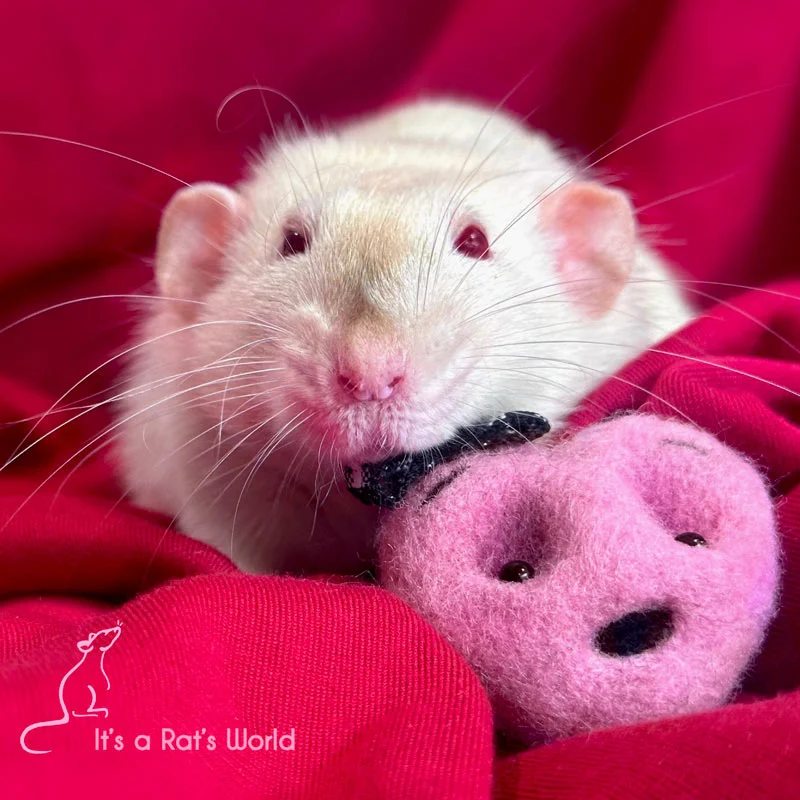
The concept of a "heart rat" has emerged as a significant psychological phenomenon within the small mammal community, describing a profound, soulmate-level bond that transcends the typical owner-pet relationship. While rat owners often maintain a "mischief"—the collective noun for a group of rats—many report the emergence of a single, or occasionally multiple, individuals who command a deeper, more transformative emotional connection. This phenomenon, while anecdotal in nature, is supported by decades of human-animal interaction (HAI) research which suggests that the intensity of the bond between humans and companion animals is often independent of the animal’s size or lifespan.
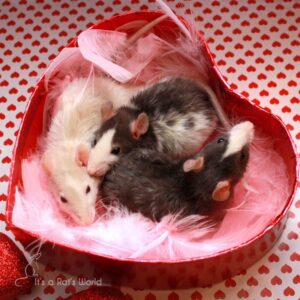
The evolution of this bond often manifests through unique personality traits, mutual recognition, and the animal’s role during specific, critical life stages of the guardian. For many, these relationships are not chosen but rather emerge organically, often characterized by a high degree of sociability and an assertive personality in the rat.
Historical Context and the Development of the Bond
The history of domesticated rats (Rattus norvegicus) in human companionship traces back to the 19th century, with the rise of "fancy rat" breeding in Victorian England. However, the contemporary understanding of the human-rat bond has shifted significantly in the last three decades. As veterinary care for "exotic" pets has improved, life expectancies and the quality of human-animal interactions have increased.
In the 1990s and early 2000s, before the widespread adoption of social media as a community-building tool, the "heart rat" phenomenon was largely an isolated experience. Without the ability to compare notes, many owners felt their intense grief upon the death of a specific rat was anomalous. Today, with the proliferation of forums and dedicated publications such as "It’s A Rat’s World," it has become clear that this experience is a recurring, documented aspect of rat ownership. The longitudinal nature of these relationships—where owners often keep 50 or more rats over a lifetime—provides a unique dataset for observing how these deep attachments form and endure.
Chronology of Emotional Attachment
Data from long-term owners suggests a predictable, albeit non-linear, progression of these bonds:

- Initial Encounter: The connection often begins during the selection process, whether through a breeder, rescue, or accidental adoption. Observations from rescues like Any Rat Rescue (ARR) indicate that "heart rats" often exhibit proactive behaviors—such as reaching out through cage bars or initiating physical contact—that set them apart from their cagemates.
- The Integration Phase: This is characterized by a "mutual training" period where the rat’s personality begins to influence the owner’s daily routine. During this time, the rat often becomes an emotional support figure, providing comfort during periods of human stress, such as health challenges, professional transitions, or the navigating of young adulthood.
- The Solidification of Identity: For many, the "heart rat" eventually becomes a part of their human identity. This is evidenced by the naming of children, pets, or even small businesses after these animals. This step signifies that the animal has moved from being a pet to a formative life influence.
- The Legacy Period: Following the animal’s natural expiration—typically within two to three years—the bond often persists through commemorative art, literature, or, in extreme cases, memorial tattoos.
Supporting Data and Behavioral Analysis
The behavioral traits that define a "heart rat" are consistently reported as high levels of intelligence, "bruxing" (a rhythmic grinding of teeth that often indicates contentment or deep relaxation), and "boggling" (the subsequent vibration of the eyes). These physiological indicators of joy are intensified in heart rats, suggesting a heightened level of trust between the animal and the human.
From a psychological perspective, these bonds function similarly to attachment theory in human development. The "secure base" provided by the animal allows the owner to navigate external hardships. Research in the field of anthrozoology has shown that the oxytocin-dopamine feedback loop—the same chemical process involved in human parental bonding—is present in interactions between humans and their pets. Because rats are highly social, pack-oriented animals, they are uniquely predisposed to form these "social contracts" with their human caregivers.
The Role of Rescue and Rehabilitation
The impact of the "heart rat" is perhaps most pronounced in the rescue community. When an owner invests time in rehabilitating a traumatized or health-compromised animal, the resulting bond is often deeper. Many heart rats are identified during the rehabilitation process, where the animal’s resilience mirrors the owner’s own emotional needs.
For instance, the story of "The Supernatural Brothers"—a group of three rescue rats that functioned as a singular unit—demonstrates that the "heart" status can be applied to a collective. This challenges the notion that the bond must be one-to-one, suggesting instead that the human-animal connection is a response to the specific behavioral energy of the animals involved.

Broader Implications and Public Perception
The perception of the rat as a companion animal has faced significant hurdles due to historical stigmas. However, the "heart rat" phenomenon is actively shifting the public narrative. By sharing stories of deep, meaningful, and life-changing relationships with these creatures, owners are humanizing a species that has long been misunderstood.
The implications for animal welfare are also significant. As more people view their rats as "heart" companions, the standard of care—including access to specialized veterinary medicine and environmental enrichment—increases. This, in turn, leads to longer, healthier lives for these animals, further reinforcing the bond and continuing the cycle of attachment.

Expert and Community Response
While there is no formal medical classification for the "heart rat" bond, veterinary professionals who specialize in small mammals increasingly acknowledge the phenomenon. Veterinarians often report that owners of heart rats are more proactive in their animal’s end-of-life care, seeking palliative options that prioritize quality of life. This level of dedication reflects the serious emotional weight these animals carry.
"The bond is as valid as any other interspecies relationship," says one anonymous shelter director who has overseen thousands of adoptions. "When we see an adopter who has truly ‘clicked’ with a specific rat, we know that animal is going to receive a level of care that goes beyond standard husbandry."
Conclusion
The "heart rat" phenomenon serves as a powerful reminder of the capacity for interspecies connection. Whether an owner experiences one such bond or several over a lifetime, the impact remains a consistent thread in their personal history. These animals do more than simply inhabit a cage; they become companions that shape the emotional landscapes of their owners. As society continues to broaden its understanding of what constitutes a "companion animal," the legacy of the heart rat stands as a testament to the fact that even the smallest creatures can hold the largest places in our lives.

