


For much of evolutionary history, the dominant reproductive strategy across the animal kingdom was remarkably hands-off: organisms would produce vast quantities of offspring, release them into the wild, and leave them entirely to fend for themselves. This solitary approach, while efficient for propagation, offered zero provisions for protection, nurturing, or post-birth investment. Yet, over successive epochs, complex social structures and dedicated parental care emerged independently across widely disparate lineages, from brooding birds and lactating mammals to the diligent nursing behaviors observed in social insects. How evolution successfully bridged the vast chasm between absentee reproduction and intensive offspring care has long remained one of biology’s most compelling open questions.
A groundbreaking study recently published in the scientific journal Nature provides a compelling, empirical explanation for how this monumental behavioral transition occurred. By closely examining clonal raider ants, a team of researchers has uncovered evidence suggesting that evolution did not forge entirely novel, bespoke neural architectures to govern parental behavior. Instead, nature appears to have engaged in biological recycling, co-opting ancient, highly conserved neural pathways that originally regulated baseline hunger and feeding drives, and repurposing them to command social care.
This revelation upends long-held assumptions regarding the novelty of behavioral evolution. By demonstrating that parental care is fundamentally an evolutionary extension of self-nourishment, the findings offer a unified lens through which scientists can view social behavior across the entire phylogenetic tree—from insects all the way to humans.
Unlocking the Evolutionary Blueprint Through Social Insects
For neuroscientists attempting to decode the genetic and chemical underpinnings of parental care, experimental models have historically presented a frustrating paradox. Ideal model organisms like fruit flies (Drosophila melanogaster) and roundworms (Caenorhabditis elegans)—staples of genetic research due to their short lifespans and easily manipulated genomes—exhibit virtually no parental investment. Once they lay their eggs, their involvement ceases entirely. Conversely, organisms that do exhibit rich, complex repertoires of maternal or paternal care, such as mice and other rodents, possess immensely intricate central nervous systems containing upwards of 100 million neurons. While scientists have successfully isolated several neuropeptides involved in mammalian parenting, mapping the precise micro-circuits responsible for these behaviors remains an extraordinarily arduous task.
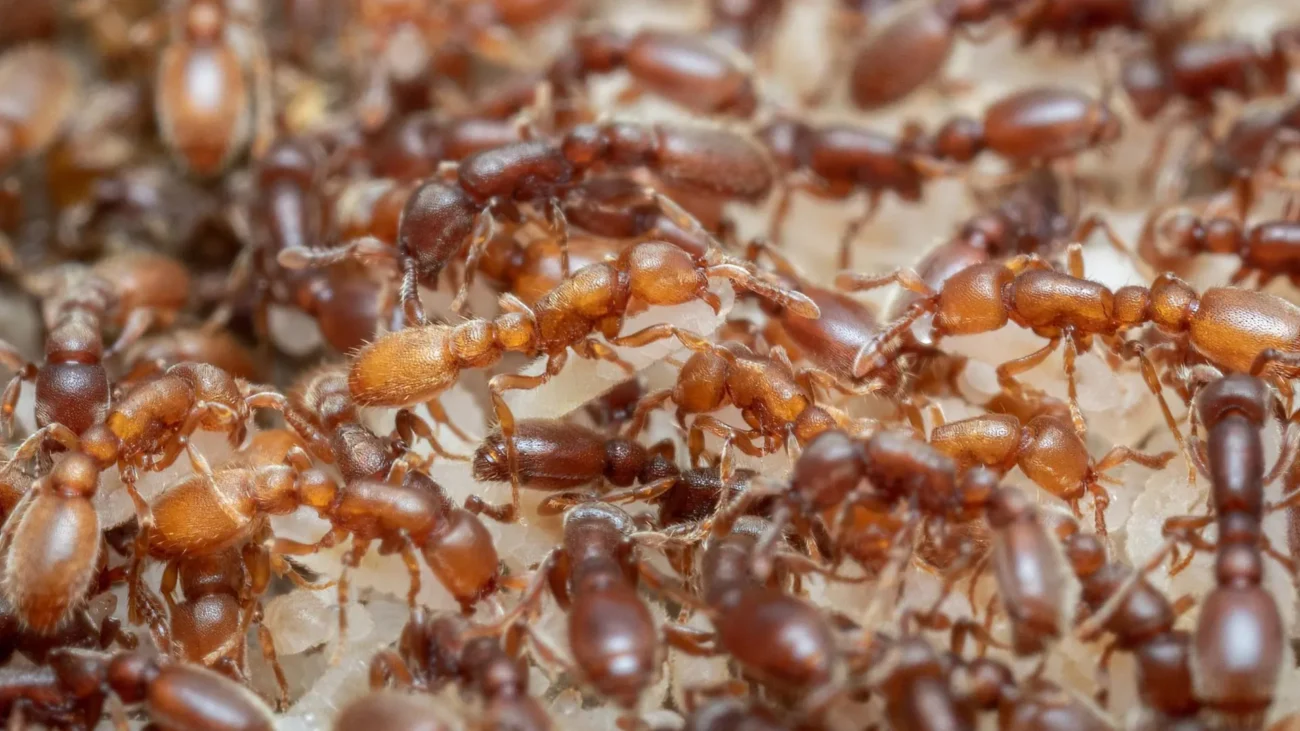
Enter the clonal raider ant (Ophistonothus or clonal raider species), a biological marvel that bridges this experimental divide. The ant brain contains approximately 60,000 neurons—vastly more tractable than a mammal’s brain, yet sophisticated enough to support complex, highly organized societies. Furthermore, clonal raider ants exhibit a remarkably predictable behavioral ontogeny. As these insects age, they undergo a distinct transition in their societal roles. Young ants remain sheltered deep within the security of the nest, dedicating their time and energy to tending, feeding, and grooming the developing larvae. As they mature and enter the latter stages of their lives, they transition into foraging roles, leaving the nest to hunt and gather provisions from the outside world.
This age-dependent division of labor makes clonal raider ants an unprecedented model for tracking how internal chemical states shift behavioral proclivities over time. Recognizing this unique potential, a research team led by Daniel Kronauer, head of the Laboratory of Social Evolution and Behavior at The Rockefeller University, set out to map the complete chemical signaling landscape of the ant brain to see how these shifting roles are orchestrated at a molecular level.
Mapping the Ant Neuropeptidome: A Chronology of Discovery
The journey toward these findings required years of meticulous biochemical mapping and behavioral observation. The research team began by constructing an advanced, automated behavioral monitoring system. This technology allowed scientists to place individual ants in controlled environments alongside individual larvae, recording and quantifying hundreds of distinct caregiving interactions with granular precision.
With the behavioral platform established, the team turned their attention to the chemical messengers driving these interactions. They successfully annotated the neuropeptidome of the clonal raider ant—cataloging the complete set of neuropeptides utilized by the insect’s brain for intercellular communication. In total, the researchers identified 70 distinct neuropeptides, establishing a comprehensive library of molecular candidates for downstream testing.
Through systematic behavioral assays, the team synthesized and tested these chemical messengers to determine which molecules actively modulated caregiving. Two specific neuropeptides quickly emerged as primary conductors of this behavioral orchestra: Neuropeptide F (NPF) and Allatostatin A (AstA).
To understand how these molecules operated across the lifespan of the colony, the researchers tracked where the peptides were produced within the brain, measured how their concentrations fluctuated as ants aged, and artificially manipulated their activity levels. The results were striking. Younger ants naturally exhibited high concentrations of NPF and low concentrations of AstA in critical brain regions, a chemical profile that strongly correlated with intensive nursing behavior. Conversely, older foragers displayed the exact inverse profile: high AstA and low NPF. When researchers experimentally altered the activity of either molecule, the ants immediately adjusted their behavior, proving that these neuropeptides were not mere biomarkers of age, but direct causal agents driving the shift from nursing to foraging.
The Hunger-Parenting Connection: Rewiring Ancient Circuits
Perhaps the most surprising dimension of the discovery was the realization that NPF and AstA do not operate in a vacuum. Rather, they are the very same signaling molecules that regulate feeding and metabolic hunger in insects—systems homologous to the hunger-regulating neuropeptide systems found in mammals.
To test this connection, the researchers subjected ants to varying nutritional states, comparing well-fed colonies against cohorts that had been systematically deprived of food. The experiment yielded a profound behavioral and chemical parallel: starved ants experienced an internal spike in NPF levels and a corresponding drop in AstA, shifting their physiological profile to closely mirror that of young, hyper-attentive caregivers. Conversely, once the starved ants were fed, their internal chemical balance rapidly reversed, suppressing their drive to tend to larvae and redirecting their motivation toward external foraging.
This physiological overlap bridges the gap between individual survival and social propagation. "We learned that parental behaviors build on the neural circuitry for feeding, and that makes some sense," explains Daniel Kronauer. "Parental behavior is a lot about feeding—not just yourself, but your offspring."
Rather than inventing a brand-new neural network from the ground up, evolution appears to have expanded an organism’s preexisting appetite-regulation machinery. The same biological imperative that drives an individual to seek out, acquire, and consume nutrition was co-opted and extended outward, motivating the animal to direct those exact same nutritional provisions toward dependent offspring. As Kronauer succinctly notes, evolution is the ultimate tinkerer: "Our work is a prime example of how evolution seldom invents things from scratch. Evolution takes what it has and works with that, sometimes in very surprising ways."
Broader Implications for Mammalian Biology and Human Medicine
While the empirical work was conducted in insects, the implications of the study extend far up the evolutionary ladder. Mammals, including humans, utilize remarkably similar neuropeptidergic signaling pathways to regulate parental attachment, social bonding, and feeding behaviors. The discovery that the evolutionary pathways governing social care are deeply constrained by ancient metabolic machinery suggests that the fundamental blueprint for parenting is shared across vast phylogenetic distances.
"It amazes me that similar parenting behaviors have evolved so many times in so many distinct animal lineages," remarks Kay, a key contributor to the research team. "Our paper suggests that the evolutionary routes to these sorts of behaviors are far more constrained than we may have naively imagined. That’s very exciting, because it may eventually lead to a blueprint of how these complex social behaviors evolve."
Beyond the direct insights into the origins of motherhood and fatherhood, the study opens new avenues for neuroscientific research into healthy brain aging. Modern biomedical research is heavily skewed toward late-stage neurodegenerative pathologies such as Alzheimer’s disease and various forms of dementia, leaving a significant knowledge gap regarding how a healthy brain naturally evolves, shifts priorities, and adapts over a normal lifespan.
Because age-related behavioral transitions are vital to the structural integrity and survival of an ant colony, these social insects provide a natural, highly observable model for investigating the neurochemical mechanisms of aging. The researchers suspect that the age-dependent shifts in neuromodulator sensitivity observed in ants are mirrored in other complex organisms, including humans, where neurochemical availability gradually alters cognitive and social proclivities over decades.
"There’s a lot of research and funding invested in studying late-stage neurodegenerative diseases, but we actually know very little about how the brain changes throughout the normal healthspan of an individual," emphasizes Kronauer. "In ant colonies, these dynamics are central to the organization of the society. Our discovery provides a striking demonstration that neuromodulators can produce age-dependent changes in behavioral proclivities in ants, and I suspect that’s the case in other animals as well, including in humans."
As the research team moves forward with plans to map the precise neural circuits targeted by NPF and AstA, the scientific community inches closer to a comprehensive, cross-species understanding of how chemical signals translate into complex social actions. By proving that the tenderest acts of parental care are rooted in the primal, ancient drive to satisfy hunger, this study fundamentally reshapes our understanding of the biological forces that bind families, societies, and species together.

