



Microsoft and Nvidia have announced a landmark partnership to launch the Surface Laptop Ultra, a device heralded as the most powerful entry in the Surface lineup to date, driven by the revolutionary Nvidia RTX Spark system-on-a-chip (SoC). This collaboration marks a significant pivot in the personal computing industry, as the two tech giants aim to move beyond the traditional CPU-GPU architecture toward a unified "superchip" designed specifically for the burgeoning era of generative AI and local personal AI agents. The RTX Spark is positioned not merely as a hardware upgrade but as a fundamental reinvention of the Windows PC, integrating Nvidia’s Blackwell architecture into a highly efficient, laptop-friendly form factor that directly challenges the performance-per-watt dominance currently held by Apple’s silicon.
The announcement represents the culmination of years of quiet development aimed at merging high-end graphical computing with the mobility required by modern professionals. By integrating the CPU, GPU, and AI processing units into a single fabric, Microsoft and Nvidia are attempting to solve the long-standing trade-off between raw power and battery longevity. The Surface Laptop Ultra is the flagship vehicle for this vision, promising a level of performance previously reserved for heavy, power-hungry workstations within a chassis that maintains the sleek, minimalist aesthetic characteristic of the Surface brand.

Technical Architecture of the RTX Spark Superchip
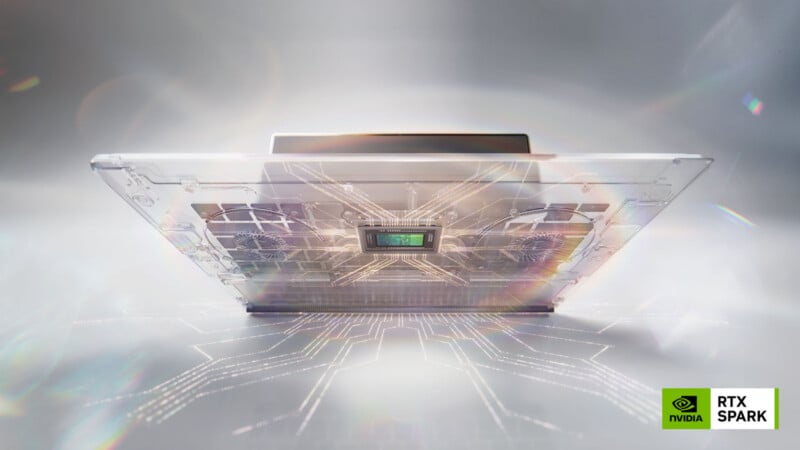
At the heart of this technological shift is the Nvidia RTX Spark, a system-on-a-chip that Nvidia CEO Jensen Huang describes as a "superchip." The architecture is a sophisticated blend of Nvidia’s most advanced technologies. It features an Nvidia Blackwell-based RTX GPU equipped with 6,144 CUDA cores and fifth-generation Tensor Cores. The inclusion of the Blackwell architecture is particularly notable, as it brings the same underlying technology found in Nvidia’s high-end data center AI chips to the consumer laptop market. This allows for unprecedented local AI processing, enabling "frontier models"—complex AI systems—to run directly on the device rather than relying on cloud-based processing.
For the central processing unit, Nvidia collaborated with MediaTek to design a custom 20-core Nvidia Grace CPU. This ARM-based design focuses on maximizing throughput while minimizing power consumption. The synergy between the Grace CPU and the Blackwell GPU is facilitated by a high-speed interconnect that allows both components to access a pool of up to 128GB of unified memory. This unified memory architecture is a critical development for Windows PCs; by allowing the GPU to access a massive, shared memory pool, the system can handle extremely large datasets and complex AI models that would typically choke a traditional system with limited VRAM.
Jensen Huang emphasized that this architecture represents a departure from forty years of traditional computing. "For forty years, you launched apps. Click. Type," Huang noted during the announcement. "With RTX Spark and Microsoft Windows, you ask—and the PC does the work." This shift toward "agentic AI"—where the computer anticipates and executes complex multi-step tasks based on natural language prompts—requires the massive parallel processing power that only a superchip of this caliber can provide.

Surface Laptop Ultra: Performance and Professional Specifications
The Microsoft Surface Laptop Ultra is designed to be the ultimate tool for "world makers"—a demographic that includes high-end video editors, 3D animators, software developers, and researchers. To support the immense power of the RTX Spark, Microsoft has overhauled the internal cooling mechanisms. The new thermal system is reported to have 2.5 times the thermal capacity of the 15-inch Surface Laptop 7th Edition. This allows the device to maintain peak performance during sustained workloads, such as 8K video rendering or training local machine learning models, without the aggressive thermal throttling or excessive fan noise that has plagued high-performance Windows laptops in the past.
The visual experience is centered around a 15-inch mini-LED PixelSense Ultra touchscreen. The display maintains Microsoft’s signature 3:2 aspect ratio, which provides more vertical screen real estate for productivity and creative software. With a resolution of 262 pixels per inch (PPI) and a peak HDR brightness of 2,000 nits, the screen is engineered to meet the demands of professionals making critical color and exposure decisions. The high brightness and contrast ratios afforded by mini-LED technology make it a viable tool for outdoor use and high-dynamic-range content creation.
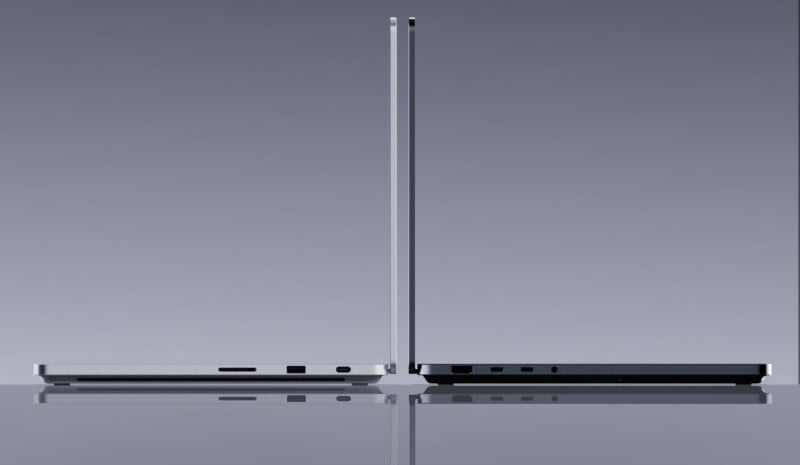
Connectivity and usability have also seen significant upgrades. Microsoft has included what it calls a "full set of maker-friendly ports," including multiple USB-C ports, a USB-A port for legacy peripherals, an HDMI output, a dedicated headphone jack, and a full-sized SD card slot. The inclusion of the SD card slot is a direct response to feedback from the photography and cinematography communities. Additionally, the device features a 30% larger haptic touchpad, designed to provide precise feedback and a more expansive surface for gesture-based navigation.
Industry Alignment and Software Integration
The success of new hardware is often determined by software optimization, and Microsoft and Nvidia have secured early commitments from major industry players. Adobe, the dominant force in creative software, has announced that it is fine-tuning its Creative Cloud suite—including Photoshop, Premiere Pro, and After Effects—specifically for the RTX Spark architecture. Adobe CEO Shantanu Narayen stated that the partnership will allow for "AI-native creative experiences" that are faster and more responsive, leveraging the local Tensor cores for tasks like generative fill, automated masking, and real-time video upscaling.
Beyond Adobe, other key creative tools are being optimized for the new superchip. Blackmagic Design’s DaVinci Resolve, a staple in the film industry, will utilize the Blackwell GPU for accelerated color grading and neural engine features. Other confirmed partners include CapCut, Filmora, Blender, and Topaz Labs. For these developers, the attraction lies in the 128GB of unified memory and the full CUDA support, which allows their software to run desktop-class algorithms on a portable device. This level of integration is intended to ensure that the "AI PC" is not just a marketing term but a functional reality for professionals who require high computational throughput.
Comparative Market Analysis and Strategic Implications
The introduction of the Surface Laptop Ultra and the RTX Spark chip is widely viewed as Microsoft and Nvidia’s most direct challenge to Apple’s M-series silicon. Since the transition to Apple Silicon, the MacBook Pro has largely dominated the market for "thin and light" yet powerful professional laptops. Apple’s advantage has been its integrated SoC design and unified memory, which provided superior efficiency compared to the traditional Intel/AMD and discrete Nvidia GPU pairings found in Windows machines.
By moving to an SoC model with the RTX Spark, Microsoft and Nvidia are closing the architectural gap. The use of a 20-core Grace CPU (ARM-based) suggests that Microsoft is doubling down on "Windows on ARM," aiming to provide the same "instant-on" responsiveness and all-day battery life that Mac users have enjoyed, but with the added advantage of Nvidia’s massive CUDA ecosystem. This is a critical distinction; while Apple’s Neural Engine is powerful, Nvidia’s CUDA remains the industry standard for professional GPU acceleration and AI development.
Furthermore, the RTX Spark will not remain exclusive to Microsoft hardware. Nvidia has confirmed that the superchip will be available to a broad range of Original Equipment Manufacturers (OEMs). Upcoming devices featuring the chip include the Asus ProArt P14 and P16, the Dell XPS 16, HP OmniBook models, Lenovo Yoga Pro devices, and MSI Prestige N16 laptops. This multi-vendor approach ensures that the "RTX Spark" ecosystem will span various price points and form factors, potentially ending the era of the bulky, loud, and aesthetically aggressive gaming laptop in favor of sophisticated, high-performance machines.
Chronology and Future Availability
The joint announcement follows a series of strategic moves by both companies. Earlier this year, Microsoft introduced the "Copilot+" PC category, focusing on NPU (Neural Processing Unit) performance for basic AI tasks. The Surface Laptop Ultra represents the "Pro" or "Ultra" tier of this vision, moving from basic NPU tasks to heavy-duty GPU-accelerated AI.

The timeline for release is as follows:
- Announcement: June 2024 (Joint Microsoft and Nvidia keynote).
- Developer Access: Summer 2024, with early kits provided to major software houses to finalize optimizations for the Blackwell/Grace architecture.
- Market Launch: Fall 2024. The Surface Laptop Ultra and the first wave of RTX Spark laptops from Asus, Dell, and HP are expected to hit shelves in late September or October, coinciding with the next major update to Windows 11.
- Pricing: While specific pricing tiers have not been finalized, industry analysts expect the Surface Laptop Ultra to start at a premium price point, likely competing with the 14-inch and 16-inch MacBook Pro models.
As the industry moves toward the Fall release, the focus will shift to real-world benchmarks. The tech community will be looking to see if the 2.5x thermal capacity and the 20-core Grace CPU can truly deliver on the promise of "all-day battery life" without compromising the "raw power" Nvidia is known for. If successful, the RTX Spark could represent the most significant shift in the Windows hardware ecosystem in over a decade, firmly establishing the PC as a local hub for the next generation of artificial intelligence.

