


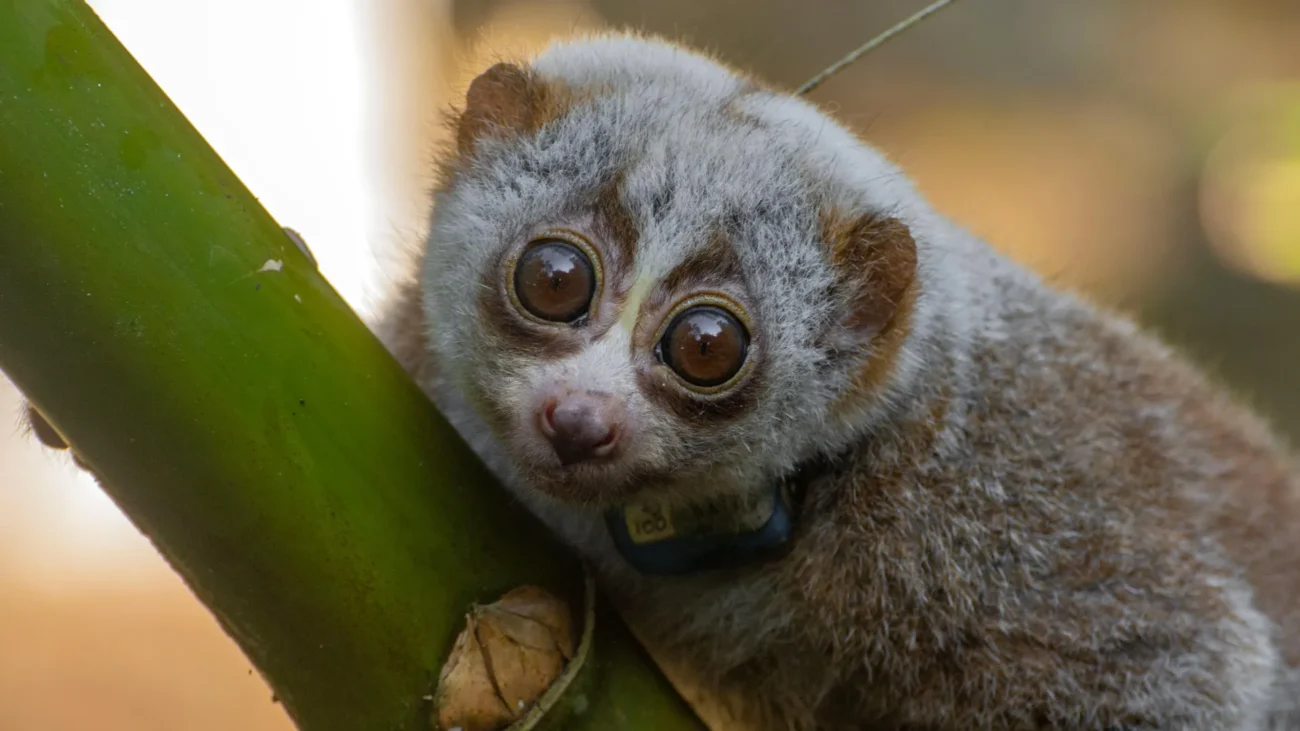
A groundbreaking scientific study has unveiled a stark reality that challenges conventional conservation wisdom: the act of returning rescued wildlife to their natural habitats, while often well-intentioned, does not guarantee successful reintegration. In a significant portion of cases, animals released after a period of captivity face perilous circumstances, transforming what should be a sanctuary into what researchers are now describing as a "death trap." This research, published in the esteemed journal Global Ecology and Conservation, casts a critical light on the complexities and potential pitfalls of wildlife rescue and release programs, particularly for highly territorial species.
The comprehensive investigation was spearheaded by Professor Anna Nekaris OBE, a distinguished primatologist from Anglia Ruskin University, in collaboration with experts from the conservation organization Plumploris e.V. and the University of Western Australia. Their intensive research focused on the post-release fate of Bengal slow lorises (Nycticebus bengalensis) in Bangladesh, a species already teetering on the brink of extinction.
The Allure and Exploitation of the Slow Loris
The Bengal slow loris, with its endearing large eyes and seemingly gentle countenance, has unfortunately become a prime target for the illegal wildlife trade. This very appeal, which has captivated humans, has led to its status as one of the most heavily trafficked primates globally. The insatiable demand for these unique creatures in the exotic pet market has driven their populations to critically low levels.
Reflecting the severity of their plight, all species of slow loris are categorized by the International Union for Conservation of Nature (IUCN) on its Red List, ranging from Critically Endangered to Vulnerable. This threatened status often necessitates rescue operations and subsequent releases as part of crucial conservation strategies aimed at bolstering wild populations and preventing their complete disappearance. These efforts, though noble, are now under scrutiny for their efficacy and potential unintended consequences.
A Grim Reckoning: Tracking Bengal Slow Lorises Post-Release
The new study meticulously tracked the movements and survival rates of nine Bengal slow lorises that were fitted with radio collars and subsequently released into a national park in northeastern Bangladesh. This particular park had a history of being utilized for previous wildlife release initiatives, suggesting a perceived suitability for reintroduction. However, the findings revealed a devastating outcome that defied optimistic expectations.
The results were alarmingly stark. Out of the nine collared lorises released, a mere two survived the return to the wild. The remaining seven succumbed to the harsh realities of their reintegrated environment. Three animals tragically died within a mere 10 days of their release, while an additional four perished within the subsequent six months. The research team managed to recover four of the seven deceased lorises, and a grim pattern emerged: all four showed clear evidence of having been killed by other slow lorises.
Territoriality, Venom, and the Perils of Reintroduction
The tragic demise of these Bengal slow lorises can be largely attributed to their inherent nature as highly territorial animals. Compounding this territoriality is their unique distinction as the only venomous primates in the world. They possess specialized glands and teeth that allow them to deliver a potent, toxic bite, a defense mechanism that unfortunately becomes a source of fatal conflict in an already established population.
The recovered lorises exhibited severe bite wounds on their heads, faces, and digits, undeniable indicators of lethal territorial encounters. These aggressive confrontations with resident lorises likely proved insurmountable for the newly released individuals, who were attempting to establish a presence in an already occupied and defended territory.
Furthermore, the research uncovered a correlation between the duration of captivity and survival rates. Animals that had spent longer periods in captivity exhibited significantly shorter survival times after their release. This suggests that prolonged confinement may diminish their ability to cope with the challenges of the wild, potentially impacting their foraging skills, predator avoidance, or social navigation.
An intriguing observation was the behavior of the released lorises. They appeared more restless and exhibited greater movement across larger areas compared to their wild counterparts. This heightened activity and expansive ranging could be interpreted as a desperate attempt to find suitable, unoccupied territory or to evade conflict with established residents. The two lorises that managed to survive had indeed traveled across considerably larger territories than those that perished, a pattern that strongly suggests that survival was contingent on their ability to leave established territories and, crucially, avoid confrontations with the resident slow loris population.
Rethinking Conservation: The Nuances of Wildlife Rescue and Release
The study’s findings necessitate a critical re-evaluation of current wildlife rescue and release protocols, particularly for less charismatic or smaller species. While large, iconic animals like big cats often benefit from intensive post-release monitoring, many smaller species are released with minimal or no tracking. This lack of follow-up means that the true outcomes of these conservation efforts frequently remain unknown, potentially masking widespread failures and perpetuating harmful practices.
Professor Anna Nekaris OBE, Senior Author of the study and head of the Little Fireface Project, emphasized the flawed assumption that all animal rescues automatically translate into positive conservation stories. "It’s assumed that returning confiscated or rescued animals to the wild is always a positive conservation story," Professor Nekaris stated. "Our research shows that for highly territorial species like slow lorises, releasing them into areas that are already densely populated can be a death trap."
She further elaborated on the public expectation driving many releases: "Many rescued endangered species are often released because the public expects it, but for animals such as the Bengal slow loris, this is not always the best course of action. Without fully understanding the animal’s behaviour, its time spent in captivity and the density of resident populations at the release site, reintroductions may do more harm than good."
The researchers advocate for a more nuanced and scientifically rigorous approach to wildlife releases. This includes thorough evaluations of the release site’s suitability, assessing the physical and psychological condition of each individual animal, and conducting detailed habitat assessments. The implementation of long-term monitoring programs and the development of species-tailored rehabilitation guidelines are crucial steps in significantly improving the chances of successful reintegration.
Hassan Al-Razi, Lead Author of the study and team leader of Plumploris e.V. Bangladesh, highlighted the systemic issues prevalent in Bangladesh: "Rescue and release have become an increasingly common practice in Bangladesh. Many wild animals, including slow lorises, are rescued and subsequently released back into the wild. However, in many cases, these releases are conducted inappropriately. For forest-dwelling species, release sites are often selected based on logistical convenience rather than ecological suitability. As a result, certain forests have effectively become dumping grounds for rescued animals and are no longer appropriate release sites."
Mr. Al-Razi expressed concern about the broader implications of these practices: "Although our research has focused on the Bengal slow loris and demonstrated the consequences of such practices, we believe similar patterns likely affect many other species." This suggests that the problem extends beyond the slow loris and may represent a widespread, yet under-reported, conservation challenge.
Implications for Conservation Policy and Practice
The study’s implications are far-reaching for conservation organizations, government wildlife agencies, and the public. It underscores the urgent need for a paradigm shift from simply rescuing and releasing animals to implementing evidence-based, species-specific reintroduction strategies. This requires a greater investment in scientific research, post-release monitoring, and the development of robust rehabilitation protocols.
The findings also raise questions about the role of public pressure in conservation decisions. While public engagement is vital, it should be guided by scientific understanding rather than emotional appeals alone. Educating the public about the complexities of wildlife rehabilitation and the potential negative consequences of poorly planned releases is essential to fostering more informed support for conservation efforts.
The Bengal slow loris serves as a poignant case study, but the lessons learned are universally applicable. As global biodiversity faces unprecedented threats, ensuring that our conservation interventions are not inadvertently contributing to the demise of vulnerable species is paramount. The transition from "rescue and release" to "rescue, rehabilitate, and reintroduce with rigorous scientific oversight" is no longer a recommendation but a critical necessity for the future of wildlife conservation. The ecological landscape, for many species, is too fragile to afford well-intentioned but ultimately fatal mistakes.

