


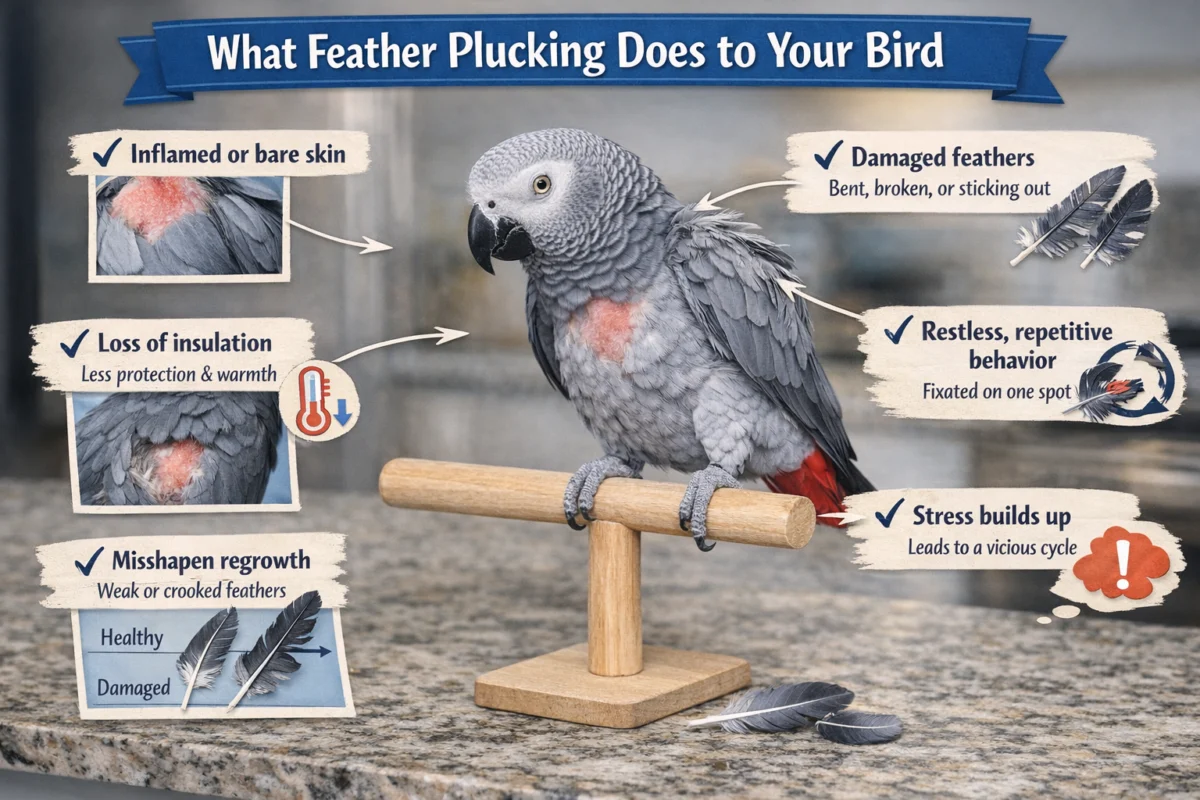
The sight of dislodged feathers on a cage floor or a bird repeatedly fixating on a particular area of its plumage often triggers concern for pet owners. This initial unease is well-founded, as these are frequently the nascent signs of feather plucking, a destructive behavior that, if not addressed promptly, can escalate into a serious welfare issue for companion birds. Catching these early indicators is crucial for effective intervention and to prevent the behavior from becoming a deeply ingrained and harmful habit.
Distinguishing Normal Molting and Preening from Destructive Plucking
The first and most critical step for any bird owner observing feather loss or unusual grooming is to accurately differentiate between normal physiological processes and pathological behaviors.
- Molting: This is a natural, cyclical process where birds shed old, worn feathers and grow new ones. Molting typically occurs a few times a year, depending on the species, age, and environmental factors. During a molt, feathers fall out naturally, usually a few at a time, replaced by new pin feathers emerging. The process is generally calm, and the bird’s plumage, while perhaps a bit sparse in areas, remains generally intact and healthy.
- Preening: This is an essential and normal grooming behavior. Birds use their beaks and tongues to meticulously realign, clean, and waterproof their feathers, distributing preen oil from a gland at the base of their tail. A bird preening normally will move calmly and methodically across different parts of its body, smoothing and tidying each feather. This behavior is vital for feather health, insulation, and flight.
- Feather Plucking: In stark contrast to molting and preening, plucking is an abnormal behavior characterized by the bird intentionally damaging or removing its own feathers. The bird fixates on one or a few specific areas, engaging in intense digging, chewing, snapping, or pulling at the same feathers repeatedly. Unlike molting, the feathers are damaged or broken, not simply shed, and bare patches may become visible.
- Self-Mutilation: This represents the most severe progression of plucking. Here, the bird moves beyond simply damaging feathers and begins to injure the underlying skin. The behavior becomes highly focused, repetitive, and extremely difficult to interrupt, often resulting in raw, irritated, or wounded skin. This is a medical emergency requiring immediate veterinary attention to prevent infection, severe pain, and further injury.
What owners often notice first are damaged feathers rather than naturally shed ones, or a persistent focus on a single area of the body. A quick self-check involves observing the nature of the feather loss and the bird’s behavior. If feathers appear chewed, bent, or broken, or if the bird is obsessively working on one spot, it is a strong indicator that something is amiss beyond a normal molt.
The Escalation of Plucking: A Timeline of Symptoms
Feather plucking rarely appears suddenly in its severe form. It typically progresses through a series of stages, making early detection vital for successful intervention.
- Subtle Onset (Weeks to Months): Initially, an owner might notice an increased number of small feather fragments at the bottom of the cage, or the bird might seem to spend an unusual amount of time grooming a particular area. The bird’s behavior might be slightly more intense than typical preening, involving more vigorous chewing or pulling motions. At this stage, the plumage might still appear relatively full, but closer inspection could reveal minor feather damage or disarray.
- Visible Damage (Months): As the behavior progresses, more obvious signs emerge. Feathers may appear frayed, chewed, or broken, particularly on the chest, legs, or under the wings—areas typically accessible to the bird’s beak. Small bare patches might start to become visible, especially around the neck or chest. The bird’s focus on plucking will become more pronounced and harder to ignore.
- Significant Feather Loss (Months to Years): Without intervention, the behavior intensifies, leading to large areas of bare skin. The bird’s insulating layer of feathers is compromised, making it susceptible to temperature fluctuations. The skin in plucked areas may appear irritated, red, or inflamed. The behavior becomes highly ritualized and difficult to interrupt, often driven by a combination of physical discomfort and psychological compulsion.
- Self-Mutilation (Advanced Stage): This is the most critical stage, where the bird inflicts direct harm to its skin. Open wounds, sores, and scabs become apparent. The risk of secondary bacterial or fungal infections is extremely high, and the bird experiences significant pain and distress. This stage demands immediate and aggressive medical and behavioral intervention to save the bird’s life and prevent permanent damage.
The reinforcing cycle of discomfort leading to plucking, which in turn worsens skin and feather health and increases the urge to pluck, underscores why early action is paramount. The longer the cycle continues, the more difficult it becomes to break.
Unraveling the Roots: Why Birds Engage in Self-Destructive Grooming
Feather plucking is not a random act; it is almost invariably a symptom of an underlying issue, whether medical, environmental, or psychological. Understanding the root cause is the cornerstone of effective treatment. Studies suggest that feather plucking affects a significant percentage of companion parrots, with estimates ranging from 10% to 30% depending on the species and living conditions, highlighting the complexity and multifactorial nature of the problem.
Medical Etiologies: These are often the first factors an avian veterinarian will investigate.
- Nutritional Deficiencies: A common culprit, especially diets primarily consisting of seeds, which are deficient in Vitamin A, calcium, and essential amino acids. Malnutrition can lead to poor feather quality, itchy skin, and compromised immune function.
- Organ Disease: Liver or kidney disease can cause systemic itching, metabolic imbalances, or toxin buildup that manifests as skin irritation or poor feather growth.
- Infections: Bacterial, fungal (e.g., Candida), viral (e.g., Psittacine Beak and Feather Disease – PBFD, Polyomavirus), or parasitic infections (mites, giardia) can cause intense itching, discomfort, and skin lesions, prompting plucking.
- Allergies: Birds can suffer from environmental allergies (dust, pollen, cleaning products) or food allergies, leading to pruritus (itching) and subsequent plucking.
- Heavy Metal Toxicity: Exposure to lead, zinc, or other heavy metals can cause neurological symptoms, organ damage, and skin irritation.
- Hormonal Imbalances: Reproductive issues, chronic egg laying, or imbalances in thyroid hormones can induce behavioral changes, including increased aggression, nesting behaviors, and plucking.
- Pain: Any source of chronic pain—arthritis, injury, internal masses—can cause a bird to focus intensely on the painful area, leading to plucking.
Environmental Factors: The bird’s immediate surroundings play a critical role in its well-being.
- Dry Air: Low humidity, especially in arid indoor environments, can lead to dry, itchy skin and brittle feathers.
- Lack of Bathing Opportunities: Regular bathing or misting is essential for feather and skin hydration and cleanliness.
- Insufficient UV Light: Birds require full-spectrum UV-A and UV-B light for psychological well-being and Vitamin D3 synthesis, which is crucial for calcium metabolism and overall health.
- Inadequate Cage Size and Enrichment: A cage that is too small restricts movement, while a lack of stimulating toys, foraging opportunities, and perches leads to boredom, frustration, and stress, which can manifest as plucking.
- Poor Cage Hygiene: Unclean cages can harbor bacteria and fungi, leading to skin infections or attracting parasites.
- Exposure to Irritants: Smoke, strong chemical odors from cleaning products, air fresheners, or cooking fumes can irritate a bird’s respiratory system and skin.
- Inconsistent Environment: Frequent changes in cage location, daily routine, or exposure to new stressors can induce anxiety.
Behavioral and Psychological Drivers: These are complex and often intertwined with environmental factors.
- Stress and Anxiety: Birds are highly sensitive creatures. Changes in household dynamics, perceived threats, loneliness, or a lack of routine can cause chronic stress.
- Boredom and Lack of Enrichment: Highly intelligent species, particularly parrots, require constant mental and physical stimulation. Without it, they can develop stereotypical behaviors, including plucking, as a coping mechanism.
- Attention-Seeking: If plucking elicits a strong reaction from owners, birds can learn to use it to gain attention, even negative attention.
- Fear and Phobias: Traumatic experiences or persistent fears can trigger anxiety and self-destructive behaviors.
- Poor Socialization: Birds weaned too early or not adequately socialized may struggle with independence and develop separation anxiety or other behavioral issues.
- Lack of Sleep: Inadequate sleep (birds need 10-12 hours of uninterrupted darkness) can lead to irritability and stress.
Species-Specific Predispositions: While any bird can pluck, certain species are notoriously more prone to the behavior due to their intelligence, complex social needs, and sensitivity. These include African Greys, Cockatoos, Macaws, and Eclectus parrots. Their intricate psychological makeup makes them more susceptible to the stressors of captive environments.
The Diagnostic Journey: Identifying the Underlying Cause
Given the myriad potential causes, a systematic and thorough diagnostic approach is essential. This process requires close collaboration between the owner and an experienced avian veterinarian.

The Critical Role of Avian Veterinary Care:
Upon noticing any signs of plucking, immediate consultation with an avian veterinarian is imperative. According to Dr. Eleanor Vance, a specialist in avian medicine, "Feather plucking is rarely a simple behavioral issue; it’s often a symptom of underlying physical or psychological distress that requires a comprehensive diagnostic approach. Delaying veterinary care can allow the underlying condition to worsen and the plucking behavior to become more entrenched."
Comprehensive Diagnostic Procedures:
- Physical Examination: A detailed head-to-tail examination to assess overall health, feather condition, skin integrity, and identify any external parasites or lesions.
- Blood Tests: A complete blood count (CBC) and biochemistry panel can reveal signs of infection, inflammation, organ dysfunction (liver, kidney), and nutritional deficiencies. Specific tests for heavy metal toxicity (lead, zinc) and vitamin levels (especially Vitamin A) may also be performed.
- Feather and Skin Biopsies/Scrapes: Samples of damaged feathers or skin can be examined microscopically for parasites, fungal elements, or bacterial infections. A biopsy can also help identify inflammatory conditions or feather follicle damage.
- Cultures: Bacterial or fungal cultures from skin lesions or the crop can identify specific pathogens causing infections.
- Imaging: Radiographs (X-rays) can detect internal organ enlargement, masses, or foreign bodies. In some cases, endoscopy may be used for a more detailed internal examination.
- Viral Testing: Specific tests for common avian viruses like PBFD and Polyomavirus can be crucial, as these can directly impact feather health.
Environmental and Behavioral Assessment:
While medical causes are being ruled out, the veterinarian will typically conduct a detailed interview with the owner to gather information about the bird’s living situation and daily routine. This includes:
- Dietary History: What the bird eats, how often, and any supplements provided.
- Cage Environment: Size, type of perches, toys, substrate, location, and cleaning regimen.
- Daily Routine: Hours of sleep, interaction with owners, time out of the cage, access to sunlight/UV lighting.
- Household Environment: Presence of other pets, smokers, use of air fresheners, candles, or cleaning products.
- Behavioral Observations: A detailed log of when the plucking occurs, what precedes it, and how the bird reacts to various stimuli. This can help identify triggers or patterns.
Strategic Intervention: A Multi-Modal Approach to Treatment
There is no single "magic bullet" for feather plucking. Effective treatment almost always involves a combination of strategies tailored to the identified root cause(s). The goal is not merely to stop the plucking but to address the underlying distress driving the behavior.
Addressing Medical Conditions:
- Medication: Antibiotics for bacterial infections, antifungals, antiparasitics, or anti-inflammatory drugs as needed.
- Dietary Adjustments: Transitioning to a high-quality pelleted diet supplemented with fresh fruits, vegetables, and appropriate supplements (e.g., Vitamin A, Omega-3 fatty acids) is often a fundamental step.
- Hormonal Therapy: For reproductively active birds or those with hormonal imbalances, hormonal therapy may be considered under veterinary guidance.
- Pain Management: If pain is identified as a cause, appropriate analgesics will be prescribed.
Optimizing the Environment:
- Dietary Enrichment: Beyond basic nutrition, provide foraging opportunities that make the bird work for its food, mimicking natural behaviors.
- Physical Enrichment: Offer a wide variety of safe, destructible toys (shreddable, chewable), puzzle toys, and different textured perches. Rotate toys regularly to maintain novelty.
- Humidity and Bathing: Increase ambient humidity (humidifier) and offer daily opportunities for bathing (misting, shallow water dish, bird bath).
- Lighting: Install full-spectrum UV-A and UV-B lighting for at least 10-12 hours daily, placed at the appropriate distance from the cage.
- Cage Optimization: Ensure the cage is adequately sized, cleaned regularly, and located in a secure, active part of the home without being overly stimulating or isolated.
- Air Quality: Eliminate environmental irritants such as cigarette smoke, strong chemical fumes, and aerosol sprays.
Implementing Behavioral Therapies:
- Positive Reinforcement Training: Teach new behaviors and reinforce desired ones to build confidence and provide mental stimulation.
- Increased Social Interaction: For birds craving attention, schedule consistent, positive interaction sessions. Avoid inadvertently reinforcing plucking by giving attention only when the bird plucks.
- Stress Reduction: Identify and minimize stressors. This might involve a quieter environment, a more predictable routine, or gradual desensitization to perceived threats.
- Sleep Hygiene: Ensure 10-12 hours of uninterrupted darkness and quiet for sleep each night.
Pharmacological Support and Physical Aids:
- Anti-Anxiety/Antidepressant Medications: In severe cases, or when behavioral and environmental changes are insufficient, a veterinarian may prescribe medications (e.g., SSRIs, tricyclic antidepressants) to help manage anxiety or compulsive behaviors. These are typically used in conjunction with environmental and behavioral modifications, not as a standalone solution.
- Physical Barriers: Elizabethan collars or protective vests can be used as a temporary measure to prevent further self-mutilation and allow feathers/skin to heal, but they do not address the underlying cause and can be stressful for the bird. Their use must be carefully monitored and accompanied by a comprehensive treatment plan.
Expert Perspectives and Ethical Imperatives
Organizations like the American Federation of Aviculture (AFA) and the Association of Avian Veterinarians (AAV) consistently advocate for proactive care and early intervention. They emphasize that a thorough understanding of a bird’s species-specific needs—from dietary requirements and environmental enrichment to social interaction and psychological stimulation—is paramount to preventing such destructive behaviors. Avian behaviorists often highlight that plucking is a communication from the bird, signaling that something is profoundly wrong in its world. Ignoring these signals not only perpetuates suffering but also reflects a lapse in responsible pet ownership.
The financial and emotional toll on owners dealing with feather plucking can be substantial. Diagnostic tests, veterinary consultations, medications, specialized diets, and enrichment items can accumulate significant costs. Beyond the financial aspect, the emotional distress of watching a beloved pet harm itself can be immense, leading to feelings of helplessness and frustration.
Beyond the Feathers: Long-Term Implications and Owner Responsibilities
The long-term implications of untreated feather plucking extend far beyond aesthetics.
- Compromised Welfare: Chronic pain, increased risk of infection, inability to regulate body temperature, and impaired flight capabilities significantly diminish a bird’s quality of life.
- Permanent Damage: Prolonged plucking can permanently damage feather follicles, leading to irreversible feather loss or abnormal feather growth.
- Behavioral Entrenchment: The longer the plucking persists, the more deeply ingrained it becomes as a compulsive behavior, making it increasingly difficult to modify, even if the original cause is resolved.
The ethical considerations of keeping companion birds are significant. Many popular pet bird species are highly intelligent, long-lived, and possess complex social and environmental needs that are challenging to replicate in a domestic setting. Responsible ownership demands extensive research into a species’ requirements before acquisition, a commitment to providing an enriching and stimulating environment, and immediate veterinary care when health or behavioral issues arise.
In conclusion, feather plucking in companion birds is a serious and complex issue that signals underlying distress. It requires a diligent, patient, and multi-faceted approach, beginning with early detection and a comprehensive veterinary evaluation. The journey to recovery can be long, but with dedicated effort, owners can significantly improve their bird’s health, welfare, and quality of life. The earlier intervention begins, the greater the chance of turning this destructive pattern around and fostering a healthier, happier avian companion.

