


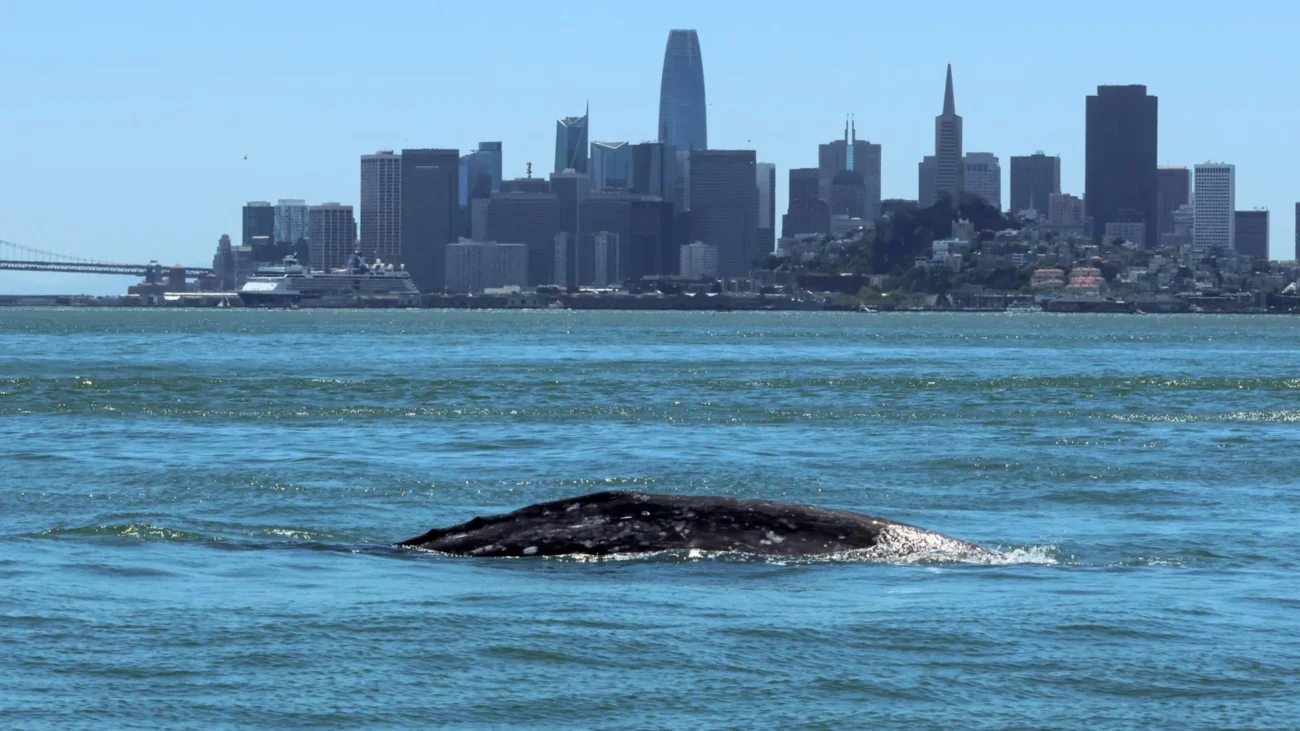
The iconic migration of gray whales, a natural spectacle spanning thousands of miles between the nutrient-rich Arctic feeding grounds and the sheltered breeding lagoons of Baja California, Mexico, is undergoing a dramatic and concerning transformation. As the planet’s oceans respond to the accelerating pressures of climate change, these magnificent marine mammals are exhibiting behaviors previously unseen, venturing into unfamiliar and increasingly hazardous territories. A striking example of this shift is the growing presence of gray whales in the heavily trafficked waters of San Francisco Bay, a deviation from their traditional migratory routes. This phenomenon, however, is not merely a curious ecological anomaly; it is linked to an alarmingly high mortality rate, with researchers identifying boat strikes as a primary cause of death among these displaced giants.
An in-depth study examining the unusual influx of gray whales into San Francisco Bay has revealed a grim statistic: nearly 20% of the whales observed entering the Bay did not survive their sojourn. The research, published in the esteemed journal Frontiers in Marine Science, highlights the complex interplay of environmental pressures and human activity contributing to this crisis.
The Perilous Convergence: San Francisco Bay’s Unlikely Visitors
San Francisco Bay, a vibrant and bustling hub of maritime activity, presents a uniquely challenging environment for marine life. For gray whales, their low profile when surfacing makes them particularly vulnerable to detection by vessel operators. "Gray whales have a low profile to the water when they surface, and this makes them difficult to see in conditions like fog which are common to San Francisco Bay," explained Josephine Slaathaug, a lead author of the study from Sonoma State University. She further elaborated on the inherent dangers of the waterway: "Additionally, San Francisco Bay is a highly trafficked waterway, and the Golden Gate Strait serves as a bottleneck through which all traffic and whales must enter and exit." This narrow gateway funnels both commercial and recreational vessels, creating a constant stream of potential collisions.
Climate Change: A Catalyst for Disruption
The fundamental driver behind these behavioral shifts is the pervasive impact of climate change on Arctic ecosystems. Gray whales, like many baleen whales, depend on the abundance of food in polar waters to build up blubber reserves necessary for their long migration and breeding periods. During their journey to warmer climes, they typically do not feed, relying solely on these stored reserves. However, rising ocean temperatures are profoundly altering the availability and distribution of their primary food sources, such as amphipods and other small invertebrates found in the seabed.
According to data from the National Oceanic and Atmospheric Administration (NOAA), the gray whale population has experienced a significant decline, dropping by more than half since 2016. This alarming trend is further underscored by a sharp decrease in the sighting of calves, indicating a potential struggle for reproductive success and overall population health. The disruption of their traditional feeding grounds is forcing whales to seek alternative food sources, leading them to explore less familiar and more dangerous environments.
A New Feeding Ground: The Emergence of "Bay Grays"
San Francisco Bay was not historically considered a typical feeding or migratory area for gray whales. Their passage through the Golden Gate was generally a swift transit en route to more established feeding grounds. However, this pattern began to noticeably change around 2018, marked by an increased frequency of gray whale sightings within the Bay and a concurrent rise in whale strandings and deaths in the region. This emergent phenomenon led scientists to coin the term "Bay Grays" for these individuals, prompting an urgent need for investigation into their motivations and the implications of their presence. Researchers initiated a comprehensive effort to understand whether these were returning individuals, suggesting a learned behavior, or one-time occurrences driven by immediate need.
Tracking the Uncharted: A Multi-Year Investigation
To unravel the mystery of the "Bay Grays," researchers embarked on an extensive tracking initiative spanning from 2018 to 2025. The methodology employed was multifaceted, combining opportunistic sightings and photographic data contributed by the public with more structured surveys conducted by scientific teams. This vast dataset was then meticulously compared with necropsy reports from stranded whales to correlate observed behaviors with outcomes.
The identification of individual whales relied on the unique patterns of scars and markings on their skin. While this method is effective for live animals, researchers acknowledged a limitation: these markings can fade after death, potentially leading to missed identifications in the necropsy data. Despite this challenge, the study managed to document a significant number of individual whales within the Bay.
Over the course of the study, 114 distinct gray whales were identified within San Francisco Bay. A key finding from this tracking effort was the low rate of return. Only four of these individuals were observed in the Bay more than once across the entire study period, strongly suggesting that for the vast majority, their presence was a singular, likely desperate, event rather than a recurring behavior. This led scientists to hypothesize that San Francisco Bay might be serving as an emergency feeding stop for whales that are already in poor physical condition. This hypothesis is further supported by observations of unusually thin individuals foraging in other atypical habitats, indicating a widespread search for sustenance among a vulnerable segment of the population.
The Grim Toll: Vessel Strikes and Starvation
Despite the potential for the Bay to offer a temporary refuge, the harsh reality for many of these whales is a tragic end. Between 2018 and 2025, a staggering 70 gray whales were found dead in the broader San Francisco Bay region. Of these fatalities, a substantial 30 were definitively confirmed to have been struck by vessels. For the remaining whales where a cause of death could be ascertained, malnutrition and starvation emerged as significant contributing factors.
The study was able to positively match 21 of the 45 identifiable dead whales to individuals documented in the researchers’ catalog. This confirmed a high mortality rate within the studied population. "At least 18% of the individuals identified in San Francisco Bay later died in the area," stated Bekah Lane of the Center for Coastal Studies, a co-author of the research. Expanding the analysis to include all local strandings, both inside and outside the Bay, revealed an even more alarming trend: "over 40% of these whales died of trauma from vessels." This statistic underscores the pervasive threat posed by maritime traffic to this endangered species.
Urgent Calls for Intervention and Protection
The findings of this study have ignited a fervent call for immediate action and further research to better comprehend the evolving behavior of gray whales and the complex factors driving their entry into perilous waters. In 2025 alone, an unprecedented 36 whales entered the Bay, with some groups comprising over 10 individuals, signaling an escalating crisis.
Scientists are emphasizing the critical need for more detailed tracking technologies and a greater number of comprehensive necropsies. These efforts are essential to definitively determine whether the low rate of returning whales is a direct consequence of high mortality, and to pinpoint the primary causes of death – be it starvation, vessel strikes, or a devastating combination of both. There is a significant concern that weakened whales, already struggling with malnutrition, may be less agile and therefore less able to detect and avoid oncoming ships, creating a vicious cycle of vulnerability.
Preventive measures are being strongly advocated for by researchers and conservationists. These could include enhanced educational programs for commercial vessel operators, strategic adjustments to ferry routes to steer clear of known whale aggregation areas, and the implementation of speed restrictions in identified high-risk zones.
"In San Francisco Bay, the biggest threat to these whales is vessel traffic," Lane asserted. She further elaborated on the importance of ongoing monitoring: "Continued monitoring will help illuminate their distribution patterns and behaviors while within the Bay, which can impact risk. Route changes and speed restrictions have been found to significantly reduce vessel strike mortality to large whales, and an assessment of risk can help identify the most effective strategies to protect these animals."
A Population Under Siege: Adapting to a Changing World
While the current research provides a crucial snapshot of how gray whales are responding to rapidly changing environmental conditions, researchers acknowledge that there are still considerable gaps in our understanding of their day-to-day movements and behaviors. The dynamic nature of their foraging and migration patterns in the face of climate change presents a complex puzzle for marine biologists.
"This study is our best analysis of the data we collected, but it’s important to consider that we do not have the full picture of each whale’s movements on a daily timescale," Slaathaug cautioned. She concluded with a profound statement on the broader implications of their work: "These results are an important piece of the larger puzzle of what is going on in the overall population as they attempt to adapt to climate change in real time."
The increasing presence of gray whales in San Francisco Bay is a stark reminder of the profound and far-reaching consequences of climate change. It highlights the urgent need for a concerted global effort to mitigate these environmental shifts and implement robust conservation strategies to protect vulnerable species navigating an increasingly uncertain future. The plight of the "Bay Grays" serves as a powerful indicator of the wider pressures facing marine ecosystems and the urgent necessity for humanity to act decisively to preserve the biodiversity of our oceans. The long-term survival of the gray whale population hinges on our ability to understand and address these emergent threats, ensuring that their epic migration continues for generations to come.

