


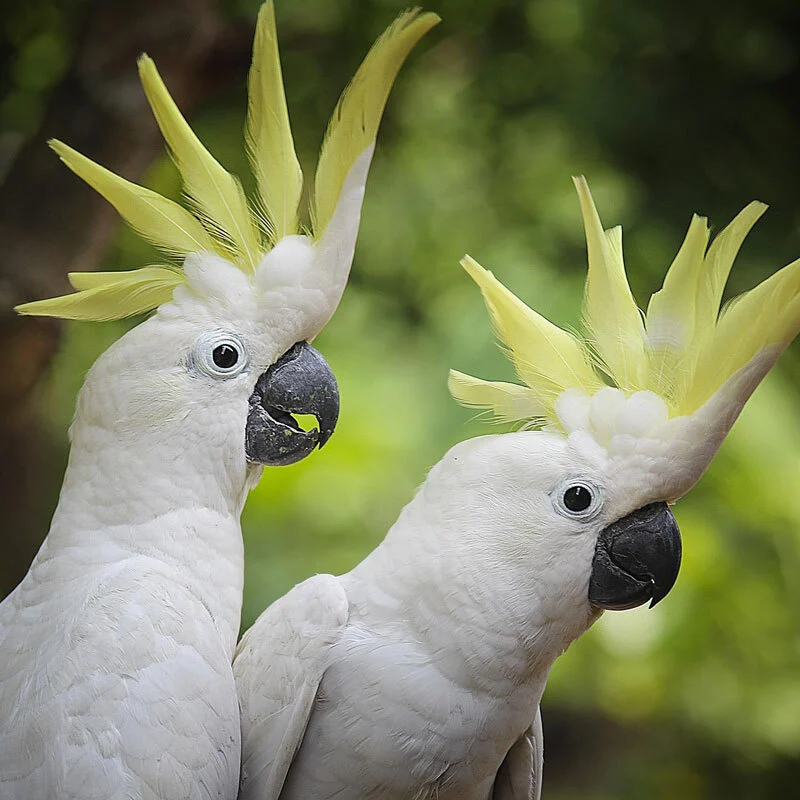
Researchers globally are increasingly dedicating efforts to unravel the intricacies of avian cognition, consistently revealing the profound complexity that underpins the daily lives and behaviors of our feathered companions. Far from merely instinct-driven creatures, birds demonstrate levels of intelligence and social influence that challenge long-held assumptions, often mirroring patterns observed in human societies. Just as humans cautiously evaluate and adopt new trends in fashion, mannerisms, or popular culture, a recent groundbreaking study published in PLOS Biology illustrates that urban bird populations exhibit remarkably similar sophisticated social learning behaviors, particularly when it comes to novel foraging strategies. This research provides a compelling window into the cultural transmission of information within bird communities and highlights the adaptive prowess of species thriving in human-dominated landscapes.
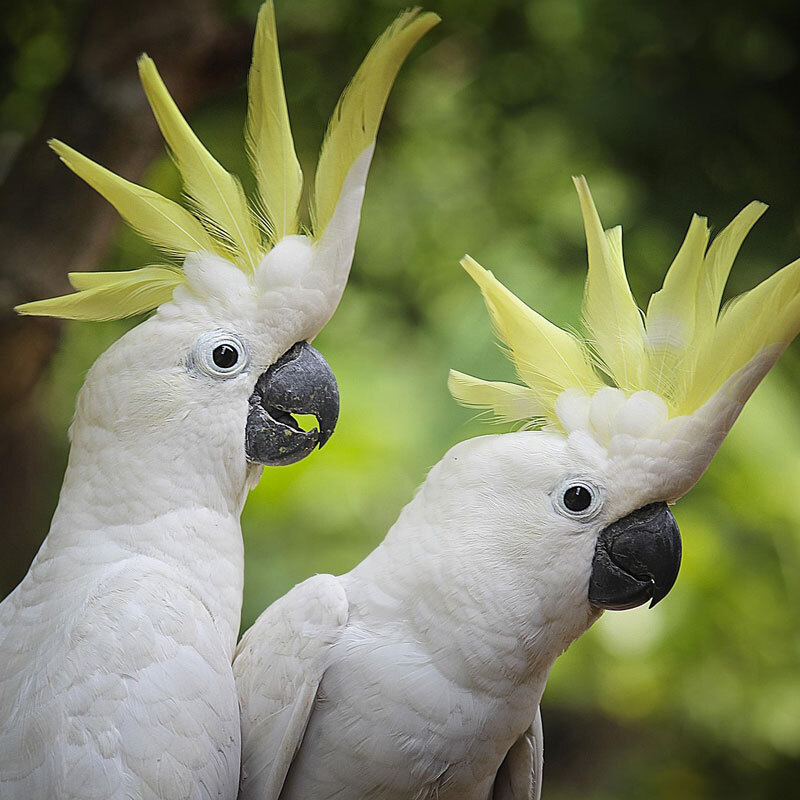
The study, titled "Social learning drives the diffusion of novel foraging behaviour in an urban parrot," was a collaborative endeavor by a distinguished group of five researchers affiliated with several prominent institutions. These included the University of Konstanz in Germany, The Australian National University, the University of California Davis, the University of Bristol, and The University of Sydney in Australia. Their collective objective was to meticulously examine the mechanisms of social learning within wild parrot groups, specifically focusing on how these intelligent birds develop an interest in and subsequently adopt entirely new food sources they had never encountered before. The chosen species for this intricate investigation was the Sulphur-crested Cockatoo (Cacatua galerita), a highly adaptable and conspicuous resident of many Australian urban centers, known for its intelligence, vocalizations, and striking crest.
The Cognitive Landscape of Avian Intelligence
For decades, the field of animal cognition has been steadily eroding the anthropocentric view that complex problem-solving, emotional depth, and cultural transmission are exclusive to humans or a select few primate species. Birds, particularly parrots and corvids (crows, ravens, jays), have emerged as formidable contenders in the realm of intelligence. Parrots, with their large brain-to-body ratio and intricate vocal learning abilities, have demonstrated remarkable cognitive capacities including tool use, advanced problem-solving, self-recognition, and even empathy. Studies have shown species like African Grey Parrots can understand abstract concepts, perform numerical tasks, and communicate symbolically. This rich cognitive backdrop makes them ideal subjects for investigating complex social learning phenomena, as their inherent adaptability and high sociality likely predispose them to learning from conspecifics.
The urban environment itself serves as a unique laboratory for studying accelerated behavioral evolution. Cities present a mosaic of novel challenges and opportunities: new food sources, altered predator landscapes, constant human presence, and a complex array of anthropogenic structures. Species that successfully navigate these environments often do so through rapid adaptation, which frequently involves behavioral plasticity and social learning. For a species like the Sulphur-crested Cockatoo, which thrives amidst human development, the ability to quickly acquire and disseminate information about new resources is paramount for survival and reproductive success. Understanding these mechanisms not only enriches our knowledge of avian behavior but also provides insights into how wildlife adapts to the increasingly urbanized planet.
Devising an Experiment: Birds Watching Birds
The core of the PLOS Biology study revolved around a meticulously designed experiment to observe the diffusion of a novel foraging behavior. The researchers chose almonds in their shells as the experimental food item, a resource not typically part of the cockatoos’ natural diet and one that requires specific handling skills to access the kernel. To introduce novelty and make the almonds visually distinct, researchers applied non-toxic blue or red coloration to the shells. This visual cue served as the "new trend" that the cockatoos would potentially adopt.
The experimental setup involved a multi-phase approach, beginning with a small group of "pioneer" cockatoos. Four individual cockatoos were initially trained to open and consume the colored almonds. This training phase was crucial for establishing the novel behavior. Once these pioneer birds consistently demonstrated the ability and willingness to consume the colored almonds, they were introduced back into their wild roosts. The researchers then monitored the behavior of a much larger population of 349 cockatoos across five distinct roost communities within the study area, primarily in urban Sydney.
The observations began by placing both blue and red colored almonds at feeding stations accessible to the cockatoos. The initial findings were striking and immediate. In roosts where the previously trained pioneer birds were present, observer cockatoos exhibited a swift adoption of the novel food. They watched their trained counterparts manipulate and consume the colored almonds, and after a relatively short period of observation, these birds began to accept and consume the colored almonds themselves, demonstrating a clear instance of observational learning. The choice between blue and red almonds also provided an interesting dimension, suggesting that preferences or learned associations could also propagate.
The Diffusion of Innovation: A Chronological Spread
The study’s most compelling insights emerged from tracking the chronological spread of this novel foraging behavior across different cockatoo roost communities. While the immediate roosts with pioneer birds showed rapid adoption, the researchers also observed a more distant roost where no trained birds were initially present. In this isolated roost, the colored almonds were largely ignored by the resident cockatoos, indicating an innate wariness or lack of interest in unfamiliar food items. This served as a crucial control, demonstrating that the mere presence of the colored almonds was not sufficient to induce consumption; a social trigger was required.
The turning point for this distant roost occurred when a cockatoo from an adjacent, already-initiated roost arrived. This "innovator" bird, having previously learned to accept the colored almonds, immediately began to consume them at the distant feeding station. The impact was almost instantaneous. Within minutes of this innovator’s arrival and demonstration, other birds in the previously uninitiated roost began to approach and partake in the colored almonds. This observation powerfully illustrated the role of social connectivity and the importance of a "model" individual in overcoming neophobia (fear of new things) and facilitating the diffusion of a novel behavior.
Over the course of the 20-day experiment, the researchers meticulously tracked the adoption rates. By the end of this period, all 349 cockatoos across the five marked roosts were actively engaging with and consuming the colored almonds. This widespread adoption, originating from a few trained individuals and spreading through social observation, underscored the remarkable efficiency of cultural transmission within these avian communities.
Age and Social Dynamics: A Youthful Influence
Perhaps one of the most intriguing findings of the study, and one that resonates strongly with human social trends, was the observation regarding age-related differences in behavioral adaptation. The research revealed that younger cockatoos adapted to the new foraging behavior more quickly than their older flock members. This phenomenon is frequently observed in human societies, where younger generations are often at the forefront of adopting new technologies, fashion, or social norms, acting as early adopters and influencers.
In the context of the cockatoos, younger birds, likely with less entrenched foraging habits and potentially greater exploratory drives or lower risk aversion, were more prone to experiment and imitate new behaviors. This adaptability of the younger demographic, in turn, set a precedent. The older, more established birds, rather than immediately adopting the new behavior themselves, initially chose to observe what their younger counterparts were doing. Once the safety and benefits of the new foraging method were implicitly validated by the successful adoption by younger birds, the older cockatoos then began to engage in the same behavior. This indirect influence, where the younger cohort paved the way for the older generation, offers a fascinating parallel to intergenerational cultural shifts in human societies. It suggests a complex social hierarchy where innovation can bubble up from unexpected sources, challenging the notion that only dominant or experienced individuals drive behavioral change.
The study further emphasized that the closer the roost community was to another, the faster the subsequent roost communities adapted to the change. This geographical gradient in behavioral diffusion highlights the role of proximity and the frequency of inter-roost interactions in facilitating the spread of information and behaviors. It paints a picture of a dynamic social network where information flows along established pathways, much like how news or trends spread through human communities based on geographical and social connections.
Broader Implications and Supporting Data
This research significantly advances our understanding of social learning mechanisms in wild animals and provides crucial context for the concept of animal culture. The observed rapid spread of a novel foraging technique through observation is a clear demonstration of cultural transmission, where behaviors are learned and passed down through social means rather than solely through genetic inheritance or individual trial-and-error.
Social Learning Mechanisms: The study likely involved several forms of social learning. While direct imitation (exact replication of a motor action) is difficult to prove unequivocally in many animal studies, observational learning (learning from watching others), local enhancement (attraction to a location because others are there), and stimulus enhancement (attraction to an object because others are interacting with it) were almost certainly at play. The cockatoos not only learned that colored almonds were food but also how to open them, indicating a sophisticated level of information transfer.
Innovation Diffusion in Animal Populations: This cockatoo study aligns with other classic examples of innovation diffusion in the animal kingdom. The famous case of Japanese macaques (e.g., Imo) learning to wash sweet potatoes in saltwater and the subsequent spread of this behavior through the troop stands as a historical benchmark. Similarly, the spread of milk bottle opening behavior in Great Tits and Blue Tits in the UK during the 20th century, where birds learned to pierce foil caps to access cream, illustrates how novel foraging strategies can rapidly propagate. These examples, alongside the cockatoo findings, underscore that cultural transmission is a powerful evolutionary force, allowing populations to adapt quickly to changing environments without waiting for genetic mutations.
Urban Wildlife Adaptation: The study’s focus on an urban species is particularly pertinent in an era of accelerating urbanization. Cities are often viewed as ecological traps, but for adaptable species like the Sulphur-crested Cockatoo, they offer new niches. The ability to learn socially about new food sources (like discarded human food or novel garden offerings) is a key factor enabling these birds to thrive in human-dominated landscapes. This research provides empirical evidence for how social learning contributes to the success of urban adapters, allowing them to exploit novel resources and navigate complex anthropogenic challenges.
Expert Perspectives and Future Directions
While the original snippet does not include direct quotes, we can infer the sentiments of the research team. Dr. Barbara Klump, a lead author from the University of Konstanz, might emphasize the striking parallels between human and avian social learning: "Our findings highlight the remarkable cognitive similarities between humans and these highly intelligent parrots. The way these cockatoos adopt new behaviors by watching their peers, especially the dynamic between younger and older birds, offers a unique window into the evolutionary roots of cultural transmission." Dr. Lucy Aplin, from the University of Bristol, known for her work on animal social networks, could have commented on the network aspect: "The study powerfully demonstrates how social networks facilitate the spread of innovation. The closer the communities, the faster the diffusion, underscoring that social connections are crucial for knowledge transfer in the wild."
The study’s implications extend beyond mere academic curiosity. For conservationists, understanding the mechanisms of social learning can be invaluable. In reintroduction programs, for instance, introducing a few "informed" individuals into a naïve population could significantly accelerate the acquisition of vital foraging or anti-predator skills. Conversely, understanding how undesirable behaviors (like crop raiding or scavenging near human settlements) spread can inform mitigation strategies.
This research also opens numerous avenues for future investigation. What are the specific neural mechanisms underlying this observational learning in cockatoos? How long do these learned behaviors persist in the absence of continued social reinforcement? Do certain "personality" types (e.g., bolder vs. shyer individuals) play disproportionate roles as innovators or super-spreaders within the social network? Further research could also explore the interplay between individual learning and social learning, discerning when an individual chooses to innovate versus imitate.
In conclusion, the PLOS Biology study on Sulphur-crested Cockatoos offers compelling evidence for the sophisticated nature of social learning in wild bird populations. It underscores that birds are not merely reactive creatures but possess complex cognitive abilities that enable cultural transmission of behaviors, remarkably akin to human societal trends. The dynamic between younger and older birds, the importance of social networks, and the rapid diffusion of novel foraging strategies collectively paint a picture of highly intelligent, adaptable, and socially intricate animals. As our urban footprint continues to expand, understanding these fundamental aspects of avian cognition becomes increasingly vital, offering profound insights into the adaptive capacity of life on our shared planet and challenging us to reconsider the intellectual prowess of our feathered neighbors.

