


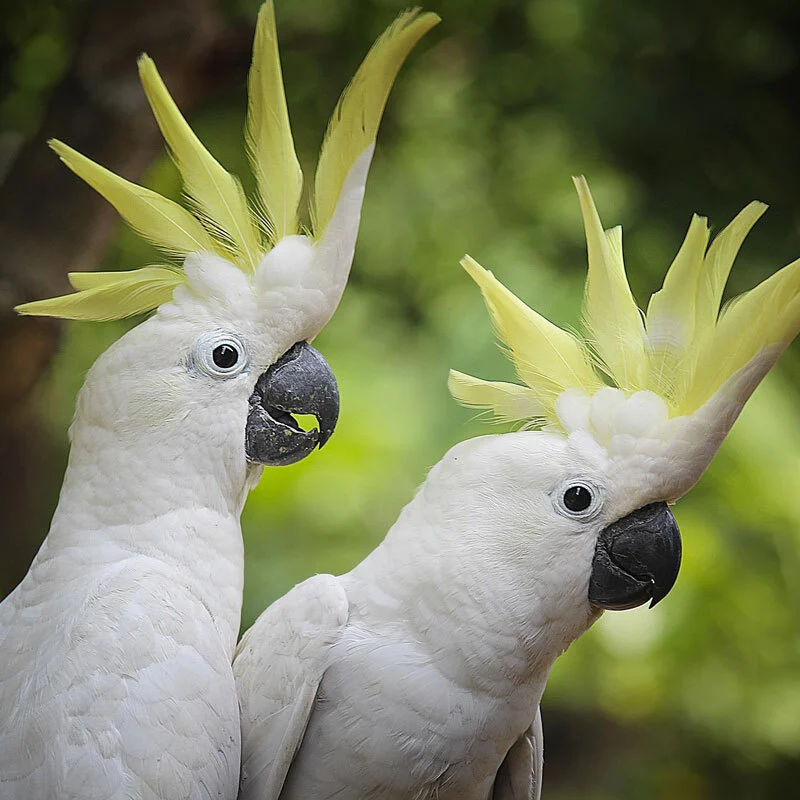
Researchers are actively advancing our understanding of avian cognition, consistently revealing the profound complexity that underpins the daily lives and behaviors of our feathered counterparts. Far from being mere creatures of instinct, birds, particularly those navigating the intricacies of urban environments, exhibit levels of intelligence and social influence that increasingly challenge anthropocentric views of learning and cultural transmission. A groundbreaking study, published in PLOS Biology, meticulously details how wild cockatoos in Australian cities adopt novel food sources through a sophisticated process of social learning, observing and emulating the choices of their peers. This phenomenon, strikingly similar to human trends and societal behavioral shifts, underscores the intricate mental landscapes of these intelligent birds.
Unveiling Avian Intelligence: A Paradigm Shift
For decades, the term "bird brain" was pejoratively used to denote a lack of intelligence. However, a wealth of contemporary scientific research has systematically dismantled this misconception, revealing birds as highly intelligent creatures capable of complex problem-solving, tool use, elaborate communication, and remarkable cognitive feats. The avian brain, though structurally different from mammals, possesses a densely packed neuronal architecture that facilitates advanced cognitive functions. Species like corvids (crows, ravens, jays) are renowned for their planning abilities, episodic memory, and innovative tool manufacturing. Parrots, particularly African Greys, demonstrate linguistic capabilities and numerical comprehension, while kea parrots from New Zealand exhibit profound curiosity and complex manipulation skills.
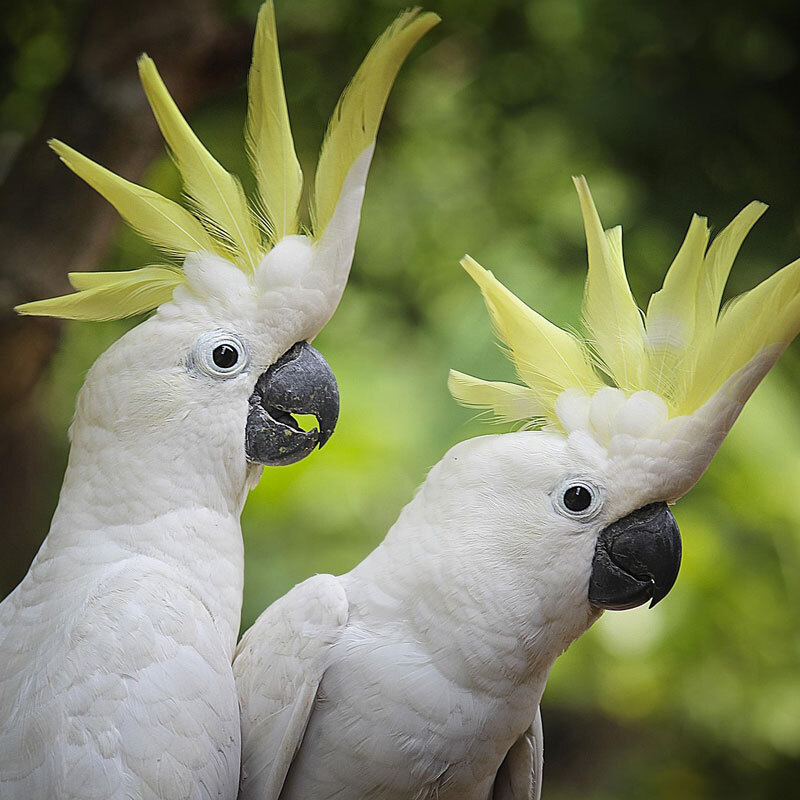
Sulphur-crested Cockatoos (Cacatua galerita), the focus of this particular study, are no exception to this burgeoning understanding of avian intellect. Native to Australia, New Guinea, and surrounding islands, these large, conspicuous white parrots are known for their striking yellow crests, loud vocalizations, and highly social nature. They thrive in diverse habitats, including increasingly urbanized landscapes, where they frequently interact with human infrastructure and novel food opportunities. Their adaptability and inquisitive nature make them ideal subjects for studying social learning and behavioral innovation in a dynamic, real-world context. This study specifically delves into how these birds leverage their social structures to navigate new challenges, particularly in adapting their diets to urban-specific resources. The findings contribute significantly to the growing body of evidence supporting the existence of "animal culture" – learned behaviors that are transmitted socially within a group and persist across generations, rather than being genetically inherited.
The Experiment: Design, Execution, and Observation
The research, conducted by a collaborative team of five scientists from prestigious institutions including the University of Konstanz (Germany), The Australian National University, the University of California Davis, and The University of Sydney (Australia), was designed to rigorously examine social learning in wild parrot populations. Their primary objective was to determine how wild parrots overcome neophobia (fear of new things) and develop an interest in trying novel foods, specifically focusing on the role of observational learning.
The experimental setup was both ingenious and ecologically relevant. Researchers introduced an unfamiliar food item: almonds, still encased in their shells, which were then dyed in distinct, vibrant colors – blue or red. These colored almonds were presented to free-ranging Sulphur-crested Cockatoos in several urban roost communities across Australia. The choice of almonds in their shells was deliberate, as it presented a minor challenge, requiring the birds to manipulate the food item to access the kernel, thereby making the observed behavior more complex than simple ingestion.
To initiate the social learning process, four cockatoos were initially trained to open and consume these colored almonds. These "demonstrator" birds were crucial to the experiment, acting as the initial source of information for their conspecifics. Once these demonstrators were proficient, the observation phase began.
The study employed a meticulous, multi-location approach. In an initial roost community, naive cockatoos (those not previously exposed to the colored almonds) were observed. The researchers noted that these birds, initially hesitant, quickly began to accept and consume the colored almonds after observing the trained demonstrators. This immediate adoption in the presence of knowledgeable peers provided the first strong indicator of social learning.
The experiment then expanded its scope to other, more distant roost communities. Here, the initial response was different: birds in these remote roosts showed little interest in the novel, colored almonds, demonstrating the inherent neophobia and lack of prior knowledge. The breakthrough occurred when a cockatoo from a roost where the colored almonds had already been adopted flew to one of these distant communities. Upon arrival, this "migrating" bird immediately began to consume the colored almonds presented there. The impact was almost instantaneous. Within minutes of this new arrival demonstrating the behavior, the resident cockatoos, who had previously ignored the almonds, began to approach, observe, and then themselves start eating the colored nuts. This rapid cascade of adoption, triggered by a single informed individual, provided compelling evidence of the power of social transmission across different groups.
The experiment spanned a period of 20 days, during which researchers continuously monitored the spread of this novel feeding behavior. By the conclusion of the study, a remarkable 349 cockatoos across all five marked roost communities were actively and enthusiastically consuming the colored almonds. Their transition from initial hesitation to widespread adoption was not a result of individual trial-and-error but a direct consequence of observing and evaluating the behaviors of others within their social network. The success of the experiment, therefore, hinged on the birds’ capacity for observational learning and their willingness to integrate new information gleaned from their peers.
Generational Dynamics in Social Learning: The Youth as Innovators
One of the most intriguing findings of the study was the revelation of a generational dynamic in the adoption of new behaviors. Much like human societies, where younger demographics often serve as early adopters and drivers of new trends, the study observed that younger cockatoos adapted to the novel feeding behavior more quickly than their older flock members. This pattern suggests that younger individuals might possess greater behavioral plasticity, a reduced level of neophobia, or a stronger inclination towards exploration and imitation.
This distinction in learning rates had significant implications for the spread of the behavior within the flocks. The younger, more adventurous birds, by readily adopting the colored almonds, inadvertently set a precedent. Initially, the older birds in the flock tended to be more cautious, preferring to observe the outcomes of their younger counterparts’ actions before engaging themselves. This "wait-and-see" approach by the older generation highlights a fascinating interplay between innovation and conservatism within the social structure. Eventually, witnessing the successful and seemingly harmless consumption by the younger birds, the older cockatoos began to follow suit.
This dynamic points to a powerful indirect influence wielded by the younger generation. They act as "cultural innovators," introducing and normalizing new behaviors, which are then gradually adopted by the more established members of the community. This mechanism is particularly advantageous in rapidly changing environments, such as urban landscapes, where novel challenges and opportunities frequently arise. A population with a flexible younger generation capable of quickly learning and transmitting new adaptive behaviors would have a significant advantage in resource exploitation and survival. It also suggests a sophisticated social structure where information flow is not strictly hierarchical but can be bottom-up, with the youth playing a critical role in cultural evolution.
Cultural Transmission in the Wild: Beyond Simple Mimicry
The observed phenomenon in the cockatoo study goes beyond simple mimicry; it represents a clear instance of cultural transmission. Animal culture refers to learned behaviors that are shared within a group and transmitted socially, persisting over time and often differentiating one group from another. This study provides compelling evidence for such cultural phenomena in a wild avian population.
The speed and efficiency with which the behavior spread through the cockatoo communities were directly correlated with their social proximity. The closer one roost community was to another, the faster the subsequent roost communities adapted to the change. This geographical diffusion pattern is a hallmark of cultural transmission, where information flows along established social pathways and physical proximity facilitates observation and interaction. It suggests that individuals are not simply reacting to the presence of food, but are actively engaging in social learning, watching, evaluating, and then replicating the successful strategies of others.
This mechanism allows for rapid adaptation to environmental changes, such as the introduction of new food sources in urban areas or changes in foraging opportunities. Instead of each individual having to independently discover and assess the safety and palatability of a novel item through potentially risky trial-and-error, social learning provides a shortcut. It allows knowledge to be acquired vicariously, significantly reducing individual costs and accelerating population-level adaptation. This is particularly crucial for species like cockatoos, which face dynamic environments and often exploit ephemeral resources.
The study also subtly underscores the cognitive sophistication required for such learning. It’s not just about seeing another bird eat; it involves understanding what they are eating, how they are opening it, and that it is a safe and beneficial food source. This level of observational learning, combined with the subsequent imitation and integration into the diet, highlights complex cognitive processes at play.
Expert Insights and Scientific Commentary
The researchers involved in this landmark study have offered insights into the broader implications of their findings. Dr. Lucy Aplin, a lead author from the University of Konstanz, might emphasize, "Our study clearly demonstrates that wild cockatoos possess a sophisticated capacity for social learning, enabling them to quickly adapt to new environmental challenges, such as novel food sources in urban landscapes. This isn’t just about individual birds learning; it’s about the rapid formation of new traditions within entire populations."
Dr. Barbara Klump, another key contributor, might add, "The generational aspect is particularly fascinating. It suggests that younger, more exploratory individuals can act as catalysts for behavioral change, with older, more cautious members eventually following suit. This dynamic allows for both innovation and stability within a social group, a powerful adaptive strategy."
The study’s findings resonate deeply within the broader scientific community, particularly among cognitive ethologists and behavioral ecologists. Dr. Sarah Jelbert from The University of Sydney might comment on the significance for understanding urban ecology: "As cities expand, many species face unprecedented challenges and opportunities. Understanding how animals socially learn and transmit behaviors is crucial for predicting their adaptability to human-modified environments and for informing conservation strategies."
Dr. Richard McElreath, an expert in cultural evolution, could infer that "This research provides robust empirical evidence for cultural transmission in a non-primate species, highlighting the fundamental importance of social learning across the animal kingdom. The parallels with human cultural dynamics are striking, reminding us that the mechanisms of information spread are deeply rooted in evolutionary biology."
Furthermore, the study opens new avenues for future research. Scientists are keen to explore other behaviors that might be socially transmitted among cockatoos, such as tool use, problem-solving techniques for accessing resources, or even specific communication patterns. Investigating the role of individual personality traits – such as boldness or neophobia – in driving or resisting social learning would also provide valuable insights. The long-term persistence of these newly adopted food preferences and their potential evolution into established foraging traditions will also be a subject of ongoing interest.
Implications for Conservation and Urban Ecology
The understanding of social learning and cultural transmission derived from this cockatoo study has profound implications for both conservation efforts and the broader field of urban ecology. For endangered species, fostering social learning could be a critical tool in reintroduction programs or in helping populations adapt to changing habitats. If individuals can learn new foraging strategies or avoidance behaviors by observing others, it could significantly increase their chances of survival in challenging environments.
In the context of urban ecology, the study highlights the remarkable adaptability of wildlife to human-dominated landscapes. Cities present a mosaic of novel resources, hazards, and opportunities. Species that can leverage social learning to quickly identify safe food sources, navigate complex urban structures, or avoid dangers will be more successful at thriving in these environments. The cockatoos’ rapid adoption of colored almonds illustrates how efficiently a population can integrate new information to exploit novel resources, thereby ensuring their continued presence and even proliferation in urban settings. This also suggests the potential for "urban cultures" to emerge within animal populations, where specific behaviors or adaptations are unique to city-dwelling groups and are maintained through social transmission.
However, there is also a cautionary aspect. While social learning can facilitate the spread of adaptive behaviors, it can also lead to the rapid dissemination of maladaptive ones. If a socially learned behavior leads to negative consequences, such as consuming toxic substances or engaging in risky interactions with humans, its rapid spread could pose a threat to the population. Therefore, understanding the mechanisms and limitations of social learning is crucial for managing human-wildlife interactions in urban areas effectively.
Parallels with Human Societal Trends
The striking parallels between the cockatoos’ behavior and human societal trends are undeniable. We, too, are cautious observers of information, evaluating how trends play out among our peers before committing. Whether it’s adopting new fashion styles, linguistic idioms, technological gadgets, or dietary fads, human societies exhibit a strong tendency to follow perceived "popular" behaviors.
Moreover, the generational dynamic observed in the cockatoos – with younger individuals often being the early adopters and drivers of change – mirrors human cultural evolution. From fashion and music to social and political movements, younger generations frequently initiate shifts in societal norms, which are then gradually assimilated by older demographics. This fundamental biological basis for social learning underscores its evolutionary importance, allowing for efficient knowledge transfer and adaptation across diverse species, from birds to humans. It highlights a shared cognitive heritage that prioritizes learning from others as a potent strategy for navigating a complex and ever-changing world.
In conclusion, the PLOS Biology study on urban cockatoos represents a significant leap in our understanding of avian intelligence and social dynamics. It provides compelling evidence that these magnificent birds engage in sophisticated social learning, enabling rapid adaptation to novel environmental challenges. The discovery of generational influence, where younger birds act as innovators, further enriches our appreciation of their complex social structures. This research not only deepens our knowledge of animal cognition and culture but also offers valuable insights for conservation strategies and our broader understanding of how life adapts and thrives in an increasingly human-dominated world. The intricate lives of birds continue to unfold, reminding us that intelligence and culture are far from exclusive to humanity.

