


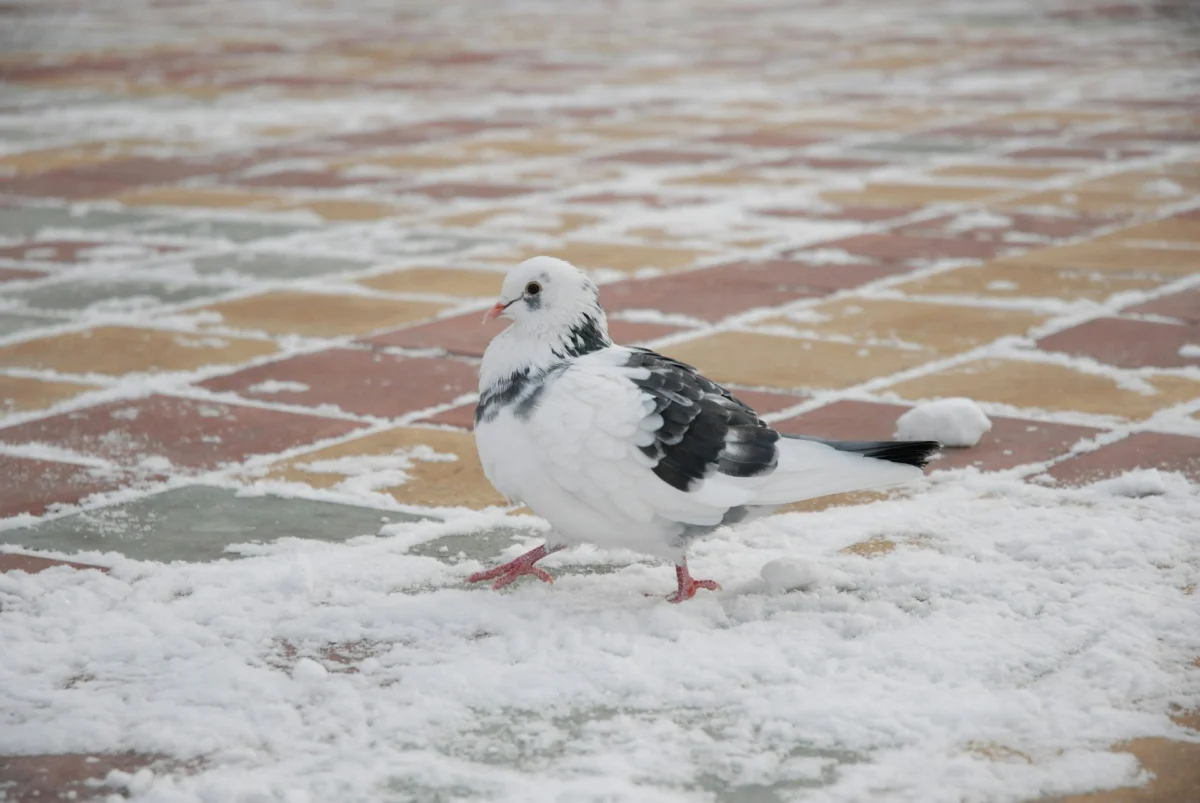
Witnessing a gull stand unperturbed on a frozen expanse or a duck glide effortlessly through water that would inflict immediate frostbite on a human is one of winter’s most captivating and bewildering spectacles. For months on end, these avian creatures exist on the very precipice of freezing temperatures, yet their extremities remain remarkably functional, unblemished by injury, and astonishingly warm. The secret to this resilience lies not in magic, but in a profound feat of physiological engineering: the countercurrent heat exchange system. This sophisticated biological mechanism allows birds to thrive in environments that would otherwise be inhospitable, showcasing a remarkable adaptation that has evolved over millennia.
The inherent vulnerability of a bird’s feet to extreme cold is a constant, yet their ability to remain active and unharmed is a testament to nature’s ingenuity. Unlike mammals, a bird’s legs possess minimal muscle mass in the exposed sections. The bulk of the musculature responsible for locomotion is strategically located higher up in the body, shielded by a dense layer of insulating feathers. The lower leg and feet, therefore, consist primarily of bone, tendon, and a highly organized, intricate network of blood vessels. This unique anatomical arrangement is the cornerstone of their exceptional cold tolerance, enabling them to endure conditions far beyond the capabilities of most terrestrial mammals.
The elegance of the countercurrent heat exchange system lies in its deceptively simple yet highly effective design. Within the bird’s legs, a parallel arrangement of blood vessels is crucial. Warm arterial blood, carrying heat from the bird’s core, descends from the body towards the feet. Simultaneously, cold venous blood, returning from the extremities after exposure to the frigid environment, ascends back towards the body. The genius of the system is that these warm arterial vessels lie in direct, intimate contact with the cold venous vessels. As the warm blood flows downwards, it encounters the cooler blood flowing upwards. Through the principles of thermal diffusion, heat is efficiently transferred from the warmer arterial blood to the colder venous blood.
This continuous heat transfer has a dual benefit. Firstly, by the time the venous blood reaches the bird’s torso, it has been significantly warmed. This prevents the vital core organs from losing precious body heat to the cold extremities, thus maintaining a stable internal temperature. Secondly, as the arterial blood descends towards the feet, it loses a considerable amount of its heat to the returning venous blood. Consequently, the blood that eventually reaches the bird’s feet is already significantly cooler than it would be without this system. This cooled blood entering the extremities minimizes the temperature gradient between the bird’s feet and the surrounding ice or water, drastically reducing the rate of heat loss to the environment. It’s a sophisticated closed-loop system that prioritizes core temperature while allowing peripheral tissues to operate at a much lower, yet survivable, temperature.
Beyond the circulatory system, birds have also evolved biochemical and structural adaptations at the cellular level to cope with extreme cold. The tissues within their feet are engineered to tolerate lower temperatures. This involves a reduction in the amount of freezable water within the cells and a modification of their biochemical composition, potentially through the presence of cryoprotectants or altered protein structures that resist ice crystal formation. These adaptations prevent cellular damage that would typically occur in colder conditions. Furthermore, birds exhibit remarkable control over blood flow to their legs. They can dynamically regulate the volume of blood circulating to their extremities. In exceptionally harsh conditions, they can constrict blood vessels to reduce flow, thereby minimizing heat loss. This regulated circulation is carefully managed to prevent the extremities from becoming so cold that tissue damage, such as frostbite, occurs. It’s a delicate balancing act, ensuring minimal heat loss without compromising the viability of the foot tissues.
Species like mallards and gulls, often seen wading or standing on icy surfaces for extended periods, exemplify the prowess of this system. They push the boundaries of cold tolerance, spending hours in direct contact with freezing water and ice. However, diving birds such as loons, grebes, and various species of diving ducks face even more extreme challenges. These birds not only withstand frigid surface waters but also dive into even colder depths, often for prolonged durations. Their legs, though still subject to the same fundamental principles of countercurrent heat exchange, are likely further optimized to handle these intensified demands, demonstrating the diverse applications of this evolutionary marvel.
The role of feathers in this remarkable survival strategy, while indirect, is nonetheless crucial. Feathers provide exceptional insulation for the bird’s body, trapping air and significantly reducing heat loss from the torso and vital organs. This allows the body to generate and conserve enough heat to power the specialized countercurrent heat exchange system in the legs without an undue metabolic burden. If the bird’s core had to work overtime to compensate for heat lost through insulated feet, its overall energy expenditure would be significantly higher, making survival in winter a much more precarious endeavor. In addition to their insulating properties, many bird species exhibit behavioral adaptations that further minimize heat exposure. It is common to observe birds standing on one leg, tucking the other up into the warmth of their belly feathers. This simple act reduces the surface area exposed to the cold by half. They will also frequently alternate which leg they stand on, allowing the tucked leg to regain some warmth. These behavioral adjustments, combined with their sophisticated physiological adaptations, create a robust and elegant solution for life in frigid climates.
The countercurrent heat exchange system is widely regarded as one of the most refined examples of evolutionary engineering found within the animal kingdom. It is a testament to the power of natural selection to sculpt intricate and highly effective solutions to environmental challenges. This adaptation allows birds to not only survive but to actively exploit winter environments. They can forage on snow-covered fields, remain active on frozen lakes and rivers, and access resources that are unavailable to many other species. This ability to thrive in conditions that would incapacitate or prove fatal to most mammals underscores the unique evolutionary advantages conferred by this specialized physiology.
Supporting Data and Scientific Understanding

Scientific research into avian thermoregulation has illuminated the intricate mechanisms at play. Studies employing thermal imaging have visualized the temperature gradients within bird legs, confirming the significant heat transfer occurring in the countercurrent system. For instance, research on penguins, which face some of the most extreme cold in the Antarctic, has revealed highly specialized vascular networks in their flippers and feet, exhibiting even more extreme countercurrent arrangements to minimize heat loss during prolonged dives and time spent on ice.
The efficiency of countercurrent heat exchange in birds can be remarkably high, often achieving up to 80-90% heat recovery from the venous blood. This means that the blood returning to the core has been warmed to nearly the temperature of the arterial blood leaving the body, significantly reducing the thermal burden on the core. This efficiency is directly proportional to the length of the vascular segments involved and the proximity of the arterial and venous vessels. Birds have evolved exceptionally long and densely packed vascular networks within their legs and feet to maximize this heat transfer.
Furthermore, the biochemical adaptations in bird tissues are also an active area of research. Studies have identified specific proteins and cryoprotectants in the blood and tissues of cold-adapted birds that help prevent ice crystallization and maintain cell membrane integrity at low temperatures. The precise composition and concentration of these substances can vary between species, reflecting their specific ecological niches and the severity of the cold they typically endure.
Historical Context and Evolutionary Timeline
The evolution of endothermy (warm-bloodedness) in birds, a trait shared with mammals, presented a significant challenge in terms of heat conservation, particularly for extremities. The emergence of the countercurrent heat exchange system likely occurred gradually over millions of years, driven by the selective pressures of surviving in temperate and polar regions. Fossil evidence, while not directly revealing physiological mechanisms, indicates that bird lineages have inhabited cold climates for tens of millions of years, suggesting a long evolutionary history for adaptations like this. Early avian ancestors may have possessed simpler forms of vascular arrangements that, over time, became increasingly sophisticated and efficient. The diversification of bird species into various ecological niches, from arctic dwellers to tropical inhabitants, has likely led to a spectrum of countercurrent heat exchange efficiencies, tailored to the specific thermal demands of each environment.
Broader Impact and Implications
The physiological marvel of countercurrent heat exchange in birds has profound implications for our understanding of evolutionary biology and biomechanics. It serves as a compelling case study in how organisms can overcome seemingly insurmountable environmental challenges through remarkable biological innovation. This system not only ensures the survival of individual birds but also plays a critical role in maintaining avian biodiversity and ecological balance in cold regions. Birds, as active participants in their ecosystems, contribute to seed dispersal, pollination, insect control, and serve as a vital food source for other animals. Their ability to remain active and reproduce during winter is therefore essential for the health and functioning of many terrestrial and aquatic ecosystems.
From a broader scientific perspective, the study of countercurrent heat exchange in birds offers valuable insights that can be applied to other fields, including the design of artificial heat exchangers and the development of new materials for thermal management in human applications, such as advanced prosthetics or cold-weather gear. The principles observed in avian physiology can inspire innovative engineering solutions for heat retention and transfer in challenging environments.
The ongoing research into avian thermoregulation continues to reveal the intricate details of this evolutionary masterpiece. As scientists delve deeper into the molecular and genetic underpinnings of these adaptations, our appreciation for the resilience and ingenuity of the avian world only grows. The seemingly simple act of a bird standing on ice is, in reality, a profound demonstration of biological engineering honed by millions of years of evolution.

