


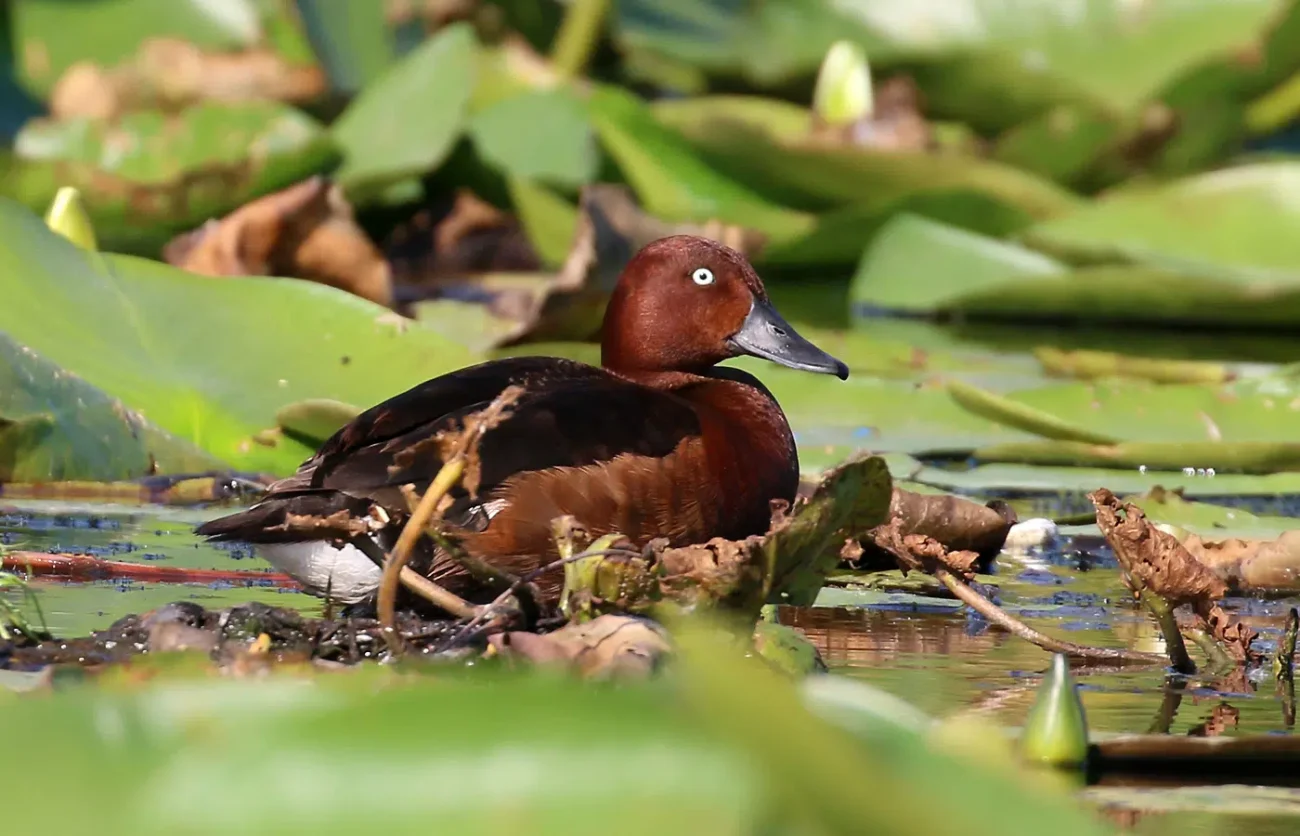
The African-Eurasian Flyway represents one of the most complex and vital ecological corridors on the planet, a sprawling aerial highway that facilitates the seasonal movement of over 2 billion birds across three continents. Spanning from the frozen expanses of the Arctic tundra to the temperate southern reaches of Africa, this migratory network is essential to the biological integrity of the Northern Hemisphere. Among the 465 species that rely on this corridor, the Ferruginous Duck (Aythya nyroca) serves as a poignant indicator of the system’s overall health. Currently listed as Near Threatened by the IUCN, this small, distinctively dark-plumaged diving duck relies on a fragile, interconnected chain of wetlands. Its journey is a testament to the necessity of international cooperation in conservation, as the species’ survival is tethered to the protection of Key Biodiversity Areas (KBAs) separated by thousands of miles.

The Anatomy of an Ecological Superhighway
The African-Eurasian Flyway is not merely a path; it is a series of critical stopover sites, staging grounds, and wintering destinations that provide the fuel and refuge necessary for survival. Migratory birds like the Ferruginous Duck do not have the luxury of permanent residence; they are bound to the availability of specific freshwater habitats.
Historically, the flyway has remained resilient, but it is currently under unprecedented pressure. Data from ornithological surveys indicate that approximately 8% of the species within this system are globally threatened with extinction, while a staggering 44% of populations are in active decline. The primary drivers of this crisis include the degradation of wetland ecosystems due to agricultural intensification, the conversion of natural lakes into aquaculture sites, illegal hunting, and the transmission of avian diseases such as the West Nile virus and various strains of highly pathogenic avian influenza.

A Tale of Two Sanctuaries: The Pokuplje Basin and Lake Nasser
The Ferruginous Duck’s lifecycle is defined by its movement between these disparate habitats. The Pokuplje Basin in Croatia stands as a vital European stronghold. Covering approximately 350 square kilometers, this lowland region—characterized by a mosaic of oak forests, expansive meadows, and a sophisticated network of carp fishponds—offers the necessary conditions for the duck to breed and raise its young. The site, which includes significant locations such as Crna Mlaka and Draganic, supports an incredible density of avian life, often hosting more than 20,000 waterbirds simultaneously during peak migration. It is here that the Ferruginous Duck finds sanctuary alongside other iconic species, including the White-tailed Sea-eagle and the Collared Flycatcher.
As the northern winters approach, the duck initiates its southward migration, eventually arriving at the vast, artificial landscape of Lake Nasser in Egypt. As one of the largest man-made reservoirs globally, Lake Nasser acts as a primary freshwater anchor for migratory birds arriving from the Eurasian landmass. It is a critical wintering site that can accommodate upwards of 200,000 waterbirds. Beyond its role as an avian haven, the lake is an economic and cultural pillar for Egypt, supporting hydroelectric power generation via the Aswan High Dam, local fisheries, and large-scale irrigation projects. The ecological diversity of the lake is also notable, providing a habitat for the Nile Crocodile, the African Softshell Turtle, and the Dorcas Gazelle.

Chronology of Conservation Efforts
The conservation of these sites has not happened in a vacuum. The following timeline outlines the strategic efforts to secure the flyway:
- Pre-2020: Recognition of the Ferruginous Duck’s declining status leads to localized, fragmented monitoring efforts across Europe and North Africa.
- 2023: Increased reports of wetland degradation in the Mediterranean basin spark a collaborative initiative between international NGOs and local environmental agencies to prioritize "ecologically coherent" site management.
- June 2026: BirdLife International secures a significant £7.5 million grant from the Ecological Restoration Fund (ERF). This funding marks a shift from reactive to proactive, landscape-scale conservation.
- Late 2026: Implementation of the three-year "Flyway Restoration Initiative" begins, focusing on the legal protection of key stopover sites and the reduction of human-wildlife conflict.
Institutional Responses and Strategic Advocacy
The recent infusion of £7.5 million by the Ecological Restoration Fund represents a turning point in the management of the flyway. Conservationists argue that protecting isolated sites is insufficient; instead, they advocate for a "networked" approach. By ensuring that birds encounter safe, resource-rich habitats at every leg of their journey, the overall survival rate of migratory species is expected to increase.

At the national level, the work of Nature Conservation Egypt (NCE) serves as a template for effective grassroots intervention. By conducting long-term, rigorous waterbird surveys, NCE has provided the empirical data necessary to lobby for legislative changes. Their most significant achievement, the successful advocacy for a total hunting ban at Lake Nasser, has already yielded measurable biodiversity gains. Observations of the Long-tailed Cormorant returning to the lake—after an extended period of absence—provide clear evidence that policy intervention can reverse localized ecological decline.
Analysis of Broader Implications
The preservation of the Ferruginous Duck is not merely a matter of species-specific protection; it is an exercise in maintaining the functionality of the global environment. Wetlands act as natural carbon sinks and water purifiers. When these sites are compromised—whether through agricultural runoff, overfishing, or illegal hunting—the consequences ripple outward, affecting local economies that rely on these ecosystems for clean water and food security.

The "human element" of this conservation effort is critical. In places like the Pokuplje Basin and Lake Nasser, the success of avian populations is inherently linked to the welfare of local communities. Sustainable aquaculture practices and the promotion of ecotourism are being explored as mechanisms to ensure that local populations view the preservation of these sites as an economic asset rather than a restriction.
Furthermore, the threat posed by avian influenza underscores the necessity of a coordinated international response. Because the flyway functions as a single, connected system, a pathogen introduced in one country can rapidly spread to another. Therefore, the monitoring of migratory species is also a matter of public and veterinary health.

Future Outlook
As the three-year project funded by the ERF progresses, the primary objective remains the stabilization of the Ferruginous Duck population. However, the secondary benefits of this project—the protection of water quality, the restoration of natural wetlands, and the strengthening of international environmental policy—will likely have a far-reaching impact on the entire African-Eurasian migratory network.
The challenge for the coming decade is to reconcile the competing demands of a growing human population with the biological requirements of migratory species. The success of the Ferruginous Duck will ultimately depend on the ability of governments, NGOs, and local stakeholders to view the flyway as a shared heritage. If the current trajectory of integrated site management continues, it may provide a roadmap for the protection of other threatened species that traverse this incredible, albeit increasingly vulnerable, aerial highway. By safeguarding the corridors that these birds rely upon, conservationists are, in effect, preserving the structural integrity of the landscapes that connect the cultures and environments of Africa, Europe, and Central Asia. The migration of the Ferruginous Duck is a cycle that has persisted for millennia; the current generation of scientists and policymakers holds the responsibility of ensuring that this cycle remains unbroken.

