


A parrot repeatedly pressing its eye against a cage bar, a toy, or its own foot is a behavior that frequently triggers anxiety in companion bird owners. While avian behaviorists often note that birds are experts at masking illness, the visual cue of persistent eye rubbing is one of the few outward indicators of discomfort that is difficult for a bird to hide. Distinguishing between normal, healthy grooming and the onset of a clinical health issue is a critical skill for any avian guardian, as early intervention in ophthalmic conditions often dictates the prognosis for recovery.
The Physiology of Avian Ocular Health
To understand why eye rubbing is a significant clinical symptom, it is necessary to first examine the anatomy of a parrot’s eye. Unlike humans, who rely primarily on the upper and lower eyelids to maintain moisture and protect the ocular surface, birds possess a specialized structure known as the nictitating membrane, or the third eyelid. This thin, translucent membrane acts as a high-speed "windshield wiper," sweeping across the surface of the eye to clear debris and distribute moisture.
In a healthy state, this biological mechanism is remarkably efficient. Parrots also engage in routine preening of the periorbital feathers—the small, delicate plumage surrounding the eye. This grooming is a standard part of their daily maintenance. However, when a bird transitions from cleaning the feathers around the eye to applying direct, repetitive pressure to the globe of the eye itself, the behavior shifts from maintenance to a compensatory response to irritation, pain, or inflammation.
Chronology of Symptoms and Diagnostic Clues
When an owner observes eye rubbing, the first step is to establish a timeline. Is this a new development, or has it been intermittent? If the behavior is sudden, it may point toward an acute physical irritant, such as a foreign body—a piece of seed hull, a stray feather barb, or environmental dust—trapped beneath the lid. If the behavior is chronic, the implications lean more toward systemic infection, environmental toxicity, or progressive ocular disease.
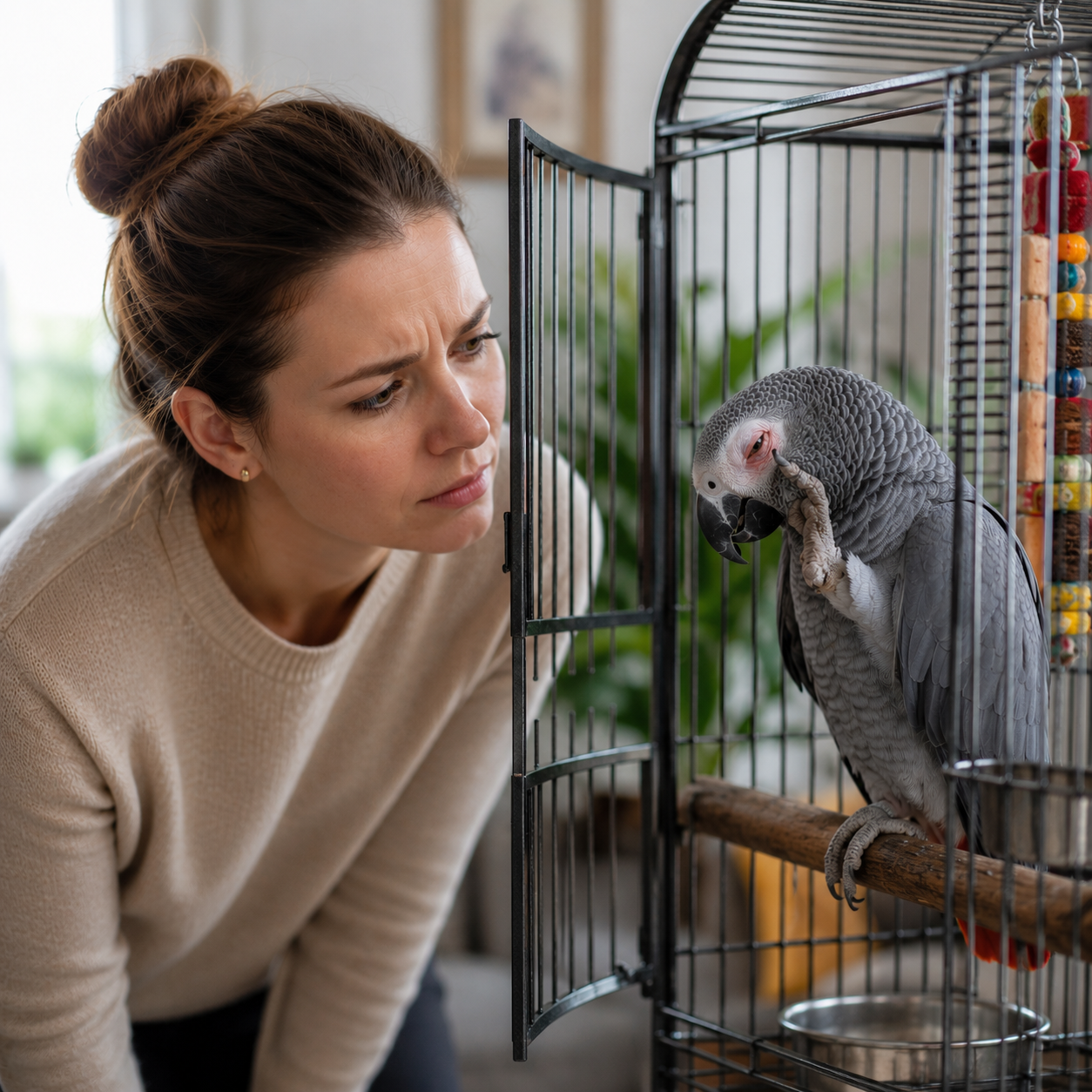
The clinical presentation of the eye itself provides the most significant data for an avian veterinarian. Owners should observe the following markers:
- Unilateral vs. Bilateral Involvement: An issue affecting only one eye suggests a localized trauma or infection. If both eyes are involved, the cause is frequently systemic, such as an upper respiratory infection (URI) or a reaction to an airborne toxin.
- Ocular Discharge: The presence of serous (clear), mucoid (thick), or purulent (pus-like) discharge is a definitive red flag indicating inflammation or infection.
- Blepharospasm (Squinting): A bird that holds one eye closed or partially closed is demonstrating a protective reflex against pain.
- Periorbital Swelling: Inflammation of the tissues surrounding the eye often indicates that the irritation has moved beyond the surface and is affecting the underlying sinuses or ocular structures.
Environmental and Nutritional Factors
Beyond physical trauma or infection, the domestic environment plays a substantial role in ocular health. Because birds have highly efficient respiratory systems, they are acutely sensitive to particulate matter and volatile organic compounds (VOCs). Smoke from cigarettes or wood-burning stoves, aerosolized cleaning products, perfumed candles, and high-dust environments can cause severe conjunctivitis in parrots.
Furthermore, nutritional status acts as the foundation for the immune system’s ability to defend the eyes. A common, yet often overlooked, factor is Vitamin A deficiency. In the avian world, Vitamin A is essential for the health of the epithelial tissues, which line the respiratory tract, the sinuses, and the ocular surface. When a bird is maintained on an exclusively seed-based diet, which is typically low in Vitamin A, these tissues become compromised, leading to a condition known as squamous metaplasia. This weakening of the tissue barrier makes the bird significantly more susceptible to bacterial and fungal infections that manifest as eye irritation and rubbing.
Professional Intervention and Veterinary Protocols
The consensus among avian medicine specialists is that persistent eye rubbing warrants a professional diagnostic assessment. An avian veterinarian will typically begin with a physical examination to rule out foreign bodies or corneal ulcers—microscopic scratches on the surface of the eye that can be excruciatingly painful.
Diagnostic tools such as fluorescein staining are standard practice; this dye highlights abrasions on the cornea that are invisible to the naked eye. In cases of suspected infection, the veterinarian may perform a cytology or culture of the ocular discharge to identify specific pathogens. Because birds have unique anatomy—such as the connection between the infraorbital sinus and the eye—the veterinarian must determine if the eye problem is primary or secondary to a sinus infection.

The treatment protocol is entirely dependent on the diagnosis. Home-based attempts to treat the eye, such as flushing with saline or applying over-the-counter ointments, are strongly discouraged. These interventions can inadvertently cause further damage, obscure diagnostic findings, or introduce contaminants into a delicate, injured eye. Professional care ensures that the bird receives appropriate medication, such as anti-inflammatories, antibiotics, or specific ophthalmic solutions, tailored to the exact nature of the pathology.
Broader Implications and Long-Term Wellness
The broader implication of eye rubbing is that it serves as an early warning system. Because birds are prey animals, they are evolutionarily hardwired to hide signs of weakness. By the time a bird is visibly lethargic or losing weight, an illness is often well-advanced. Therefore, a behavioral change like persistent eye rubbing—even in the absence of other symptoms—is an opportunity to address a health issue while it is still in its infancy.
Preventative measures for long-term ocular health include:
- Strict Environmental Control: Utilizing HEPA air purifiers in the bird’s living space and eliminating aerosolized chemicals.
- Nutritional Optimization: Transitioning birds from seed-heavy diets to high-quality formulated pellets supplemented with a variety of fresh, dark leafy greens and orange-fleshed vegetables to ensure adequate Vitamin A intake.
- Routine Monitoring: Owners should perform a "wellness check" once a week, observing the clarity of the eyes and the cleanliness of the surrounding feathers.
Summary of Best Practices
For the bird owner, the mandate is clear: do not wait for the situation to "resolve itself." If the behavior involves more than an occasional swipe during normal grooming, it is a clinical indicator.
- Observe: Document the frequency of the rubbing and any visible changes to the eye (redness, swelling, discharge).
- Isolate: Remove potential irritants like scented candles or harsh cleaning agents from the room.
- Consult: If the behavior persists beyond 24 hours, or if there is visible redness or discharge, contact an avian-certified veterinarian.
The integration of proper nutrition, a clean environment, and rapid veterinary response constitutes the gold standard of care. By treating the eye as a window into the bird’s overall systemic health, owners can prevent minor irritations from escalating into debilitating or vision-threatening conditions. Protecting a parrot’s eyesight is not merely a matter of comfort; it is a fundamental aspect of maintaining the bird’s quality of life and ensuring its longevity in a domestic setting. As research into avian medicine continues to evolve, the emphasis on proactive, owner-led monitoring remains the most effective tool for preventing the progression of common but potentially serious ocular disorders.

