


The eastern rosella (Platycercus eximius) stands out even among the world’s most vibrant avian species, captivating ornithologists, bird enthusiasts, and pet owners alike with its striking palette of crimson, yellow, green, and blue. Native to southeastern Australia and Tasmania, this moderately sized parrot has successfully expanded its footprint globally, establishing notable feral populations in regions such as New Zealand. Renowned for its playful yet fiercely independent personality, the species occupies a unique ecological niche, bridging the gap between wild Australian fauna and domestic aviculture.
Taxonomic Classification and Physical Characteristics
Scientifically designated as Platycercus eximius, the eastern rosella is a member of the Psittaculidae family, encompassing broad-tailed parrots native to Oceania. An adult specimen typically measures approximately 30 centimeters (12 inches) in length and maintains a healthy body mass of roughly 100 grams.
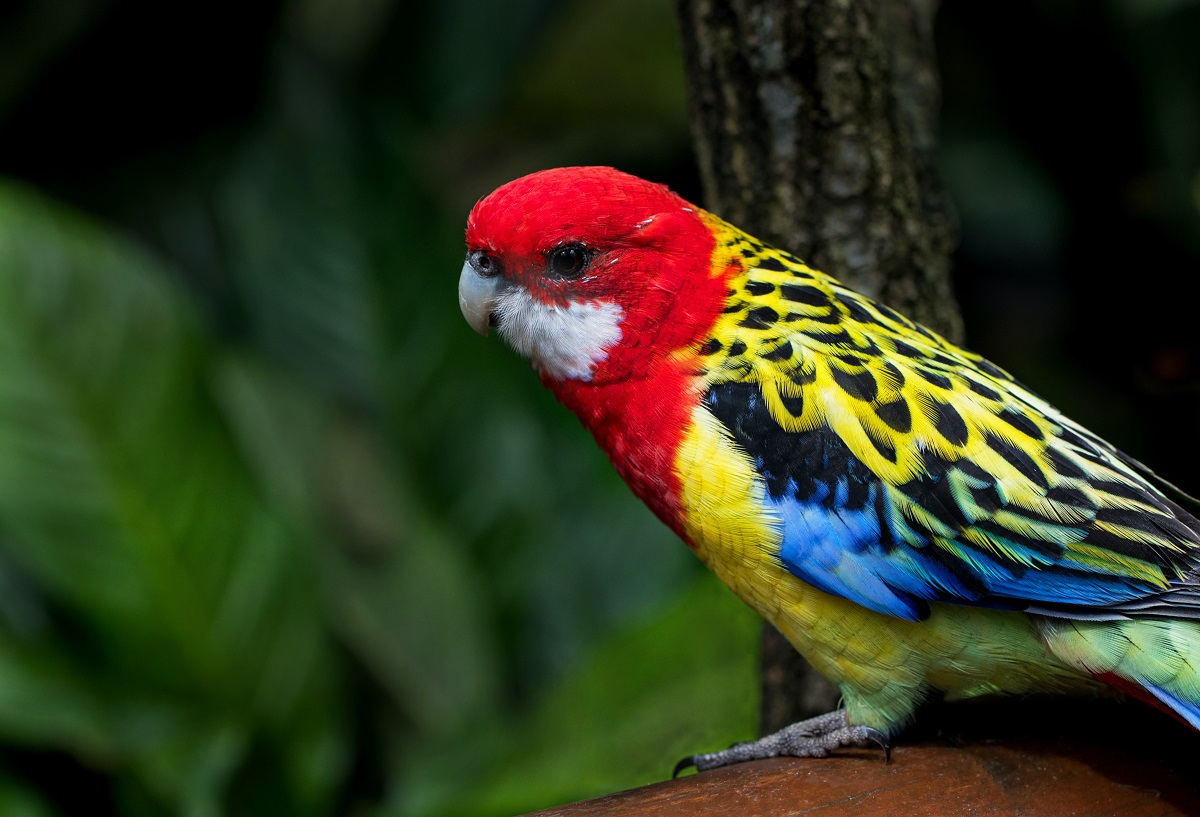
The visual presentation of the eastern rosella is remarkably distinct. The bird features a brilliant red head and upper chest, abruptly contrasted by pristine white cheek patches. Its belly and lower plumage transition into a gradient of yellow-green, while the upper wing feathers display a scalloped pattern of yellow-green and black. The back is predominantly green, complementing the blue undersides of the wings and a long, graduated blue-green tail.
Sexual dimorphism is subtle within the species. While adult males generally possess brighter, more intense coloration, broader heads, and slightly wider beaks than females, definitive visual sexing remains challenging until the bird matures and completes its first complete molt. Juveniles emerge from the nest with significantly muted tones and yellow beaks, gradually acquiring adult plumage between two and six months of age.
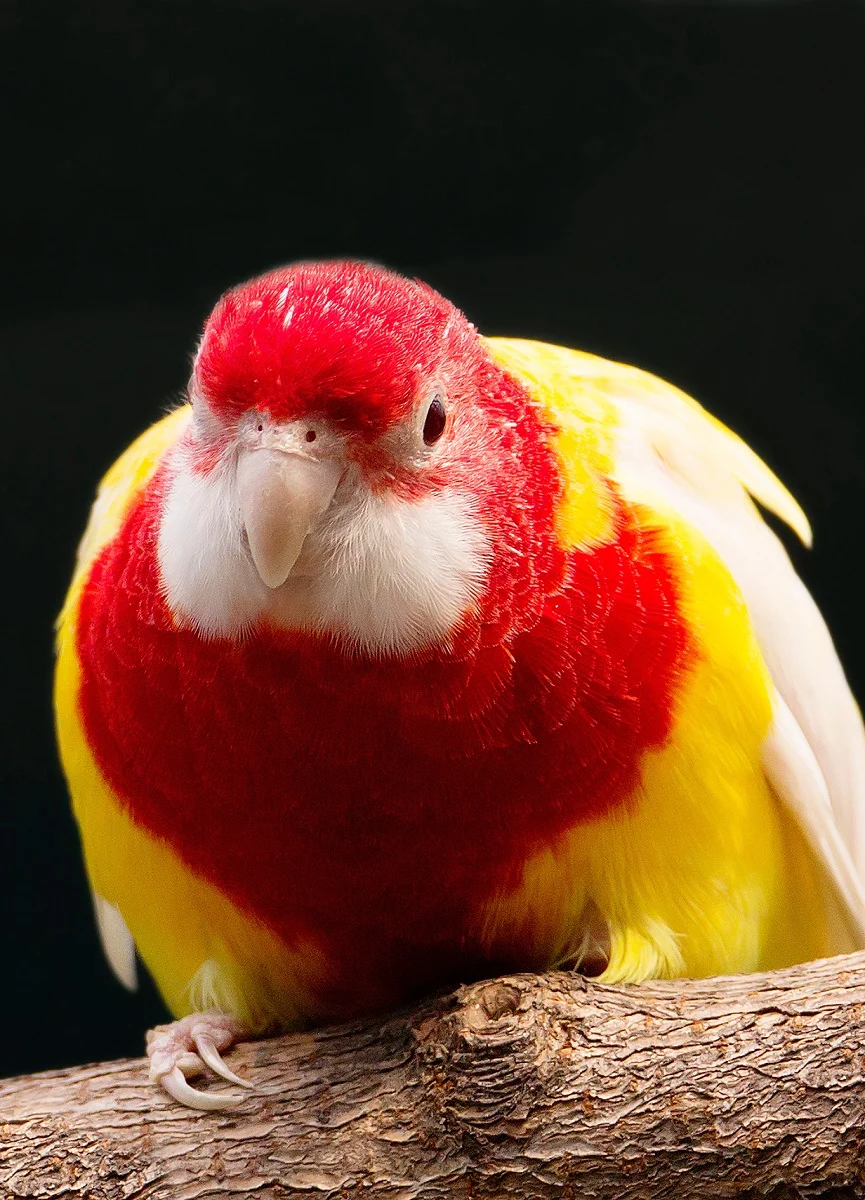
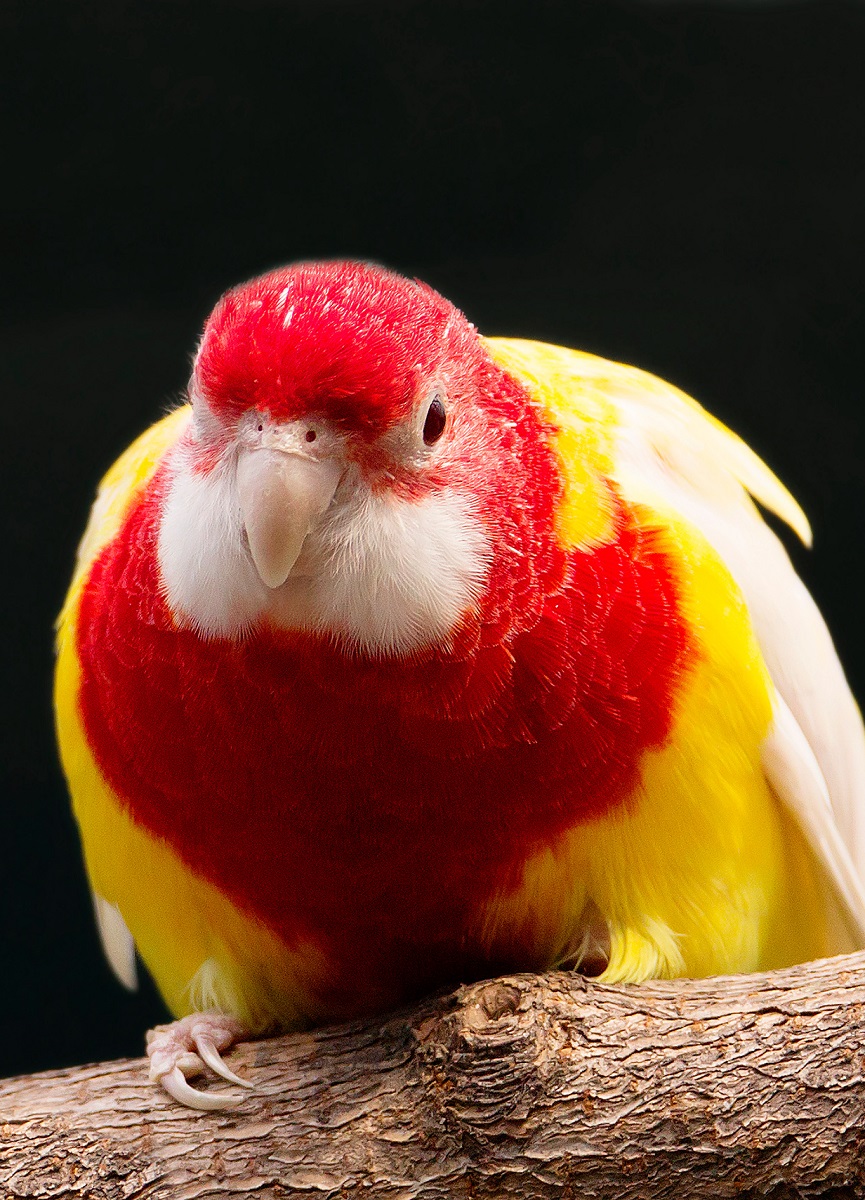
Avicultural practices have further diversified the visual phenotypes of the species. Selective breeding programs have produced numerous color mutations, most notably the "Rubino" morph. Rubinos are characterized by a striking red, yellow, and white pigmentation, completely lacking the wild-type green, blue, and black melanin-based feathers. Furthermore, natural hybridization frequently occurs where the ranges of overlapping species intersect. Field observations regularly document fertile crosses between the eastern rosella and its close relatives, the crimson rosella (Platycercus elegans) and the pale-headed rosella (Platycercus adscitus), producing visually arresting intermediate phenotypes.
Natural Habitat, Geographic Distribution, and Conservation Status
The natural distribution of the eastern rosella spans the diverse landscapes of southeastern mainland Australia, extending from southeastern Queensland through New South Wales and Victoria, as well as across the island state of Tasmania. Within these regions, the species demonstrates a strong preference for lightly wooded environments, including open eucalyptus forests, forest edges, agricultural pasturelands, and suburban parks. They are adaptable up to moderate altitudes of approximately 1,250 meters (4,100 feet), provided an accessible and consistent water source is nearby.
Beyond its native range, the eastern rosella represents a successful introduced species in New Zealand. Established feral populations trace back to two primary historical pathways: accidental escapes from captivity—such as a notable 19th-century incident in Dunedin where a damaged aviary released a dozen birds—and deliberate introductions, including a controversial 1910 release after customs authorities refused entry to a commercial shipment. Today, these introduced colonies thrive across parts of the North and South Islands.
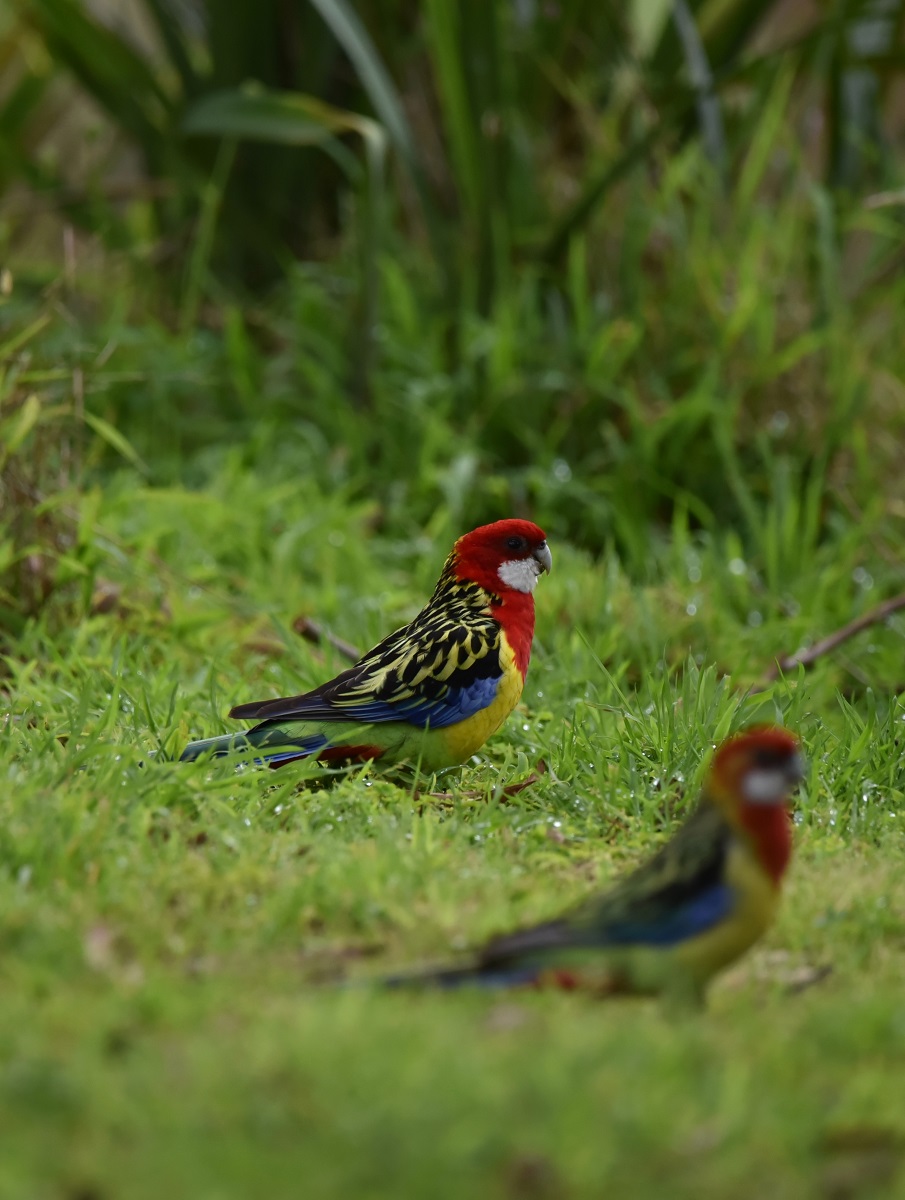
From a conservation perspective, the International Union for Conservation of Nature (IUCN) classifies the eastern rosella as a species of Least Concern. Current population assessments indicate stable or even increasing numbers across its natural range. Ironically, this demographic resilience is partly attributed to anthropogenic environmental modification. The widespread conversion of dense native forests into agricultural land has inadvertently benefited the species by creating expansive feeding grounds rich in cereal crops, grains, and weed seeds.
Dietary Ecology and Agricultural Conflict
Wild eastern rosellas exhibit a generalized granivorous and frugivorous diet. Field studies and crop analyses confirm that their primary sustenance consists of seeds, with a distinct preference for thistle seeds, supplemented by seasonal fruits such as wild apples, berries, blossoms, flower buds, and occasional insect matter.
This dietary reliance on seeds and fruits has historically placed the eastern rosella in direct conflict with the agricultural sector. Since European settlement in Australia, farmers have frequently categorized the species as an agricultural pest due to its propensity to raid commercial orchards and grain harvests.
Despite being protected under native wildlife legislation, state environmental authorities maintain permit systems allowing agricultural producers to cull rosellas under strictly regulated conditions. Permits are granted only when farmers can substantiate tangible economic loss to crops and demonstrate that non-lethal deterrents have proven ineffective. In response to consumer demand for sustainable practices, agricultural advocacy groups have increasingly promoted wildlife-friendly labeling systems to help consumers identify produce cultivated without lethal wildlife mitigation strategies.
Avicultural Care and Domestic Husbandry
In domestic settings, eastern rosellas are predominantly maintained as aviary birds rather than traditional hand-reared companion parrots. This preference stems from their inherently territorial and independent disposition, which makes housing them alongside smaller, docile aviary species—such as budgerigars—problematic. Nevertheless, well-socialized individuals can make engaging indoor pets, prized for their high activity levels, inquisitive nature, and moderate vocalization levels.
Captive nutritional requirements mirror the species’ diverse wild diet. Modern avian veterinary consensus advises against maintaining rosellas exclusively on seed mixes, which frequently lead to nutritional deficiencies and hepatic lipidosis. Instead, veterinarians recommend a foundational diet composed of high-quality formulated pellets, supplemented daily by fresh vegetables—such as leafy greens, carrots, and bell peppers—and fruits offered two to three times weekly. Further dietary enrichment can be achieved through sprouted seeds, whole-grain pasta, brown rice, and occasional protein sources like hard-boiled egg or freeze-dried insects.
Housing requirements dictate the provision of spacious enclosures. For single pairs or indoor pets, cage dimensions should measure at least one meter in length to accommodate horizontal flight and wing-stretching, with bar spacings not exceeding 1.25 centimeters (0.5 inches) to prevent escapes or entrapment. Natural wood perches of varying diameters, alongside a robust rotation of foraging toys, are essential for preventing behavioral stereotypies such as feather plucking.
Vocalization, Temperament, and Broader Implications
Unlike many larger parrot species renowned for disruptive flock calls, eastern rosellas possess a relatively low noise level. Their vocalizations primarily consist of melodic whistles, soft cheeps, and conversational chatter rather than piercing screeches, making them structurally suited for apartment living, provided building insulation is adequate. While they lack the advanced mimicry capabilities of African grey parrots or amazons, patient and consistent training can yield imitation of household noises, simple whistles, and occasional spoken words.
The duality of the eastern rosella—functioning simultaneously as an iconic symbol of Australian biodiversity, an agricultural antagonist, and a beloved avicultural subject—underscores the complex ecological interactions between native wildlife and human development. As agricultural landscapes continue to evolve and global interest in responsible exotic pet ownership expands, ongoing research into the behavior, genetics, and conservation management of Platycercus eximius remains vital for ensuring that this dazzling species continues to thrive both in the eucalyptus woodlands of Australia and within the global community of bird enthusiasts.

