


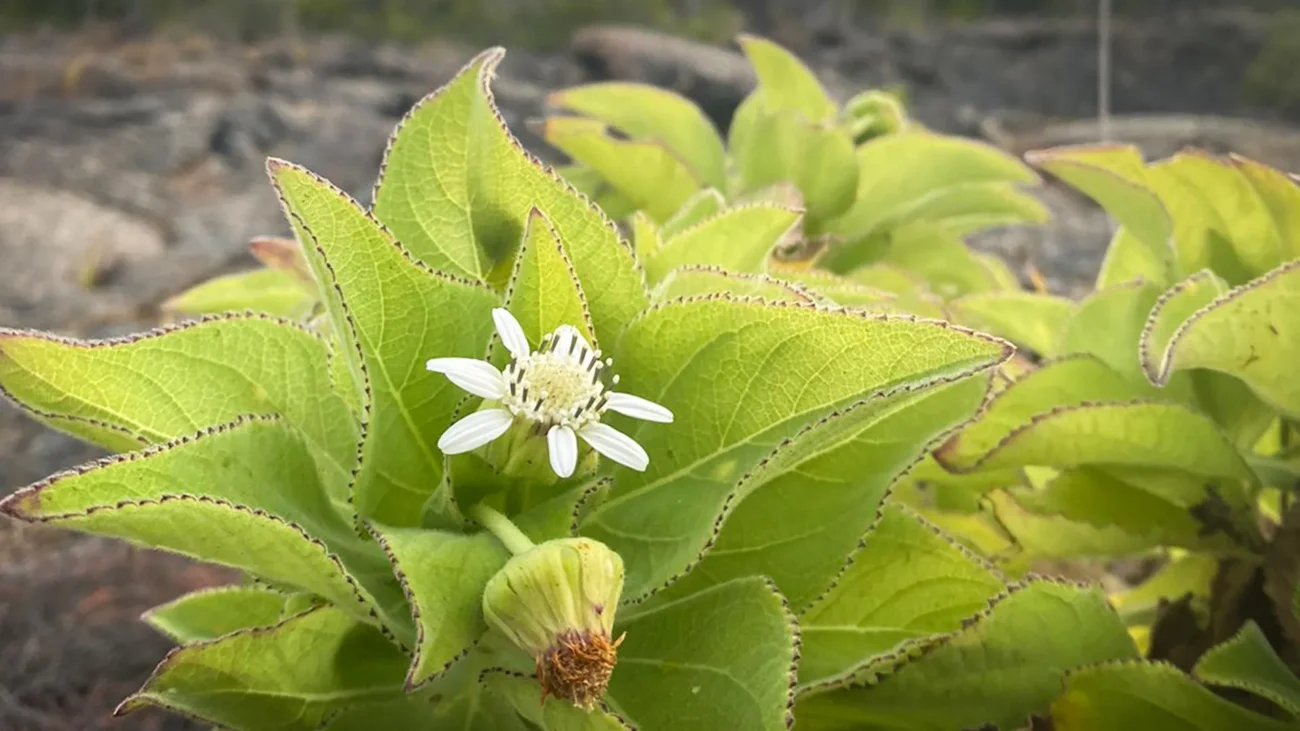
Nearly two centuries after Charles Darwin first stepped ashore on the isolated volcanic expanse of the Galápagos Islands, the remote archipelago continues to challenge and refine our understanding of evolutionary biology. While Darwin’s foundational observations of finches and mockingbirds helped crystallize his theory of evolution by natural selection, modern geneticists are looking beyond the animal kingdom to uncover fresh secrets hidden within the unique flora of the islands. A comprehensive new international study published in the journal Nature Communications has focused on Scalesia, a remarkable genus of plants endemic to the Galápagos commonly referred to as giant daisies. By sequencing the complete genomes of every known species within the group, researchers have revealed a complex tale of rapid adaptation, parallel evolution, and active speciation that mirrors the famous evolutionary trajectory of Darwin’s finches while offering entirely new insights into how genetic networks drive physical traits.
The research effort was spearheaded by an extensive global coalition of scientists, drawing expertise from the Norwegian University of Science and Technology’s (NTNU) University Museum, the Royal Botanic Gardens, Kew, the University of California, Davis, the University of Copenhagen, the Charles Darwin Foundation, the University of Georgia, and the University of British Columbia, alongside several other collaborating institutions. Together, this multidisciplinary team utilized advanced genomic sequencing technologies to trace the lineage and evolutionary mechanisms of Scalesia, shedding light on how these plants managed to colonize, diversify, and thrive across some of the most ecologically diverse and challenging landscapes on Earth.
Historical Context and the Legacy of the Beagle
To fully appreciate the significance of the recent Scalesia findings, one must contextualize the historical weight carried by the Galápagos Islands in the annals of science. In September 1835, the HMS Beagle, under the command of Captain Robert FitzRoy, arrived at the Galápagos archipelago, carrying a young naturalist named Charles Darwin. During a five-week stay across several islands, Darwin collected numerous geological and biological specimens. Among his collections were a variety of birds that he famously misidentified at first glance, believing them to include distinct specimens of sparrows, woodpeckers, and true finches.
It was only after returning to England and consulting with ornithologist John Gould that the true nature of the birds became clear: they were all closely related ground and tree finches whose morphological variations—specifically the size and shape of their beaks—had adapted over generations to exploit different food sources, ranging from seeds and cactus fruits to insects. This realization, paired with his observations of mockingbirds and tortoises, became a cornerstone of Darwin’s revolutionary manuscript, On the Origin of Species, published in 1859.
However, Darwin’s collections in the archipelago were not limited to fauna. During his travels across the islands, he also gathered an array of botanical specimens. Plant life in the Galápagos proved to be equally indicative of the region’s evolutionary uniqueness. Decades later, botanical taxonomists would examine Darwin’s collected plant samples and identify seventy-eight specimens representing species entirely new to science. Among these botanical discoveries were four distinct species of Scalesia. Despite this historical foundation, the genetic machinery driving the astonishing physical diversity of these plants remained poorly understood until the advent of modern whole-genome sequencing.
Chronology of Scalesia Diversification
The evolutionary narrative of Scalesia is defined by its remarkable speed and youthful lineage. Botanical classifications indicate that Scalesia is a relatively young plant genus, with every currently recognized species having emerged within the past one million years. Originating from mainland South American ancestors that managed the treacherous open-ocean crossing to the isolated volcanic islands, the ancestral plant found an archipelago devoid of many competing flora species.
This ecological opportunity triggered a classic evolutionary phenomenon known as adaptive radiation. In adaptive radiation, a single ancestral lineage rapidly diversifies into a wide array of descendant forms, each specialized to occupy a distinct ecological niche. Over the span of a million years, Scalesia transitioned from herbaceous ancestors into a breathtaking spectrum of forms. Today, the genus encompasses everything from low-lying shrubs to towering arboreal specimens reaching heights of up to twenty meters, earning them the moniker of "giant daisies."
These plants successfully colonized dramatically disparate microclimates across the islands. Individual species adapted to thrive in the damp, mist-shrouded highland forests characterized by rich soils, as well as the scorching, arid lowlands where water is scarce and temperatures soar. This wide phenotypic divergence—meaning observable physical differences—evolved in a geological blink of an eye, matching the rapid evolutionary pace observed in Darwin’s finches.
Genomic Findings: Unraveling Parallel Evolution
To uncover how such immense physical diversity could arise in a relatively short timeframe, the research team analyzed the complete genomes of every known Scalesia species. The resulting data provided a high-resolution window into the molecular mechanisms underpinning plant adaptation.
One of the most visually striking adaptations within the Scalesia genus is the evolution of deeply lobed leaves featuring intricate, serrated edges. Botanists and ecologists long suspected that these complex leaf shapes served a functional purpose in arid environments, helping the plants survive extreme heat and drought stress by reducing surface area to limit transpirational water loss and enhancing thermal radiation to release heat more efficiently.
Through genomic mapping, the researchers discovered that these deeply lobed leaves did not evolve just once from a single ancestral lineage. Instead, the trait evolved independently multiple times across separate branches of the Scalesia family tree. This phenomenon is a textbook example of parallel evolution, wherein independent organisms or lineages arrive at similar functional solutions to comparable environmental challenges.
Yet, the genetic investigation yielded a profound surprise that challenges conventional biological assumptions. When the scientists examined the DNA responsible for these parallel physical traits, they found that different genetic pathways were utilized in each instance.
"Even more surprising was that each time this trait evolved, it did so through different genes—even though all of them belong to the same biological system controlling leaf development," noted Vanessa Bieker, a researcher at the Royal Botanic Gardens, Kew, and the lead author of the publication. "This provides a clear example of parallel evolution: nature arriving at the same solution multiple times, but through different genetic pathways. Instead of being controlled by a single ‘master gene’, evolution appears to draw on an entire network of interacting genes, tweaking different components to produce similar outcomes."
Rather than relying on a singular master regulatory gene to dictate leaf architecture, evolutionary pressures can manipulate diverse nodes within a larger, interconnected genetic network. These distinct underlying genetic modifications ultimately converge to produce nearly identical macroscopic physical traits, revealing a previously underappreciated layer of genetic flexibility in natural selection.
Implications for Speciation and Active Evolution
Beyond elucidating the mechanisms of parallel evolution, the genomic dataset indicates that the evolutionary story of Scalesia is far from concluded. The genetic evidence gathered by the international team points toward ongoing, active speciation across the archipelago.
The researchers observed that distinct populations assigned to the same taxonomic species often harbor substantial genetic divergences. Many of these populations have remained geographically and reproductively isolated from one another for extended periods due to the fragmented nature of the Galápagos landscape, which is defined by isolated volcanic peaks separated by arid lowlands or ocean expanses.
Consequently, the data suggests that numerous Scalesia populations currently classified under single species designations actually represent distinct, nascent evolutionary lineages that have not yet been formally recognized or described by science.
"Populations within the same species show large genetic differences and have been isolated from one another for long periods. This means new species may be in the process of forming," stated Professor Michael D. Martin of the NTNU University Museum. "Many Scalesia populations may represent distinct evolutionary lineages that have not yet been formally described."
This finding carries significant weight for conservation biology and wildlife management in the Galápagos. Because these geographically isolated populations are evolving independently along separate genetic trajectories, the researchers argue that standard conservation strategies must be reevaluated. Traditional conservation frameworks often focus solely on protecting formally recognized species. However, the genetic reality uncovered by the study implies that management units should be established at the population level. Treating each isolated lineage as an independent conservation unit ensures that the full spectrum of active evolutionary potential across the archipelago is preserved against threats such as invasive species, climate change, and habitat degradation.
Broader Scientific Significance
The publication of these findings in Nature Communications extends far beyond the borders of the Galápagos National Park. By providing an unusually high-resolution molecular portrait of adaptive radiation and parallel evolution, the study offers broader insights into how complex biological traits emerge across the natural world.
The research demonstrates that evolutionary innovation is not restricted to linear or predictable genetic pathways. The capacity of a biological system to utilize an entire network of interacting genes to arrive at advantageous physical adaptations highlights the inherent plasticity of life. As global ecosystems face unprecedented anthropogenic pressures and rapid environmental shifts, understanding the genetic agility of adaptive lineages like Scalesia provides scientists with critical baseline knowledge regarding how biological systems respond to environmental stress.
More than 150 years after Charles Darwin utilized the Galápagos Islands to formulate a paradigm-shifting theory of life on Earth, the archipelago continues to serve as an unparalleled natural laboratory. As modern genomic tools continue to unlock the microscopic secrets written into the DNA of the islands’ endemic species, researchers are finding that Darwin’s living laboratory still holds transformative lessons for the future of evolutionary science.

