


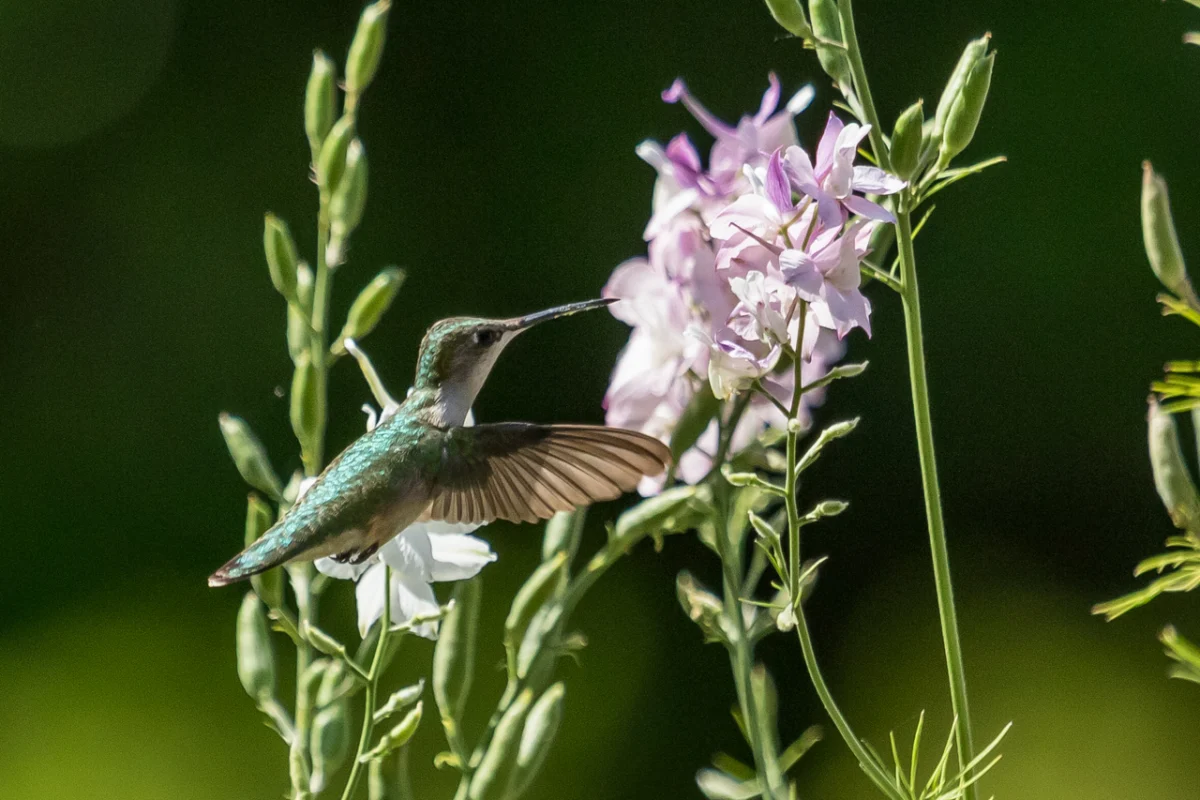
Fall migration is currently underway across the United States, marking the commencement of one of the most remarkable endurance feats in the avian world. As seasonal temperatures begin to shift and day lengths shorten, the Ruby-throated Hummingbird (Archilochus colubris) has begun its arduous transit from the breeding grounds of the eastern United States and southern Canada toward its wintering territories in Mexico and Central America. This mass movement of millions of individuals is not merely a seasonal occurrence; it is a biological imperative that highlights the extraordinary physiological capabilities of one of the world’s smallest warm-blooded creatures.
The Mechanics of an Epic Journey
Despite weighing roughly the same as a single U.S. penny—averaging between 2.5 and 4 grams—these diminutive birds possess the capacity to traverse immense distances. During their annual migration, many Ruby-throated Hummingbirds will fly hundreds, and in some cases well over 1,000 miles, to reach their destination. The timing of this migration is dictated by complex environmental cues, including photoperiodism—the change in the duration of daylight—which triggers a physiological state known as hyperphagia.
Hyperphagia is a period of intense feeding during which hummingbirds increase their body mass by as much as 25 to 40 percent. They consume vast quantities of nectar, which provides the necessary carbohydrates for immediate energy, while also preying on small insects and spiders to acquire the proteins and fats required for sustained muscle maintenance during their long-distance flight.
The Gulf Coast Gauntlet: A 500-Mile Crossing
One of the most perilous segments of the migration occurs when the birds reach the Gulf Coast. Ornithologists have observed two primary strategies utilized by the species to navigate this formidable barrier. A portion of the population opts for a coastal route, hugging the shoreline through Louisiana and Texas, which allows for frequent stops to forage. However, a significant number of birds undertake a non-stop, trans-Gulf flight.
For those choosing the direct path, the journey represents a grueling 500-mile flight across the open waters of the Gulf of Mexico. This trajectory requires the birds to remain in constant flight for approximately 18 to 22 hours without the possibility of refueling or rest. The success of this crossing is entirely dependent on the energy reserves acquired in the weeks prior to departure. If weather conditions, such as sudden cold fronts or heavy rainfall, coincide with this crossing, the mortality rate can increase, underscoring the vital importance of high-quality stopover habitats along the northern Gulf Coast.
Chronology and Seasonal Peaks
The migration of the Ruby-throated Hummingbird is a protracted event, typically occurring in stages throughout the late summer and early autumn. Adult males are generally the first to depart their breeding territories, often beginning their movement southward as early as mid-to-late August. Females and juveniles follow, with the bulk of the population moving through the southern United States throughout September and into early October.
For birdwatchers and researchers, this window of time provides a unique opportunity to observe high concentrations of these birds. The Gulf Coast serves as a critical "bottleneck" area, where the funneling of birds creates a natural staging ground. Organizations such as the Gulf Coast Bird Observatory (GCBO) in Texas track these movements with precision, noting that mid-September acts as a peak period for observation.
To mark this occurrence, institutions like the GCBO organize educational events, such as the annual Xtreme Hummingbird Xtravaganza, held this year on September 12 and 19. These events serve to educate the public on the necessity of habitat conservation, specifically regarding the native flowering plants that provide essential nectar sources for migrating hummingbirds.
Ecological Significance and Habitat Requirements
The survival of the Ruby-throated Hummingbird is inextricably linked to the availability of stopover habitats. As these birds travel southward, they require a "chain" of foraging opportunities. If a link in this chain is broken—due to habitat loss, urban development, or the degradation of native plant populations—the ability of the population to complete its migration is compromised.
Experts in avian ecology emphasize that the loss of native flora is a primary threat to migratory birds. Non-native, ornamental plants often fail to provide the caloric density required by hummingbirds. Consequently, conservationists strongly advocate for the planting of nectar-rich native species such as Salvia, Bee Balm, and Trumpet Vine. These plants not only provide fuel for the birds but also support the local insect populations that serve as a necessary protein source.
Public Observation and Citizen Science
For residents of the eastern and southern United States, the month of September offers an excellent opportunity to engage in amateur ornithology. Hummingbirds are frequently seen hovering around backyard feeders and late-blooming garden flowers. However, it is important to note that these sightings are often fleeting. Unlike local breeding birds that stay in one territory for months, migrants are transient, often remaining in a specific location for only a few days before continuing their southward trek.

To contribute to scientific understanding, many birders participate in citizen science programs such as eBird or the Hummingbird Monitoring Network. By logging sightings, dates, and behavior, the public helps researchers build a more accurate map of migratory timing and population health. This data is essential for assessing the impact of climate change on migration patterns, as warming trends in the northern hemisphere can cause a mismatch between the birds’ arrival in breeding zones and the peak bloom of nectar sources.
Broader Implications of Migration Shifts
The migration of the Ruby-throated Hummingbird is a bellwether for the health of the ecosystems through which it travels. Because these birds are highly sensitive to their environment, changes in their migration timing or success rates can signal broader ecological shifts. For instance, increased frequency of extreme weather events—often linked to climate change—can force birds to deviate from their traditional flight paths or deplete their energy reserves prematurely.
Furthermore, the expansion of artificial light at night (ALAN) in urban corridors poses a significant risk to migratory species, potentially disorienting them during their nocturnal flights. Addressing these challenges requires a multi-faceted approach, including the preservation of large-scale migratory corridors and the implementation of "lights-out" policies in major metropolitan areas during the migration peak.
As September continues, the sight of a hummingbird in a garden remains a profound reminder of the connectivity of our natural world. These tiny, iridescent travelers are currently navigating a gauntlet of environmental and physical challenges, driven by an instinctual map that has been refined over millennia. Whether they are refueling at a backyard feeder or braving the winds over the Gulf of Mexico, their journey remains a testament to the resilience of nature in an increasingly human-dominated landscape. Through continued habitat protection and public awareness, the annual spectacle of the Ruby-throated Hummingbird migration can be preserved for generations to come, ensuring that these remarkable aviators continue their essential role in the pollination of our native ecosystems.

