


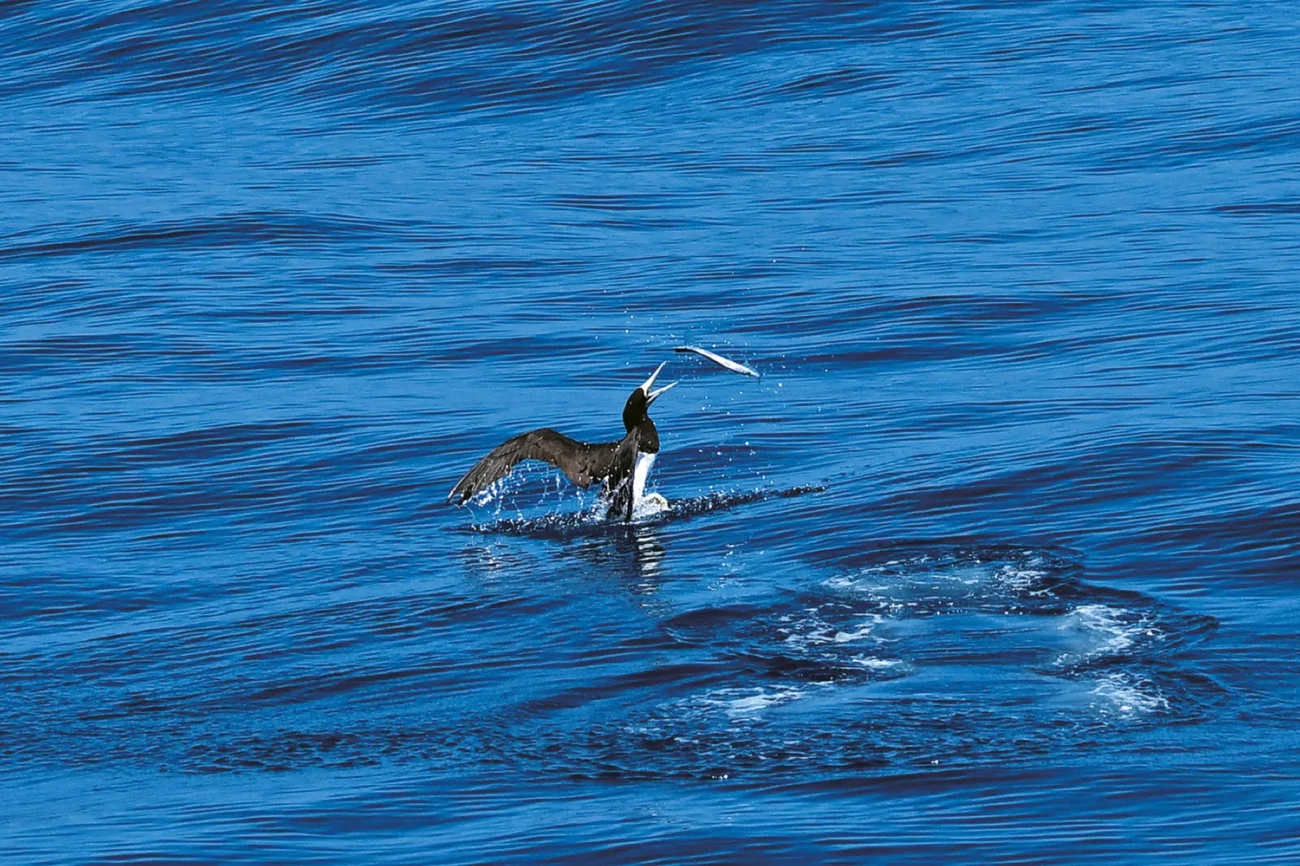
In the latest installment of her ongoing series for Fujingahou Magazine, HIH Princess Takamado offers a rare, intimate look at the avian biodiversity of Japan’s remote Ogasawara Islands, focusing specifically on the survival strategies of the Sulidae family, commonly known as boobies. The article, which features original photography captured during a May 2026 expedition, serves as both a biological observation and a meditation on the precarious nature of marine life in the Pacific.
The publication coincides with the one-year anniversary of the 2025 World Expo in Osaka, a milestone that has prompted a period of reflection on Japan’s environmental and cultural engagement. Princess Takamado, a long-time advocate for conservation, uses her field notes to bridge the gap between high-level diplomatic environmental discourse and the raw, unvarnished reality of the natural world.
The Ogasawara Islands: A Laboratory of Biodiversity
The Ogasawara Islands, often referred to as the "Galapagos of the East," are a UNESCO World Heritage site known for their high levels of endemism and unique ecological history. Situated approximately 1,000 kilometers south of Tokyo, this volcanic archipelago provides a vital sanctuary for various seabird species, including the Brown Booby (Sula leucogaster) and the Red-footed Booby (Sula sula).
The May 2026 expedition was conducted in partnership with expert wildlife photographer Koichi Fujiwara of NATURE’S PLANET, ensuring that the visual documentation met the rigorous standards required for scientific and artistic publication. The resulting imagery provides a granular look at the hunting behaviors of these seabirds, a topic of significant interest to marine biologists studying the health of Pacific pelagic ecosystems.
Biological Analysis: The Mechanics of the Plunge
The booby’s hunting technique, known as plunge-diving, is a marvel of evolutionary engineering. As documented in the Princess’s field notes, these birds can reach speeds approaching 100 kilometers per hour during a vertical descent. This behavior is not merely a matter of momentum; it is a highly specialized adaptation.

Biologically, the booby is equipped with several features that facilitate these high-impact strikes. The bird’s streamlined, cone-shaped head and neck act as a projectile, while its robust skull serves as an anatomical helmet. Furthermore, subcutaneous air sacs, located beneath the skin of the breast and face, act as natural airbags to mitigate the force of water entry. Despite these adaptations, the process is fraught with risk. Collisions with other birds and concussive injuries from improper entry angles are recognized hazards, highlighting the thin margin between nutritional success and physical injury.
Chronology of the Expedition and Behavioral Observations
The observations made during the May 2026 trip focused on the competitive dynamics of foraging. A particular sequence captured by the Princess illustrates the intense competition for resources. In a series of high-speed burst photographs, a Brown Booby is seen successfully capturing a fish, only to be immediately beset by conspecifics attempting to kleptoparasitize—or steal—the catch.
The timeline of the encounter suggests that food sources in the open ocean are not as abundant as one might assume from curated wildlife documentaries. While modern media often depicts large, synchronized feeding frenzies, the reality for the individual bird is one of solitary hunting, persistence, and frequent failure. This empirical observation challenges the prevailing narrative that such concentrations of prey are a daily occurrence, suggesting instead that they are rare, high-energy events in an otherwise resource-sparse environment.
Nomenclature and Cultural Context
The article also addresses the cultural history of the species. In Japan, the Brown Booby is referred to as "Katsuo-dori," or "Bonito Bird." This nomenclature reflects a historical understanding of maritime symbiosis. Traditional fishers recognized that the presence of these birds on the surface of the water was a reliable indicator of active predatory behavior beneath the waves. As bonito schools drive smaller fish toward the surface, the boobies capitalize on the trapped prey. This relationship underscores the interconnectedness of marine food webs and the importance of apex predators in signaling ecosystem health to human observers.
Environmental Implications and Conservation Status
The research and observations presented by Princess Takamado highlight the broader implications of marine conservation. BirdLife International, which provided the English-language reference materials for this project, notes that the health of seabird populations is a direct proxy for the health of the oceans.
The Ogasawara Islands serve as a critical breeding ground for these species. However, climate change, shifting ocean currents, and plastic pollution continue to threaten the stability of these habitats. The Princess’s focus on the "harshness" of the wild serves as a reminder that these species operate within a finely tuned balance. Any disruption to the availability of surface-dwelling fish—whether through overfishing or warming temperatures—directly threatens the survival of the boobies.

Expert Contributions and Editorial Oversight
The project involved a collaborative effort between the imperial household’s interest in the arts and professional ornithological documentation. Yuki Masuda, the editor at Fujingahou, oversaw the editorial process, ensuring that the Princess’s reflections were balanced with factual, descriptive captions regarding the species’ physical characteristics and breeding patterns.
By utilizing high-speed digital photography, the team was able to capture frame-by-frame sequences that serve as legitimate study material for behavioral biologists. The documentation of the "failed catch"—where a bird struggles to maintain its grip on a slippery fish—is particularly illustrative of the dexterity required by these birds to survive in a dynamic marine environment.
Synthesis of Findings
In summary, the 2026 Ogasawara expedition provides more than just aesthetic imagery; it offers a grounded, observational study of avian survival in one of Japan’s most ecologically significant regions. The findings confirm that:
- Strategic Adaptation: The physiological structure of the booby is a result of millions of years of adaptation to high-speed hunting, yet it remains prone to significant accidental injury.
- Resource Scarcity: Contrary to the popular image of abundant feeding grounds, the open ocean presents a challenging landscape where successful captures are hard-won and heavily contested.
- Indicator Species: The traditional naming conventions, such as "Katsuo-dori," remain relevant, as these birds function as essential biological markers for fishermen and scientists alike.
As the scientific community continues to monitor the Ogasawara marine environment, projects like these play a dual role. They contribute to the public’s understanding of natural history while documenting the precarious realities faced by seabirds in the 21st century. Through the lens of Princess Takamado, the public is invited to view these creatures not merely as symbols of the sea, but as active participants in a complex, competitive, and fragile marine ecosystem.
The work serves as a testament to the importance of continued observation and the need to protect the habitats that allow such species to thrive. In an era where the pace of environmental change is accelerating, the "Katsuo-dori" remains an enduring, if challenged, emblem of the Pacific’s vast and unforgiving beauty.

