


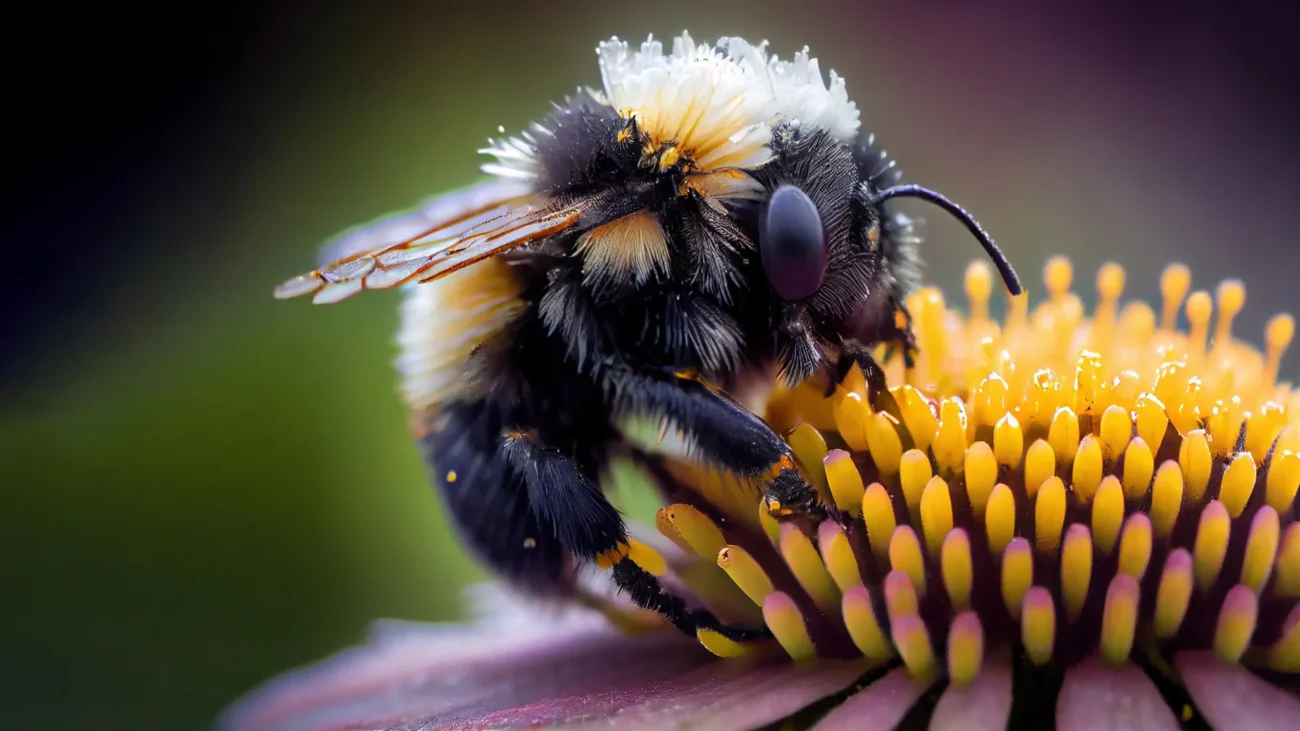
New scientific findings from the University of Cambridge have cast a revealing, albeit concerning, light on the invisible environmental pressures facing native pollinators. According to research published in the journal Ecological Entomology, bumblebees can amass dramatically higher concentrations of toxic heavy metals in their bodies and pollen reserves than honeybees, even when both species forage side by side in the exact same landscape. This stark disparity underscores how localized industrial fallout, agricultural practices, and urban expansion create hidden hazards that disproportionately threaten wild bee populations compared to their managed counterparts.
The study, spearheaded by researchers in Cambridge’s Department of Zoology and funded by the Royal Society, examined colonies positioned in Cambridgeshire, England—a region where baseline soil contamination is generally considered low. Yet, despite the rural appearance of the landscape, the data revealed that bumblebee-collected pollen contained between two and seven times more heavy metals than that gathered by honeybees across a suite of contaminants, including arsenic, cadmium, chromium, cobalt, lead, and tin. Furthermore, adult bumblebees themselves harbored roughly three times higher whole-body concentrations of these dangerous elements.
Understanding the broader context of heavy metal pollution in ecosystems requires looking beyond visible soot and industrial smokestacks. While high-concentration contamination is well-documented around heavy industrial sites, metal smelting facilities, and active mining regions, toxic elements frequently migrate into ostensibly pristine rural areas. Airborne particulate matter can travel significant distances on prevailing winds, while agricultural inputs such as phosphate-based fertilizers, livestock manure, sewage sludge, and industrial compost frequently introduce trace metals like cadmium and lead directly into agricultural soils. Once present in the earth, these elements persist indefinitely, entering the food web through root absorption by flowering plants.
The Chronology and Scope of the Investigation
The path to these findings began with a systematic field study designed to test whether different corbiculate bee species—those that carry pollen in baskets on their hind legs—process environmental toxins uniformly. Historically, environmental toxicologists and ecologists have relied heavily on honeybees (Apis mellifera) as biological indicators, or sentinel species, to gauge the health and contamination levels of local ecosystems. Because honeybees are widely managed in man-made hives and forage predictably over large areas, scientists frequently use them to map out heavy metal pollution in urban and industrial zones.
However, the research team, led by Dr. Sarah Scott during her tenure at Cambridge before transitioning to Newcastle University, suspected that using honeybees as a universal proxy for all pollinators might create a dangerous blind spot. To test this hypothesis, the researchers established an observational framework comparing honeybee and bumblebee colonies placed in close proximity to one another within the Cambridgeshire countryside.
Using specialized pollen traps fitted to hives and colonies, the team harvested fresh pollen loads brought back by the foraging insects. Simultaneously, they collected adult worker bees to measure internal tissue accumulation. Laboratory assays utilizing advanced mass spectrometry quantified the exact parts-per-billion concentrations of arsenic, cadmium, chromium, cobalt, lead, and tin. The results shattered the assumption that shared foraging grounds equate to shared toxicological profiles. Across nearly every metal tested, bumblebees returned significantly elevated loads.
Anatomy of Exposure: Why Bumblebees Bear the Brunt
The striking variance in heavy metal accumulation between the two species is not a matter of mere coincidence; rather, it is driven by a complex interplay between insect physiology, nesting ecology, and foraging behavior.
Foremost among these factors is the stark contrast in colony scale and architecture. A typical managed honeybee colony is a demographic powerhouse, housing anywhere from 30,000 to 60,000 individuals within an elevated, weather-proof hive or hollow tree cavity. In stark contrast, native bumblebees establish much smaller, subterranean or ground-level colonies typically housing between 50 and 500 individuals. This difference in workforce size dictates how a colony absorbs environmental shocks. When a honeybee forager succumbs to toxin exposure, the loss represents a fraction of a percent of the total colony workforce. For a bumblebee colony, the loss of even a few dozen foragers can catastrophically impair the collective ability to gather food and rear brood.
Foraging range further exacerbates this disparity. Honeybees are long-distance travelers, routinely venturing up to 10 kilometers from their hive in search of optimal nectar and pollen sources. This expansive mobility allows honeybee colonies to spread their foraging footprint over vast swaths of land, effectively diluting their exposure to localized pollution hotspots. Bumblebees, conversely, are homebodies; they typically restrict their foraging activities to a radius of approximately 1.5 kilometers from their subterranean nests. Consequently, if a bumblebee colony happens to be situated near a localized patch of contaminated soil or an airborne particulate deposition zone, the workers have little spatial recourse to avoid the hazard.
Dietary specialization also plays a critical role. Honeybees are generalist foragers that cast a wide net across a vast array of plant species. By mixing pollen from dozens of different floral sources, they naturally dilute the concentration of any single contaminant absorbed from a specific plant type. Bumblebees tend to gather smaller absolute amounts of pollen and often exhibit more selective floral preferences based on tongue length, body size, and local resource availability. Because certain plant families are hyperaccumulators of specific heavy metals—pulling toxic elements out of the soil at much higher rates than their neighbors—bumblebees tied to these specific plants ingest disproportionately higher doses of heavy metals.
Finally, physical morphology cannot be overlooked. Bumblebees possess exceptionally dense, hairy bodies compared to their more streamlined honeybee cousins. This heavy coat of branched setae acts as an electrostatic velvet trap, effortlessly catching ambient dust, airborne industrial fallout, and soil particles laden with heavy metals as the insects buzz through the landscape. Much of this particulate matter is subsequently groomed, packed into pollen loads, or ingested during grooming sessions, increasing the insect’s internal and external toxic burden.
Physiological and Ecological Implications
While the concentrations of heavy metals detected in the Cambridgeshire study were generally below acute lethal thresholds—meaning the bees did not drop dead instantly upon exposure—toxicologists warn that sublethal concentrations can be equally insidious.
Dr. Sarah Scott highlighted the subtle yet devastating impacts of chronic, low-level metal exposure: "Most metal levels we found were not high enough to kill bees, but even low level contamination can still harm bee health and colony success in subtle but important ways, such as affecting their ability to forage and reproduce."
Decades of ecotoxicological research corroborate this assessment. Heavy metals such as lead and cadmium are potent neurotoxins that interfere with central nervous system function in insects. Even trace amounts can disrupt associative learning, spatial memory, and motor coordination. For a foraging bee, impaired memory and navigation translate directly to an inability to locate floral resources efficiently, remember the spatial layout of the landscape, or find the way back to the nest.
Furthermore, laboratory studies have linked heavy metal ingestion to impaired larval development, reduced egg-laying capacity in queens, and lowered overall reproductive output. When these individual deficits scale up to the colony level, the results can be disastrous. Reduced brood survival, combined with the inherently smaller populations of bumblebee colonies, creates a dangerous feedback loop that can precipitate localized colony collapse.
The Broader Picture: Food Security and Biodiversity
The implications of these findings extend far beyond entomological curiosity, striking at the core of agricultural productivity and ecosystem stability. Bumblebees are among the most efficient and versatile pollinators on the planet. Their unique ability to perform "buzz pollination"—vibrating their flight muscles at a specific frequency to dislodge tightly held pollen from flowers such as tomatoes, peppers, blueberries, and cranberries—makes them irreplaceable agricultural assets.
Professor Lynn Dicks, senior author of the study and a researcher in the University of Cambridge’s Department of Zoology, as well as a Fellow at Selwyn College, emphasized the vulnerability of these populations even outside traditional industrial zones.
"Even in areas that we usually consider safe or lower risk for heavy metals—typically rural areas, away from industrial or mining areas—bees can pick up toxic metals," Professor Dicks noted. "Bumblebee colonies tend to have fewer workers available to perform tasks, so the loss of individual foragers can have a disproportionately large impact on overall colony function."
As agricultural landscapes face mounting pressures from chemical intensification, habitat fragmentation, and climate volatility, the silent accumulation of heavy metals adds a complex new layer of anthropogenic stress. Bees are foundational to terrestrial ecosystems; roughly one-third of human dietary crops depend directly or indirectly on insect pollination. The disruption of pollinator health threatens not only wild floral biodiversity but also the economic viability of commercial fruit and vegetable production.
Official Responses, Recommendations, and Future Outlook
Despite the unsettling nature of the data, the research team is careful to frame their findings not as a counsel of despair, but as a call for informed environmental management and continued conservation action. A primary concern among researchers following the publication of such studies is that well-meaning members of the public might hesitate to plant urban or suburban gardens for fear of inadvertently poisoning local wildlife.
The scientists behind the Cambridge study strongly reject this notion, urging citizens to maintain and expand pollinator-friendly gardening practices.
"Bees play a critical role in both biodiversity and food security, so we’d still encourage people to plant flowers to help them, even if you live in an area more likely to be contaminated," Dr. Scott advised. "At the end of the day, bees still need food. Even if it carries traces of heavy metals, having some food is better than having no food."
Instead of abandoning pollinator conservation, experts suggest shifting policy focus toward addressing the root causes of environmental contamination. This includes stricter regulation of industrial emissions, better management of agricultural runoff, careful vetting of organic fertilizers and sewage sludge used in crop production, and continued remediation of historically contaminated urban and brownfield soils.
The study, which received financial backing from the Royal Society, points the way toward a more nuanced understanding of ecotoxicology. Moving forward, environmental regulators may need to reassess how chemical pollution limits are established, ensuring that biological safety thresholds protect not just the hardiest sentinel species, but also the more vulnerable wild pollinators upon which global ecosystems depend. Protecting these vital insects requires recognizing that even the quietest countryside harbors invisible chemical footprints—and that safeguarding biodiversity demands vigilance far beyond the shadow of the factory gate.

