


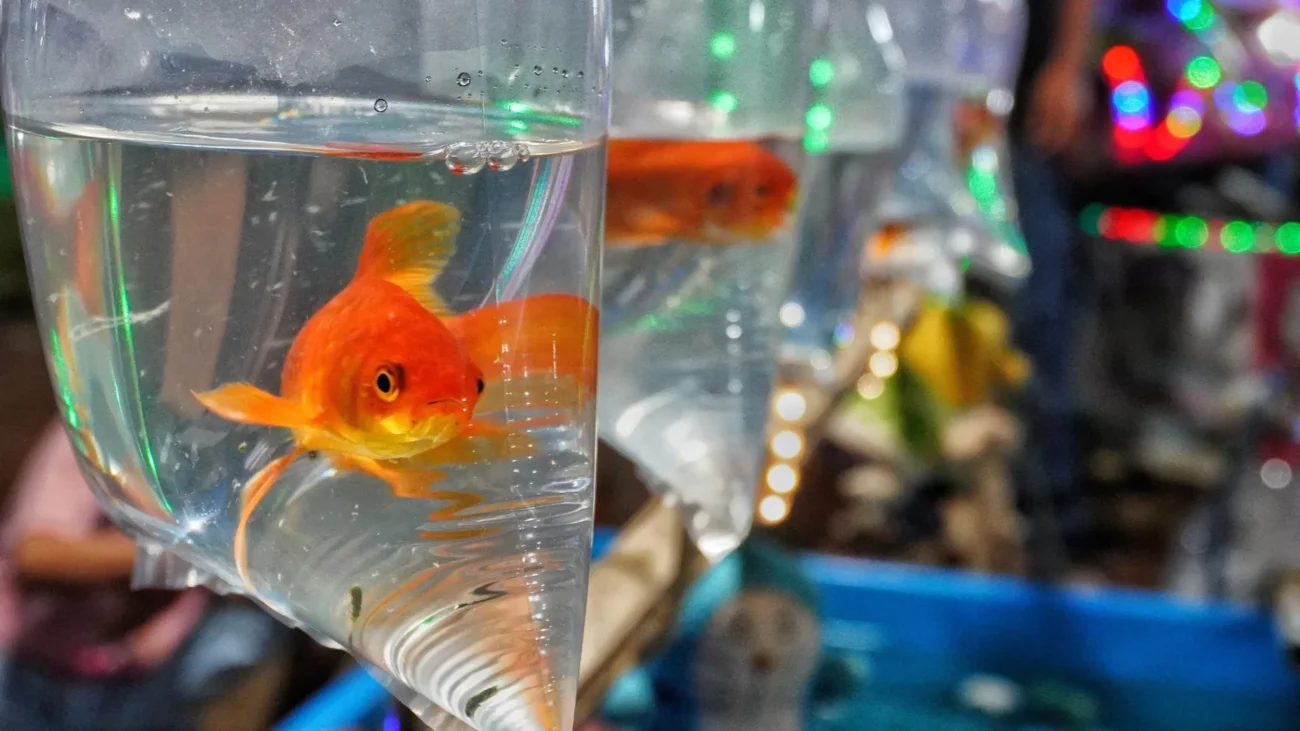
When people imagine invasive species wreaking havoc on native ecosystems, they typically picture massive pythons slithering through the Florida Everglades, zebra mussels clogging industrial water pipes, or aggressive Asian carp leaping into Midwestern rivers. Rarely does the public eye turn toward the benign, spherical orange pet residing in a glass bowl on a child’s bedroom desk. However, a newly published peer-reviewed study spearheaded by researchers at The University of Toledo and the University of Missouri has dismantled the comforting illusion that common goldfish are harmless when introduced to the wild. The findings present definitive, empirical proof that these innocent-looking household pets can act as ecological wrecking balls, fundamentally transforming freshwater habitats and pushing vulnerable aquatic environments past the brink of irreversible collapse.
Published in the prestigious Journal of Animal Ecology, the research delivers some of the most rigorous experimental evidence gathered to date regarding the ecological consequences of feral goldfish (Carassius auratus). Utilizing large-scale outdoor experimental setups designed to simulate natural aquatic habitats, the scientific team observed how goldfish reshape both nutrient-poor and nutrient-rich lakes over time. The conclusions serve as an urgent, unambiguous alarm bell for pet owners, commercial breeders, natural resource managers, and environmental policymakers alike: what begins as a sympathetic act of releasing an unwanted pet into a local pond can quickly mushroom into a profound ecological crisis.
Dr. William Hintz, an associate professor in the Department of Environmental Sciences and the Lake Erie Center at The University of Toledo who served as the study’s lead investigator, emphasized the psychological barrier researchers must overcome when educating the public. Releasing a goldfish into a local waterway is frequently rationalized by well-meaning owners as a humane alternative to euthanasia—a compassionate second chance at a free life in the wild. Yet, Dr. Hintz stresses that this perceived kindness masks a dangerous reality. The evidence is now unequivocally clear that these pets can rapidly transform into ecological pests, wreaking havoc on the delicate balance of freshwater ecosystems.
Anatomy of an Experiment: Replicating Lake Dynamics
To arrive at these conclusions, the research team—which included Dr. Hintz, Hannah Barrett, and Dr. Rick Relyea from the University of Missouri—designed a comprehensive, multi-tiered investigation. Titled "Invasive goldfish trigger a regime shift in experimental lake ecosystems of varying trophic state," the study avoided the limitations of small-scale laboratory aquariums or purely observational field studies, which often struggle to control for confounding variables.
Instead, the scientists utilized large outdoor freshwater mesocosms. These standardized, medium-sized artificial ecosystems are engineered to mimic the complex physical, chemical, and biological conditions of real-world lakes. By housing these mesocosms outdoors, the researchers allowed natural weather patterns, sunlight fluctuations, and ambient temperatures to influence the environments, ensuring the ecological interactions observed closely mirrored those occurring in natural ponds and lakes.
The experiment was strategically structured to evaluate how goldfish impact two distinct types of freshwater environments: oligotrophic systems, which are naturally low in nutrients and typically characterized by clear water and sparse plant growth, and eutrophic systems, which are rich in nutrients, highly productive, and frequently prone to algal blooms. By introducing Carassius auratus into both scenarios, the research team could determine whether the fish’s destructive potential was limited to specific baseline conditions or if they posed a universal threat across varying aquatic landscapes.
Furthermore, the researchers employed a sophisticated combination of additive and substitutive experimental designs. This methodological rigor allowed them to meticulously separate the specific, isolated impacts of goldfish from the generalized effects associated simply with having a higher overall biomass of fish within a given body of water. The data analysis revealed a sobering truth: while minor fluctuations in aquatic vegetation could occasionally be attributed to total fish abundance, the severe, systemic ecological damage observed was directly and exclusively tied to the presence of invasive goldfish.
The Mechanics of Destruction: Why Goldfish Thrive and Ruin
To understand how a domestic pet transforms into an apex ecological disruptor, one must examine the biological traits of the goldfish. Though selectively bred for centuries to display bright metallic colors, double tails, and bulbous eyes, the domesticated goldfish retains a direct genetic lineage to hardy, adaptable wild carp native to East Asia. When given access to unrestricted space, abundant natural food sources, and freedom from the confinement of an aquarium, domesticated goldfish undergo a radical physical and behavioral transition.
Within a remarkably short window of time after being introduced to a natural waterway, these fish can grow exponentially, expanding into surprisingly large, robust adults. Unlike many native species that occupy narrow ecological niches, goldfish are dietary generalists. They consume vast quantities of aquatic prey, including zooplankton, macroinvertebrates, and the eggs of native fish and amphibians, putting them in direct, aggressive competition with indigenous species for dwindling food resources.
Compounding this predatory pressure is their notorious foraging behavior. Goldfish are bottom-feeders that constantly root through the benthic sediment at the bottom of lakes and ponds. As they forage for food, they stir up fine silts and mud, dramatically reducing water clarity. This persistent turbidity blocks sunlight from penetrating the water column, choking out submerged native vegetation that provides critical habitat, spawning grounds, and oxygen for native fish and aquatic insects. Moreover, this constant churning resuspends settled nutrients like phosphorus and nitrogen back into the water column, frequently triggering explosive, toxic blooms of filamentous algae and phytoplankton that suffocate the ecosystem.
The Threat of the Aquatic Regime Shift
Perhaps the most alarming contribution of the new study is its documentation of a "regime shift" triggered by the invasive fish. In ecological terms, a regime shift occurs when an ecosystem absorbs stress up to a critical threshold, past which it abruptly reorganizes into a fundamentally different, highly degraded structural and functional state.
In the context of freshwater lakes, a healthy system characterized by clear water, diverse submerged plants, and a balanced web of native fish and invertebrates can rapidly flip into a turbid, algae-dominated green soup once invasive goldfish populations cross a certain density threshold. What makes regime shifts particularly terrifying for conservationists is their resilience. Once an ecosystem crosses this invisible boundary, it becomes remarkably resistant to recovery. Simply removing the original stressor—in this case, eradicating the goldfish—does not automatically restore the lake to its original, healthy condition. Instead, the degraded state becomes self-reinforcing, requiring intensive, prolonged, and extraordinarily expensive ecological restoration efforts to reverse the damage.
The Global Pet Trade and the Pathway to Invasion
The ecological threat posed by goldfish is not an isolated local phenomenon; it is a symptom of a massive global industry. Goldfish are among the most widely distributed and heavily traded ornamental fish on the planet. Millions are bred, packaged, and shipped across international borders annually to supply pet stores, garden ponds, and hobbyists.
This hyper-connected global trade inevitably creates pathways for introduction into the wild. While some invasive populations originate from deliberate, misguided releases by owners who no longer wish to care for their pets, others escape through accidental means. Heavy rainfall events, seasonal flooding, and overflowing backyard decorative ponds routinely allow captive fish to wash out into local creeks, rivers, and stormwater retention basins. Once established in these interconnected watersheds, goldfish demonstrate a high tolerance for low oxygen levels, extreme water temperature fluctuations, and severe pollution, allowing them to survive winters that would prove fatal to many other species and spread rapidly across entire regional drainages.
Calls to Action: Prevention, Policy, and Public Education
In light of their experimental findings, Dr. Hintz, Dr. Relyea, and their co-authors are urging natural resource agencies, wildlife management departments, and policymakers to recalibrate how they view and manage goldfish populations. Rather than dismissing them as harmless anomalies, authorities should treat goldfish as high-priority invasive species, placing them on watchlists alongside more notorious aquatic invaders like snakeheads and zebra mussels.
The researchers advocate for a proactive management strategy centered heavily on prevention, early detection, and rapid response. Once wild populations of goldfish establish reproducing cohorts in natural water bodies, complete eradication becomes notoriously difficult, often requiring drastic measures such as chemical treatments (piscicides) that can inadvertently harm native species. Therefore, stopping the introduction at the source remains the most cost-effective and ecologically sound defense.
Crucially, this defense relies on bridging the knowledge gap between the pet-owning public and environmental scientists. Public awareness campaigns must be intensified to educate consumers about the far-reaching consequences of releasing aquarium species into natural waterways. Pet owners must understand that flushing a fish or releasing it into a local park pond is not an act of mercy, but an introduction of a biological pollutant.
For individuals who find themselves unable to care for their goldfish, the scientific community and animal welfare organizations offer several responsible alternatives. Rather than dumping the fish into the wild, owners are encouraged to return the animal to a local pet store, surrender it to a dedicated aquarium society, find another hobbyist willing to adopt it, or consult with local state wildlife agencies for proper guidance on humane disposal or surrender protocols.
Broader Implications for Freshwater Conservation
As global biodiversity faces unprecedented pressures from climate change, habitat fragmentation, and chemical pollution, the invisible threat of biological invasions continues to erode the resilience of freshwater ecosystems. Lakes and rivers cover a tiny fraction of the Earth’s surface yet harbor a disproportionately massive percentage of global aquatic biodiversity. Protecting these fragile freshwater habitats requires constant vigilance against both major commercial vectors of introduction and seemingly innocuous household practices.
The collaborative research from The University of Toledo and the University of Missouri serves as a vital reminder that human actions, no matter how small or well-intentioned, ripple outward through interconnected natural systems. By elevating the status of the common goldfish from a domestic novelty to a documented ecological threat, this study provides the scientific foundation necessary to drive better policy, inspire more responsible pet ownership, and safeguard freshwater ecosystems for generations to come.

