


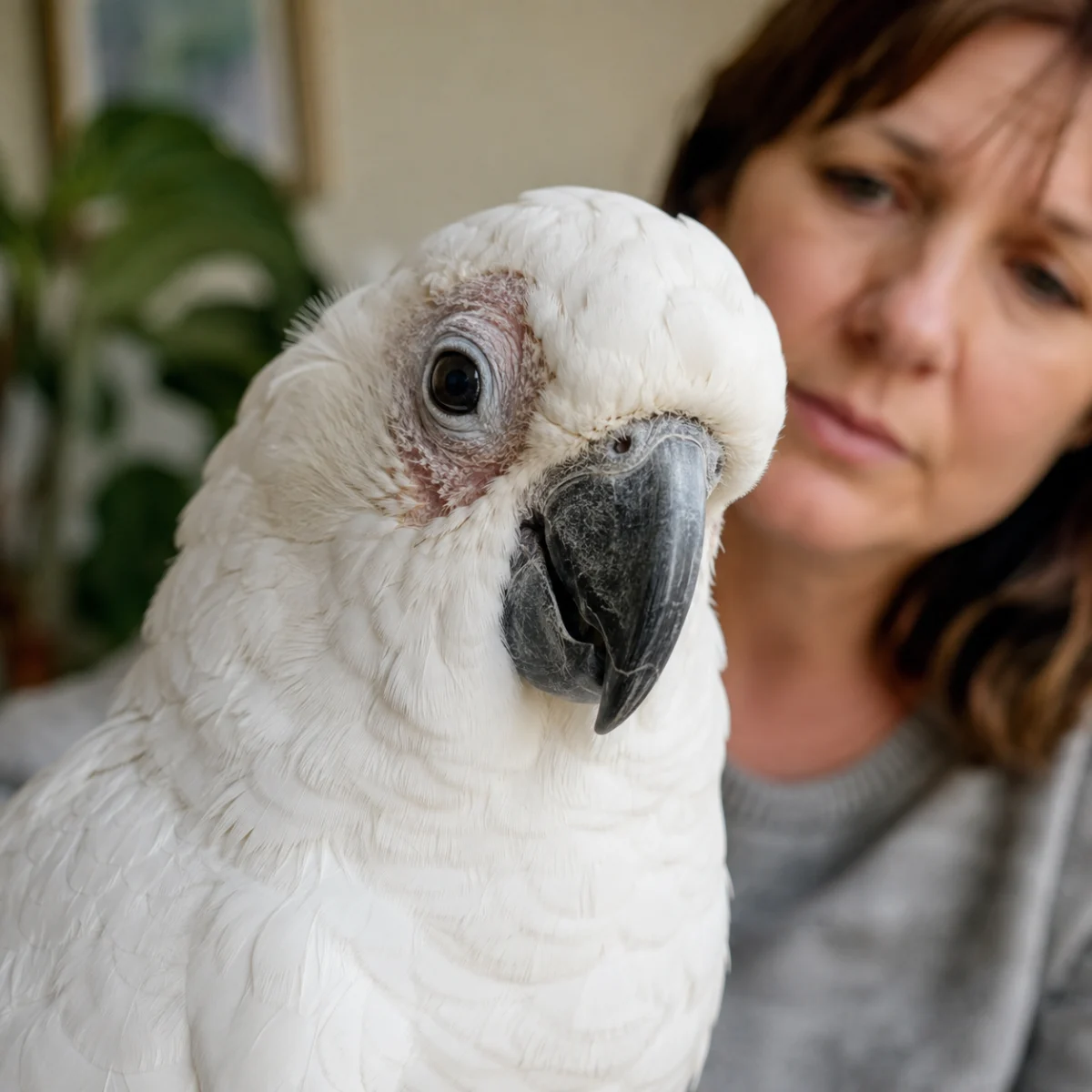
When an owner notices thinning plumage or a bald patch developing around their bird’s eye, the immediate reaction is often one of concern. While the feathers surrounding the ocular region are exceptionally fine and delicate, making them prone to appearing sparse during routine molting, persistent or localized hair loss can indicate underlying health issues. Distinguishing between a natural physiological process and a pathological condition requires a systematic approach to observation, focusing on skin integrity, ocular health, and behavioral patterns.
The Physiology of Avian Molting
Molting is an essential biological process wherein birds shed old, damaged feathers to replace them with new, healthy plumage. For most companion parrots, this occurs seasonally or in response to changes in photoperiod and environmental conditions. During a typical molt, the loss of facial feathers is gradual. The skin beneath should remain supple, free of inflammation, and exhibit clear signs of active regeneration, specifically the emergence of "pin feathers." These are the keratin-encased, developing feathers that provide visual confirmation that the follicle remains functional.
However, clinical data suggests that if the skin appears erythematous (red), crusty, or if the bird exhibits persistent discomfort, the etiology is likely not a simple molt. A primary diagnostic marker is the symmetry and progression of the feather loss. A localized patch that fails to fill in over several weeks or continues to expand despite the completion of a molt cycle is a significant indicator that the bird is suffering from an external or internal stressor.
Chronology of Observation: When to Seek Professional Intervention
For owners monitoring a potential health issue, establishing a timeline is crucial. The progression of symptoms generally falls into three categories of urgency:
- Stable Monitoring (Days 1–7): If the bird is active, eating well, and shows no signs of ocular discharge, owners are advised to photograph the area daily. This provides a baseline to determine if the area is expanding or if new growth is appearing.
- Increased Surveillance (Days 7–14): If the area remains static or if the bird begins to show signs of localized irritation—such as rubbing its face against perches or using its foot to scratch the ocular region—the threshold for intervention lowers. Persistent scratching can cause mechanical damage to the feather follicles, potentially leading to permanent alopecia.
- Emergency Response (Immediate): Any evidence of ocular swelling, discharge (tearing or pus), or systemic changes—such as lethargy, reduced appetite, or labored breathing—necessitates an immediate consultation with an avian veterinarian. These symptoms are often correlated with sinus infections or respiratory distress, which, due to the anatomical proximity of the sinuses to the eye, can manifest as localized feather loss.
Diagnostic Analysis: Beyond the Molt
When feather loss is not attributed to the molting cycle, avian practitioners typically examine three primary causal vectors: mechanical damage, infectious disease, and environmental/nutritional deficits.
Mechanical Damage and Behavioral Factors
Mechanical damage is a frequent cause of periocular feather loss. Unlike the wings or chest, birds cannot easily preen the area around their own eyes with their beaks. Consequently, if a bald patch appears, it is often the result of the bird rubbing its face against abrasive cage components, toys, or even the cage bars.
Furthermore, in multi-bird households, the phenomenon of "over-preening" or "barbering" must be considered. In this scenario, a companion bird may obsessively groom the head or face of the affected bird. If observed, this behavior requires a temporary separation or a re-evaluation of the social dynamics within the cage environment to prevent trauma to the skin and follicles.
Infectious and Dermatological Considerations
While bird owners frequently express concern regarding ectoparasites, specifically mites, the clinical reality is that mites are a relatively uncommon cause of localized feather loss in the general pet parrot population. In cases where mites are present, they often present with systemic dermatological changes, such as hyperkeratosis (thickening of the skin), crusting, and scaling, particularly around the cere and beak.
Infections—whether bacterial, fungal, or viral—often present with secondary symptoms. Inflammation of the conjunctiva or the sinuses can lead to the production of discharge, which matts the surrounding feathers. As the bird attempts to clean this discharge, it may inadvertently remove the feathers. Therefore, the feather loss is often a "secondary symptom" of a primary ocular or respiratory infection.
Nutritional Implications and Systemic Health
While nutrition is rarely the sole cause of a single bald spot, it plays a critical role in the maintenance of integumentary health. Avian medicine has long recognized the importance of Vitamin A in supporting the epithelial tissues of the respiratory tract, sinuses, and skin.
Data from the MSD Veterinary Manual emphasizes that birds maintained on exclusively seed-based diets are at a higher risk for hypovitaminosis A. Seeds are notoriously low in essential vitamins and minerals required for the production of healthy keratin. While transitioning a bird to a high-quality formulated diet supplemented with beta-carotene-rich vegetables—such as dark leafy greens, sweet potatoes, and carrots—is recommended for long-term health, owners should exercise caution regarding supplementation. Excessive administration of fat-soluble vitamins, including Vitamin A, can be toxic and should only be undertaken under the guidance of a veterinary professional.
The Role of the Avian Veterinarian
The definitive diagnosis of feather loss involves a comprehensive physical examination. Veterinarians may utilize:
- Ophthalmic Examinations: Using specialized lighting and magnification to rule out corneal ulcers or conjunctivitis.
- Cytology and Cultures: If discharge is present, swabs are taken to identify bacterial or fungal pathogens.
- Imaging: If respiratory involvement is suspected, radiographs may be required to visualize the sinuses and air sacs.
The consensus among avian experts, including those from the VCA Animal Hospitals and the MSD Veterinary Manual, is that early intervention significantly improves the prognosis for follicle recovery. If the underlying cause is addressed promptly—whether it be an infection requiring antibiotic therapy, an environmental adjustment to stop rubbing, or a nutritional overhaul—the follicles are usually capable of resuming normal feather production.
Broader Impact and Ethical Considerations
The presence of feather loss is often the first, and sometimes only, subtle indicator of a bird’s declining health. Because birds are prey species, they are evolutionarily hardwired to mask signs of illness until a condition is advanced. Thus, a minor patch of missing feathers should be treated as a significant "early warning" signal.
The socioeconomic impact of this reality is reflected in the growing demand for specialized avian veterinary care. As the popularity of companion parrots rises, so too does the need for standardized care guidelines. Owners are encouraged to maintain a "health log" for their birds, recording weight, changes in temperament, and any visible physical alterations. This documentation proves invaluable during veterinary consultations, allowing practitioners to differentiate between chronic, systemic issues and acute, isolated events.
Conclusion: A Proactive Approach to Avian Wellness
In summary, while a few missing feathers during a molt may be benign, the appearance of a distinct, expanding bald patch warrants a calculated, observational, and potentially clinical response. Owners should prioritize the health of the skin and the clarity of the eye over the simple aesthetics of the feather loss.
By integrating careful monitoring with a balanced, nutritionally dense diet and maintaining a relationship with a qualified avian veterinarian, owners can ensure that minor issues do not escalate into systemic health crises. The goal is to provide an environment that supports natural regenerative processes while remaining vigilant for the telltale signs of discomfort or illness. When in doubt, professional assessment is the safest course of action, ensuring that the bird’s health—and its ability to maintain its protective layer of feathers—remains uncompromised.

