


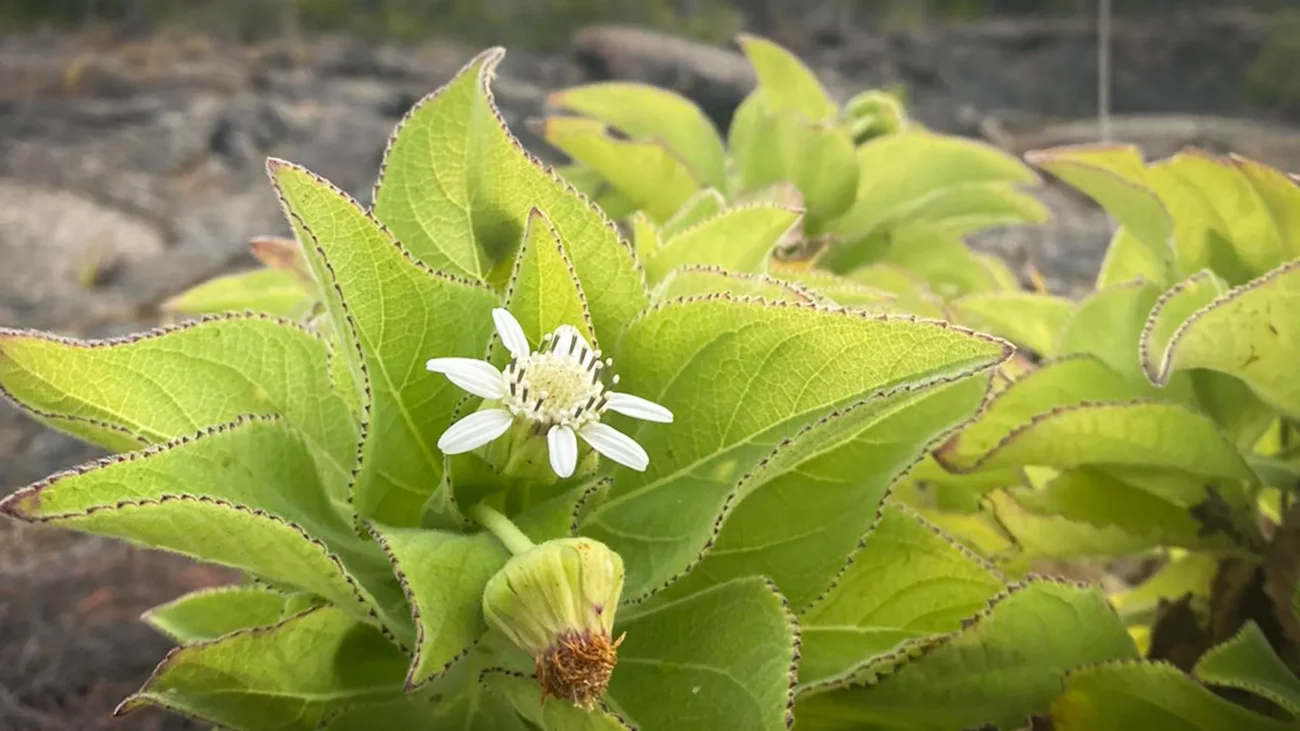
Nearly two centuries after the HMS Beagle dropped anchor in the volcanic waters of the Galápagos archipelago, the remote Pacific chain continues to function as a premier testing ground for the biological sciences. While Charles Darwin’s collection of finches and mockingbirds helped lay the cornerstone for the theory of evolution by natural selection, modern geneticists are looking beyond the famous avifauna to decode secrets hidden within the island flora. A comprehensive international study has recently turned its lens toward Scalesia—a diverse genus of endemic plants commonly referred to as the Galápagos giant daisies—revealing complex genetic mechanisms that challenge traditional understandings of how species adapt, diversify, and evolve.
The findings, published in the peer-reviewed journal Nature Communications, shed light on the rapid diversification of these plants across starkly different island habitats. Led by an expansive consortium of researchers from the Royal Botanic Gardens, Kew, the Norwegian University of Science and Technology (NTNU), the University of California, Davis, the University of Copenhagen, the Charles Darwin Foundation, the University of Georgia, and the University of British Columbia, the project offers an unprecedented look at adaptive radiation and the intricacies of parallel evolution at the molecular level.
A Living Blueprint for Natural Selection
To understand the magnitude of the recent botanical findings, scientists must contextualize the unique ecological theater of the Galápagos Islands. Located roughly 1,000 kilometers off the coast of Ecuador, the archipelago’s isolated volcanic islands present a myriad of microclimates. When Charles Darwin visited the islands in 1835, he observed creatures found nowhere else on Earth. Among his collections were various bird specimens he initially misclassified as sparrows, warblers, and a tit. Later expert analysis by ornithologist John Gould revealed that these birds were all ground and tree finches, whose distinct, specialized beaks had adapted to exploit different food sources.
This observation formed the empirical bedrock of Darwin’s revolutionary manuscript, On the Origin of Species, published in 1859. The theory of natural selection posits that within any given population, individuals possessing physical or behavioral traits better suited to their environmental pressures are statistically more likely to survive, reproduce, and pass those advantageous traits to subsequent generations. Over vast stretches of time, this gradual accumulation of adaptive traits leads to the emergence of entirely new species.
However, Darwin’s contributions to science were not limited to ornithology. During his historic voyage, the naturalist also gathered numerous botanical specimens across the islands. Among these were 78 plant collections that would later be utilized by taxonomists to identify species entirely new to science, including four distinct species of Scalesia.
Despite this historical foundation, the genetic underpinnings that drove the rapid evolution of these plants remained opaque for generations. The new study bridges this historical gap by pairing 19th-century naturalist exploration with 21st-century genomic sequencing technologies, allowing researchers to peer directly into the DNA of every known Scalesia species.
The Rapid Rise of the Galápagos Giant Daisies
The genus Scalesia is remarkably young in evolutionary terms. Every recognized species within the group has emerged over the course of the past one million years—a blink of an eye on the geological timescale. Despite this brief evolutionary window, the plants have radiated into a stunning array of ecological niches, spanning from the damp, mist-shrouded highland forests to the arid, sun-baked volcanic lowlands.
The physical diversity within the genus is striking. Depending on the species and its habitat, Scalesia ranges from low, woody shrubs to towering canopy-forming trees that can reach heights of up to 15 meters. Yet, the most visually arresting variation lies in their foliage. The leaves range from large, smooth, and entire margins to small, deeply lobed structures adorned with intricate, serrated edges.
According to the research team, these complex leaf shapes are not merely aesthetic; they are vital adaptations. Scientists theorize that deeply lobed leaves help individual plants survive under intense heat and drought by optimizing transpiration, minimizing water loss, and releasing excess solar energy more efficiently than broad, smooth leaves.
"Just like Darwin’s famous finches, these plants evolved rapidly after arriving on the Galápagos from mainland South America," noted Dr. Vanessa Bieker, a researcher at the Royal Botanic Gardens, Kew, and the first author of the published study.
By analyzing the complete genomes of every extant Scalesia species, the researchers mapped out the evolutionary history of the genus with unprecedented precision. The genomic data confirmed that deeply lobed leaves did not evolve just once from a single ancestral template; rather, this complex trait emerged independently across multiple, separate branches of the Scalesia family tree.
Parallel Evolution and the Genetic Network
The discovery of independently derived leaf shapes provides a textbook illustration of parallel evolution—a biological phenomenon wherein separate populations or species independently develop similar solutions to identical environmental challenges. However, the genetic architecture driving this parallelism revealed a twist that surprised the research team.
Conventional genetic models often suggest that striking physical adaptations are controlled by singular "master genes"—regulatory switches that trigger specific structural changes when activated. In the case of Scalesia, however, the genomic data told a fundamentally different story.
"Even more surprising was that each time this trait evolved, it did so through different genes—even though all of them belong to the same biological system controlling leaf development," Dr. Bieker explained. "This provides a clear example of parallel evolution: nature arriving at the same solution multiple times, but through different genetic pathways. Instead of being controlled by a single ‘master gene’, evolution appears to draw on an entire network of interacting genes, tweaking different components to produce similar outcomes."
This nuance alters how evolutionary biologists view complex traits. Rather than relying on a single genetic lever, evolutionary pressures can successfully modify different components within a broader regulatory network to arrive at the same functional physical endpoint. This modularity demonstrates the profound flexibility and creativity inherent in natural selection, proving that nature can achieve convergent phenotypic results through divergent genotypic routes.
Ongoing Speciation and Conservation Implications
Beyond illuminating the mechanisms of parallel evolution, the genomic mapping of Scalesia offers critical insights into the present and future state of the Galápagos ecosystem. The genetic evidence suggests that the evolutionary narrative of these giant daisies is far from concluded.
Professor Michael D. Martin of the Norwegian University of Science and Technology’s University Museum emphasized the dynamic nature of the archipelago’s biology. "More than 150 years after Darwin’s work on the Galápagos transformed our understanding of life on Earth, these islands continue to reveal new biology," Martin stated.
The researchers discovered that many isolated populations within the same recognized species exhibit substantial genetic divergence. Having been separated by geographic barriers—such as expanses of barren lava fields, stretches of open ocean between islands, or steep elevation gradients—these populations have accumulated distinct genetic mutations over long periods. This indicates that new species of Scalesia may currently be in the process of formation, representing distinct evolutionary lineages that have yet to be formally documented by taxonomists.
This ongoing speciation carries immediate and practical consequences for environmental managers and conservationists. Because these isolated populations are tracking separate evolutionary trajectories, the study’s authors argue that traditional conservation strategies must be updated.
Under the researchers’ recommendations, conservation frameworks should treat each genetically distinct population as an individual management unit. Shifting the focus from broad species-level protection to localized lineage conservation could prove vital in safeguarding the botanical heritage of the archipelago, particularly as native flora faces mounting pressures from climate change, habitat degradation, and invasive species.
Broader Impacts on Evolutionary Theory
The implications of the Scalesia study extend far beyond the shores of the Galápagos Islands. By offering a high-resolution window into adaptive radiation, the research provides a modern template for understanding how complex biological systems respond to environmental novelty.
Adaptive radiation—the rapid proliferation of a single ancestral lineage into diverse forms adapted to different ecological roles—has fascinated biologists since the inception of evolutionary theory. While historical studies relied primarily on morphological observations, contemporary genomics allows researchers to track the invisible threads of DNA that dictate survival in real time.
The revelation that complex physical adaptations can be engineered through distinct genetic pathways within a shared regulatory network challenges deterministic views of genetics. It underscores the redundancy and adaptability of genomic architectures across the tree of life.
As international scientific teams continue to analyze the genetic landscapes of island endemics, the Galápagos remain as vital to the advancement of biological science today as they were when Darwin stepped ashore nearly two centuries ago. Through the lens of modern genomics, the living laboratory of the Pacific continues to yield profound insights, proving that the mechanisms driving the diversity of life on Earth are even more intricate and flexible than previously imagined.

