


Aspergillosis represents one of the most significant and challenging respiratory health threats facing companion avian species globally. Caused by ubiquitous environmental molds within the Aspergillus genus, this fungal infection primarily targets the respiratory system, specifically infiltrating the lungs and air sacs. Because the disease is often insidious in its onset and notoriously difficult to diagnose with standard clinical protocols, it remains a focal point of concern for avian practitioners and bird owners alike. Recognizing the subtle symptoms of this condition—ranging from exercise intolerance and vocal changes to persistent respiratory distress—is critical to improving long-term outcomes for affected birds.
The Nature of the Pathogen and Environmental Exposure
The primary causative agents of aspergillosis are Aspergillus fumigatus and, to a lesser extent, A. flavus. These fungi are found throughout the natural environment, thriving in decomposing organic matter. In domestic settings, birds are exposed to these spores via inhalation. It is essential to distinguish between environmental exposure and clinical disease; the mere presence of Aspergillus spores in a household does not guarantee that a bird will become infected.
Healthy avian immune systems are typically equipped to clear these inhaled spores without complication. However, when a bird’s immune defenses are compromised—whether through chronic stress, poor nutrition, underlying illness, or immunosuppression—the fungal spores may colonize the respiratory tract. Research consistently identifies vitamin A deficiency as a primary risk factor, as the nutrient is essential for maintaining the integrity of the epithelial lining within the respiratory system. Once the fungal colonization takes hold, the organism can form granulomas—inflammatory masses that obstruct airflow and complicate therapeutic intervention.
Clinical Presentation and Diagnostic Challenges
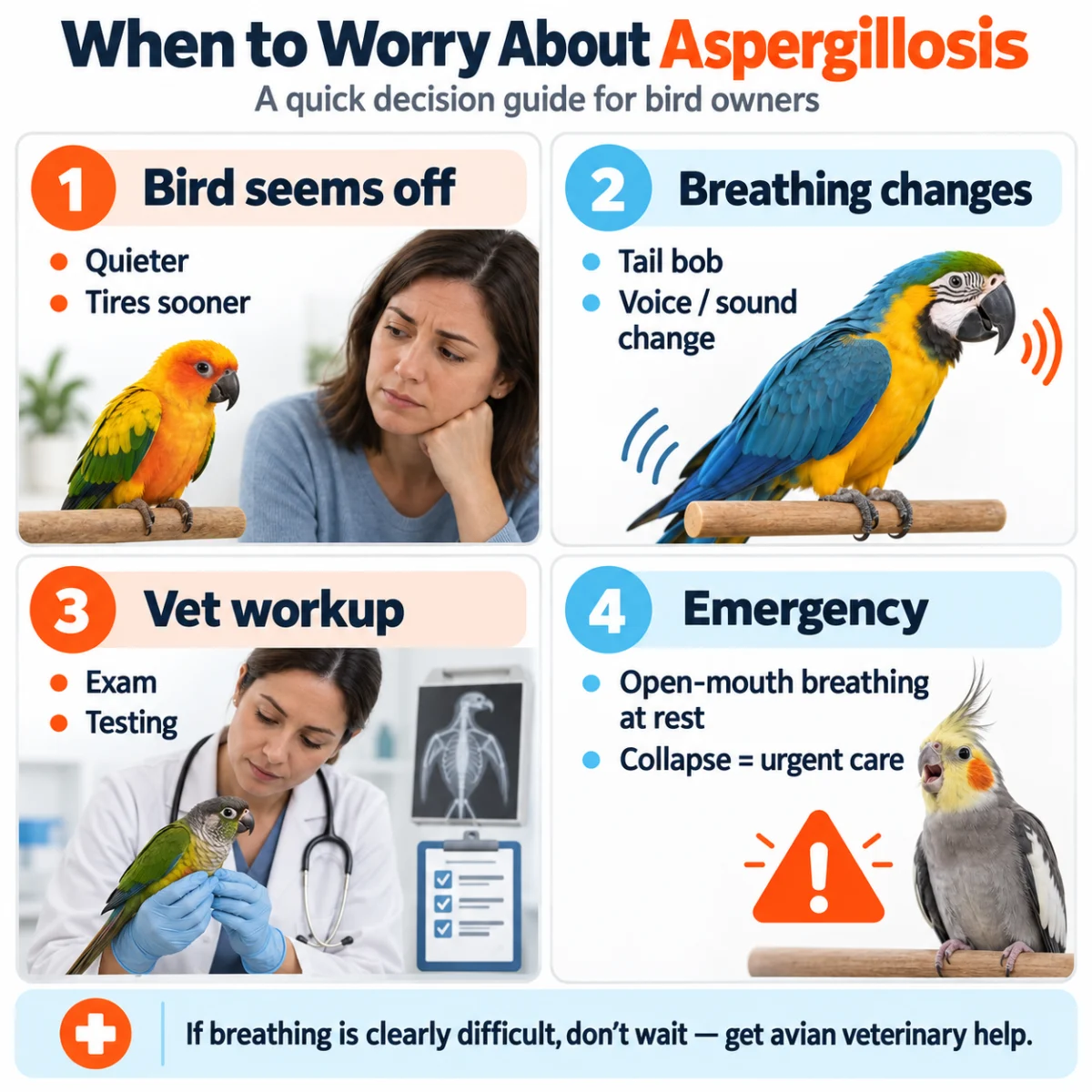
The clinical trajectory of aspergillosis is rarely uniform. While acute cases can manifest with rapid-onset respiratory failure, chronic aspergillosis often presents with non-specific behavioral shifts. Owners may observe a gradual decline in stamina, reduced interest in physical activity, or a slight decrease in appetite. These indicators are frequently overlooked until the disease has progressed significantly.
Diagnostic complexity arises from the lack of a singular, definitive screening tool. Veterinarians often employ a multi-modal approach to confirm an aspergillosis diagnosis, synthesizing data from physical examinations, hematology, and advanced imaging. Standard blood panels can identify systemic inflammation but often fail to isolate the fungal pathogen specifically. Radiographic imaging, such as X-rays, remains a cornerstone of the diagnostic process, though early-stage infections may be radiographically silent.
In recent years, the medical community has increasingly relied on advanced diagnostics, including computed tomography (CT) scans and endoscopic examinations. Endoscopy allows clinicians to visualize the internal air sacs directly and, when necessary, collect biopsies for histopathological analysis. This provides the most conclusive evidence of tissue invasion, though it requires specialized equipment and carries the inherent risks associated with anesthesia in a compromised patient.
Chronology of Treatment and Prognostic Indicators
Treatment protocols for aspergillosis are notably protracted, often spanning several weeks or months. The standard of care involves the administration of targeted antifungal agents, which may be delivered orally, via injection, or through nebulization to reach the deep recesses of the respiratory system. Because the infection often creates physical barriers to drug penetration, such as thickened tissues or dense granulomas, treatment must be sustained until the infection is confirmed to be in remission.
Clinical improvement is rarely marked by a singular recovery milestone. Instead, veterinarians look for a positive trend across several metrics: stabilized or increased body weight, improved vocalization, normalized breathing patterns at rest, and increased activity levels. It is imperative that owners adhere strictly to the prescribed medication schedule, as premature cessation of treatment is a leading cause of recurrence.
Risk Mitigation in the Domestic Environment
While complete sterilization of a living environment is neither possible nor advisable, avian owners can implement strategic management practices to minimize the risk of heavy fungal exposure. The primary objective is the mitigation of moisture-rich environments that facilitate mold growth.
- Environmental Sanitation: Ensuring that cages and surrounding areas are free from damp organic material, such as rotting food or soiled substrate, is paramount.
- Nutritional Management: High-quality, properly stored commercial diets help ensure that birds maintain optimal immune function, reducing their vulnerability to opportunistic infections.
- Air Quality Control: Mechanical air purification systems equipped with HEPA filtration can serve as a beneficial, albeit supplemental, layer of protection. However, such devices should never be viewed as a substitute for addressing the root causes of moisture, such as leaks, inadequate ventilation, or damp household infrastructure.
Implications of Misdiagnosis and Internet-Based Advice
The rise of digital information has enabled bird owners to connect and share experiences, but it has also introduced risks regarding medical misinformation. A prevalent issue in the avian community is the tendency for owners to attempt self-diagnosis or to modify treatment regimens based on anecdotal evidence found on social media platforms.
The medical consensus is clear: if a bird exhibits signs of respiratory distress—such as open-mouth breathing, tail bobbing, or audible clicking—immediate intervention by a qualified avian veterinarian is required. These symptoms represent a medical emergency that transcends the scope of home care. Delaying professional evaluation to seek consensus on online forums can exacerbate the patient’s condition, significantly reducing the chances of successful recovery.
Professional Perspectives on Long-Term Outcomes
The prognosis for a bird diagnosed with aspergillosis depends heavily on the stage of the disease at the time of diagnosis. When identified early and managed with a comprehensive treatment plan, many birds recover and return to a high quality of life. Conversely, advanced cases characterized by extensive organ damage or disseminated infection present a more guarded prognosis.
Veterinary specialists emphasize that the recovery process is iterative. Follow-up examinations and repeat diagnostic testing are essential to monitor the bird’s internal status, even after external symptoms appear to have resolved. This proactive approach helps to identify potential relapses before they manifest as severe clinical crises.
Broader Impact on Avian Wellness
Aspergillosis is generally considered a non-contagious condition between birds, meaning that one bird’s illness is typically the result of environmental factors rather than a contagious pathogen circulating within the flock. Nevertheless, the diagnosis of a single bird serves as a critical indicator for owners to re-evaluate the shared environment of all birds in the home.
The economic and emotional impact of an aspergillosis diagnosis on owners is substantial, often necessitating expensive diagnostic procedures and long-term care commitments. As such, the most effective strategy remains the preventative maintenance of the avian environment. By focusing on hygiene, proper nutrition, and timely professional consultation, owners can significantly lower the risk profile for their birds.
Ultimately, aspergillosis highlights the necessity of a partnership between the bird owner and the avian veterinarian. Because the disease is so multifaceted, the successful management of aspergillosis relies not just on medicine, but on the owner’s diligence in observing subtle behavioral cues and their willingness to follow structured, evidence-based treatment plans. As veterinary diagnostics continue to evolve, the hope is that earlier detection and more effective, targeted therapies will continue to improve the outlook for birds afflicted by this challenging fungal pathogen. Owners are encouraged to maintain a regular schedule of veterinary wellness exams, which often serve as the first line of defense in identifying the early indicators of chronic respiratory compromise.

