


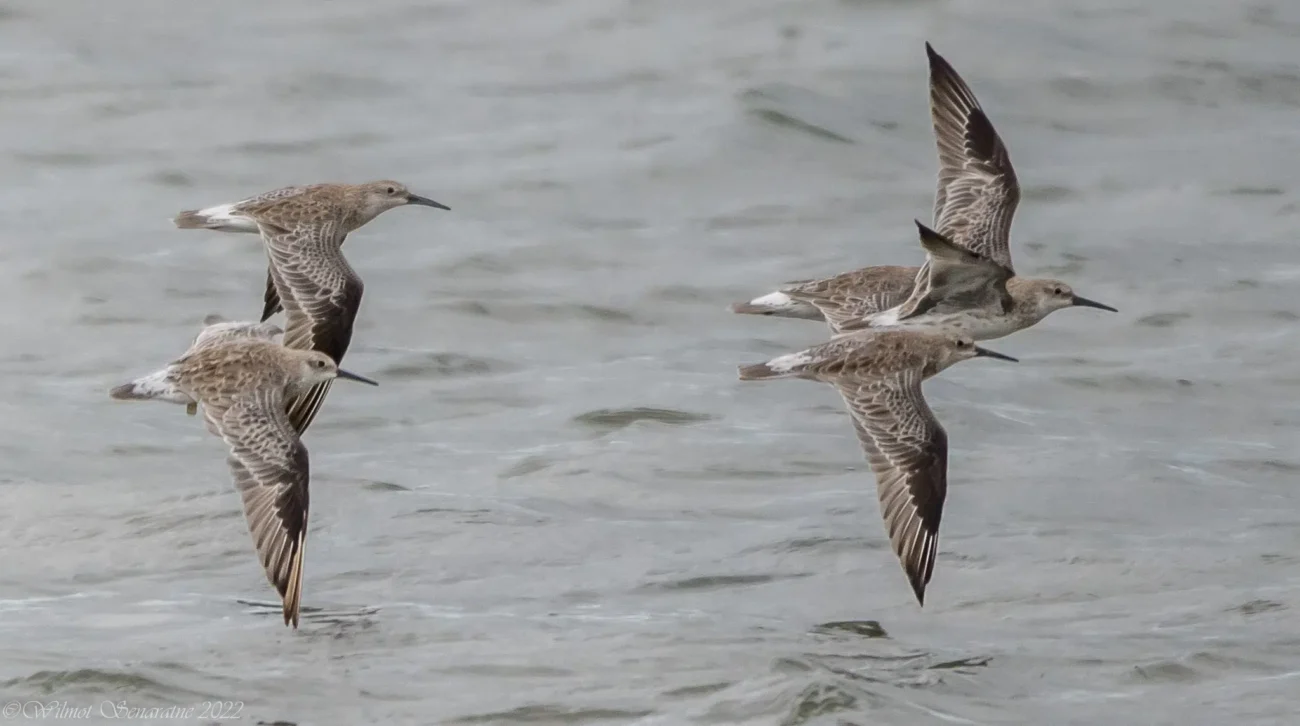
The East Asian-Australasian Flyway (EAAF) represents one of the most complex and biologically significant natural infrastructure networks on the planet. Functioning as a gargantuan aerial highway, it facilitates the biannual migration of millions of waterbirds across a staggering latitudinal range. The route extends from the harsh, high-latitude breeding grounds of the Siberian Arctic tundra, slicing through the temperate zones of East Asia, and terminating in the tropical wetlands of Southeast Asia and the expansive coastlines of Australia and New Zealand. Among the 523 species that depend on this connectivity is the Great Knot (Calidris tenuirostris), an Endangered shorebird whose survival is tethered to a chain of fragile, interconnected coastal ecosystems.
The Epic Migration of the Great Knot
The Great Knot is a master of endurance. Every year, these birds embark on a trans-hemispheric journey that tests the limits of avian physiology. Breeding in the remote, mountainous regions of eastern Russia, they migrate south to escape the impending Arctic winter. Their wintering distribution is vast, encompassing the coasts of Southeast Asia, the Indian subcontinent—including India, Bangladesh, and Pakistan—and the eastern shores of the Arabian Peninsula, as well as the Australian continent.

This migration is not a singular, non-stop flight but a high-stakes relay race. The Great Knot relies on a specific sequence of "stopover sites"—coastal intertidal zones where they can feed on benthic invertebrates to replenish vital fat stores. Without these precise refueling stations, the birds would lack the energy reserves necessary to complete their transit or successfully breed upon their return to the north.
Chronology of the Annual Migratory Cycle
The life cycle of the Great Knot is defined by strict seasonal windows. By late spring (May), the birds reach the northernmost limits of the flyway to begin their nesting season in the Siberian mountains. This period is critical for reproductive success, requiring nutrient-rich environments and relative isolation.
As autumn approaches in August and September, the population begins its southward migration. This phase is characterized by a "staging" behavior, where large flocks congregate at estuaries and tidal mudflats. During the boreal winter (December through February), the birds are dispersed across their southern range, with significant populations found in the coastal regions of the Indian Ocean and the Pacific. By March and April, the reverse migration commences, with the birds returning to the Arctic, marking a total annual flight path that can span over 20,000 kilometers.

Strategic Hubs: Key Biodiversity Areas
The survival of the Great Knot is fundamentally dependent on the health of Key Biodiversity Areas (KBAs). These sites are designated based on their international importance for the global persistence of biodiversity. For the Great Knot, three sites serve as linchpins of their existence:
The Inner Gulf of Thailand
Recognized as a premier coastal corridor for migratory waterbirds in mainland Southeast Asia, the Inner Gulf of Thailand acts as a major sanctuary. Data indicate that this region supports between 150,000 and 300,000 birds annually. The Pak Thale region, in particular, has become a focal point for conservation initiatives. The Bird Conservation Society of Thailand has successfully pioneered a model that links local economic stability with environmental stewardship, training community members as ecotourism guides and promoting "biodiversity-friendly" salt production. This approach demonstrates that protecting the flyway does not necessarily require the total exclusion of human economic activity, but rather the integration of sustainable practices.
Sonadia Island, Bangladesh
Located in the Bay of Bengal, Sonadia Island is a globally significant KBA covering approximately 29.8 square kilometers. The island’s unique intertidal geography makes it an essential "refueling depot." Migratory birds, including the Great Knot, utilize the rich, sediment-heavy mudflats to gain the mass required for their next leg of flight. The island serves as both a transit point and a primary wintering ground, highlighting the need for localized protection of intertidal zones against land reclamation and coastal development.

Yalu Jiang Estuary, China
As the Great Knot nears its northern breeding grounds, it encounters the Yalu Jiang Estuary. Spanning 689 square kilometers of reedbeds and tidal flats, this site is a critical northern hub where, during peak migration, the daily count of waterbirds can exceed 70,000. Despite its ecological value, the estuary is currently under immense pressure. Anthropogenic threats such as industrial development, oil and gas exploration, and increased human disturbance threaten the integrity of these tidal flats. The degradation of this site would have immediate, catastrophic consequences for the birds’ ability to reach their breeding grounds in prime physical condition.
Data-Driven Conservation Implications
The status of the Great Knot as an "Endangered" species on the IUCN Red List is a direct reflection of the loss of intertidal habitat across the EAAF. Research indicates that the primary driver of population decline in many shorebird species is the loss of tidal flats, which are frequently reclaimed for infrastructure, aquaculture, and industrial expansion.
Analysis of the flyway suggests that conservation efforts must shift from a site-specific focus to a landscape-scale strategy. Because the Great Knot depends on a chain of sites, the loss of even one major stopover location can cause a "bottleneck" effect, significantly reducing the survival rate of the entire cohort. For instance, if the Yalu Jiang Estuary were to lose its carrying capacity, the birds might not be able to store enough energy to survive the final flight to the Siberian Arctic, leading to a direct drop in annual reproductive recruitment.

Official Responses and Future Outlook
Conservation organizations, including BirdLife International and their local partners, have emphasized that the Great Knot is a "flagship species"—a representative of the health of the entire ecosystem. Statements from international conservation groups suggest that the preservation of these coastal habitats yields benefits far beyond bird populations. These intertidal zones act as natural storm buffers, carbon sinks (through blue carbon sequestration in mangroves and seagrasses), and essential nurseries for fisheries that support local human economies.
The consensus among wildlife biologists is that the future of the Great Knot depends on international cooperation. Because these birds cross multiple national borders, domestic policies in one country are insufficient to guarantee their survival. Multilateral frameworks that prioritize the protection of KBAs, the enforcement of environmental impact assessments for coastal development, and the active involvement of local communities are the essential pillars of a successful management strategy.
Broader Impact and Human Connectivity
The migration of the Great Knot serves as a powerful reminder of the interconnectedness of our global biosphere. The birds bridge the distance between the industrial centers of East Asia and the rural, traditional coastal communities of Southeast Asia and India. When these coastal corridors are protected, the benefits extend to human health and economic security.

As the climate changes, sea-level rise poses an existential threat to the very intertidal flats the Great Knot requires. The narrow coastal strips between rising seas and human development leave little room for these habitats to migrate inland. Consequently, the next decade will be decisive. Policies that incorporate "climate-resilient" coastal management—ensuring that tidal flats have the space to shift and reform—are no longer optional, but vital requirements for preventing the extinction of the Great Knot.
In conclusion, the survival of this species is an indicator of our ability to manage natural resources on a continental scale. By safeguarding the Inner Gulf of Thailand, Sonadia Island, the Yalu Jiang Estuary, and the thousands of other sites along the flyway, we are not merely protecting a bird; we are maintaining the functionality of the global coastal systems that sustain life across two continents. The Great Knot’s journey is a testament to the endurance of nature, but its continuation remains entirely in the hands of the human societies that share its path.

