


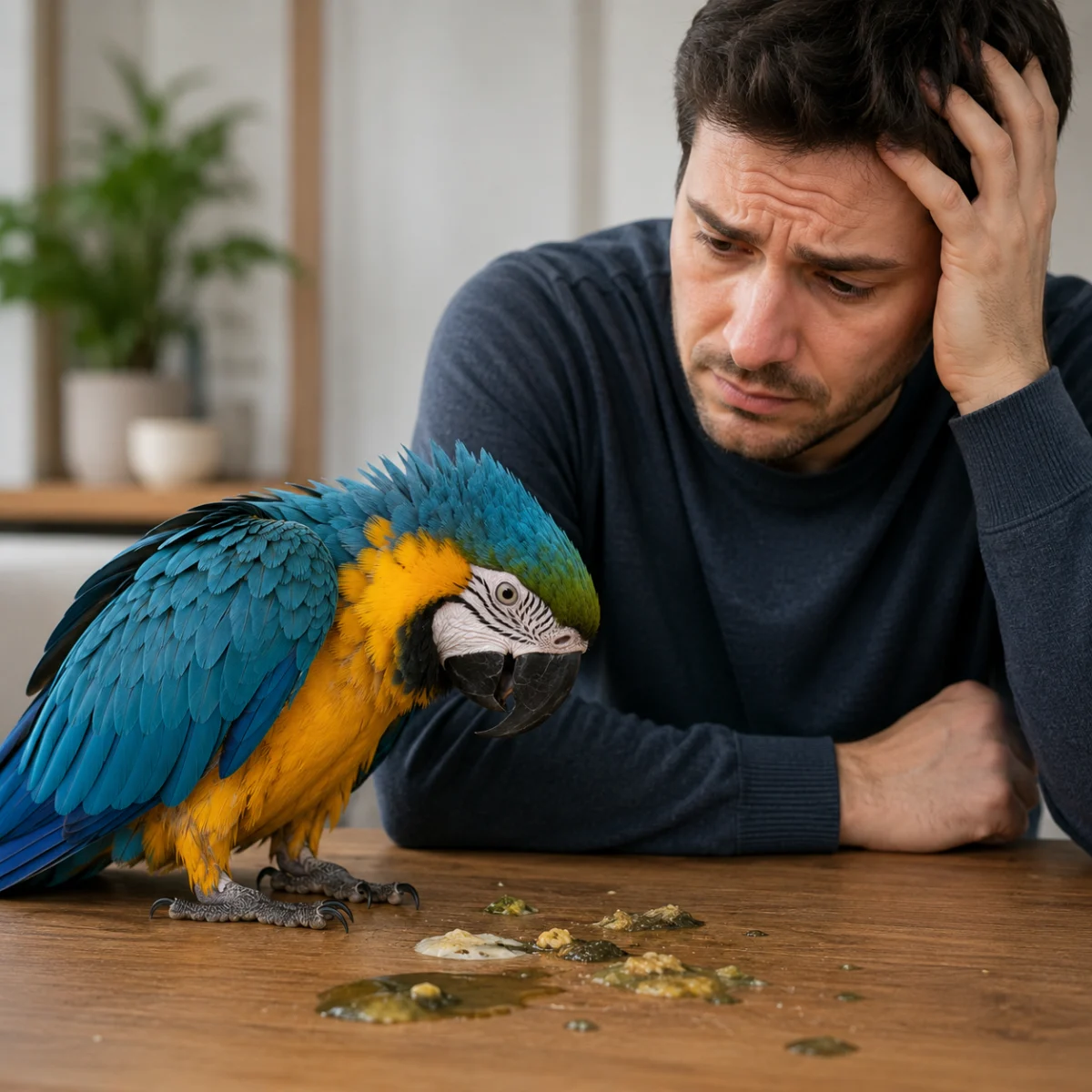
The health of a pet bird is often hidden behind a mask of stoicism, as birds are evolutionarily programmed to conceal signs of illness to avoid predation. Consequently, the most reliable window into a bird’s physiological state is the appearance and consistency of its droppings. Understanding the nuances of avian waste is not merely a matter of hygiene; it is a critical diagnostic skill for any responsible bird owner. By analyzing the color, consistency, and frequency of droppings, caretakers can differentiate between harmless dietary fluctuations and life-threatening medical emergencies that require immediate veterinary intervention.
The Anatomy of Avian Waste: Why Birds Differ from Mammals
To effectively monitor a bird’s health, one must first understand that avian excretory systems are distinct from those of mammals. In mammals, feces and urine are excreted separately. In birds, however, the cloaca acts as a common chamber where the digestive, urinary, and reproductive tracts converge. A typical dropping consists of three distinct parts: the feces (the solid, usually dark or green component), the urates (the chalky white or cream-colored paste), and the urine (the clear liquid).
Because these components mix upon exiting the body, a high-moisture dropping does not automatically signify diarrhea. "True" diarrhea is characterized by an alteration in the fecal portion itself—it becomes loose, unformed, or voluminous. If the fecal portion remains firm but is surrounded by excess liquid, the bird may simply be consuming high-water-content foods like fruits, or it may be experiencing stress-induced polyuria.
Chronology of Symptoms: When to Observe and When to Act
When a bird owner notices a change in droppings, time is the most critical variable. A momentary change—such as a shift in color following the introduction of a new vegetable—is often benign. However, a persistent change lasting longer than 24 hours warrants a closer look.
The following timeline provides a framework for decision-making:
- Phase 1 (The Observation Window): If a bird is active, eating normally, and maintaining a healthy posture, but exhibits a slight change in stool consistency, monitor the situation for 24 hours. Evaluate the bird’s environment for potential stressors or recent dietary shifts.
- Phase 2 (The Assessment Window): If the change persists beyond 24 hours, or if the fecal component becomes watery, foul-smelling, or contains undigested food, a physical assessment is required. Check the bird for secondary symptoms: fluffed feathers, reduced appetite, or a change in weight.
- Phase 3 (The Veterinary Threshold): If the bird shows signs of systemic illness—such as sitting low on a perch, losing weight, vomiting, or exhibiting lethargy—this is no longer a matter of home management. Immediate, urgent care from an avian or exotic animal veterinarian is mandatory.
Data-Driven Analysis of Dropping Color and Consistency
Color changes in droppings are frequently the result of recent dietary intake, but they can also signal underlying metabolic or infectious diseases. According to data provided by the Merck Veterinary Manual and clinical observations from avian specialists, the following indicators should be approached with caution:
| Observation | Potential Clinical Significance | Recommended Action |
|---|---|---|
| Bright Green | Likely dietary pigment (e.g., spinach, kale) | Monitor for normalcy |
| Dark Green/Black | Potential for digested blood (melena) | Urgent veterinary evaluation |
| Yellow/Green Urates | Possible liver disease or systemic infection | Veterinary diagnostic testing |
| Undigested Seeds | Malabsorption or proventricular disease | Schedule prompt appointment |
| Red/Bloody | Cloacal trauma or lower GI bleeding | Emergency veterinary care |
The presence of undigested food is a significant clinical marker. In a healthy bird, the gizzard and proventriculus are designed to grind and break down food particles efficiently. Finding whole seeds or intact pellets in the stool suggests that the digestive system is failing to perform its mechanical or chemical duties. This can be indicative of serious conditions, including Proventricular Dilatation Disease (PDD), chronic parasitic infections, or severe bacterial overgrowth.
Distinguishing Vomiting from Regurgitation
A common point of confusion for bird owners is the distinction between regurgitation and vomiting. Regurgitation is typically a controlled, rhythmic behavior often associated with courtship, bonding, or feeding offspring. The bird usually extends its neck and brings up food without significant distress or mess.
Conversely, vomiting is a messy, involuntary, and concerning event. A bird that is vomiting will often shake its head violently, causing food particles to spray across the cage walls or onto its own head feathers. This is a clear indicator of a gastrointestinal or systemic illness, such as a crop infection, toxin ingestion, or metabolic dysfunction. Unlike regurgitation, which is a behavioral expression, vomiting is a clinical emergency.
Broader Implications: Environmental and Toxicological Factors
The digestive health of a bird is deeply intertwined with its environment. Toxins, such as heavy metals (lead and zinc) found in older cages, paint, or household hardware, can cause acute digestive distress. Furthermore, poor sanitation—such as leaving "chop," sprouts, or soft foods in a cage for more than two hours—can lead to rapid bacterial growth.
Clinical research indicates that the majority of avian digestive issues are secondary to improper husbandry. Maintaining a clean environment is the first line of defense. When a bird presents with abnormal droppings, it is essential to bring a fresh sample and a detailed history to the veterinarian. This should include a list of recent dietary changes, environmental stressors, and any observations regarding the bird’s behavior, such as a decrease in vocalization or a change in activity levels.
The Role of Probiotics and Preventative Care
While many owners seek to address digestive issues with over-the-counter probiotics, it is important to contextualize their use. Probiotics serve to support the existing gut flora, particularly following antibiotic treatment or mild dietary disruption. They are not a substitute for medical diagnosis or treatment for serious conditions. Relying solely on supplements while a bird exhibits signs of systemic illness—such as weakness or weight loss—can lead to a dangerous delay in life-saving care.
Expert Guidance and Veterinary Standards
According to industry experts, including behavior specialists and avian veterinarians, the "Golden Rule" of bird care is that abnormal droppings alone are a diagnostic clue, but abnormal droppings paired with lethargy or behavioral changes are a medical crisis.
Avian biology is incredibly efficient, meaning that by the time a bird appears "sick" to the human eye, the illness has often reached an advanced stage. Owners are advised to keep a log of their bird’s daily weight, as sudden weight loss is often the most accurate precursor to visible clinical symptoms.
For those seeking further information, authoritative resources such as the Clinical Avian Medicine textbook and the Merck Veterinary Manual provide comprehensive insights into the complexity of avian gastroenterology. When in doubt, the most prudent course of action is always a consultation with a veterinarian who specializes in avian medicine. The integration of meticulous daily observation and timely professional intervention remains the gold standard for ensuring the long-term health and welfare of pet birds.
By remaining vigilant and understanding the physiological realities of their companions, owners can act as the primary defense against the progression of silent, often treatable, avian illnesses. The objective is clear: prioritize prevention through knowledge and ensure that veterinary care is sought the moment the subtle signs of illness become apparent.

