


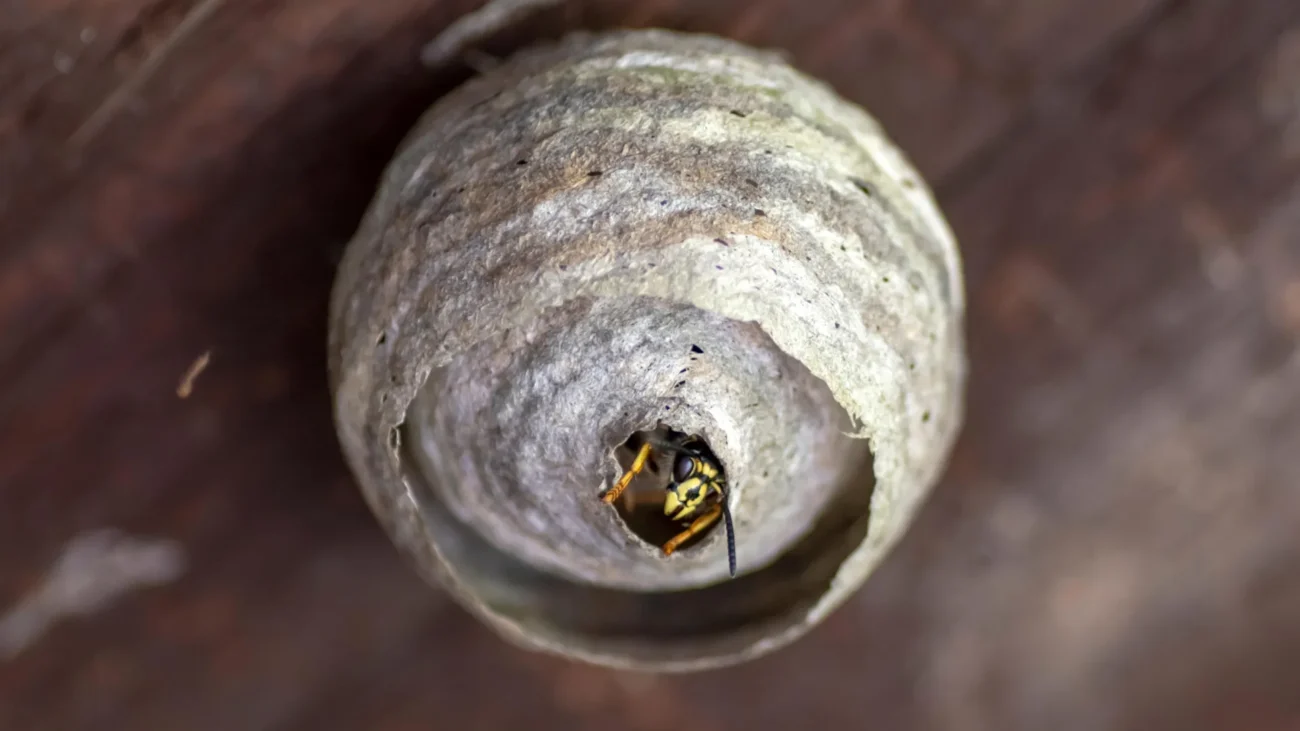
For generations, the arrival of summer has been inextricably linked to the buzzing presence of common social wasps. Whether perceived as an aggressive intruder at a family picnic or a silent, paper-making architect nesting in a loft, the wasp has long served as a familiar fixture of the warmer months—sharing the seasonal spotlight with outdoor festivals, sunscreen, and the perennial challenges of school holidays. Yet, the summer of 2026 has defied historical norms, characterized by a sudden, pervasive absence of these insects that has baffled entomologists, disrupted academic research, and quieted the pest-control industry.
As researchers and professional pest-management technicians alike report a striking deficit in sightings, the scientific community is racing to understand what this means for local ecosystems. Far from being merely a seasonal nuisance, social wasps function as critical apex predators of invertebrate populations, essential pollinators, and efficient natural decomposers. The unfolding scenario of 2026 highlights a complex ecological puzzle, driven by unprecedented meteorological shifts, extreme temperatures, and the compounding stressors of modern climate change.
Anomalous Absence: The 2026 Field Observations
The first tangible indicators of the anomaly emerged not from automated sensors or long-term ecological datasets, but from the daily frustrations of field researchers. Entomologists studying social Hymenoptera found themselves facing an unexpected hurdle: simply sourcing specimens for laboratory experiments became an arduous task. University research teams that typically rely on abundant local populations of Vespula species reported prolonged difficulties in capturing subjects for behavioral and physiological studies.
This biological drought quickly manifested in commercial and public spheres. Professional pest-control operators across multiple regions noted an unprecedented quietude in their operational calendars. Typically, the height of summer generates a surge of service requests from homeowners seeking the removal or extermination of active nests near residential properties. In stark contrast to the previous year—which experienced a warm spring and hot summer accompanied by widespread media reports of "wasp plagues"—the summer of 2026 yielded remarkably few callouts.
While comprehensive national monitoring initiatives, such as the Big Wasp Survey, require months of systematic sampling before officially quantifying population metrics, the preliminary, on-the-ground observations point toward a significant downward deviation from historical baselines.
Chronology of a Disrupted Season: From Spring Promise to Extreme Heat
To understand the current scarcity, researchers must trace the chronological progression of the wasp lifecycle, which begins months before the first human encounters a foraging worker at a picnic table.
The biological cycle commences in the spring, a period traditionally defined by delicate survival thresholds. Following a period of winter hibernation, newly mated females—known as foundresses or queens—emerge to establish solitary nests. This foundational phase demands extraordinary energy and risk: the queen must independently handle site selection, structural engineering, egg laying, foraging for prey, and rearing the first generation of brood.
The early months of 2026 initially presented an encouraging landscape for these emerging queens. A warm, dry early spring generated a robust abundance of early nectar supplies, vital for queens to develop their ovaries, alongside early prey populations necessary to provision the developing larvae. Under normal circumstances, this favorable start increases the survival probability of the foundational nest.
However, the meteorological timeline quickly derailed. The initial warmth transitioned into unprecedented heat spikes for the time of year, abruptly punctuated by sharp meteorological anomalies: unseasonably cold, damp days followed by unexpectedly freezing nocturnal temperatures. These sharp environmental swings created a hostile microclimate for queens attempting to consolidate their nascent colonies.
Faced with severe energetic stress and unpredictable thermal conditions, many queens are believed to have abandoned their fledgling nests or succumbed to exposure. This attrition effectively decimated the initial, promising bounty of spring queens, reducing the overall reproductive output before the colonies could transition into their exponential growth phase.
The Thermal Tolerance Threshold and Physiological Stress
As spring yielded to summer, the seasonal progression was dominated by relentless, recurring heatwaves. While certain insect populations—such as butterflies, which thrive on the continuous, uninterrupted foraging and mating opportunities afforded by warm, dry weather—experienced a productive year, social wasps faced a different physiological reality.
All ectothermic organisms possess a critical thermal maximum (CTmax), a threshold beyond which environmental temperatures induce severe physiological trauma, including desiccation, uncoordinated muscle spasms, and eventual metabolic stupor. While honeybees exhibit a CTmax of approximately 49°C, and local ground surface temperatures in parts of the UK frequently exceeded 50°C during the 2026 heatwaves, the adverse effects of thermal stress manifest well before the absolute lethal limit is reached.

Research indicates that sustained ambient temperatures exceeding 32°C severely impair cognitive function, navigation, and foraging efficiency in related social insects like bumblebees. Concurrently, conservation organizations have noted that extreme heatwaves accelerate the withering of floral resources, starving foraging insects of necessary carbohydrates.
Social wasps possess notable evolutionary adaptations designed to buffer environmental extremes. As social organisms, they engage in sophisticated thermoregulatory behaviors, such as coordinated wing-fanning to cool developing larvae within the nest. Furthermore, the multi-layered, paper-envelope architecture of their nests provides natural insulation against sudden temperature fluctuations. At the cellular level, their exoskeletons are coated with specialized waxy molecules known as cuticular hydrocarbons. These hydrocarbons are capable of restructuring in response to elevated temperatures, thereby minimizing water loss and protecting the insect from desiccation during severe heat stress.
Despite these resilience mechanisms, the estimated CTmax for common social wasps hovers around 45°C (113°F). The extremity of the 2026 ground temperatures frequently pushed past this tolerance level, overwhelming even their sophisticated thermoregulatory behaviors and leaving colonies acutely vulnerable to heat exhaustion and dehydration.
The Micro-Wasp Phenomenon: Evidence of Heat-Induced Stunting
Beyond the sheer reduction in numbers, biologists have identified another morphological anomaly among the surviving wasp population: an unusual prevalence of undersized adults.
In entomology, the final body size of most holometabolous insects—those undergoing complete metamorphosis—is permanently fixed during the larval developmental stage. Wasps do not undergo further growth once they have successfully pupated. Under normal seasonal progression, the very first worker wasps to emerge in spring are diminutive simply because the lone queen is constrained in her ability to provision them with adequate nutrition. However, as summer progresses and the colony transitions into its expansion phase by early August, the exponential increase in foraging workers ensures that subsequent broods are abundantly fed, resulting in substantially larger adult specimens.
The continued predominance of "spring-sized" wasps deep into the summer of 2026 suggests two primary compounding factors. First, the restricted diversity and abundance of available prey during the erratic spring and summer limited the nutritional plane of the developing larvae. Second, experimental biology demonstrates that insect larvae reared under elevated thermal conditions exhibit accelerated metabolic rates, causing them to reach the pupation stage prematurely at a significantly reduced body size.
This observation aligns with broader, century-long ecological trends linking global temperature increases to the progressive shrinking of social wasp body sizes—a phenomenon that appeared to accelerate visibly across populations during the extreme climate anomalies of 2026.
Broader Ecological Implications and Conservation Concerns
The potential decline and morphological alteration of social wasp populations carry profound implications for wider ecological stability. Because wasps are formidable predators of other invertebrates, including agricultural pests such as aphids, caterpillars, and flies, their absence can disrupt natural pest-suppression dynamics. Furthermore, as they forage for nectar to sustain their own flight and energy needs, wasps act as secondary pollinators for a wide array of plant species, contributing to the health and reproduction of local flora. Finally, their role as decomposers aids in the rapid recycling of organic matter within woodland and urban ecosystems alike.
The observed disruptions in 2026 serve as a stark case study in the vulnerability of insect populations to climate volatility. While public discourse often focuses on charismatic species like bees and butterflies, the quiet struggles of Vespula species highlight how extreme weather events ripple through trophic webs, affecting even adaptable, globally successful invasive and native species.
Citizen Science and Ongoing Research Initiatives
As researchers grapple with the implications of an unusually wasp-poor summer, academic institutions are turning to public engagement to gather empirical data that can substantiate these anecdotal trends.
Entomologists emphasize that public perception of wasps often shifts during anomalous years. Rather than viewing them solely through the lens of human annoyance, citizens are being encouraged to adopt a more observational approach during alfresco dining. When a wasp approaches a picnic setting in search of resources, its behavior often reflects nutritional desperation: seeking protein sources, such as meat, to provision starving broods, or carbohydrate sources, such as jam, to sustain its own flight metabolism in the absence of wild prey.
To map the true extent of the population shift, research teams have launched targeted citizen science projects, such as the Wasp Picnic Survey. By encouraging individuals to photograph wasps interacting with food sources and submit standardized observation data, researchers aim to quantify distribution, size anomalies, and local densities across regions. Through these collaborative efforts, scientists hope to transform the unusual silence of the 2026 summer into actionable data, ensuring a deeper understanding of how climate extremes are reshaping the future of one of the natural world’s most resilient yet vulnerable insects.

