


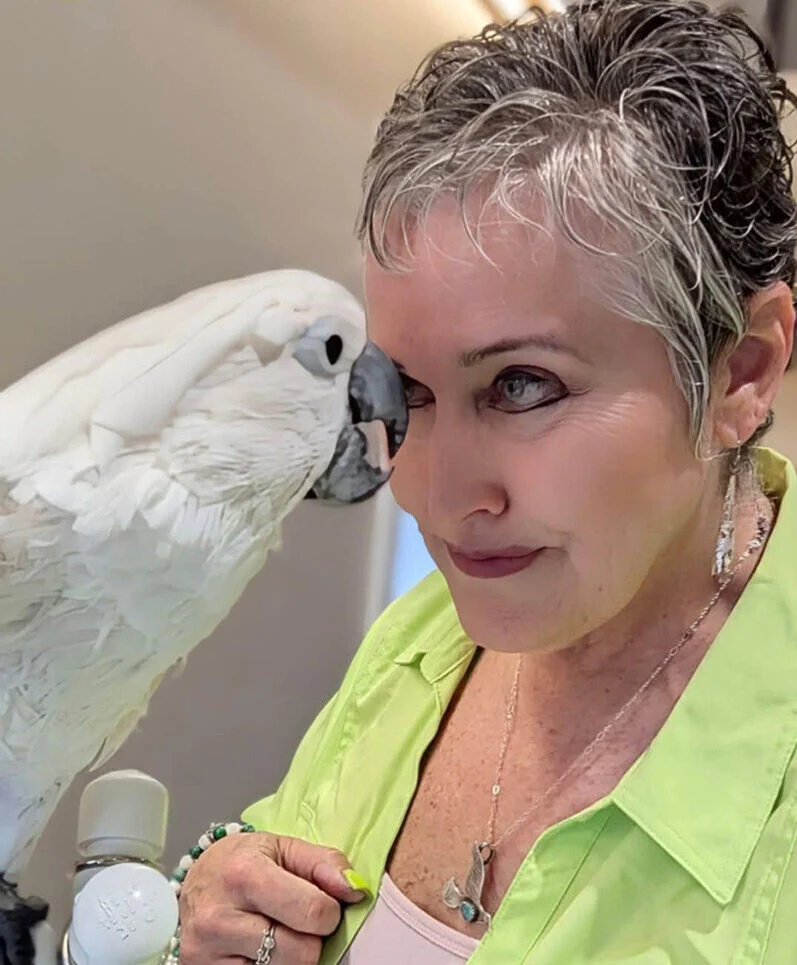
The narrative of human-animal connection has reached a historic milestone with the recognition of an extraordinary umbrella cockatoo named Boo, who has become the first avian recipient of the prestigious Pet Partners Pet of the Year award. This accolade serves as a testament to the profound capacity for healing found in non-traditional therapy animals. While dogs and cats have long dominated the landscape of therapeutic support, Boo’s journey—from a survivor of severe neglect and a decade of blindness to a beacon of hope for individuals with disabilities—challenges existing paradigms regarding the role of exotic birds in clinical and community settings.
A Journey Through Darkness and Recovery
Boo’s life trajectory is defined by a remarkable arc of resilience. For many years, the cockatoo lived in an environment characterized by neglect and abuse, which resulted in the loss of his vision. Blindness in captive parrots often leads to profound behavioral issues, chronic stress, and physical decline due to the animal’s inability to navigate its surroundings or interpret environmental cues. For a decade, Boo existed in this state of sensory deprivation.
The turning point occurred when his owner, Amy Hurst, sought advanced medical intervention. In a groundbreaking surgical procedure, specialists were able to restore Boo’s sight. This medical achievement was not merely a physical restoration; it was a psychological catalyst that allowed the bird to re-engage with the world. Following the successful recovery, Hurst transitioned Boo into a life of service, leveraging his newfound sensory capabilities to foster connection with others.
The Role of Pet Partners and Animal-Assisted Therapy
Pet Partners, a nonprofit organization headquartered in Bellevue, Washington, has been the primary vehicle for Boo’s transition into a therapeutic role. The organization is a leader in the field of Animal-Assisted Intervention (AAI), a structured, goal-oriented interaction between humans and animals. Unlike emotional support animals, which are often defined by their presence alone, therapy animals like Boo are registered and evaluated for their ability to remain calm and responsive in diverse social settings.
Pet Partners maintains rigorous standards for its registered teams. Handlers must undergo training to ensure the safety of both the animal and the client, while the animals are assessed for their temperament, obedience, and ability to handle the stressors of clinical or public environments. Boo’s integration into this program signifies an expansion of the diversity of species currently recognized as effective in therapeutic settings.
Chronology of an Extraordinary Tenure
The timeline of Boo’s impact is marked by significant stages of development:
- Initial Years: A decade marked by environmental neglect and subsequent loss of vision.
- The Surgical Intervention: A milestone procedure that restored Boo’s sight, detailed in the report "From Darkness to Daylight."
- Rehabilitation and Training: A period of intensive care and socialization provided by Amy Hurst, preparing Boo for service-oriented interactions.
- Registration with Pet Partners: Official certification as a therapy animal, allowing him to work within specialized programs.
- The 2026 Award Recognition: Boo is named Pet Partners Pet of the Year, the first bird to receive this distinction, coinciding with a record-breaking fundraising effort by the organization.
Quantitative Impact and Data Analysis
The effectiveness of animal-assisted therapy is supported by a growing body of clinical data. Research consistently indicates that interaction with therapy animals can reduce cortisol levels—the body’s primary stress hormone—while simultaneously increasing oxytocin production.
According to organizational data, Pet Partners facilitates thousands of visits annually, reaching populations that include children with autism, veterans with post-traumatic stress disorder (PTSD), and individuals recovering from strokes. The 2026 fundraising campaign, which raised $158,275, highlights the public’s growing commitment to these programs. This financial support is critical for maintaining the registration, liability insurance, and logistical coordination required to deploy animal-handler teams across the United States.

Current statistics suggest that approximately 18% of pet owners identify their animals as essential to their emotional stability. However, the use of avian species in these roles remains a niche but growing sector. Birds, particularly cockatoos, are known for their high intelligence and social complexity, which makes them uniquely suited for intense, one-on-one interactions in therapy settings, provided they are managed by experienced handlers.
The Broader Implications for Animal Welfare
The success of Boo as a therapy animal has sparked discussions regarding the ethics of keeping parrots in captivity. While the exotic bird trade is often criticized for the welfare challenges it presents, Boo’s story provides a nuance: when provided with expert care, medical intervention, and a purposeful life, these animals can thrive well into their fourth decade. At 41 years old, Boo is an example of longevity and cognitive vitality in geriatric birds.
Furthermore, his recognition as Pet of the Year signals a shift in public perception. Historically, the "Pet of the Year" titles have favored domesticated mammals. By selecting a bird, the committee has acknowledged that the "therapeutic bond" is not species-specific. This inclusivity encourages organizations to consider a wider array of species for AAI programs, potentially opening doors for other rescued exotic animals that might otherwise be deemed unsuitable for such work.
Expert and Community Response
While official statements from Pet Partners emphasize the collective success of their volunteers, the sentiment surrounding Boo’s award is one of inspiration. Advocates for avian welfare note that Boo’s story is not just about the bird, but about the "Handler-Animal Dyad." The success of the partnership between Amy Hurst and Boo is cited by behavioral specialists as the gold standard for animal rehabilitation.
"Boo represents a bridge between the trauma he experienced and the joy he brings to others," said one industry observer. "His ability to adapt to a world of sight after ten years in darkness is not just a medical wonder; it is a behavioral one."
The Future of Animal-Assisted Interventions
As the field of mental health continues to integrate non-pharmacological interventions, the role of therapy animals is expected to expand. The success of the 2026 Pet Partners campaign suggests that the public is increasingly eager to support initiatives that emphasize the human-animal bond.
Looking ahead, the implications for programs like those offered by Pet Partners are twofold: first, there is a clear demand for more diverse therapy animals that can cater to specific patient needs; second, there is a need for continued funding to ensure that the standards of animal welfare are never compromised for the sake of the therapy program.
Boo’s story serves as a reminder that the capacity for recovery—both in humans and animals—is limitless. By transforming his past trauma into a platform for service, Boo has not only secured his place in the history of the Pet Partners organization but has also set a new standard for what a rescue animal can achieve. Whether participating in stroke recovery programs or assisting youth groups, his presence continues to offer a unique form of companionship that transcends the boundaries of species, proving that even the most vulnerable among us can provide the greatest strength to others.
As we move toward a future where mental health support is increasingly personalized, the legacy of Boo and the tireless dedication of those like Amy Hurst will remain a cornerstone of the conversation. His story is a powerful testament to the fact that when we invest in the recovery of an animal, we often end up investing in the collective health of our community.

