


The year 2026 has been a period of profound professional recognition for Dr. Irene Pepperberg, a preeminent figure in the field of animal cognition. Recently, Dr. Pepperberg was honored with two prestigious lifetime achievement awards: one from the Coller-Dolittle Foundation and another from Division 3 (Experimental Psychology) of the American Psychological Association (APA). In addition to these accolades, she has been elected to a three-year term as a Member-at-Large for the APA’s Division 3. These honors arrive against the backdrop of a volatile global landscape, yet they serve as a marker of the enduring significance of her work, which has spanned nearly 50 years of rigorous investigation into the intelligence and linguistic capabilities of parrots.
While these awards are bestowed upon an individual, Dr. Pepperberg emphasizes that her success is the byproduct of a massive, collaborative effort. Her research, which began in the late 1970s, has necessitated the support of hundreds of students, colleagues, veterinarians, and institutions. By her own account, the trajectory of her career—often compared to the dramatic "Perils of Pauline" serials of the early 20th century—has been a test of perseverance in the face of limited funding, frequent institutional moves, and the logistical hurdles of maintaining long-term, high-level animal research.
A Chronology of Scientific Persistence
The genesis of Dr. Pepperberg’s work dates back to June 1977, when she began her pioneering partnership with Alex, an African Grey parrot who would go on to fundamentally change the scientific understanding of avian intelligence. Operating out of borrowed space at Purdue University, the early days of the lab were characterized by extreme scarcity. Initial grant applications were met with skepticism, with reviewers questioning the validity of studying complex cognitive processes in birds.
Despite this institutional resistance, the lab persisted by employing modeling techniques inspired by the work of researcher Dietmar Todt. Through consistent training, Alex began to demonstrate the ability to label materials (such as paper, wood, and hide), colors, and shapes. These preliminary successes eventually secured a modest grant from the National Science Foundation, providing the necessary momentum to continue. However, the stability of the research program remained elusive. Throughout the 1980s and 1990s, the lab underwent a series of relocations, shifting from Purdue to Northwestern University, the University of Arizona, the MIT Media Lab, and eventually Brandeis University.
Each transition brought new environmental challenges and necessitated the formation of new support networks. During her time at Northwestern, the team faced a critical moment when Alex required life-saving micro-surgery for aspergillosis, a fungal infection. A coalition of veterinary specialists, including Susan Brown, Richard Nye, and Greg Harrison, played a vital role in his recovery, ensuring the continuation of the research.
Institutional Evolution and the Harvard Transition
Following her tenure at Brandeis, Dr. Pepperberg relocated her laboratory to Harvard University’s Department of Psychology. This move marked a significant shift toward collaborative research with the Vision Lab and prominent researchers such as Susan Carey. It was during this period that the lab’s focus expanded with the arrival of a new subject, Athena, following the passing of Alex in 2007 and Arthur (Wart) shortly before the move from Brandeis.
The COVID-19 pandemic introduced yet another disruption to the continuity of the laboratory. For an 18-month period, the research team operated out of a private residence belonging to a research assistant, Diana Greene. This period underscored the precarious nature of academic research, which often relies on the personal dedication of staff members to sustain long-term studies. Currently, the laboratory maintains an association with Boston University and operates from an apartment in Somerville, Massachusetts. This configuration, while unconventional, allows for the continued training of research assistants and the ongoing care of the subjects.

Supporting Data: The Impact of Avian Cognition Studies
The body of work produced by the Pepperberg laboratory has generated substantial data regarding the cognitive abilities of African Grey parrots. Studies have consistently demonstrated that these birds possess the capacity to understand concepts such as "same" and "different," numerical sequences, and the properties of materials.
Beyond the anecdotal, the peer-reviewed output from this research has been influential in comparative psychology. The "Model-Rival" technique—whereby the bird observes an interaction between two humans, one serving as the trainer and the other as the "rival" or student—has become a standard pedagogical tool in animal training. Statistically, the sheer volume of publications originating from the lab over the last five decades has established a foundation for modern animal linguistics, proving that avian vocalizations are not merely mimetic but possess communicative intent.
The Human Element: An Army of Contributors
Dr. Pepperberg is quick to redirect the credit for her awards to the "army" of individuals who have sustained the laboratory. From the undergraduate volunteers at Purdue who assisted with early testing to the lab managers—such as Arlene Levin Rowe and Suzanne Gray—who navigated the complexities of inter-institutional transfers, the success of the project has always been a communal endeavor.
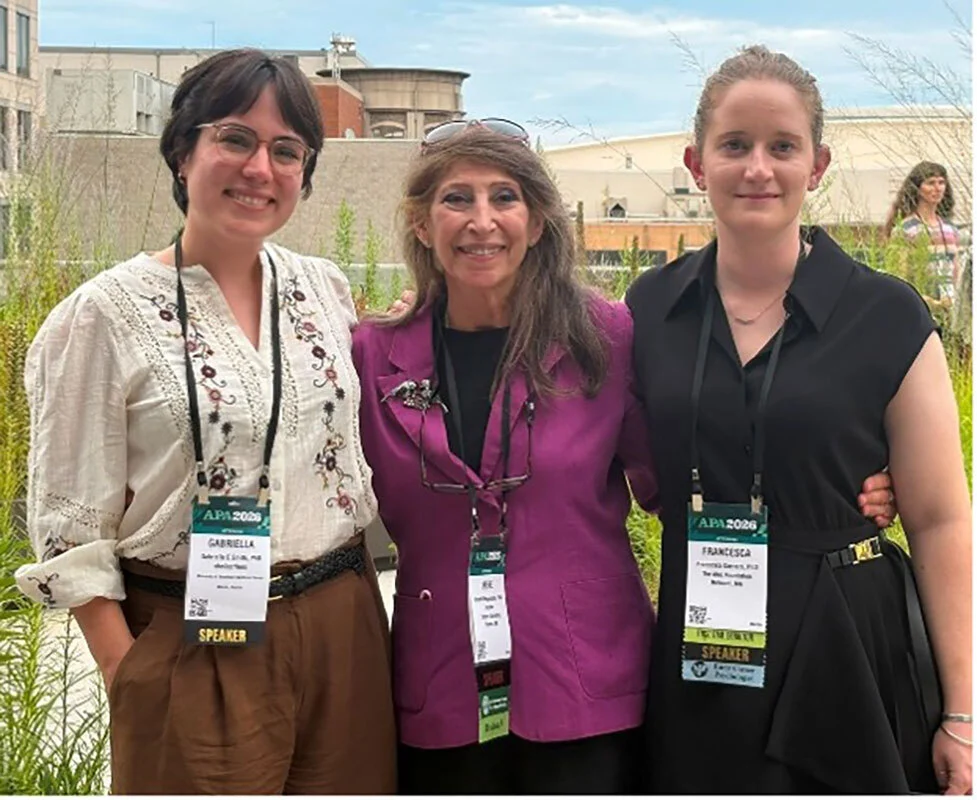
In a recent symposium at the American Psychological Association, Dr. Pepperberg was joined by colleagues Dr. Gabriella Smith and Dr. Francesca Cornero to discuss the ongoing advancements in the field. These interactions reflect the transition of her work from a solo pursuit to a broader discipline. The collaborative nature of the current lab, supported by assistants like Alana Carroll, demonstrates a shift toward institutionalized research that can survive the departure or retirement of individual leaders.
Broader Implications for Psychological Research
The recognition of Dr. Pepperberg’s career by the APA highlights the normalization of avian cognition as a legitimate and critical branch of psychology. Historically, the field was dominated by studies of primates and rodents. The persistent effort to document the internal lives of parrots has successfully broadened the scope of what is considered "intelligent" behavior in the animal kingdom.
The implications of her work extend to the ethics of animal treatment and the methodologies used in cognitive science. By proving that birds possess complex conceptual abilities, Dr. Pepperberg has forced a reevaluation of the cognitive distance between humans and other species. Furthermore, the laboratory’s history serves as a case study for the challenges of long-term longitudinal research in academia. The reliance on private donors, individual research assistants, and flexible institutional arrangements suggests that the current model for funding high-impact, unconventional science remains fragmented.
As the laboratory enters its next phase under the auspices of Boston University, the focus remains on the training of the next generation of researchers. The awards bestowed upon Dr. Pepperberg in 2026 are not merely a reflection of past achievements but a recognition of the infrastructure she built to ensure that the study of avian cognition would continue well into the future. For the scientific community, her career stands as a testament to the idea that scientific discovery is rarely the result of a single "Eureka" moment, but rather the cumulative result of decades of grit, institutional navigation, and the unwavering dedication of a collective, multidisciplinary team.

