


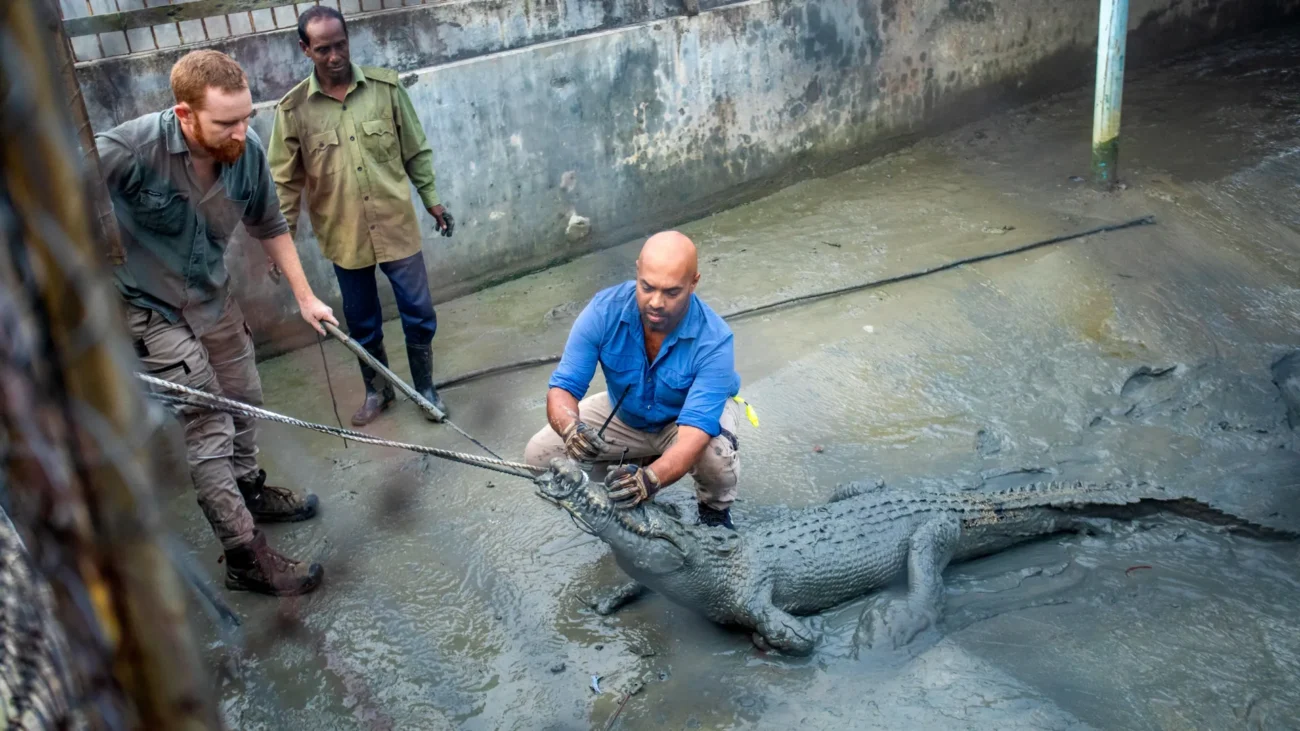
The global effort to restore diminishing apex predator populations has received a significant boost following the publication of a groundbreaking study regarding the post-release behavior of saltwater crocodiles. According to the research, saltwater crocodiles that have spent their formative years or their entire lives in captivity do not exhibit the strong homing instincts that typically plague animal relocation and reintroduction programs. This behavioral distinction could fundamentally reshape conservation strategies in regions where wild populations have been decimated by historical hunting and modern habitat fragmentation.
The findings, published in the peer-reviewed journal Wildlife Research under the title What is home? Post-release movements of captive-reared and translocated mature saltwater crocodiles in Bangladesh, offer a potential pathway forward for environmentalists struggling to rebuild dwindling reptile numbers. By demonstrating that older, captive-bred specimens can successfully integrate into wild ecosystems without attempting a perilous journey back to their enclosures, the study addresses a critical knowledge gap that has hindered conservation biology for decades.
The research initiative was spearheaded by IUCN Bangladesh and the Bangladesh Forest Department, with financial backing provided by the Deutsche Gesellschaft für Internationale Zusammenarbeit (GIZ). It focuses on the Sundarbans mangrove forest, a sprawling and complex ecosystem that serves as one of the last major strongholds for the saltwater crocodile (Crocodylus porosus) in South Asia.
Historical Context and the Plight of the Sundarbans
To understand the significance of this new research, one must examine the precarious status of saltwater crocodiles in Bangladesh. Historically, these massive reptiles—the largest living reptiles on Earth—roamed freely and abundantly throughout the coastal tidal waters, estuaries, and mangrove networks of the region. However, the twentieth century brought catastrophic declines.
Intensive and unregulated commercial hunting for valuable crocodile skins pushed the species to the brink of local extinction by the 1970s. Although the government of Bangladesh instituted legal protections for saltwater crocodiles in 1973, the species has failed to mount a natural or measurable recovery in the decades since. Today, the vast majority of the country’s surviving saltwater crocodiles are restricted to the Bangladeshi portion of the Sundarbans.
Even within this protected biosphere, the population remains dangerously low. Recent ecological surveys estimate that only about 140 mature saltwater crocodiles remain in the entire region. At such low population densities, the species faces heightened risks from genetic bottlenecking, stochastic environmental events, and ongoing human-wildlife conflict. Traditional conservation methods—primarily releasing vulnerable hatchlings into the wild—have yielded disappointing results. Hatchling mortality rates are exceptionally high due to predation and environmental stressors, and it takes many years for surviving juveniles to reach reproductive maturity.
Consequently, conservationists have long debated whether utilizing older, larger, captive-bred crocodiles could accelerate population recovery. Until now, however, a major obstacle stood in the way: the formidable homing instinct characteristic of many crocodilian species.
The Science of Homing and the Captive Exception
Finding the way back home is a vital evolutionary trait across the animal kingdom, supporting survival, territory defense, and reproductive success. While some species execute brief daily excursions to nests or temporary resting sites after foraging, others navigate extraordinary distances across oceans, continents, or vast wilderness areas over weeks or months.
Crocodilians occupy a unique and formidable niche in this behavioral landscape. According to behavioral ecologist and Adjunct Associate Professor Ru Somaweera from Murdoch University, who contributed to the study, crocodiles possess an exceptionally powerful homing instinct.
"Crocodiles are remarkably good at finding their way home, often returning to their original capture sites and limiting the success of relocation programs," Dr. Somaweera explained. "What we still don’t fully understand, though, is how this behavior plays out in individuals that have been bred or kept in captivity for long periods before being released back into the wild."
In conventional wildlife management, when problem animals or adult predators are moved away from human settlements, they frequently travel immense distances—sometimes crossing unfamiliar terrain or open water—to return to their original home ranges. Conservationists feared that adult crocodiles raised in captivity would similarly try to return to their breeding facilities or enclosures upon release, wandering aimlessly, exposing themselves to human threats, or ultimately starving in their quest to find familiar concrete walls.
If captive-raised animals systematically attempted to return to captivity, reintroduction programs utilizing subadults or adults would be rendered structurally unviable. Testing this hypothesis required tracking the precise movements of crocodiles released into the wild.
Methodology and Tracking Protocols
To investigate these dynamics, researchers designed a rigorous field study within the challenging terrain of the Sundarbans mangrove forest. The scientific team selected a diverse cohort of five mature saltwater crocodiles to monitor via advanced satellite tracking technology.
The experimental group was carefully structured to compare different backgrounds and life histories:
- Three captive-reared females that had spent between 8 and 22 years living entirely within artificial enclosures and breeding facilities.
- One local wild crocodile that was captured within the Sundarbans and subsequently released at the exact same site as a control subject.
- One wild crocodile, designated as "Jongra," which was captured and then translocated (moved a significant distance) away from its original home range to test standard wild homing behavior.
Once fitted with specialized satellite telemetry devices designed to withstand the harsh estuarine environment, the five crocodiles were released into the wild. Scientists then monitored their daily movements, spatial distribution, and behavioral patterns continuously over the course of several months.
Divergent Paths: Captive-Reared Resilience Versus Wild Homing Drives
The findings revealed a stark contrast between the behavior of the captive-raised crocodiles and the translocated wild specimen, providing unexpected clarity for wildlife managers.
True to the study’s primary hypothesis, none of the three captive-reared females exhibited any behavioral indicators of attempting to return to the breeding facilities where they had spent up to two decades of their lives. Instead of embarking on long-distance treks or displaying disorientation, these animals rapidly integrated into the local ecosystem.
"They settled into small, well-defined areas and moved in much the same way as the local wild crocodile we tracked, which tells us they are possibly able to adapt to their new environment seamlessly," Dr. Somaweera noted.
The captive-reared crocodiles established home ranges, foraged locally, and exhibited movement patterns statistically indistinguishable from native wild counterparts. This behavioral plasticity suggests that the absence of early life experience in the wild does not permanently impair an adult crocodile’s ability to function as a wild predator, provided it possesses the physical size and hunting instincts innate to the species.
Conversely, the outcome for the translocated wild crocodile, Jongra, highlighted the persistence of natural homing instincts in animals with established wild territories. Jongra was moved approximately 132 kilometers away from his original capture site before being released into unfamiliar waters.
"Unfortunately, the results weren’t as good for the wild crocodile Jongra, who was translocated about 132km from his home before being released," Dr. Somaweera said. "Although Jongra didn’t make it back to his original capture site during telemetry monitoring, his movements were very clearly going in that direction. He traveled far more each day than any other crocodile we tracked, covered an exceptionally large area, and even recorded single-day movements of more than 30 kilometers: all typical signs of homing behavior."
Jongra’s frantic journey underscored the immense physiological and psychological energy wild crocodiles expend when displaced from their native territories, a phenomenon that often places translocated animals at high risk of mortality due to exhaustion, starvation, or entering hostile human-dominated areas.
Practical Implications for Global Conservation Strategy
The divergent behavioral trajectories documented in the Sundarbans carry profound practical implications for wildlife conservation, both in Bangladesh and across the global range of crocodilian species.
For decades, conservation managers have relied almost exclusively on releasing fragile hatchlings into dwindling wild populations—a method plagued by high attrition rates. The new data suggests that rearing crocodiles in captivity until they reach subadult or adult stages, and subsequently releasing them into suitable, unoccupied habitats, is not only feasible but potentially superior to traditional restocking methods. Larger crocodiles possess higher survival rates, greater resistance to predation, and immediate reproductive capacity, shortening the timeline for population stabilization and growth.
At the same time, the study provides a vital cautionary note regarding the management of nuisance or displaced wild crocodiles. Because wild-raised adults possess an unyielding drive to return home when translocated, standard relocation protocols for problem animals must be reassessed. Simply moving a wild adult crocodile far away without accounting for its homing trajectory can trigger dangerous, long-distance movements through fragmented landscapes, increasing the likelihood of human-crocodile encounters. Careful release planning, barrier deployment, or the utilization of specialized holding protocols may be necessary for wild translocations.
Broader Impacts and Future Outlook
As conservation organizations face mounting pressures from habitat loss, climate change, and anthropogenic encroachment, empirical studies like the one conducted in the Sundarbans provide the rigorous data needed to move beyond guesswork in wildlife management.
By proving that captive-raised saltwater crocodiles can successfully adapt to wild environments without turning back toward human facilities, researchers have unlocked a new tool for species recovery. The insights gained from tracking Jongra and his captive-reared counterparts offer a blueprint for balancing animal welfare, public safety, and ecological restoration.
With funding partners and governmental agencies digesting these findings, future conservation frameworks in Bangladesh and neighboring regions are expected to incorporate captive-reared subadult and adult releases into their master plans. As these mature predators find their footing in the wild without looking back toward captivity, a fragile population gains a renewed lease on survival.

