


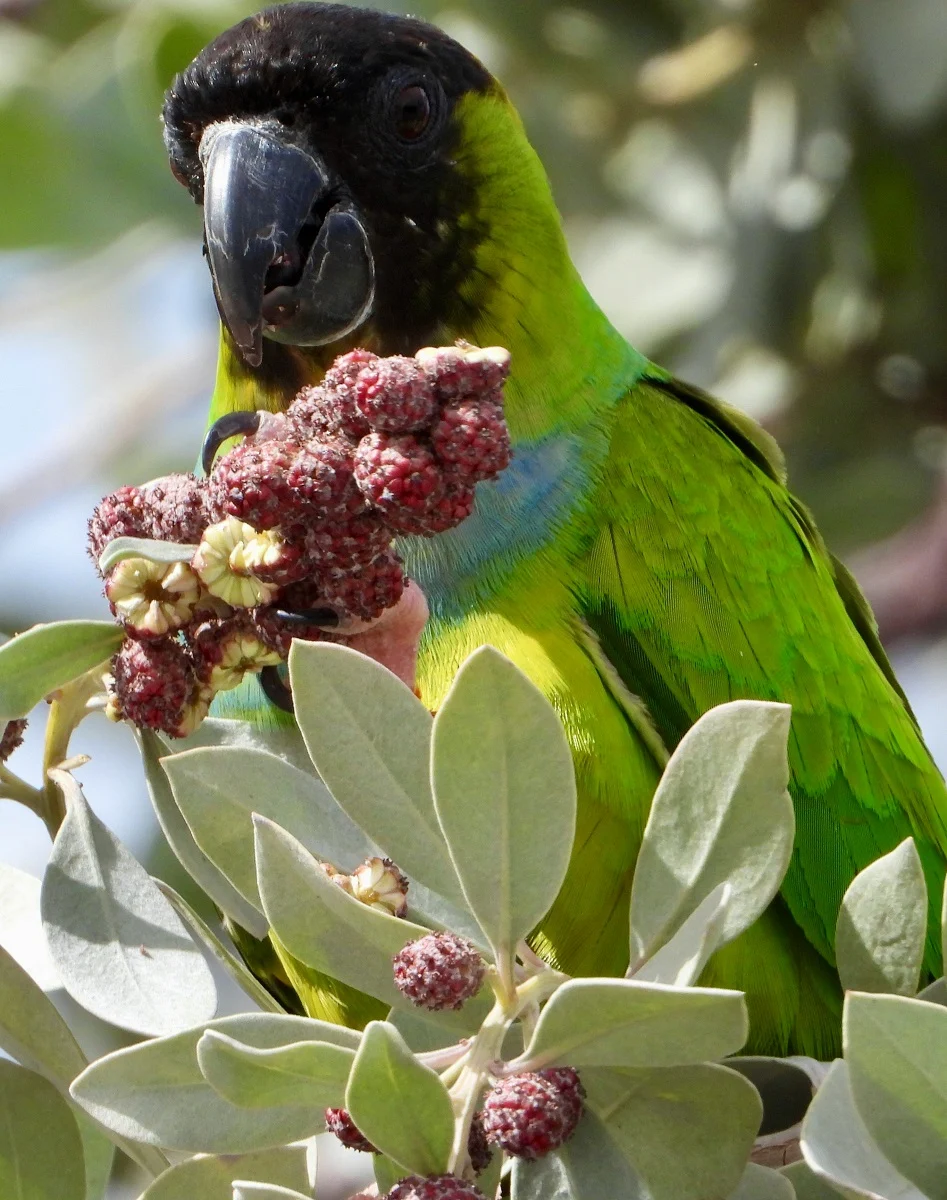
The nanday conure (Aratinga nenday), historically recognized under the monotypic genus Nandayus nenday before phylogenetic revisions in 2004 placed it firmly within the genus Aratinga alongside closely related species like the sun and jenday conures, represents a fascinating avian subject for ornithologists, conservationists, and prospective pet owners alike. Native to the open lowlands of central South America—spanning Paraguay, southern Brazil, eastern Bolivia, and northern Argentina—this small-to-medium-sized parrot has captured global attention due to its striking appearance, high social intelligence, and notoriously high vocalization levels. Weighing up to 140 grams and reaching lengths of approximately 12 inches (30 centimeters), the species is instantly recognizable by its distinct black hood, contrasting green body, blue-green chest feathers, and vibrant red thighs. With a lifespan that can extend up to 30 years under optimal captive conditions, the nanday conure requires a specialized, long-term commitment from anyone considering integration into a household.
Natural Habitat, Ecological Role, and Conservation Status
Within its native range, the nanday conure primarily inhabits open lowlands, savanna regions, and forest edges up to elevations of roughly 2,600 feet (800 meters). These environments are frequently characterized by swampy terrain or dry regions dotted with palm trees, which the birds utilize extensively for nesting and roosting. Ecological studies underscore the species’ vital role in its native ecosystems; notably, research published in 2002 identified the nenday conure as a key pollinator for the Erythrina dominguezii tree, facilitating cross-pollination while feeding on floral nectar. Additionally, like many neotropical parrot species, wild populations frequently visit clay licks—exposed mineral-rich soil banks—to ingest earth, a behavior ornithologists believe aids in absorbing essential micronutrients and neutralizing plant toxins ingested during foraging.
Despite localized pressures, the International Union for Conservation of Nature (IUCN) Red List classifies the Aratinga nenday as a species of Least Concern. Paradoxically, wild population numbers appear to be stable or increasing. This demographic trend is largely attributed to human activities, specifically the conversion of dense forests into cattle pastures and open agricultural lands, which inadvertently expands the preferred open-habitat foraging grounds of the conure.
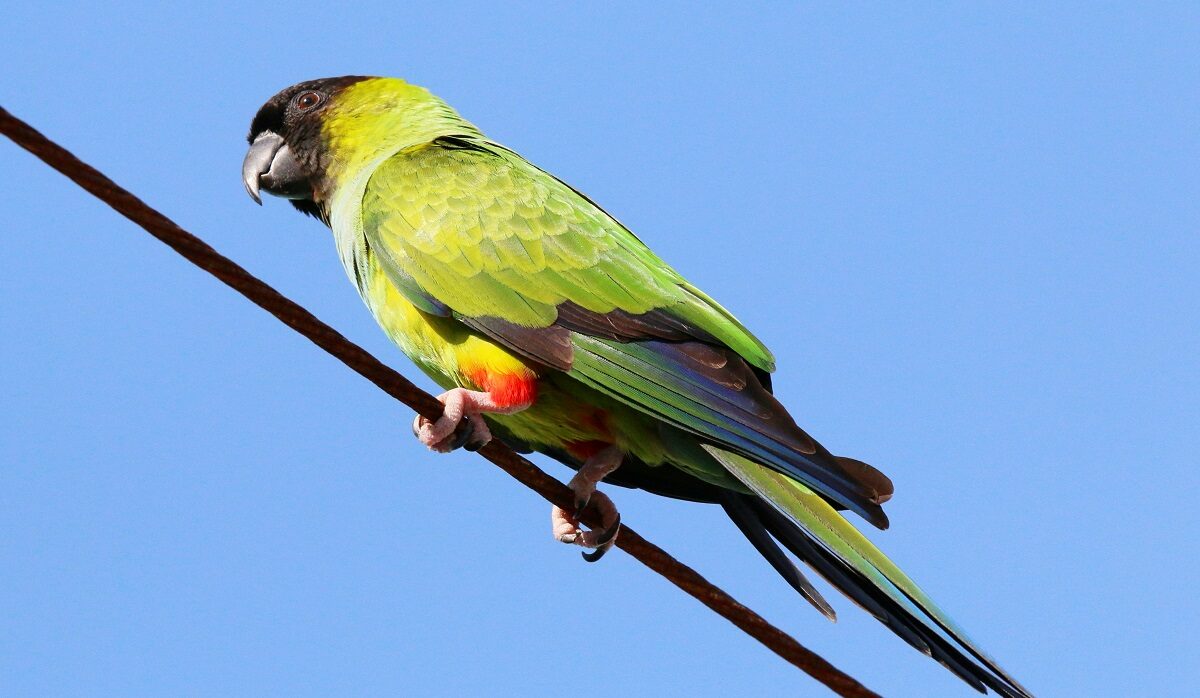
However, the species’ ecological footprint extends far beyond South America. Due to the escape and intentional release of captive pets over the past several decades, the nanday conure has established thriving naturalized populations across the globe. Today, self-sustaining feral flocks can be found in various regions of Spain and multiple U.S. states, including California and Florida, where ornithological surveys consistently rank them among the top three most successful invasive parrot species. While these resilient flocks demonstrate impressive adaptability, urban wildlife management agencies frequently monitor them due to potential agricultural impacts and competition with native fauna.
Captive Diet and Nutritional Requirements
Transitioning from the diverse foraging habits of the wild—where their diet consists predominantly of wild palm fruits, seeds, berries, and flower buds—captive nanday conures require carefully formulated nutritional management. Historically, pet parrots were fed exclusively on seed-based mixtures; however, contemporary avian veterinary medicine strongly advises against seed-only diets. Veterinarians and avian nutritionists emphasize that unsupplemented seeds frequently lead to severe nutritional deficiencies, fatty liver disease, and obesity in captive psittacines.
The foundation of a healthy captive diet for a nanday conure should consist of high-quality commercial pelleted food formulated specifically for small-to-medium parrots. This base should be complemented daily with a wide variety of fresh, parrot-safe produce. Recommended additions include leafy greens, broccoli, peppers, apples, and grapes. Furthermore, owners can incorporate cooked whole grains such as brown rice and pasta, sprouted seeds, and occasional protein sources like small pieces of boiled egg. Maintaining a balanced diet directly correlates with longevity, immune health, and feather condition, helping the bird reach its maximum 30-year potential lifespan.
Housing, Environment, and Safety Protocols
Providing adequate spatial accommodation is a critical component of nanday conure husbandry. In an ideal scenario, these active birds thrive in full-sized outdoor or indoor aviaries measuring at least 10 feet (3 meters) in length, allowing for sustained flight. For indoor housing, owners must invest in a robust cage with a horizontal orientation, as cage length is biologically more significant for flighted movement than vertical height. A minimum footprint of 30 by 24 by 24 inches (75 by 60 by 60 cm)—though larger is strongly preferred—is necessary to ensure the bird can fully extend and flap its wings without damaging its plumage.
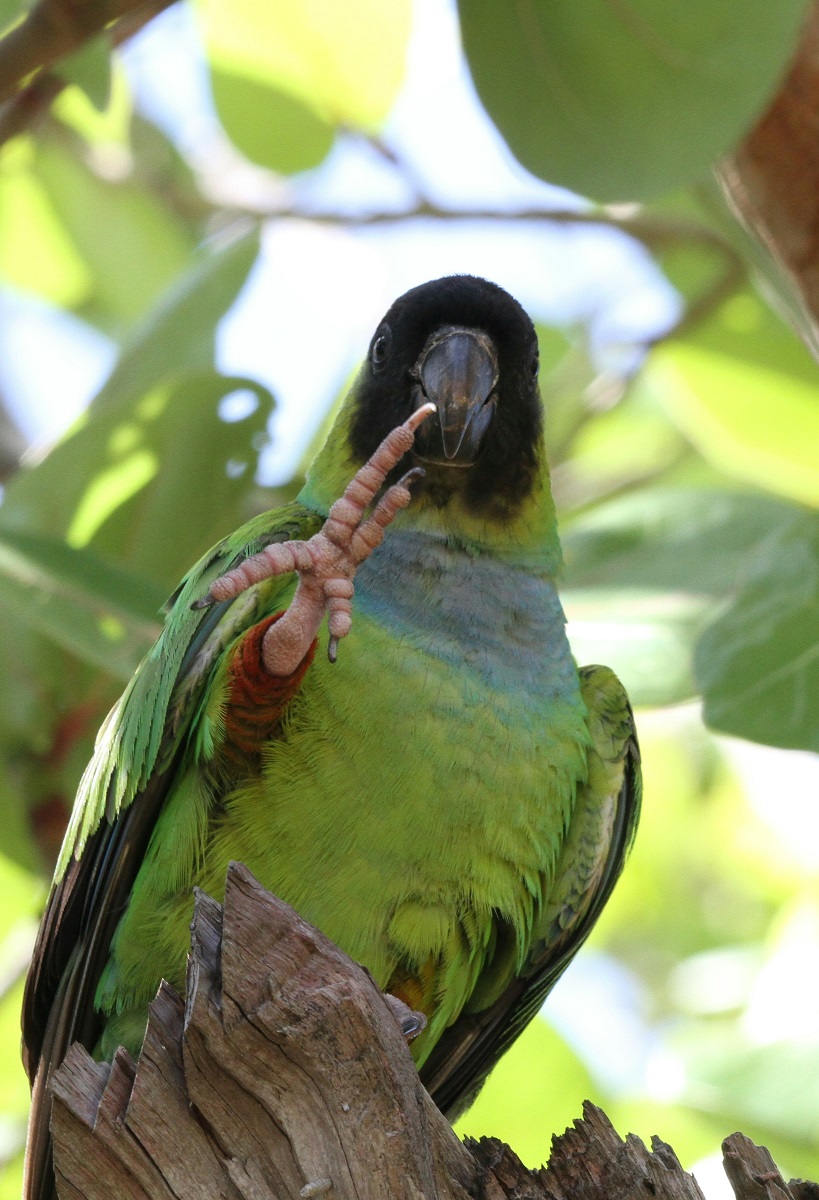
The interior of the enclosure must feature natural wood perches of varying diameters to prevent foot arthritis, along with multiple feeding stations and fresh water sources. Because conures possess high intelligence and manipulative capabilities, a rotation of durable toys is essential to mitigate boredom.
Furthermore, caretakers must implement rigorous environmental safety protocols. Avian respiratory systems are exceptionally sensitive due to a specialized unidirectional airflow anatomy. Consequently, toxic airborne fumes present severe, life-threatening hazards. Household dangers that must be permanently eliminated or strictly separated from the bird’s living area include tobacco smoke, aerosolized cleaning sprays, scented candles, and heated nonstick (PTFE/Teflon) cookware, off-gassing from which can prove rapidly fatal to psittacines.
Behavioral Enrichment and Social Dynamics
Nanday conures are intensely social, gregarious animals that live in large flocks in the wild. In captivity, this high degree of sociability translates into an absolute requirement for consistent mental stimulation and interaction. Depriving a nanday conure of adequate social engagement often leads to severe psychological distress, manifested through destructive behaviors such as feather plucking, excessive screaming, and self-mutilation.
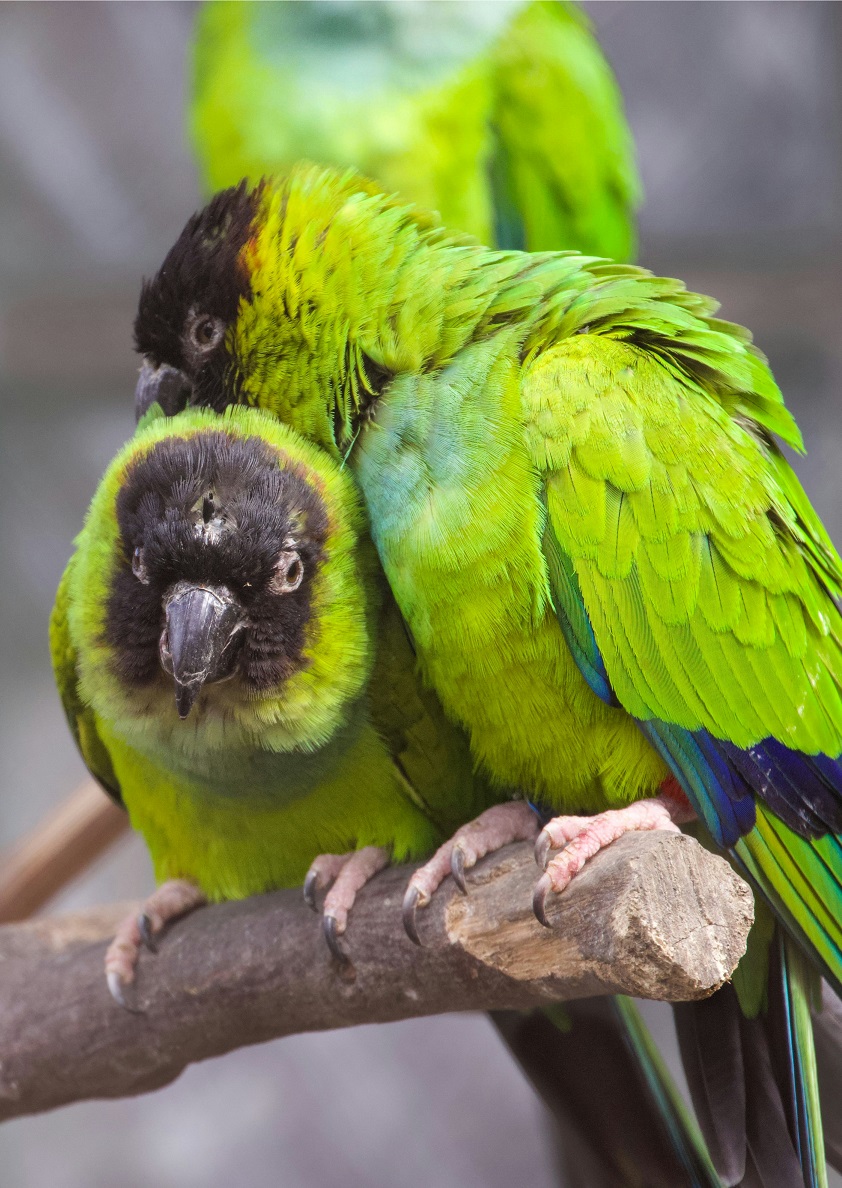
For households where human family members maintain standard full-time work schedules (such as a 9-to-5 routine), acquiring a second nanday conure to provide conspecific companionship is frequently recommended to prevent loneliness. In addition to social interaction, owners must actively prevent cognitive stagnation through foraging toys, puzzle feeders, and regular out-of-cage training sessions. Because parrots are notoriously curious and physically fragile, owners must also maintain vigilance and basic avian emergency first-aid knowledge to handle accidental injuries resulting from household exploration.
Temperament and Human Interaction
Among Aratinga conures, the nanday is frequently praised by avian enthusiasts for its exceptionally friendly, outgoing, and affectionate disposition. Unlike certain smaller conure species belonging to the genus Pyrrhura (such as the green-cheeked conure), which may occasionally resort to defensive nipping, a well-socialized nanday conure is generally tolerant of multiple family members and receptive to new human acquaintances.
Their ideal daily routine typically involves interactive play with durable toys, vocalization or basic talking training, physical affection such as head scratches, and resting on a trusted owner’s shoulder. However, this high level of attachment has a distinct downside: nandays can easily become overly dependent or jealous. They frequently exhibit separation anxiety, vocalizing loudly when their preferred human leaves the room or attempting to intercept attention directed toward other family members.
Acoustic Profile and Vocalization Analysis
The single most defining characteristic that prospective owners must evaluate before acquiring a nanday conure is its extraordinary and piercing vocalization capacity. Aratinga conures are widely acknowledged as the loudest representatives of their size class, and nanday conures routinely push these acoustic limits.
Ornithological and avicultural literature highlights the staggering volume potential of these birds. While large macaws can reach sound pressure levels of approximately 105 decibels and Moluccan cockatoos can peak around 135 decibels, scientific literature, including observations compiled in Robin Deutsch’s 2009 work Good Parrotkeeping, notes that small nanday conures have been recorded screaming at intensities as high as 155 decibels. Continuous or sudden exposure to noise levels of this magnitude can cause permanent physiological damage to human eardrums.
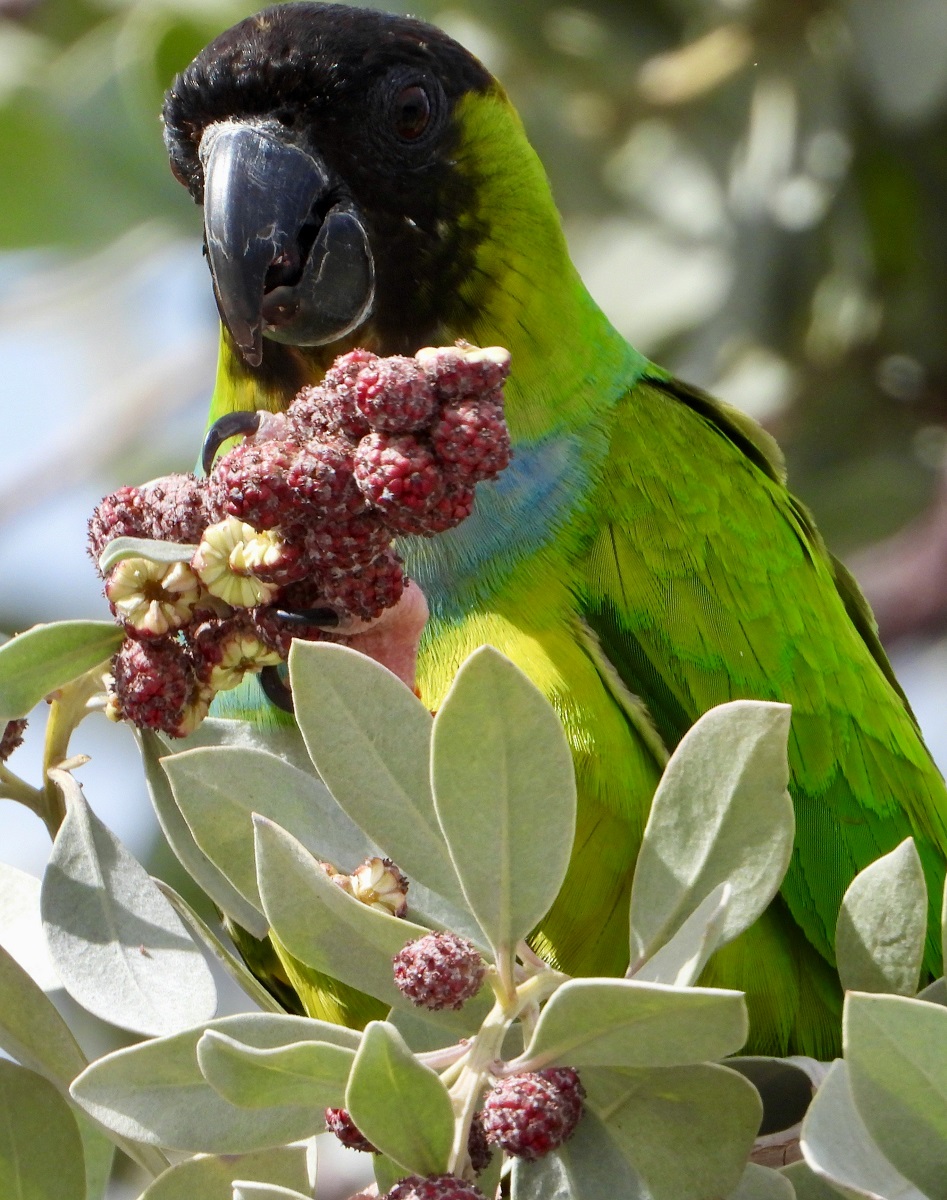
Because of this piercing flock call—which is naturally utilized in the wild to maintain contact across vast open savannas—nanday conures are decidedly unsuited for apartment living or close-quarters residential complexes with strict noise ordinances. Parrots naturally exhibit peak vocalization periods around dawn and dusk, as well as during moments of high excitement. Aside from raw screams, nandays are capable of varied vocalizations, including whistles, chirps, and rudimentary imitations of household sounds. While they do not possess the advanced speech clarity of an African grey parrot, many individual nanday conures learn to mimic short words, phrases, and playful "baby babble" sounds while interacting with their human caregivers.
Prospective owners are strongly advised to audit recordings of the species through specialized bioacoustic databases such as xeno-canto or visit established breeders in person to experience the true acoustic output of a nanday conure before making a long-term adoption commitment.

