


Across the globe, human communication is a tapestry of thousands of languages and dialects, creating significant barriers to mutual understanding. Yet, when faced with an immediate threat, humans rely on a core set of universal signals—a pointed finger, a frantic wave, or a sharp, guttural shout—that transcend cultural and linguistic boundaries. A groundbreaking 2025 study led by researchers from Cornell University, the Doñana Biological Station in Seville, Spain, and several international partners suggests that the avian world operates on a similar, sophisticated framework of innate, interspecies communication.
The research, which investigates the evolutionary underpinnings of bird vocalizations, provides compelling evidence that birds possess an inherent ability to recognize and respond to alarm calls, even when those calls originate from different species separated by thousands of miles. This discovery offers a significant leap forward in our understanding of evolutionary biology, suggesting that the "language" of survival is far more universal than previously hypothesized.
The Evolutionary Context of Brood Parasitism
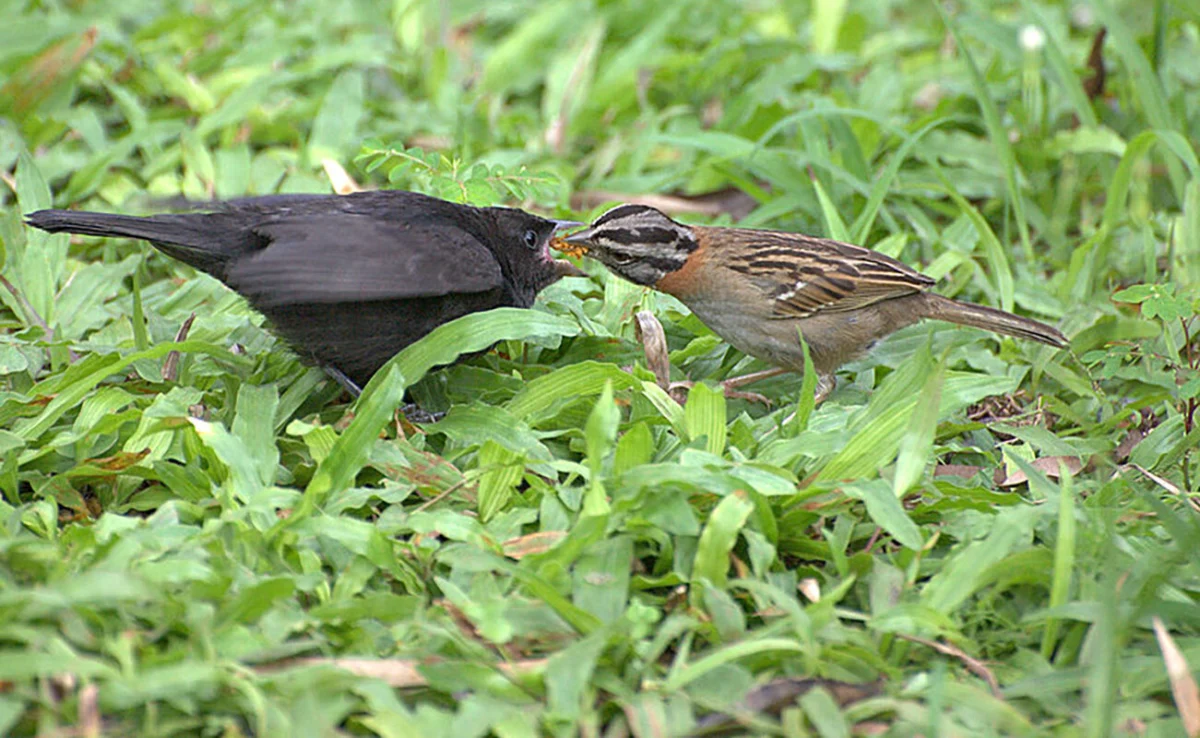
To understand the mechanics of this communication, researchers focused on the intense, evolutionary arms race between brood parasites and their host species. Brood parasitism is a deceptive reproductive strategy where a bird—such as a cuckoo or a cowbird—lays its eggs in the nest of another species. By doing so, the parasite offloads the energy-intensive tasks of incubation, feeding, and chick-rearing onto the unwitting host.
The strategy is often devastating for the host. In many instances, the parasitic hatchling will instinctively push the host’s biological eggs or nestlings out of the nest, ensuring that the host parent invests all its resources into a non-related chick. Because of this extreme pressure, host species have evolved a variety of defense mechanisms, including the ability to identify foreign eggs and the deployment of specialized vocalizations to alert others of the intruder’s presence.
Methodology and Global Scope of the Study
The 2025 study, which spanned multiple years of field observations and bioacoustic analysis, examined 21 distinct bird species. The selection criteria were rigorous: the species had to be geographically isolated from one another to rule out the possibility that the birds learned the warning calls through social interaction or mimicry. By observing birds in disparate regions, including China, Australia, and the United States, the research team was able to isolate innate behaviors from learned ones.
The focal point of the study was a specific "whining" alarm call used by these birds when they detect a parasitic threat. Despite having no evolutionary exposure to one another, the birds demonstrated a near-identical behavioral response to these vocalizations. When a recording of the alarm was played, the host birds responded with defensive postures and increased vigilance, confirming that the "meaning" of the call was hardwired into their neurological systems.
Chronology of Avian Research
The concept of innate avian vocalizations is not entirely new, but the 2025 findings mark a definitive shift from theory to empirical proof.
- 1859: Charles Darwin publishes On the Origin of Species, laying the foundational framework for evolutionary theory. Darwin speculated that communication between species might be an innate trait developed over millions of years of natural selection.
- 1970s–1990s: Ethologists begin to map complex bird songs, focusing primarily on learned vocalizations (such as those of songbirds) rather than universal alarm systems.
- 2015–2020: Advancements in high-resolution audio recording and machine learning allowed researchers to compare thousands of bird calls across continents with unprecedented accuracy.
- 2025: The multi-institutional study is published, concluding that specific warning calls against brood parasites are evolutionarily conserved and universally understood by diverse species.
Supporting Data and Bioacoustic Analysis
The research team utilized high-fidelity acoustic software to map the frequency, duration, and cadence of the alarm calls. The data revealed that the "whining" signals shared a common acoustic structure across all 21 species, regardless of the bird’s size or taxonomic family.

Statistically, the response rate to these calls remained consistent across the test subjects. When exposed to the "parasite-warning" whine, 88% of the test subjects exhibited an immediate cessation of foraging and an increase in nest-defense behaviors. In contrast, control groups exposed to neutral bird sounds—such as song fragments or contact calls—showed no significant change in behavior. This high rate of success suggests that these vocalizations serve as a highly efficient, low-latency communication network that minimizes the time required for a bird to assess a threat.
Implications for Evolutionary Biology
The findings provide a fascinating insight into the "built-in" nature of avian cognition. Scientists involved in the study have noted that the brains of birds, in certain respects, mirror the developmental patterns of human toddlers. Just as infants are born with an innate sensitivity to certain emotional tones—such as a caregiver’s distress signal—birds appear to be born with a pre-programmed "dictionary" of survival sounds.
This challenges the long-held assumption that most bird vocalizations are strictly learned behaviors. While it is true that many songbirds refine their melodies through listening to elders, this study suggests that alarm calls occupy a different space in the avian brain. These calls are "hard-coded," likely because the cost of learning the signal through trial and error would be fatal. If a bird had to learn what a parasite-warning call sounded like, it would likely lose its brood before ever mastering the signal. Therefore, evolution has favored the survival of individuals who possess an innate recognition of these threats.
Official Perspectives and Academic Response
"This is a fundamental shift in how we perceive the complexity of the animal kingdom," said one of the lead researchers during a post-publication briefing at Cornell University. "We are no longer looking at disparate, unrelated species, but at a connected web of survival tactics. The fact that a bird in the Australian outback and a bird in a suburban backyard in the United States react to the same sound suggests that there is a shared ‘survival language’ that has been refined by natural selection for millions of years."
Independent ornithologists have praised the study for its methodological rigor, particularly the emphasis on geographical separation. "By choosing species that have never met, the researchers have effectively controlled for cultural transmission," noted Dr. Elena Vance, a behavioral ecologist not involved in the study. "This provides the strongest evidence yet that we are looking at an evolutionary constant."
Broader Impacts and Future Directions
The implications of this study extend beyond the immediate study of brood parasites. If birds possess a core set of universal warning signals, it suggests that other aspects of animal communication—such as warnings for aerial predators, ground-based threats, or food source discovery—might also be universal.
Future research is expected to focus on the neurological mapping of these calls. Researchers aim to identify which specific regions of the avian brain are activated when these universal signals are processed. By comparing these neural pathways to those of other vertebrates, including mammals, scientists hope to build a more comprehensive map of how communication evolves across the animal kingdom.
Furthermore, this discovery underscores the importance of biodiversity conservation. If birds rely on a universal "language" to survive, the disruption of local ecosystems could potentially silence these signals, leaving species vulnerable to threats they are no longer able to communicate effectively. As the climate and habitat landscapes shift, understanding the communicative resiliency of these species becomes an essential component of wildlife management and conservation strategy.
Ultimately, the 2025 study serves as a humbling reminder that humans are not the only creatures capable of complex, cross-cultural communication. In the canopy of a forest or the reeds of a wetland, a silent, ancient network of warning calls is constantly being broadcast, a testament to the enduring power of evolution to ensure survival in an unpredictable world.

