


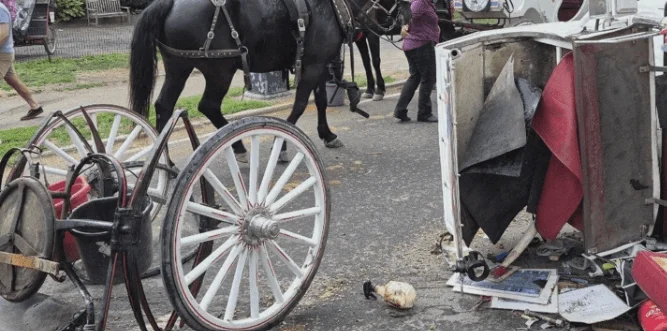
The bustling atmosphere of Central Park was shattered on Wednesday, June 21, 2026, when a routine horse-drawn carriage ride escalated into a fatal accident, claiming the life of 18-year-old Romanch Mahajan. According to eyewitness accounts and verified video footage, a horse engaged in pulling a tourist carriage suddenly became startled and bolted, losing control amidst the heavy pedestrian and vehicular traffic of the park. The carriage, which was carrying members of the Mahajan family, overturned during the high-speed transit. Romanch Mahajan sustained catastrophic injuries while reportedly attempting to shield his mother from the impact as the vehicle capsized. Despite the immediate intervention of emergency responders, the teenager was pronounced dead shortly thereafter, marking a grim milestone in the long-standing debate over the safety and ethics of the carriage industry in New York City.
The Chronology of a Tragedy
The events leading up to the death of Romanch Mahajan suggest a week of heightened tension and systemic failure within the urban equine industry. The timeline of the incident and the surrounding advocacy efforts highlights a rapidly deteriorating situation in Manhattan’s most famous green space.
On June 14, 2026, exactly one week prior to the fatal accident, a carriage horse named Deniz collapsed while in harness in Central Park. Witnesses reported that the animal appeared exhausted before falling to the pavement. Deniz subsequently died, sparking immediate protests from animal rights organizations and local residents. The death of Deniz served as a catalyst for a rally held on the steps of City Hall the following day, June 15. During this demonstration, members of the New York City Council, including prominent bill sponsor Christopher Marte, joined organizations such as PETA and NYCLASS to demand an immediate legislative end to horse-drawn carriage operations.
The momentum for a ban was already at a fever pitch when the Mahajan family boarded a carriage on Wednesday, June 21. The accident occurred during the late afternoon, a peak time for park activity. Following the crash, a memorial vigil was organized on the morning of Monday, June 22, at the Cherry Hill Fountain. This location, situated near the site of the fatal overturn, became a focal point for grief and political mobilization. During the vigil, city and state officials stood alongside advocates to honor Mahajan’s memory and amplify his family’s plea for a permanent cessation of the industry.
Technical Analysis of Equine Behavior in Urban Settings
The death of Romanch Mahajan underscores the inherent risks of operating large, flight-prone animals in a modern urban environment. Equine behavioral experts have long argued that horses, as prey animals, possess a highly developed "startle reflex." In a setting as chaotic as New York City—characterized by sudden sirens, construction noise, unpredictable cyclists, and dense crowds—the threshold for a horse to "bolt" is significantly lowered.
Data from the New York City Department of Health and Mental Hygiene, alongside historical accident reports, indicate that "spooking" is the leading cause of carriage-related injuries. When a horse bolts while attached to a carriage, the vehicle acts as a fixed weight that can cause the animal to panic further if it feels pursued by the structure behind it. In the case of the June 21 accident, the carriage effectively became a projectile once the horse lost its composure. The physics of a high-speed carriage overturn often result in "crush" injuries or fatal falls, as seen in the tragic passing of Mahajan.
Furthermore, the environmental conditions in June 2026 were particularly taxing. High temperatures and humidity levels in New York City place immense physiological stress on working equines. The death of Deniz just days earlier suggests that the fleet may have been suffering from cumulative heat exhaustion, which can lead to erratic behavior or physical collapse.
Legislative Context and the Marte Bill
The political response to the tragedy has centered on a specific piece of legislation currently stalled in the City Council. Sponsored by Council Member Christopher Marte, the proposed bill seeks to replace horse-drawn carriages with electric, vintage-style horseless carriages. This transition is framed as a "just transition" that would preserve the livelihoods of the carriage drivers while removing live animals from the streets.
The legislative push has faced significant opposition from the Transport Workers Union (TWU) Local 100, which represents the carriage drivers. The union argues that the industry is a vital part of New York’s tourism economy and that the horses are well-cared for under existing regulations. However, proponents of the ban argue that no amount of regulation can mitigate the fundamental danger of a 1,500-pound animal panicking in a crowded park.
Mayor Zohran Mamdani, who has faced increasing pressure to take an executive stance on the issue, was directly addressed in a statement released by the Mahajan family. The family’s message was unequivocal: they requested that the Mayor and the City Council end all carriage rides immediately and permanently to ensure that no other family suffers a similar loss. The administration is now at a crossroads, balancing the demands of animal welfare advocates and public safety concerns against the interests of a historic, albeit controversial, industry.
Industry Safety Records and Public Perception
While the carriage industry often cites a "low" rate of fatal accidents relative to the number of rides given, critics point to a pattern of "near-misses" and unreported incidents. A review of news archives over the last decade reveals dozens of instances where horses have collapsed, bolted into traffic, or been involved in collisions with motor vehicles.
Public perception appears to be shifting in favor of a ban. A 2025 poll suggested that a majority of New Yorkers view horse-drawn carriages as an antiquated and inhumane practice. The death of a young tourist, particularly one who died performing an act of bravery to save his mother, has galvanized this sentiment. The narrative has moved beyond animal welfare to encompass a broader concern for public safety and municipal liability.
Statements from Stakeholders
In the wake of the accident, statements have poured in from various sectors of the city’s leadership.
"New York City cannot keep pretending this industry can be made safe," a spokesperson for PETA stated during the Cherry Hill vigil. "For years, we have sounded the alarm about the dangers of forcing horses into the chaos of Manhattan. Now, a teenager is dead, and the blood is on the hands of those who refused to act."
Council Member Christopher Marte echoed these sentiments, stating, "This was a preventable tragedy. We have the technology to maintain the charm of Central Park without the inherent risk of using live animals. How many more deaths—equine or human—will it take for this Council to pass the ban?"
Conversely, representatives from the carriage industry expressed their condolences to the Mahajan family but cautioned against "knee-jerk" legislative reactions. They maintained that the incident was a freak accident and that the industry adheres to some of the strictest animal welfare standards in the country.
Implications for the Future of Central Park
The death of Romanch Mahajan is likely to serve as the definitive turning point for the carriage industry in New York. Legal experts suggest that the city may face significant litigation from the Mahajan family, which could force a reevaluation of the permits granted to carriage operators. If the city is found to have been negligent in failing to address known safety risks—especially following the death of Deniz a week prior—the financial and political cost of maintaining the industry may become untenable.
The proposed transition to electric carriages offers a potential middle ground, though it requires significant infrastructure investment. These vehicles would eliminate the risk of "bolting" and would not be subject to the same heat-related work stoppages as live animals. As the city mourns the loss of a young life, the debate is no longer just about the treatment of animals; it is about the fundamental responsibility of a city to protect its residents and visitors from avoidable hazards.
The memorial at Cherry Hill Fountain remains a somber reminder of the events of June 21. As flowers and messages accumulate near the site of the crash, the call for "Romanch’s Law"—a potential name for the carriage ban—continues to grow. New York City now faces a choice between clinging to a centuries-old tradition or evolving in the interest of modern safety and ethics. The decision made by Mayor Mamdani and the City Council in the coming weeks will determine whether the death of Romanch Mahajan becomes a catalyst for change or remains a tragic footnote in the city’s history.

