


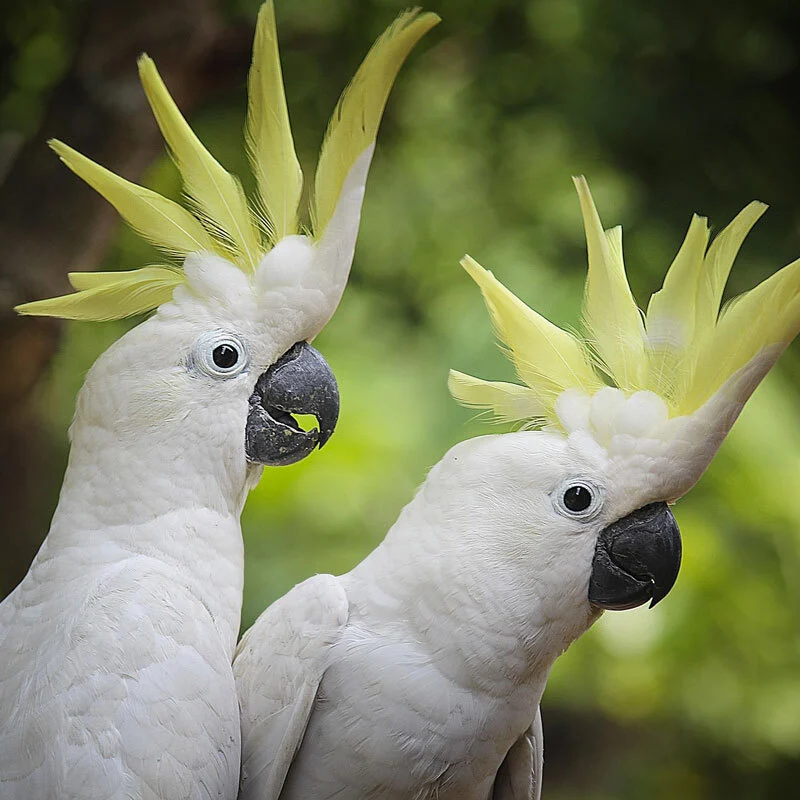
Researchers are increasingly dedicating significant efforts to unraveling the complexities of avian cognition, consistently revealing the profound intelligence and intricate social dynamics that govern the daily lives of our feathered counterparts. The recent findings from a collaborative international study, published in PLOS Biology, underscore that birds, particularly the highly adaptable sulphur-crested cockatoos thriving in urban environments, exhibit sophisticated social learning mechanisms that bear striking resemblances to human cultural transmission, particularly in the adoption of novel behaviors such as new food sources. This groundbreaking research offers compelling insights into how information and behaviors disseminate through avian communities, challenging previous assumptions about animal intelligence and cultural development.
The study, led by a consortium of five researchers from esteemed institutions including the University of Konstanz (Germany), The Australian National University, the University of California Davis, and The University of Sydney (Australia), specifically focused on observing social learning within wild populations of parrots. Their primary objective was to meticulously understand the processes through which these intelligent birds overcome neophobia—the inherent reluctance to try new things—and develop an interest in consuming foods they have never encountered before. This inquiry delves into a fundamental aspect of behavioral ecology: how individual learning is amplified and accelerated through social observation, a cornerstone of cultural evolution across species.
Unpacking Avian Intelligence and Social Learning
The long-held view of birds as creatures of instinct has been systematically dismantled by decades of cognitive ethology. Modern research consistently demonstrates that many avian species possess remarkable problem-solving abilities, memory, communication skills, and even tool use. Parrots, in particular, are renowned for their high intelligence, often compared to great apes in terms of cognitive capacity. Their ability to mimic human speech is merely a superficial indicator of a much deeper cognitive architecture that supports complex social interactions and adaptive behaviors.
Social learning, defined as learning from others, is a critical mechanism for adaptation in dynamic environments. It allows individuals to acquire valuable information without incurring the risks and costs associated with individual trial-and-error. For species living in complex social structures, such as the highly gregarious sulphur-crested cockatoo, social learning is not just beneficial; it is a fundamental driver of behavioral evolution and cultural transmission. This study specifically sought to observe the propagation of a novel feeding behavior within established wild flocks, offering a unique window into the dynamics of avian ‘culture.’
The Methodology: A Controlled Experiment in Wild Settings
To investigate the nuances of social learning, the research team devised an ingenious experiment involving sulphur-crested cockatoos (Cacatua galerita) in suburban Sydney. The birds, known for their inquisitiveness and adaptability, were presented with a novel food item: almonds in their shells. To add a layer of experimental control and observational clarity, these almonds were dyed with distinct, vibrant colors—either blue or red. The choice of almonds in shells was strategic; it presented a slight challenge that required manipulation, making the learned behavior more distinct than simply consuming an easily accessible food item.
The core of the experimental design involved a group of four "demonstrator" birds who were initially trained to accept and open the colored almonds. These trained individuals were then introduced into five distinct roost communities, carefully marked and monitored by the researchers. The objective was to observe how the behavior of these trained birds influenced the foraging choices of their wild counterparts. The experiment spanned a period of 20 days, allowing ample time for behavioral diffusion and observation across the various roosts.
Birds Watching Birds: The Diffusion of Novelty
The most striking finding of the study was the clear evidence that wild cockatoos meticulously observed their conspecifics before adopting the new food items. Initially, untrained birds displayed caution towards the brightly colored, unfamiliar almonds. However, once they witnessed the trained demonstrator birds confidently selecting and consuming the blue or red almonds, their hesitation quickly diminished. Within a short period, the observing cockatoos began to accept the same almond choices with remarkable alacrity. This initial observation provided compelling evidence of direct social learning, where the behavior of one individual directly informs the actions of another.
A particularly insightful aspect of the study involved a roost located further away from the initial experimental sites. In this distant community, the colored almonds were initially met with prolonged apprehension and largely ignored by the resident birds. The breakthrough occurred only after a cockatoo from one of the previously exposed roosts arrived and immediately began to accept and consume the colored almonds. The arrival of this ‘informed’ individual acted as a catalyst; within minutes, other birds in that distant roost began to emulate its behavior, sharing in the selection of the previously rejected food items. This "diffusion from afar" vividly illustrates the powerful role of informed individuals in bridging behavioral gaps across social networks, akin to how new trends might spread through human communities.
By the conclusion of the 20-day experiment, the results were unequivocal. A total of 349 cockatoos across all five marked roosts were actively engaging with and enjoying the colored almonds. This widespread adoption was not attributed to individual discovery, but rather to a collective learning process initiated and sustained through observation and evaluation of others’ behaviors. The study meticulously documented the spread of this novel foraging technique, providing quantitative data on the speed and extent of behavioral transmission within and between roost communities.
The Generational Divide: Youthful Innovation and Elder Prudence
One of the most fascinating revelations of the study mirrored a common observation in human societies: the role of age in the adoption of new behaviors. The research indicated that younger cockatoos adapted to the novel foraging behavior more quickly than their older flock members. This phenomenon is not uncommon in animal behavior, where younger individuals often exhibit greater behavioral plasticity and reduced neophobia, making them more prone to innovation and the adoption of new skills.
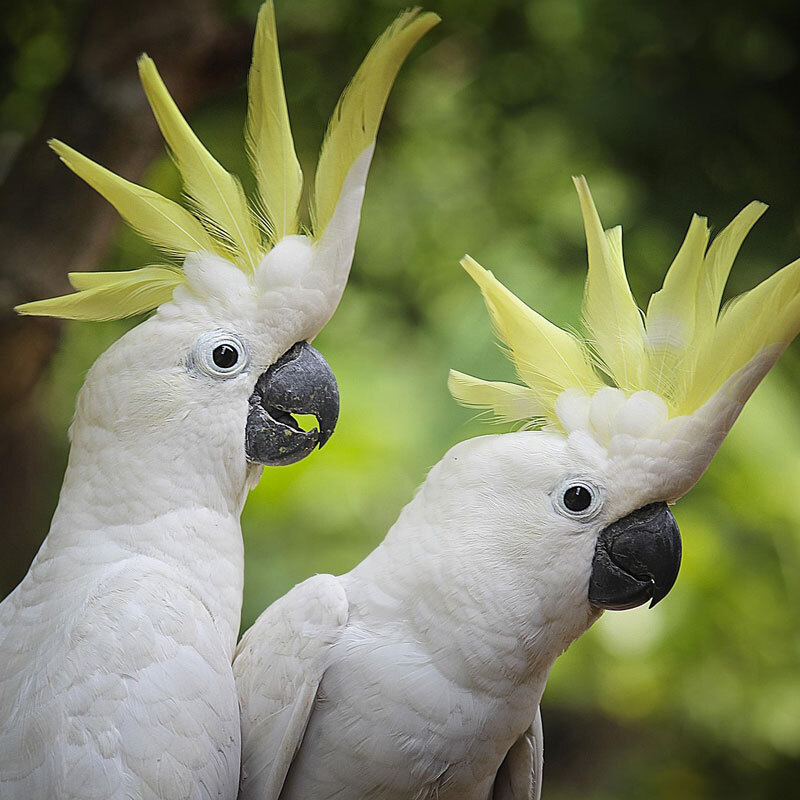
This generational difference suggests a dynamic interplay within the flock. The younger, more adventurous birds acted as early adopters, potentially setting the tone for what became acceptable or advantageous within their social circles. Conversely, older birds, often characterized by established routines and a degree of behavioral conservatism, tended to observe the outcomes of the younger birds’ engagements before committing to the new behavior. This pattern highlights an indirect influence exerted by the younger generation on their elders, where the successful integration of a novel behavior by the youth eventually validates it for the more cautious adults. This mirrors human trends where younger demographics often drive initial adoption of new technologies or cultural practices, which then gradually permeate older age groups.
Dr. Lucy Aplin, a co-author from the Max Planck Institute of Animal Behavior and the University of Konstanz, commented on this aspect, stating, "The quicker adaptation of younger birds to novel food sources is a critical mechanism for cultural evolution. They are often the pioneers, testing the waters, and if successful, their innovations can then spread through the entire population, including to older, more conservative individuals." This observation provides a compelling parallel to how cultural shifts often originate from and are propagated by younger cohorts in human societies.
Broader Implications: From Urban Ecology to Animal Culture
The findings of this PLOS Biology study carry significant implications extending beyond the specific case of urban cockatoos. They reinforce the understanding that societal behavioral changes within a group can indeed lead to widespread acceptance of similar behaviors by others, a principle fundamental to cultural transmission. The study further demonstrated a clear correlation between geographical proximity and behavioral adaptation speed: roost communities closer to an initial point of behavioral change adapted more rapidly. This spatial diffusion pattern is consistent with models of cultural spread in various species, including humans.
Urban Ecology and Adaptation: Sulphur-crested cockatoos are highly successful urban dwellers, thriving in environments modified by human activity. Their ability to rapidly acquire and transmit new foraging strategies, as demonstrated in this study, is a key factor in their success. Understanding these social learning mechanisms is crucial for comprehending how urban wildlife adapts to novel anthropogenic food sources, waste, and challenges. This insight can inform urban planning and conservation strategies, helping to mitigate human-wildlife conflicts and promote coexistence.
The Concept of Animal Culture: The study adds substantial weight to the growing body of evidence supporting the existence of "culture" in non-human animals. While the term "culture" has traditionally been reserved for humans, observations of learned traditions, behaviors, and knowledge passed down through generations in various animal species—from chimpanzees using tools to whales developing unique songs—are challenging this anthropocentric view. The transmission of a novel food preference through social learning in wild cockatoos, persisting and spreading across hundreds of individuals, strongly suggests a form of cultural inheritance at play. This cultural transmission allows for cumulative learning, where improvements and innovations can build upon previous generations’ knowledge, accelerating adaptation.
Evolution of Intelligence: The sophisticated social learning observed in cockatoos provides valuable insights into the evolutionary pressures that favor higher intelligence. In complex, dynamic environments, individuals capable of learning from others and adapting collectively are likely to have a significant survival advantage. This study illustrates how cognitive abilities, such as observational learning and memory, contribute to the fitness of a social species, driving the evolution of complex brains and behaviors.
Conservation Efforts: For endangered species, understanding social learning can be pivotal for conservation strategies. Reintroduction programs, for instance, could benefit immensely from incorporating ‘informed’ individuals or designing environments that facilitate social learning of critical survival skills, such as foraging for native foods or avoiding predators. Conversely, understanding how undesirable behaviors (e.g., scavenging human waste) can spread through social learning could help in designing interventions to mitigate such issues.
The Role of Research Collaboration and Future Avenues
The collaborative nature of this research, involving multiple universities across continents, highlights the interdisciplinary approach now common in cognitive ethology. Combining expertise in animal behavior, ecology, and psychology was essential for designing and executing such a complex field study. Dr. John Martin from The University of Sydney, a key contributor, emphasized the importance of this collaborative spirit: "Studies of this scale, involving extensive fieldwork and detailed behavioral tracking across multiple sites, are only possible through dedicated international collaboration. It allows us to pool resources, knowledge, and diverse perspectives to tackle big questions in animal cognition."
Looking ahead, this study opens several exciting avenues for future research. Scientists are keen to investigate the long-term persistence of these learned behaviors. Do these food preferences become ingrained over generations? Are there ‘cultural leaders’ within flocks who disproportionately influence behavioral trends? Further studies could also explore the cognitive mechanisms underlying the observed social learning, potentially using controlled experiments to dissect the roles of imitation, emulation, and local enhancement. Investigating how these behaviors might vary across different urban environments or even in non-urban cockatoo populations could provide a more holistic understanding of their behavioral ecology.
In conclusion, the PLOS Biology study on urban sulphur-crested cockatoos offers compelling evidence of sophisticated social learning capabilities that drive the adoption and spread of novel behaviors within wild avian populations. By demonstrating how information about new food sources can propagate through observation, catalyzed by early adopters and spreading spatially through social networks, the research reinforces the growing understanding of avian intelligence and the profound parallels between animal and human cultural transmission. These findings not only enrich our appreciation for the complex minds of birds but also provide critical insights into adaptation, cultural evolution, and the intricate social fabric that binds animal communities in an ever-changing world.

