


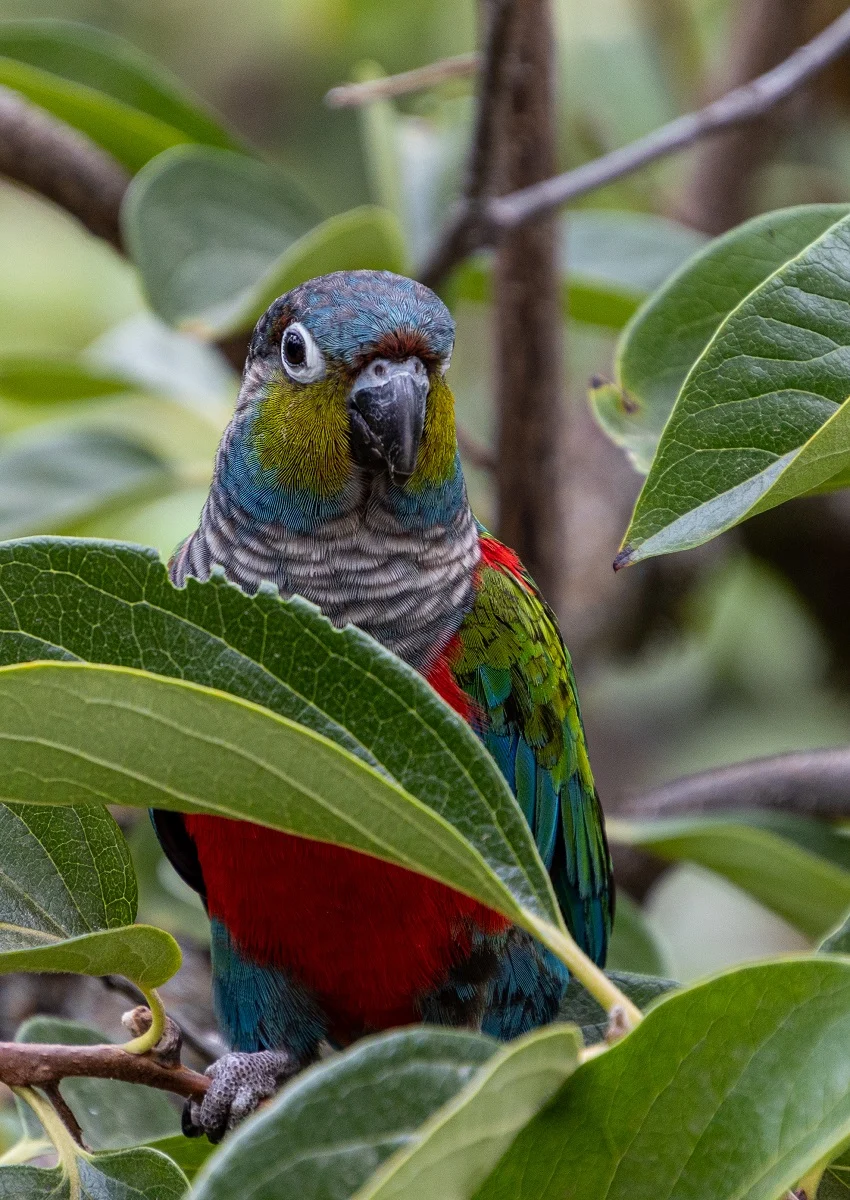
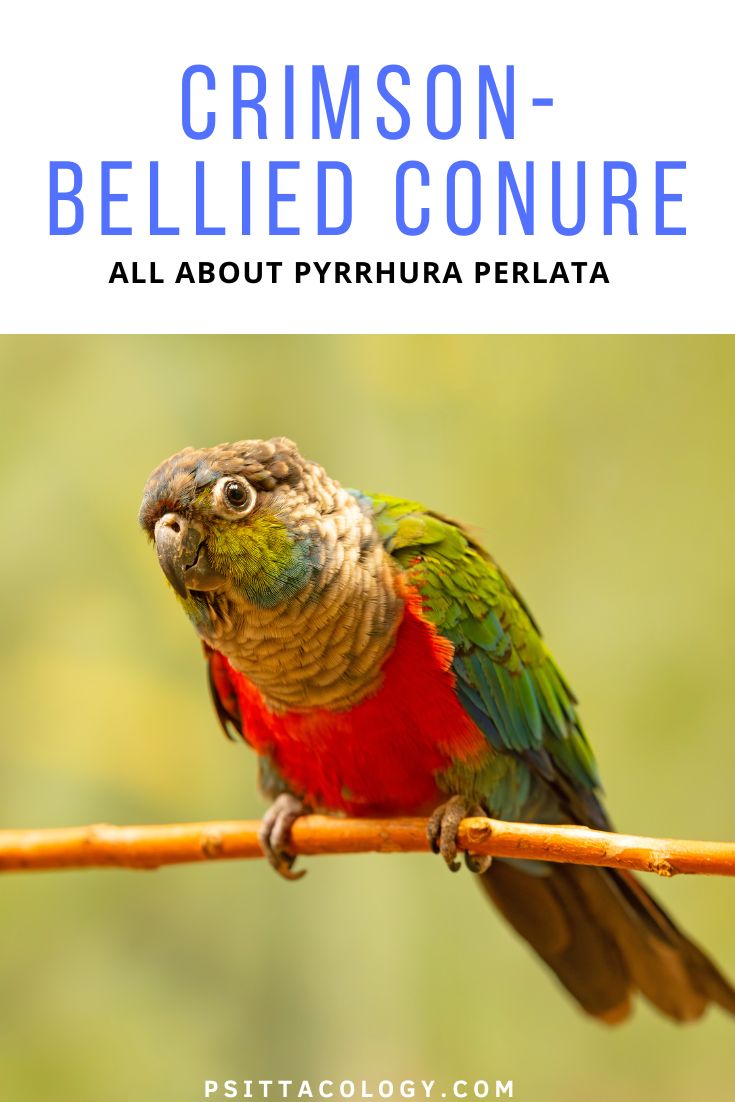
The crimson-bellied conure, scientifically designated as Pyrrhura perlata and frequently referred to in aviculture as the crimson-bellied parakeet, represents one of the most vividly colored psittacine species native to the neotropical regions of South America. As prospective pet owners increasingly seek companion animals that combine high intelligence with manageable physical dimensions, this specific conure has steadily risen in popularity. However, maintaining a captive specimen requires a comprehensive understanding of its biological requirements, natural history, and environmental demands.
Main Facts and Biological Overview
Originating primarily within the dense canopies of the Brazilian Amazon basin—with significant populations extending into northern Bolivia—Pyrrhura perlata is characterized by its distinct physical dimensions and striking plumage. An adult specimen typically reaches a maximum length of approximately 10 inches (25 centimeters) and maintains an average body weight of roughly 90 grams.
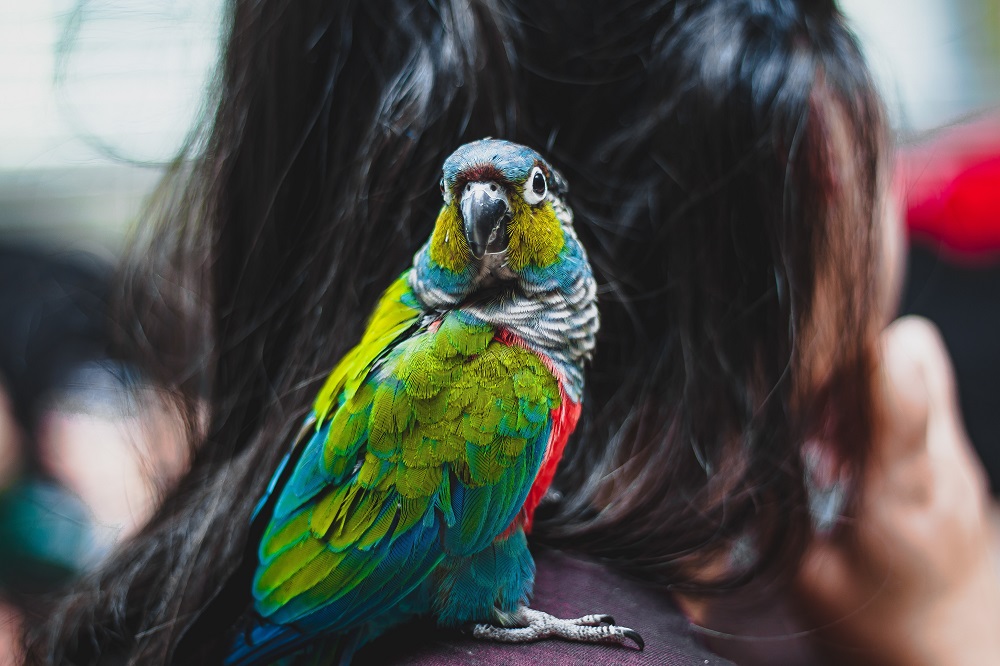
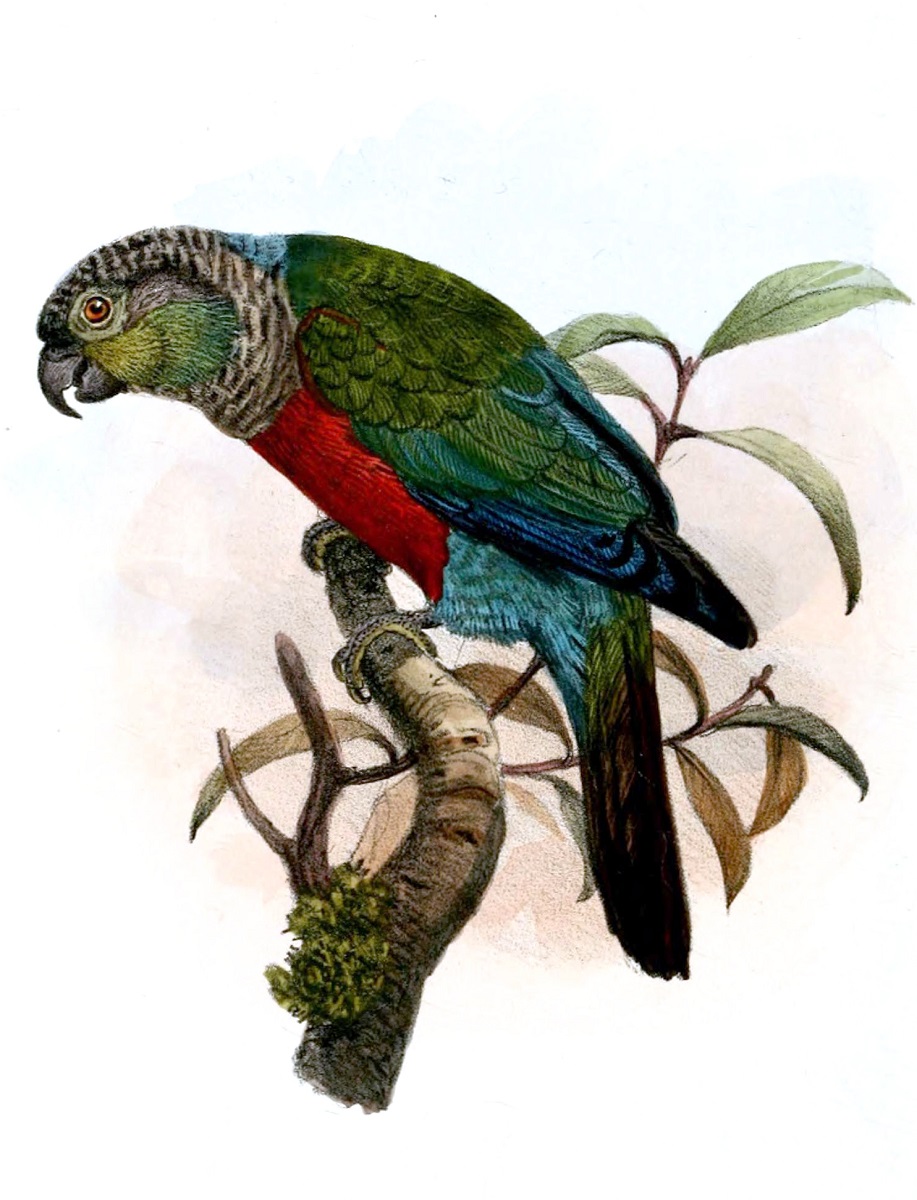
The defining physical characteristic of the species is its vibrant, deep-red abdominal plumage, which contrasts sharply with its surrounding coloration. However, ornithological observations indicate that juvenile birds do not possess this coloration at hatching; the signature bright red belly can take up to a full year of development to fully manifest. Additional anatomical features include prominent white eye rings, a dark grey to black beak, and a long, graduated tail typical of the Pyrrhura genus. Notably, the species exhibits strong monomorphism, meaning there are no reliable visual dimorphic markers that allow researchers or bird owners to distinguish males from females by external appearance alone.
Natural Habitat and Geographical Distribution
The ecological distribution of the crimson-bellied conure is largely restricted to the terra firme forests of central South America. Unlike seasonally flooded varzea forests, terra firme ecosystems remain dry year-round, providing a stable canopy structure rich in biodiversity. Within Brazil, the species is predominantly concentrated in the state of Rondônia, though its range spills across international borders into the northern departments of Bolivia.
In the wild, these parakeets operate in small, cohesive social units or flocks, occasionally intermingling with related species such as the painted conure. Their primary nesting sites are located in natural tree hollows, where breeding pairs raise successive clutches.
From a conservation standpoint, the International Union for Conservation of Nature (IUCN) currently classifies Pyrrhura perlata as a species of Least Concern. Despite this relatively stable global categorization, avian conservationists and field researchers emphasize that local populations are experiencing a measurable decline. This negative demographic trend is primarily driven by widespread deforestation within the Amazon basin for agricultural expansion and logging, compounded by localized trapping for the international pet trade.
Dietary Requirements: Wild Adaptations Versus Captive Care
The nutritional profile of the crimson-bellied conure varies significantly between its native habitat and a domestic environment, requiring careful management by avian caretakers.
In the wild, the species exploits the rich biodiversity of the rainforest canopy. Its diet consists heavily of wild figs, seasonal fruits, flowers, and catkins. Additionally, wild crimson-bellied conures are frequently observed visiting natural clay licks—exposed mineral-rich soil banks—where they ingest clay to neutralize plant toxins found in their diet and to absorb vital micronutrients and minerals such as sodium and calcium.
In contrast, captive specimens require a scientifically formulated diet to ensure longevity. Avian veterinarians universally advise against relying exclusively on seed-based diets, which lack essential vitamins and amino acids and frequently lead to hepatic lipidosis (fatty liver disease), malnutrition, and a shortened lifespan. Instead, a modern captive diet should use high-quality commercial pellets as a nutritional staple. This core diet must be supplemented daily with fresh, pesticide-free vegetables, regular portions of safe fruits, and complex carbohydrates such as cooked whole-grain rice or quinoa. Access to fresh, clean drinking water is mandatory on a 24-hour basis.
Housing, Environmental Enrichment, and Spatial Needs
Although the crimson-bellied conure is classified as a small parrot, its biological drive for high activity levels necessitates substantial spatial accommodation. Avicultural standards dictate that housing units must be as large as practically possible, with a minimum horizontal cage width of 36 inches (90 centimeters) recommended if the bird is granted several hours of supervised out-of-cage flight time daily. For owners unable to provide daily free-flight opportunities, an indoor aviary setup is considered mandatory to prevent muscular atrophy and stress-related disorders.

Cage accessories require deliberate selection. Standard plastic perches or uniform wooden dowels are strongly discouraged by avian health professionals, as prolonged contact can lead to pressure sores and pododermatitis (bumblefoot). Natural wood branches of varying diameters and bark textures are required to exercise the feet and maintain joint flexibility.
Mental stimulation is equally critical for Pyrrhura perlata. Highly intelligent and inquisitive, these birds require extensive environmental enrichment to prevent chronic boredom. In a captive setting, sensory deprivation and isolation frequently manifest as severe behavioral pathologies, including excessive vocalization, stereotypic feather-plucking, stress-induced aggression, and obesity resulting from insufficient movement. Mitigation strategies involve rotating a diverse array of foraging toys, puzzle feeders, and chewing materials designed to simulate the natural wear-and-tear they would inflict on forest vegetation. Furthermore, because these conures possess a natural inclination to investigate household hazards, any room designated for out-of-cage activity must undergo rigorous "parrot-proofing" to eliminate toxic plants, open water sources, and heavy metals.
Behavioral Temperament and Social Dynamics
Within the avicultural community, conures belonging to the genus Pyrrhura are frequently praised for their affectionate and playful dispositions. While green-cheeked conures remain the most widely distributed species of this genus in households, crimson-bellied conures share a similar reputation for possessing a charming, clownish personality.
Well-socialized individuals generally exhibit a high degree of sociability toward human family members, often seeking physical contact through cuddling and receiving head scratches. However, this inquisitive nature also translates into a propensity for mischief; their strong desire to chew means household items, textiles, and furniture are frequently targeted during unsupervised exploration.
Vocalization patterns within the species are moderate compared to larger parrot families such as macaws or cockatoos. While they are not classified as quiet animals—all psittacines produce vocalizations—their baseline noise level falls into the low-to-medium range. Piercing alarm calls or excited screams typically occur only in response to perceived threats, sudden environmental changes, or demands for attention.
Regarding human speech acquisition, crimson-bellied conures possess a limited capacity for vocal mimicry. While individual birds may learn to replicate simple household noises, mechanical sounds, or an occasional isolated word, they are generally not recognized as prolific talkers compared to species like African grey parrots or Amazon parrots.
Lifespan and Long-Term Implications for Owners
The acquisition of a crimson-bellied conure represents a significant biological and logistical commitment. Under optimal husbandry conditions, adhering strictly to modern avian veterinary guidelines, balanced nutrition, and appropriate environmental enrichment, Pyrrhura perlata can achieve a captive lifespan exceeding 20 years.
Avian rescue organizations and veterinary professionals continually stress the importance of public education regarding this longevity. Prospective owners must prepare for decades of specialized care, potential medical expenses associated with exotic animal veterinary medicine, and the daily social demands of an intelligent, long-lived companion animal. Through diligent adherence to these welfare standards, owners can ensure that these colorful South American parrots maintain a high quality of life throughout their extended lifespan.

