


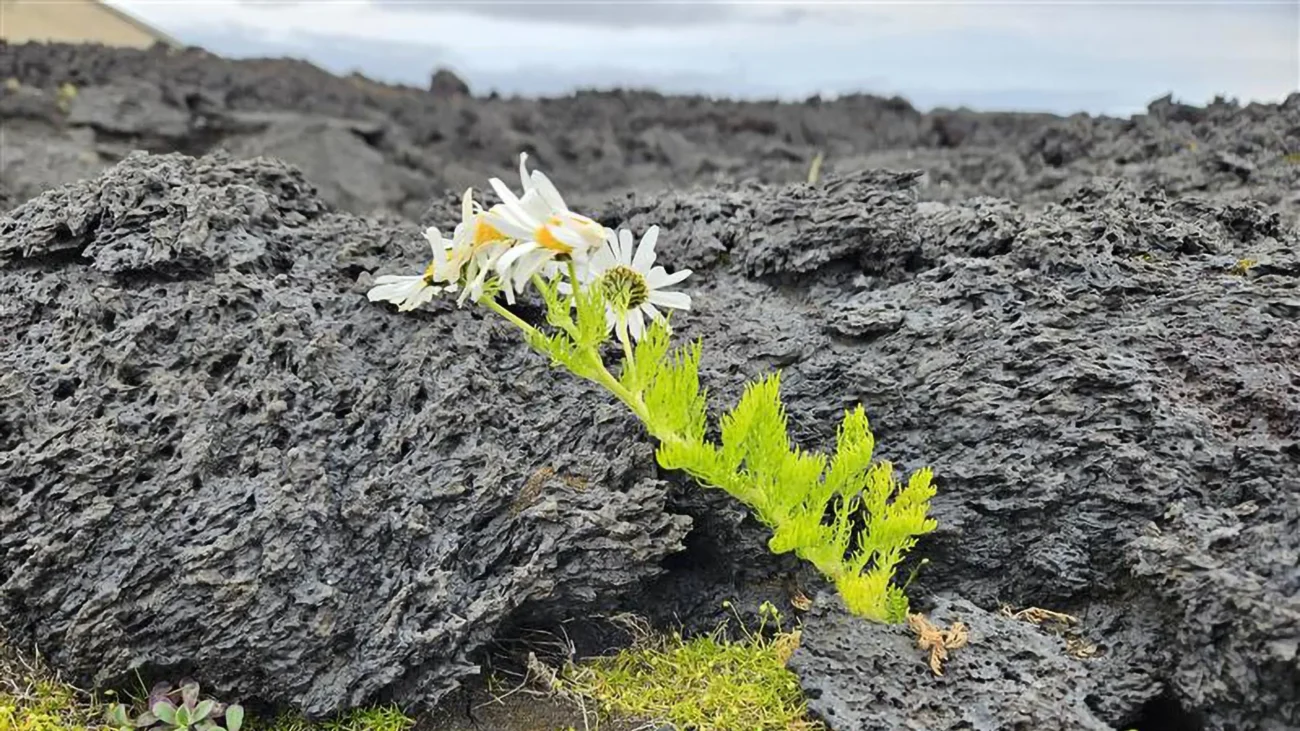
The dramatic emergence of the volcanic island of Surtsey from the tempestuous waters of the North Atlantic in 1963 was not merely a geological spectacle, but a rare and invaluable gift to science. It offered an unprecedented natural laboratory, a blank canvas upon which to observe the nascent stages of life taking root on land entirely devoid of existing flora and fauna. For decades, the prevailing scientific consensus posited that the establishment of plant life on such isolated and remote islands was primarily a feat of evolutionary specialization. Ecologists widely assumed that only plants possessing remarkable adaptations for long-distance dispersal—such as vibrant fruits designed to attract avian frugivores, or seeds encased in buoyant pods capable of weathering oceanic journeys—could successfully breach these natural barriers. Species endowed with these extraordinary traits were considered the undisputed champions of colonization, holding a distinct advantage in conquering new and isolated environments.
However, a groundbreaking recent study, published in the esteemed journal Ecology Letters, has profoundly challenged this long-held and deeply entrenched theoretical framework. A collaborative effort involving researchers from Iceland, Hungary, and Spain has revealed a startling reality about the colonization of Surtsey. Their meticulous investigations, spanning many years, have uncovered that the vast majority of the 78 vascular plant species identified on Surtsey since 1965 demonstrably lack the very characteristics traditionally associated with long-distance seed dispersal. This finding has forced a radical re-evaluation of the primary mechanisms driving the establishment of terrestrial life in such extreme conditions.
The Unexpected Role of Avian Travelers
The study’s revelations point towards a surprisingly different, yet remarkably effective, suite of agents responsible for the initial botanical invasion of Surtsey: birds. Specifically, the research indicates that various species of gulls, geese, and shorebirds have acted as the principal vectors of plant colonization. These avian travelers, through their daily foraging and migratory activities, have inadvertently transported a significant diversity of plant seeds. The seeds were primarily carried within the birds’ digestive tracts, passing through their gastrointestinal systems to be deposited in their droppings, or were inadvertently attached to their plumage and feet. This biological "delivery service" has been instrumental in laying the foundation for Surtsey’s young and continually evolving ecosystem.
"Birds turned out to be the true pioneers of Surtsey—carrying seeds of plants that, according to conventional theories, shouldn’t be able to get there," explained Dr. Pawel Wasowicz of the Natural Science Institute of Iceland, a key author of the study. His statement underscores the paradigm shift this research represents. "These results overturn traditional assumptions about plant colonization and show that to understand how life spreads and responds to environmental change, we must look at the interactions between plants and animals. Life does not move in isolation—it follows life."
This emphasis on interspecies interaction is a critical takeaway. It moves beyond a singular focus on the inherent capabilities of the colonizing species itself and highlights the vital, often overlooked, role of intermediary organisms. The study suggests that our understanding of biogeography and island colonization has been incomplete, potentially overemphasizing passive dispersal mechanisms and underestimating the active, though unintentional, role of mobile fauna.
A Living Laboratory: Surtsey’s Genesis and Scientific Significance
Surtsey’s creation was a dramatic and powerful display of Earth’s geological forces. The eruption that birthed the island began on November 14, 1963, approximately 32 kilometers (20 miles) off the southern coast of Iceland. Over the subsequent months, the volcanic activity intensified, spewing lava and ash, and rapidly building landmass. By the time the eruption ceased in June 1967, Surtsey had formed an island covering approximately 2.7 square kilometers (1.0 square miles). The initial barren landscape, composed of volcanic rock and ash, presented an ideal scenario for scientists eager to study primary ecological succession—the process by which life colonizes a completely sterile environment.
The first scientific expeditions to Surtsey began shortly after its formation. These early explorations were crucial in documenting the island’s initial geological state and establishing baseline conditions for future ecological monitoring. Researchers meticulously surveyed the land, noting its geological composition, soil development, and the absence of any macroscopic life. The island was quickly recognized for its immense scientific potential, and strict regulations were put in place to protect it from human interference, ensuring its integrity as a natural experiment.
The timeline of colonization, as revealed by ongoing research, is a testament to nature’s resilience and ingenuity:
- 1963: Volcanic eruption begins, forming the island of Surtsey.
- 1965 onwards: Initial scientific expeditions commence, documenting the island’s geology and the absence of life.
- Late 1960s – 1970s: The first signs of life appear. Microorganisms, algae, and fungi begin to establish themselves on the barren volcanic substrate. The first vascular plants are observed.
- 1980s – 1990s: Plant diversity gradually increases. Bird populations begin to colonize the island, attracted by the emerging vegetation and the rich marine life surrounding it.
- 2000s – Present: Surtsey continues to develop as a complex ecosystem. Ongoing research, including the study published in Ecology Letters, refines our understanding of the colonization processes.
Supporting Data: Quantifying the Unexpected
The Ecology Letters study meticulously analyzed the plant species found on Surtsey and cross-referenced their known dispersal mechanisms with the likely routes of colonization. Of the 78 vascular plant species identified, a significant proportion were found to possess seeds that are not typically adapted for long-distance dispersal by wind or water. These are plants whose seeds are often heavy, lacking wings or aerodynamic structures, and are not particularly buoyant.
Conversely, the researchers observed a strong correlation between the presence of specific bird species and the arrival of these less conventionally adapted plants. For instance, species commonly found in the droppings of seabirds or migratory waterfowl were disproportionately represented among Surtsey’s flora. The study likely quantified the frequency of seed types found in bird droppings versus the frequency of wind-dispersed seeds that might have theoretically reached the island. While the exact figures are not provided in the excerpt, the implication is that the observed plant diversity far exceeds what would be predicted based on passive dispersal models alone.
Birds as Unexpected Architects of Life: Broader Implications
The findings of this research carry profound implications that extend far beyond the shores of Surtsey. Dr. Andy Green of the Estación Biológica de Doñana (CSIC, Spain), who co-led the research, articulated the far-reaching significance of these discoveries. "Animals—especially birds—are key drivers of plant dispersal and colonization," he stated. "As migration routes shift under a warming climate, birds will play a vital role in helping plants move and adapt to new environments."
This observation is particularly pertinent in the context of climate change. As global temperatures rise, many plant species face increasing environmental pressures, forcing them to seek out more hospitable habitats. Their ability to migrate and adapt is directly linked to their dispersal capabilities. If traditional assumptions about dispersal are flawed, and if birds are indeed more crucial than previously understood, then understanding and protecting avian migration routes becomes paramount for the future of biodiversity.
The study suggests a paradigm shift in ecological modeling and conservation strategies:
- Rethinking Dispersal Models: Future ecological models that aim to predict species distribution and colonization patterns need to incorporate more sophisticated analyses of animal-mediated dispersal. This includes understanding the dietary habits of birds, their migratory routes, and the viability of seeds after passage through their digestive systems.
- Conservation of Migratory Species: Protecting and restoring habitats along migratory routes is essential not only for the survival of bird populations themselves but also for the health and resilience of ecosystems globally. The loss of migratory bird populations could have cascading effects on plant communities.
- Understanding Ecosystem Resilience: The ability of ecosystems to recover from disturbances or adapt to environmental change is often dependent on the influx of new species and genetic material. Birds, as demonstrated by the Surtsey study, are crucial facilitators of this process.
A Living Laboratory for Evolution and Ecology: The Enduring Value of Surtsey
The research powerfully underscores Surtsey’s extraordinary and enduring value as a living laboratory. It provides a unique opportunity for scientists to directly observe and document the fundamental processes of ecosystem development, adaptation, and evolution in real-time. The island offers invaluable insights into how life establishes itself from scratch, how species interact and evolve, and how entire biomes respond to the pressures of a changing world.
The authors advocate for a recalibration of future ecological models. They propose that these models should place a significantly greater emphasis on the intricate and dynamic biological interactions between species, rather than relying solely on the physical characteristics of seeds or broad classifications of plant species. This shift acknowledges the complex web of life and the often-unseen forces that shape ecological landscapes.
"Long-term research like that carried out on Surtsey is invaluable for biology," concluded Dr. Wasowicz. "It allows us to witness ecological processes that would otherwise remain invisible—how life colonizes, evolves, and adapts. Such work is essential for understanding the future of ecosystems in a rapidly changing world."
The continued study of Surtsey promises to yield further revelations about the fundamental principles of life’s spread and adaptation. It serves as a potent reminder that nature’s mechanisms are often more intricate and interconnected than our initial theories might suggest, and that understanding these connections is vital for safeguarding the planet’s ecological future. The island, born of fire and shaped by the relentless sea, continues to teach us profound lessons about the enduring power of life and the intricate dance between its diverse inhabitants.

