


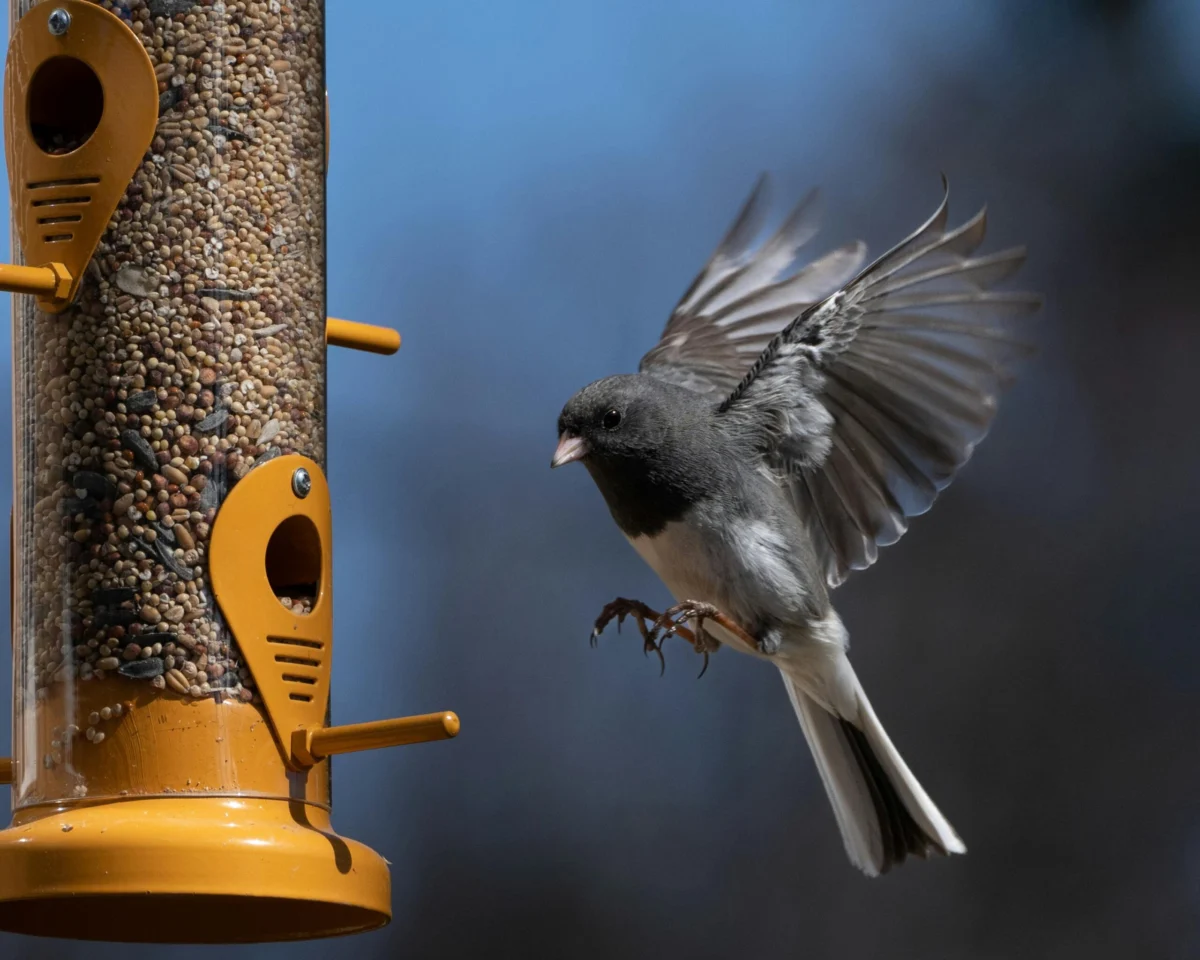
It’s a familiar scene for many: you top up the bird feeder, step back inside, and within minutes, birds seem to materialize from thin air. This almost magical appearance can leave us wondering if our feathered visitors possess a sixth sense for freshly filled feeders. While they aren’t psychic, the sophisticated methods birds employ to find food sources are a testament to their remarkable observational skills, intelligence, and social awareness. Understanding these mechanisms offers a fascinating glimpse into the complex lives of common garden birds.
The Science Behind the Swift Arrival
The rapid gathering of birds at a newly replenished feeder isn’t a coincidence; it’s a finely tuned biological and behavioral response. Birds primarily rely on a combination of keen eyesight, robust memory, and astute social learning to locate these valuable food caches. Their ability to spot subtle changes in their environment from a distance, remember the location of reliable food sources from previous visits, and observe the feeding activities of their peers all contribute to their swift discovery of a refilled feeder. While not the primary driver, auditory cues and the general activity around a feeder can also play a supplementary role.
Exceptional Vision: The Bird’s Primary Tool
Contrary to a common misconception, most backyard birds possess a relatively poor sense of smell. Their reliance is firmly placed on their exceptional eyesight, which is far more developed than that of many mammals. Many bird species are capable of detecting minute alterations in their surroundings from considerable distances. When a bird feeder is refilled, several visual cues become immediately apparent to a bird perched nearby:
- Movement: The act of filling the feeder, even if brief, involves movement that can catch a bird’s attention from its vantage point.
- Color and Contrast: The addition of new seed, often a different color or texture than the surrounding natural elements or an empty feeder, creates a visual contrast that stands out.
- Changes in Light Reflection: Freshly filled feeders might reflect light differently, or the seeds themselves may have a sheen that is noticeable.
- The Feeder Itself: Many feeders are designed with bright colors or distinct shapes that make them more visible against natural backdrops.
Some avian species possess the remarkable ability to perceive ultraviolet (UV) light. This capability can render seeds and feeders even more conspicuous against natural foliage, acting as a powerful beacon for food. For instance, certain types of seeds reflect UV light more than their surroundings, making them visually "brighter" to birds with UV vision.
Debunking the Scent Myth: Do Birds Smell Bird Seed?
The notion that birds are drawn to feeders by the scent of birdseed is largely a myth for most common backyard species. While some birds, like vultures, have highly developed senses of smell, the vast majority of birds that frequent feeders rely on visual cues. Their olfactory senses are comparatively limited. Therefore, the aroma of sunflower seeds or millet typically does not waft through the air to guide them. Instead, they are actively scanning their environment for visual confirmation of food.
However, it’s important to acknowledge that scent can play a role in specific circumstances or for certain species. For example, the smell of fermenting fruit might attract some birds, or in dense fog where visibility is poor, scent might become a more significant factor. But for the typical, clear-day scenario of a backyard feeder, scent is not the primary attractant. Birds are usually arriving because they have seen the feeder, remembered its location from prior visits, or observed other birds already feeding.
The Power of Memory: A Reliable Food Map
Birds possess surprisingly robust memories, particularly when it comes to identifying and returning to reliable food sources. Once a feeder has consistently provided sustenance, birds will make a mental note of its location and return periodically to check. This learned association is crucial for their survival, especially during leaner months.
When a bird discovers a food source, it effectively logs this information. This memory is reinforced with each successful feeding. Even if a feeder is temporarily empty, birds will often revisit it, exhibiting a learned expectation of future food availability. This is a vital survival strategy, particularly in winter when natural food sources become scarce. The ability to recall and access dependable feeding spots can significantly increase an individual bird’s chances of surviving harsh conditions.

This explains why, even if you refill a feeder and step away briefly, birds that were already in the vicinity – perhaps foraging in nearby trees or shrubs – will quickly investigate. They may have been observing the feeder for a while, and the act of refilling simply changes its status from "potentially rewarding" to "currently rewarding."
Social Learning: The Flock Effect
Birds are inherently social creatures, and they not only observe their environment but also each other. When one bird discovers a feeder and begins to feed, this activity acts as a powerful signal to other birds in the area. This phenomenon is known as "local enhancement."
Upon seeing another bird feeding, or even just congregating at a particular spot, other birds are drawn to investigate. They observe the activity, follow the movement of other individuals, and may respond to feeding calls or sounds. This ripple effect can rapidly transform a quiet feeder into a bustling hub of avian activity. Species like tits, finches, sparrows, and starlings are particularly adept at this form of social learning. The presence of one successful feeder-user can quickly alert an entire local population, creating the illusion that birds are "spreading the news" about a newly available food source.
While birds don’t communicate about food in the same way humans share directions, they effectively convey information indirectly through their actions and reactions. The sight of other birds feeding, the sounds they make, and the sheer act of flocking together all serve as potent social cues that guide birds to food. This is a primary reason why a feeder can transition from being undisturbed to teeming with visitors in a matter of minutes.
The Subtle Influence of Sound and Activity
While vision and memory are the dominant senses for locating feeders, sound and other environmental cues also play a role. The distinct rattle of seeds cascading into a feeder, the gentle sway of the feeder in the wind, or the chirps and calls of birds already engaged in feeding can all serve as secondary confirmations that food is indeed available. These auditory signals can reinforce visual cues and strengthen a bird’s decision to approach and feed.
The combination of these sensory inputs – sight, memory, social observation, and sound – creates a highly efficient and effective food-finding system for birds. This intricate interplay of abilities allows them to navigate their environment and secure the energy they need to thrive.
Why the Instantaneous Arrivals?
The perception that birds arrive the moment you step away from a feeder is usually a result of several factors working in concert:
- Pre-existing Presence: Birds are often already in the vicinity, foraging in nearby trees, shrubs, or even on the ground. They are constantly scanning their environment for potential food sources.
- Learned Behavior: Birds have learned that feeders are reliable sources of food. They will habitually check known feeder locations.
- Visual Confirmation: The act of refilling provides a clear visual cue. Birds that were already nearby and observing the feeder now see it is actively being stocked.
- Social Cues: If other birds are present or arrive quickly, their presence further signals to others that food is available.
Essentially, birds continuously monitor their known food territories. Refilling the feeder transforms it from a location they might check out of habit to one that is currently offering a guaranteed meal. Their movements are often fluid, and they are always assessing their surroundings for opportunities.
Enhancing Feeder Visibility for Our Feathered Friends
For those who wish to attract birds more rapidly and consistently to their feeders, a few thoughtful strategies can be implemented:

- Strategic Placement: Locating feeders in visible areas, such as near windows (but at a safe distance to prevent collisions), close to trees or shrubs that offer perching and cover, or in open areas where birds can easily spot them from a distance, can significantly improve their discoverability.
- Feeder Design and Color: Choosing feeders that are brightly colored or have contrasting elements can make them more noticeable.
- Variety of Food Types: Offering a diverse range of seeds and suet can appeal to a broader spectrum of bird species, increasing the likelihood of attracting visitors.
- Consistent Refilling: Maintaining a regular refilling schedule reinforces the feeder as a dependable food source in the birds’ memory.
- Habitat Features: Incorporating natural elements like native plants, water sources, and shelter can create a more attractive environment for birds overall, making feeders a natural extension of their foraging grounds.
Addressing Concerns: Bird Dependency on Feeders
A common concern among bird enthusiasts is whether feeding birds leads to dependency. Scientific research and extensive field observations suggest that for most bird populations, this is not the case. Bird feeders typically serve as a supplement to natural food sources rather than a complete replacement. Birds continue to forage for insects, seeds, and other natural food items.
In fact, birds are remarkably adaptable and will readily adjust their foraging habits if a feeder is removed. However, it is undeniable that during periods of extreme weather, such as prolonged cold spells or droughts, feeders can become a critical lifeline. Predictable and consistent food availability during these challenging times can significantly improve survival rates. Therefore, maintaining feeders during harsh weather is particularly beneficial.
A Window into Avian Intelligence and Adaptation
The seemingly instantaneous arrival of birds at a refilled feeder is a captivating demonstration of their intelligence, observational prowess, and adaptability. It is not a feat of magic but a direct result of their highly developed senses, robust memory, and sophisticated social behaviors.
When we observe this natural phenomenon, we gain a deeper appreciation for the complex lives of the birds that share our environments. It’s a quiet pleasure and a constant reminder that even the most familiar garden visitors are engaged in a perpetual cycle of observation, learning, and adaptation, navigating their world with an intelligence that often surpasses our assumptions.
Do Birds Recognize Humans Who Feed Them?
While birds may not recognize individual humans in the way we recognize faces, many species are capable of forming associations between people, places, and routines with the availability of food and a sense of safety. Over time, birds that regularly visit a feeder may become less wary of the person who consistently refills it, especially if that person moves calmly and predictably.
Certain species are particularly adept at learning these associations. Individual birds, based on their past experiences, may exhibit varying levels of boldness or caution around humans. Even if a bird doesn’t consciously "recognize" a specific person, it can learn to associate that individual with a positive outcome: "this person means food, and there is no immediate threat." This learned association can influence how closely they approach and interact with their human benefactors.
Bird Feeder FAQs
-
Do birds find feeders by smell? Generally, no. Most backyard birds rely on their excellent eyesight, memory, and social cues to locate feeders. Their sense of smell is typically not strong enough to detect birdseed from a distance.
-
How long does it take for birds to find a new feeder? The time it takes for birds to discover a new feeder can vary significantly. Factors such as the feeder’s visibility, the type of food offered, the abundance of natural food sources in the area, and the density of the local bird population all play a role. It can range from a few hours for highly visible feeders in active bird areas to several weeks in less populated or more challenging environments.
-
Do birds remember feeder locations? Yes, absolutely. Many bird species possess remarkable spatial memory and will remember the locations of reliable food sources, such as feeders. They will revisit these spots regularly, even if the feeder is temporarily empty, demonstrating a learned expectation of future food availability.

