


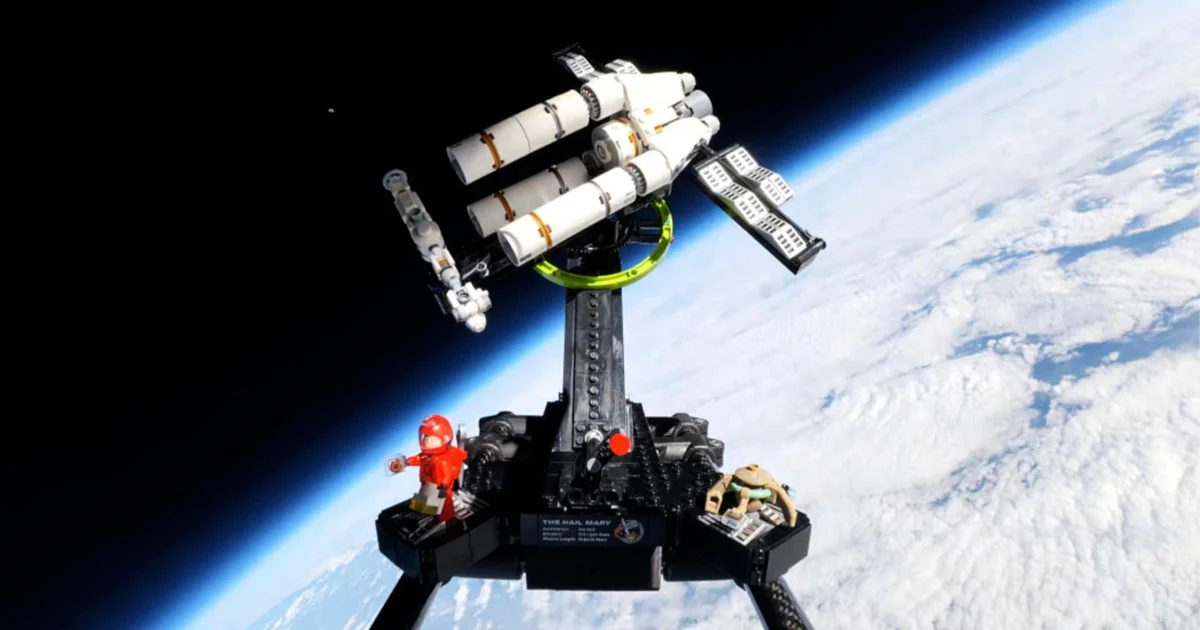
Lego Minifigures from Project Hail Mary Set New Guinness World Record with High Altitude Space Flight represents a significant milestone in the intersection of cinematic promotion and high-altitude aerospace achievement. On Friday, March 20, 2026, a specialized mission launched from Gwynedd County, United Kingdom, successfully propelled a custom-built Lego model featuring characters from the blockbuster film Project Hail Mary to the upper reaches of the Earth’s atmosphere. The mission, orchestrated by the near-space flight specialists at Sent Into Space in collaboration with Sony Pictures UK and Amazon MGM Studios, reached a peak altitude of 114,790 feet (approximately 34,988 meters), officially securing a Guinness World Record for the "Highest Altitude Launch and Retrieval of a LEGO Set."
The flight, which lasted approximately eight hours from ascent to recovery, featured Lego minifigures of Dr. Ryland Grace—portrayed in the film by Academy Award nominee Ryan Gosling—and his extraterrestrial companion, Rocky. The mission was timed to coincide with the theatrical release and promotional campaign for Project Hail Mary, the highly anticipated adaptation of Andy Weir’s best-selling science fiction novel. By reaching an altitude of nearly 22 miles, the Lego set entered the stratosphere, a region of the atmosphere where the curvature of the Earth is clearly visible against the profound blackness of space.
Technical Execution and Chronology of the Mission
The record-breaking journey began in the early morning hours in Gwynedd, a region of North Wales chosen for its favorable atmospheric conditions and recovery logistics. The Lego model was mounted on a bespoke aerospace-grade carbon fiber platform, equipped with high-definition cameras, GPS tracking systems, and environmental sensors to monitor temperature and pressure changes during the ascent.
The ascent was powered by a high-altitude balloon (HAB) filled with hydrogen. As the balloon rose through the troposphere and into the stratosphere, the decreasing external air pressure caused the balloon to expand significantly. For over eight hours, the Lego minifigures endured extreme conditions, including temperatures dropping below -60 degrees Celsius (-76 degrees Fahrenheit). At its peak altitude of 114,790 feet, the craft was positioned well above 99% of the Earth’s atmosphere, providing a backdrop of the planet’s thin blue limb and the darkness of the cosmic void.
Upon reaching its maximum volume, the balloon burst as planned, initiating the retrieval phase of the mission. The payload descended via a specialized parachute system designed to stabilize the craft and protect the delicate Lego structure from the rigors of atmospheric reentry. Using real-time telemetry and satellite tracking, the recovery team from Sent Into Space located the landed craft in a rural area of the U.K. The Guinness World Records adjudicators later confirmed that the Lego set remained fully intact, a prerequisite for the "launch and retrieval" record category.
Collaboration and Promotional Synergy
The record-breaking event was a coordinated effort between several major entities. Sony Pictures UK utilized the mission as a centerpiece for the film’s marketing strategy, emphasizing the themes of scientific curiosity and space exploration that define the source material. Sent Into Space, a company known for its expertise in near-space imaging and atmospheric research, provided the technical framework necessary to achieve the record.
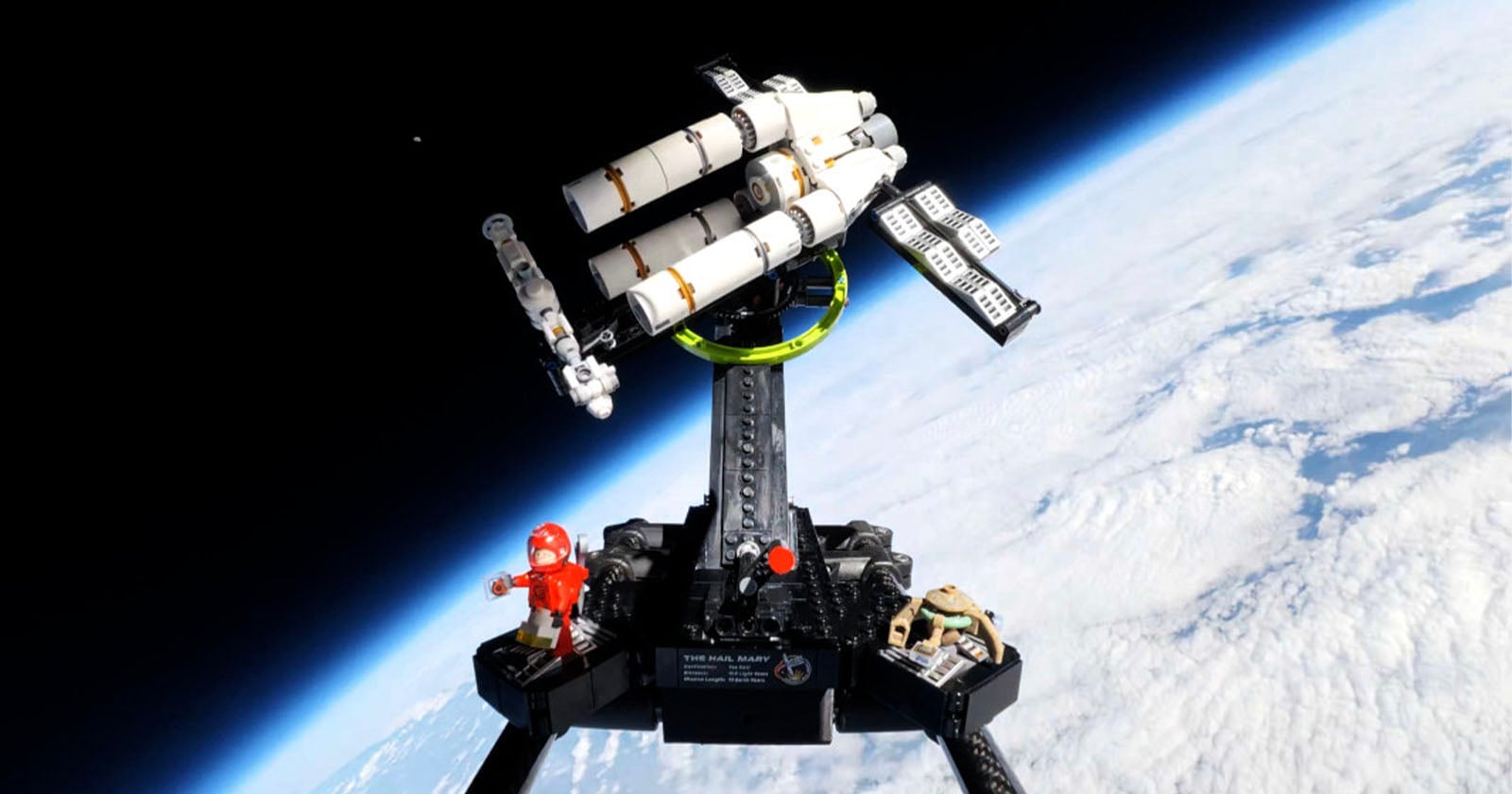
Guinness World Records officially recognized the feat on April 21, 2026, noting the impressive nature of the retrieval. "For over eight hours, the minifigure spun amongst the blackness of space, witnessing the blue curvature of the planet and its cotton-like clouds, before falling back down to the green grass back on Earth," a spokesperson for Guinness World Records stated. "Once on solid ground, the tiny toy was safely recovered—making this incredible trip the highest altitude launch and retrieval of a LEGO set in Guinness World Records history."
This achievement marks the second Guinness World Record associated with the Project Hail Mary film production, following previous accolades for its technical innovations in set design and cinematography.
Cinematic Innovation and Production Challenges
The success of the Lego mission mirrors the technical ambition of the film Project Hail Mary itself. Directed by Phil Lord and Christopher Miller, the production sought to maintain a high degree of scientific accuracy, much like Andy Weir’s previous work, The Martian. The film’s cinematographer, Greig Fraser—an Oscar winner known for his work on Dune and The Batman—faced unique challenges in bringing the story’s interstellar settings to life.
One of the most complex sequences involved the construction of a 70-foot-long tunnel made of "xenonite," a fictional substance described in the novel as a solidified gas. Fraser revealed in an interview with Variety that the physical properties of the tunnel made traditional lighting nearly impossible. "We had to discover what this thing was," Fraser explained. "The Sun has to come through it, but that provided a couple of challenges because this tunnel was 70 feet long. We physically couldn’t get enough LEDs."
To solve this, the production team utilized old-school tungsten lights that were pixel-mapped, allowing the cinematographers to simulate the rotation of a sun around the ship in any configuration required. This dedication to practical effects and physical sets provided the film with a grounded, tactile aesthetic that resonated with both critics and audiences.
Authenticity in Visual Storytelling
In a further nod to scientific authenticity, the filmmakers opted to use real astrophotography for the film’s closing credits. Rather than relying solely on computer-generated imagery (CGI) to depict deep space, the production team reached out to the amateur and professional astrophotography community.
Rod Prazeres, a noted backyard astrophotographer, was among those whose work was featured on the silver screen. In an interview with PetaPixel, Prazeres expressed his pride in seeing his captures of deep-space nebulae and star clusters used in a major Hollywood production. This decision by the filmmakers highlighted a growing trend in cinema to bridge the gap between high-budget entertainment and the real-world scientific community.
The inclusion of Prazeres’ work serves as a testament to the film’s overarching message: that the wonders of the universe are accessible to those with the patience and tools to look upward. It also underscores the film’s commitment to honoring the hobbyists and scientists who share a passion for space.
The Broader Impact of Near-Space Marketing
The use of high-altitude balloons for promotional purposes has become an increasingly popular tool for brands looking to capture "edge of space" content. However, the Project Hail Mary mission stands out due to its formal recognition by Guinness World Records and its direct thematic link to the film’s narrative.
For the aerospace industry, such missions provide valuable data on high-altitude wind patterns and the durability of materials in extreme environments. For the public, these events serve as a bridge between the fantastical elements of science fiction and the reality of modern aerospace capabilities. The successful retrieval of the Lego set demonstrates the precision of modern GPS and recovery technology, which is essential for more serious scientific endeavors, such as weather ballooning and atmospheric sampling.
Implications for the Future of the Project Hail Mary Franchise
The record-breaking Lego flight and the critical success of the film have solidified Project Hail Mary as a cornerstone of modern science fiction cinema. The character of Dr. Ryland Grace, a teacher turned reluctant astronaut, has resonated with audiences, and the portrayal of his bond with the alien Rocky has been praised for its emotional depth and scientific creativity.
As the film continues its theatrical run and moves toward home media and streaming platforms, the Guinness World Record serves as a permanent reminder of the production’s ambition. The Lego minifigures used in the flight have since become highly sought-after collector’s items, symbolizing a moment where the world of play, the world of film, and the frontiers of our atmosphere converged.
The mission’s success also highlights the enduring popularity of the Lego brand in space-related contexts. From providing educational kits for the International Space Station (ISS) to breaking world records in the stratosphere, Lego continues to be a primary tool for inspiring the next generation of engineers, astronauts, and filmmakers.
In the final analysis, the flight of the Lego Dr. Grace and Rocky is more than a marketing stunt; it is a celebration of the human drive to explore, whether through the pages of a novel, the frames of a film, or the ascent of a balloon into the thin, cold air of the stratosphere. The record stands as a testament to the collaborative spirit of the U.K. aerospace sector and the global film industry, proving that even the smallest "bricks" can reach the greatest heights.

